Storage Box for Shoes: Choose the Box and Find the Pair Later
Choose a storage box for shoes that fits your pairs, plan easy access, and record size, wearer and exact location so you find the right shoes later.
By Steve Watts · Co-Founder, Totely
October 14, 2026 · Updated October 14, 2026 · 14 min read
The first cold morning arrives, and you remember the brown lace-up boots you put away in spring. Three closed boxes sit on the closet shelf. One holds summer shoes, one holds boots, and one holds pairs being saved for a child. The boxes look tidy. Finding the right pair still means opening all three.
A useful storage box for shoes needs to fit the footwear, suit the place where you keep it, and open without an awkward shuffle. Once those physical details work, a short record can tell you which pair is inside, whose it is, and where the box lives.
Start with the shoes you actually need to store. A box that suits a pair of sandals may be wrong for tall boots, and a daily shoe routine may work better without a closed box at all.
Quick Links
Choose a Storage Box for Shoes by Use
Before buying a matching set, separate the pairs into three groups: worn regularly, stored for a season, and kept for an occasional use or future size. Those groups do not need the same container.
Nike's shoe-storage guide also distinguishes frequently worn footwear from pairs used for particular occasions or weather. That is a useful starting point: decide how often a pair needs to come out before choosing its box.
| Storage choice | Useful when | Check before committing |
|---|---|---|
| Original shoe carton | You already have a sound carton that fits an occasional pair | The box has not softened or collapsed; it opens without a heavy stack above it |
| Rigid box with a removable lid | You want to group a few seasonal pairs or protect inner cartons | Usable interior space, suitable ventilation, manageable filled weight and room to remove the lid |
| Drop-front or drawer-style shoe box | A boxed pair needs frequent access from a shelf | The opening admits the actual shoes; the door or tray clears nearby objects |
| Divided fabric organizer | Several suitable pairs share a closet or under-bed space | Compartments fit without squeezing; dividers stay useful when sizes differ |
| Individual shoe bags inside a larger container | Pairs need separation and the bag suits their materials | You can identify each pair and lift it out without unpacking everything |
| Open rack or shelf | The shoes are part of your regular rotation | There is a clear place to return both shoes, rather than a growing pile |
This is a comparison of formats, not a ranking of products we have tested. Choose for your shoes and your room rather than the largest advertised capacity.
Clear or opaque?
Clear boxes make a visible pair easier to recognize. They are less useful when the front is blocked, the shoes are inside bags, or several nearly identical pairs share the same space. An opaque container can still be practical if you give it a clear number and maintain a contents record.
Clear walls also tell you little about comfort or current fit. A familiar-looking shoe may belong to another person or be a size you are keeping for later.
Does a drop-front box solve the problem?
It can solve the opening problem. The Container Store's drop-front design demonstrates how a front door can provide access while boxes remain stacked.
That benefit depends on the setup. A hanger in front of the door, a shelf lip, or a bulky boot that cannot pass through the opening can still make retrieval awkward. Check the actual door or drawer movement.
Should you keep the original box?
Keep it when it is sound, fits the pair, and makes sense for the way you store it. You do not need to replace every carton to create a useful system.
If several original cartons belong inside a larger numbered container, keep their pair identities in the outer box record. A description such as “navy occasion flats in original carton” is useful even when the shoes themselves are hidden.
Avoid building a tall, heavy pile on weak cartons. Shelves can carry the boxes separately, and a suitable outer container can keep small cartons together without asking the bottom carton to support the entire collection.
Measure the Pair, the Box and the Opening
A shoe-size claim is a starting point, not a fit check. Two shoes carrying the same printed size can have different sole lengths, toe shapes, heels, or shafts. A large athletic shoe and a narrow flat do not occupy a compartment in the same way.
Measure the actual pair in the position you intend to store it. Include the widest part, sole length, heel height, and any shaft or support that needs clearance. Do not bend a boot shaft or press down a structured upper just to close the lid.
Then separate three measurements:
| Measurement | What it answers | Common oversight |
|---|---|---|
| Usable interior dimensions | Will the shoes fit without pressure? | A listing gives exterior or shipping dimensions |
| Container exterior dimensions | Will the filled box fit its shelf or under-bed space? | The handles, lid or feet take extra space |
| Opening and removal clearance | Can you take out the pair where the box will live? | The box fits, but its lid or front door cannot open |
For a divided organizer, check individual compartments as well as the whole container. A claim of “12 pairs” may assume footwear much smaller than yours. Check whether a compartment holds the complete pair comfortably or needs one slot per shoe; either arrangement changes the organizer's useful capacity.
Try a simple fit, opening and return check before buying many boxes:
- Place one real pair in the candidate container without forcing it.
- Close the lid or door normally.
- Put the container in its intended storage position.
- Remove the pair using the opening or pull-out route available there.
- Return both shoes and close the container again.
This is a check you can perform at home, not a measured product test. If you have to move several unrelated objects every time, reconsider the container or its position.
For under-bed storage, the route matters as much as the height. Check the bed frame, support legs, nearby furniture, and the space needed to pull the organizer out. The under-bed storage guide covers that wider hidden-storage setup.
Prepare Shoes Before Closing the Box
A storage container is not a drying station. Follow the shoe maker's cleaning instructions for the specific material, and put shoes away only when they are clean and fully dry. Avoid applying the same washing method or care product to every pair.
Jones Bootmaker's storage guidance recommends dry preparation, suitable shape support, and keeping shoes from pressing or stacking directly on one another. It also discusses original cartons, shoe bags and larger containers; the material and location matter alongside the box.
For everyday packing:
- Keep the two shoes together.
- Give structured uppers room rather than compressing them.
- Use suitable support where the maker recommends it, without stretching the shoe.
- Separate hard soles, heels, or hardware from surfaces they could rub.
- Keep removable liners or pair-specific accessories with the pair when appropriate.
Tall boots may need housing that supports their shafts in a suitable position. Delicate finishes or embellishments may need more specific packing advice. For an unusual, valuable, or damaged pair, follow the maker's guidance or seek a footwear specialist's advice before experimenting.
Do not assume a few ventilation holes or a packet inside a box can correct shoes packed while damp. Nor should “airtight,” “archival,” or “UV-protective” become a blanket promise about any container with a lid.
You can record a problem without trying to fix it during packing. “Loose sole edge; needs assessment before wear” is more useful than leaving the issue to be rediscovered when you need the shoes.
Give Daily and Seasonal Pairs Different Access
The shoes you use this week deserve an easy return position. If opening a box turns every ordinary morning into a storage project, a rack or accessible shelf may be the better choice for that group.
Seasonal pairs can move farther from the daily routine, provided their storage is suitable and their address is clear. Prefer a dry interior location for shoes that need stable conditions; do not assume a hot attic or damp garage is appropriate because the container is sturdy.
Place heavier or bulkier filled boxes where you can handle them comfortably. Follow the container and shelving instructions rather than inventing a universal stack height or load limit.
A useful address identifies the room, shelf and box:
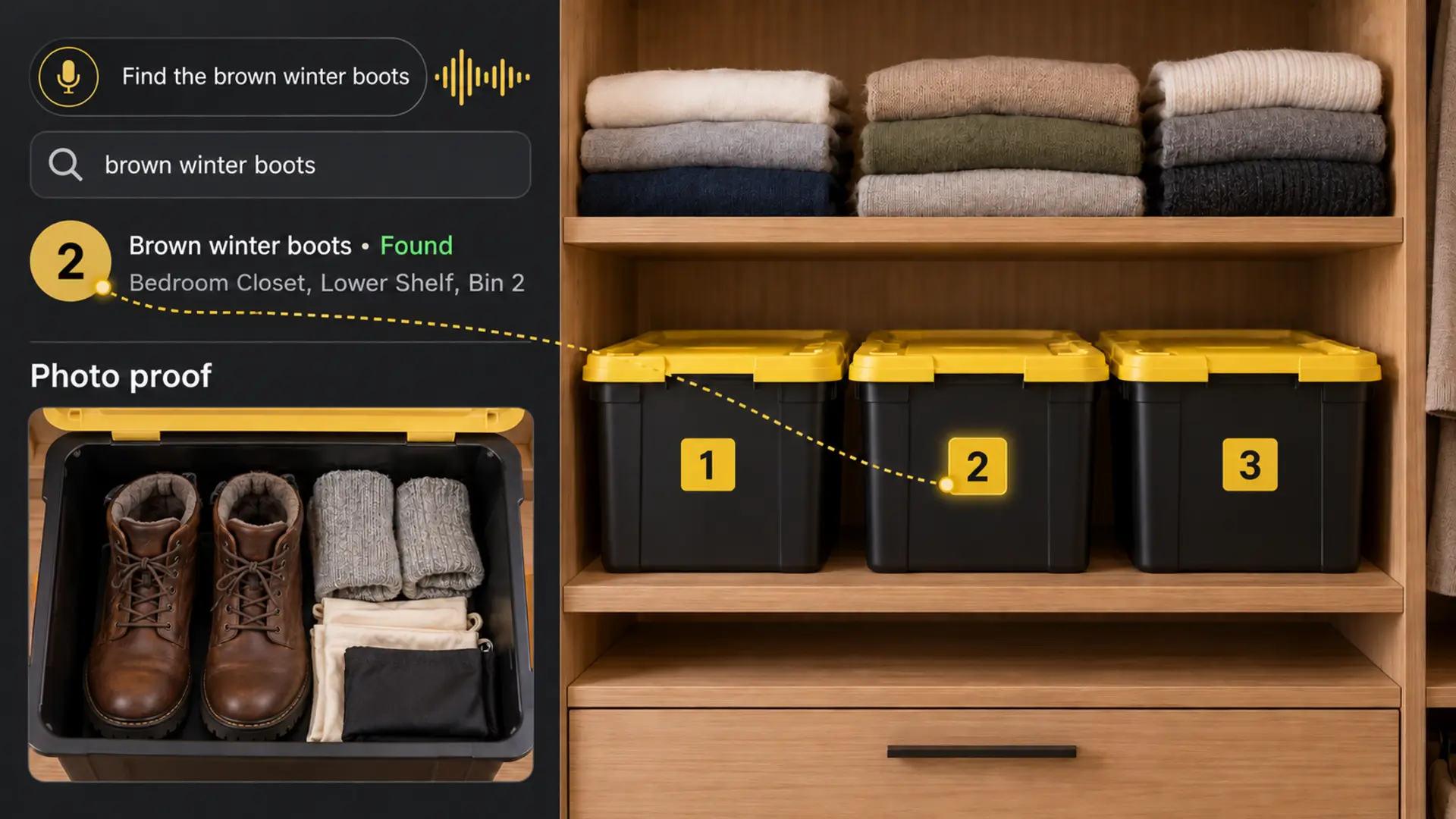
Bedroom Closet, Lower Shelf, Bin 2
“Winter shoes” describes contents. “Somewhere in the closet” describes a search problem. The exact shelf and visible number give another person something they can act on.
For a small home, reserve the easiest spaces for the current season and keep the next seasonal group identifiable. The seasonal storage guide covers rotation across clothing, household supplies and outdoor gear.
Build a Pair-to-Box Map
A label reading “shoes” does not distinguish the brown winter boots from similar brown ankle boots worn by someone else. You do not need a detailed label on every shoe. Put a simple number on the container, then keep pair descriptions with the box record.
Here is an illustrative household map, not a real inventory:
| Box | Saved location | Specific contents | Helpful pair note |
|---|---|---|---|
| 1 | Bedroom Closet, Lower Shelf | Adult summer sandals and canvas shoes | List each pair separately; keep matching shoes together |
| 2 | Bedroom Closet, Lower Shelf | Brown lace-up winter boots, removable liners and dust bags | Adult pair; record the printed size and last fit check |
| 3 | Bedroom Closet, Lower Shelf | Kids' next-size shoes in individual cartons | Record wearer, size system and whether fit has been checked |
The search “brown winter boots” should lead to Bin 2, rather than require a tour of all three containers.
Record the details that distinguish a pair
Start with a short description: color, style, wearer, printed size and one recognizable feature. If the original carton is inside the box, say so.
A hypothetical note might read:
Brown lace-up winter boots; adult pair; label says US women's 8; both shoes present; removable liners stored alongside. Bedroom Closet, Lower Shelf, Bin 2. Recheck fit before the next season.
The printed size is a label fact. Whether the shoes fit now is a separate observation. Keep the size system, such as US, UK or EU, with the number rather than treating all “8” labels as interchangeable.
For children's stored footwear, “next size” can become misleading as time passes. Record the label and a current fit note when someone actually tries the pair. Do not let an old note stand in for checking it again. If you are also storing clothes, the kids' clothes-by-size guide gives that related collection its own system.
Check that it is a complete pair
Before photographing or closing the box, confirm that both shoes belong together. If one is missing, write “one shoe only; partner not located” rather than recording a complete pair by assumption.
That small distinction helps you decide what is actually available. A neat box containing three single shoes is not the same as three wearable pairs.
Use a photo without relying on it for every fact
Take a clear overview while the contents are visible. Add another reference photo only when it helps distinguish a pair or inner carton.
A photo of closed packaging cannot reveal the shoes inside. A photo of a shoe cannot reliably supply its wearer, fit history, or a covered size label. Read and enter those details yourself when they matter.
You can photograph an original carton instead of repeatedly unpacking a protected pair. Add the description and a known contents note. If the carton has been reused, correct that description before treating its printed label as the contents.
Update the record when shoes change places
If the boots return to the entryway for the season, update the storage note. If a pair moves to a donation bag, remove it from the box contents. If you split a box into two, record both new addresses.
A saved image shows what was photographed, not a live view of the container. Make the small update at the point of change rather than waiting for an annual reorganization. The guide to keeping track of bins explains that maintenance loop across household storage.
The One-Box Starter Method
Choose one manageable box and one pair you have had trouble finding. Leave the rest of the collection for another session.
- Identify the pair and confirm that both shoes are present.
- Follow its care guidance and wait until it is ready for storage.
- Check the interior fit, opening and return route.
- Keep the pair separated from anything that presses or rubs it.
- Put one clear number on the outside of the container.
- Photograph the visible contents before closing it.
- Save the room, shelf and box number, plus a few distinguishing pair details.
- Test whether someone else can locate the pair from that record.
If the record takes them straight to the correct box, you have a useful starting system. If they still need to search, improve the location or description before adding more boxes.
This can also help you check whether you already own a suitable pair before buying another. A record is most useful when it distinguishes a complete, currently usable pair from shoes merely kept for later; see how to stop buying duplicate items.
How Totely Helps
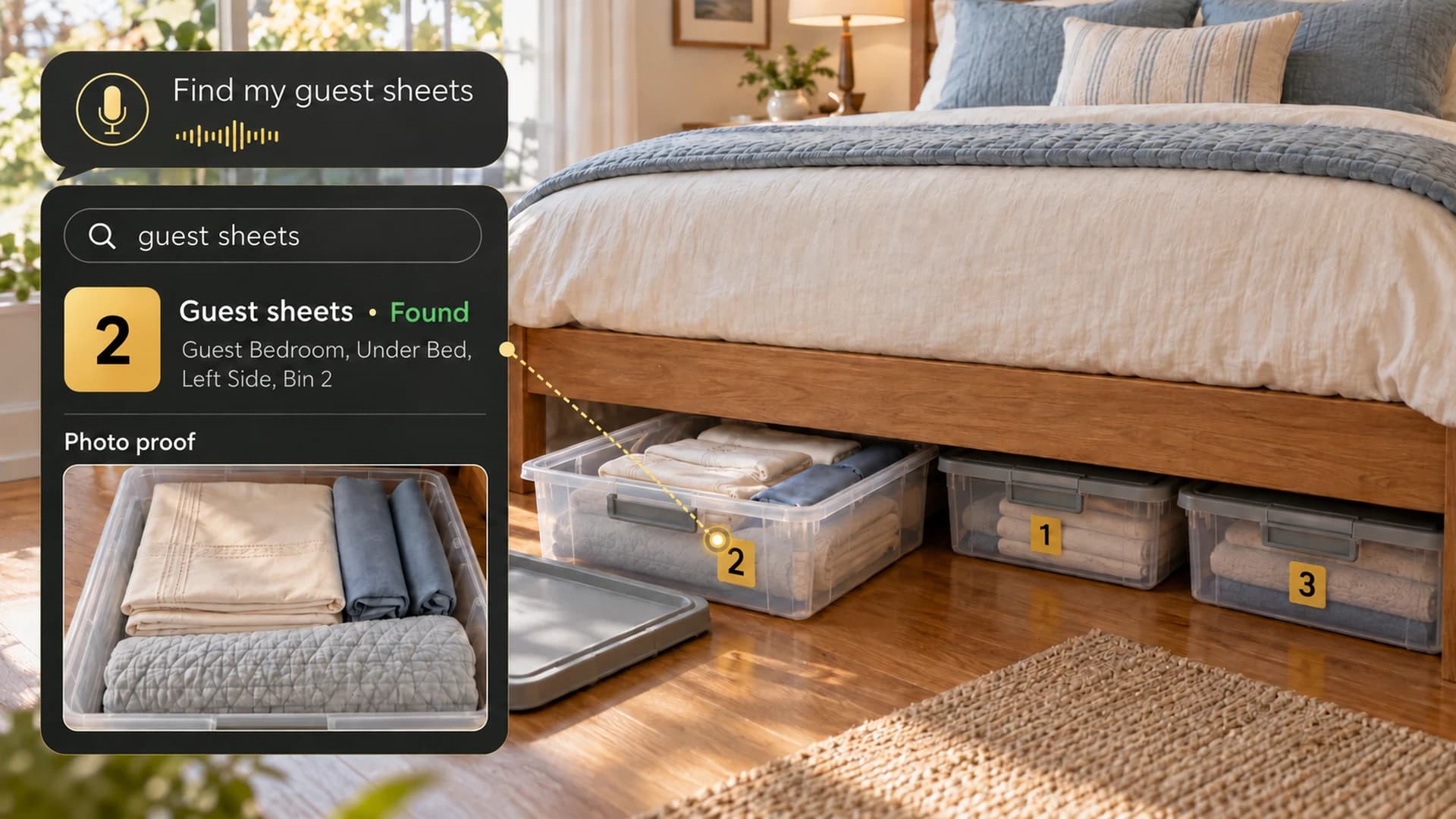
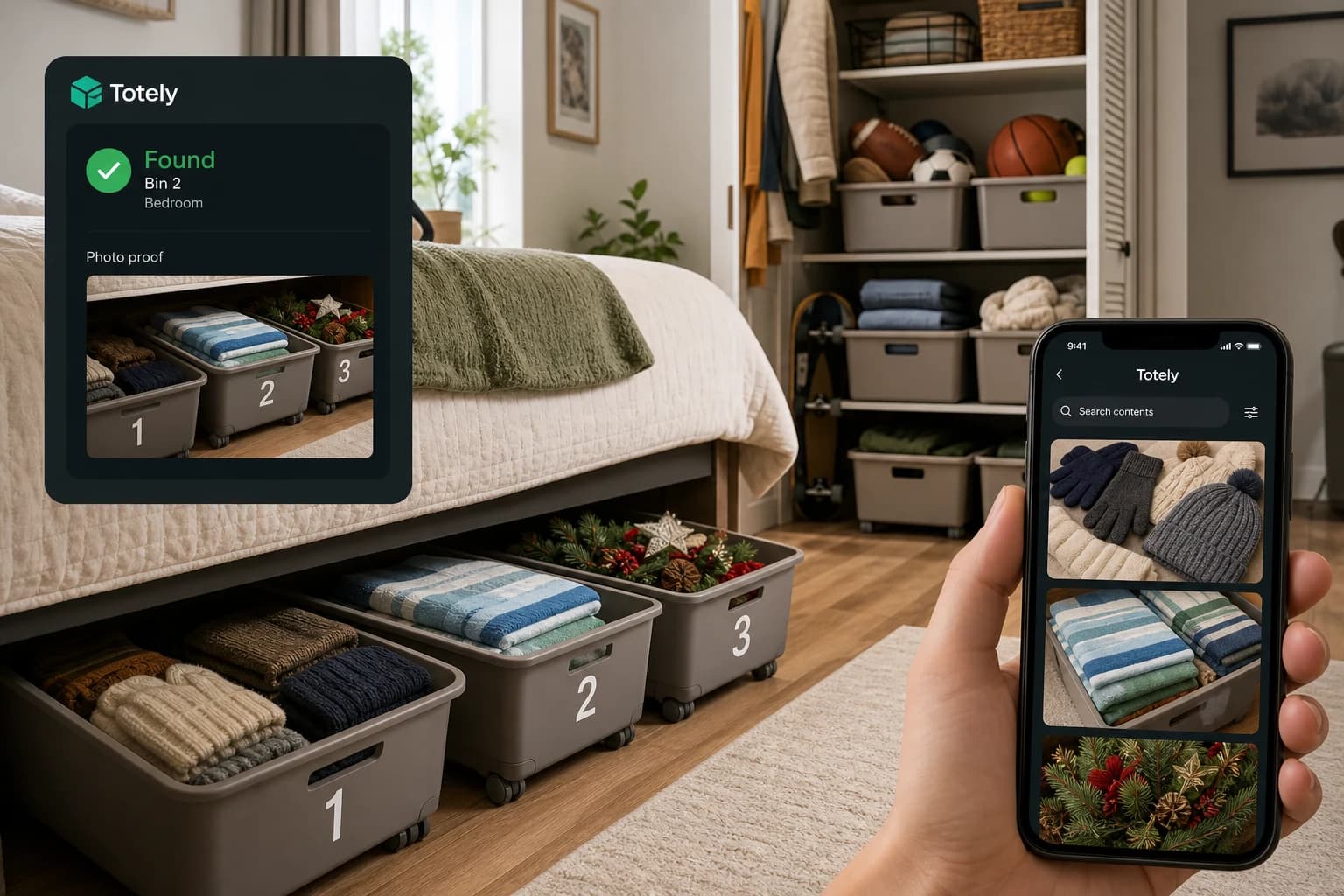
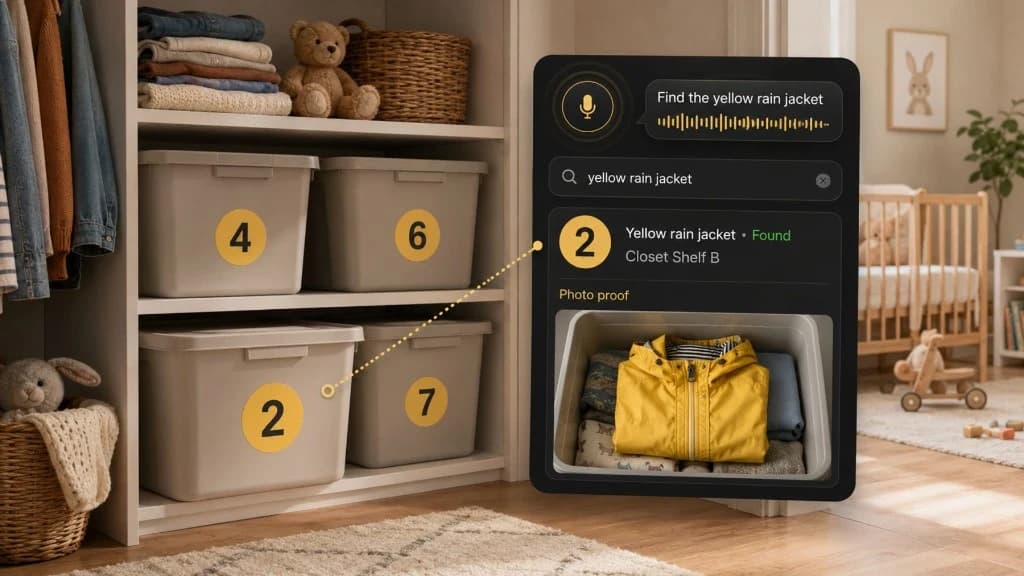
Totely adds a digital memory layer to the physical box system. Give Bin 2 its visible number, photograph the contents while the brown winter boots and accompanying gear are visible, and let Totely suggest a first item list from the photo.
Review that list. Correct any description, add a missed pair, and enter the wearer or printed size if you want those details in your record. These are helpful notes, rather than a promise of dedicated size filters or automatic fit detection. Save Bedroom Closet, Lower Shelf, Bin 2 as the precise location description.
Later, search naturally for “brown winter boots.” The saved record can point you to Bin 2 and show its photo proof before you pull out the other containers.
The app cannot see through a closed lid or know who a pair belongs to unless that information is recorded. It does not determine whether children's shoes fit today, assess material damage, or automatically know that you moved the boots to the entryway. Human review and updates keep the record useful.
You do not need QR codes, barcodes or manual entry of every shoe to start. One box-level photo, a reviewed list and a few helpful pair notes can be enough to try the system with the One-Tote Test.
Shoe Storage Box FAQs
Is a clear shoe box better than an opaque one?
Clear walls help when the pair is visible and the box front is accessible. An opaque box can also work with a useful contents record. Choose based on actual fit, material needs and how you retrieve the shoes.
Can I keep shoes in their original boxes?
Yes, when the carton is sound, suits the pair and lives in an appropriate location. Avoid heavy piles that crush lower cartons. If original boxes sit inside a larger container, record which pair each inner carton holds.
Are plastic shoe boxes suitable for long-term storage?
They can be, depending on the shoes, box design and storage conditions. Pack clean, dry shoes and follow the maker's material-specific advice. A vent or moisture-control accessory does not make damp packing suitable.
How do I know whether boots will fit a shoe box?
Measure the actual boots in the intended storage position, including soles, shafts and any support. Compare with usable interior dimensions and the opening. Do not force the lid shut or fold a structured shaft to meet a claimed capacity.
What should I record for children's stored shoes?
Record the wearer, printed size and size system, recognizable style, complete-pair status and whether current fit has been checked. Keep uncertain fit notes honest and check the pair again before use.
Do I need to photograph every pair individually?
No. A box-level overview and a few specific pair notes can be enough. Separate photos help when similar pairs are hard to distinguish, while descriptions remain essential for shoes hidden inside cartons.
Make the Box Useful Next Season
The right storage box for shoes fits the actual footwear and works in its intended space. Once that is settled, give it a simple number, save its exact location, and record the details that identify the pair.
Next time the weather changes or an occasion calls for stored shoes, you should have a clear box to open and a pair description to check. Stored, not lost.