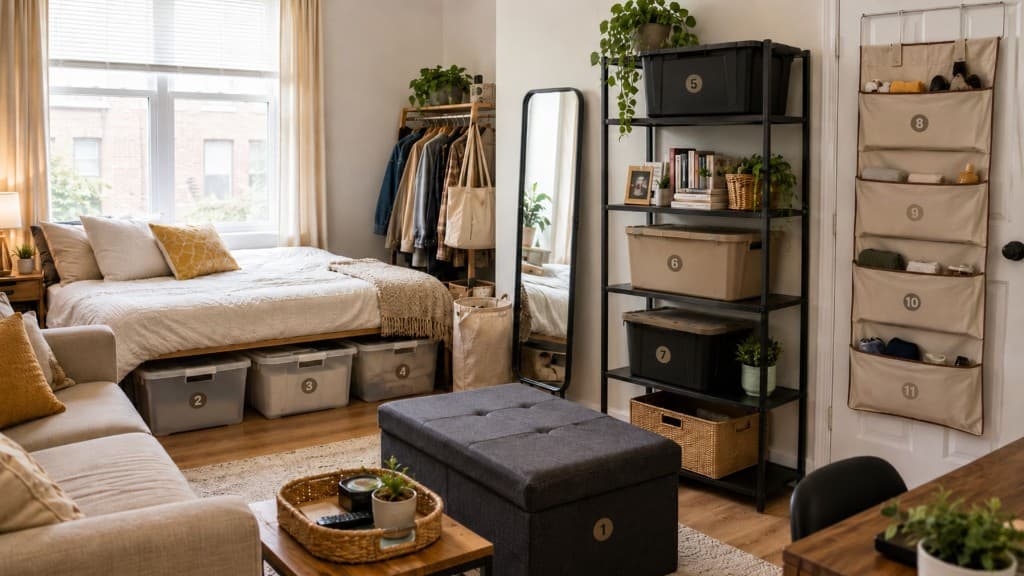
Under Bed Storage Bins: Make Hidden Storage Searchable
Choose under bed storage bins that fit your frame and walkway, then number each bin and save its location so guest sheets stay easy to find.
By Steve Watts · Co-Founder, Totely
October 11, 2026 · Updated October 11, 2026 · 12 min read
The guest sheets are somewhere under the bed. Your visitors arrive tonight, and you pull out two containers before finding the right set. The bedding was put away; its location was the missing part.
Good under bed storage bins fit through the lowest part of the frame, hold the intended items without bulging, and pull out into the space you actually have. Choose the physical container first. Then give it a number and record which room, bed, and side it belongs on.
You can start with the bin you already own. One useful record is enough to test whether hidden storage will work for your household.
Quick Links
Measure the Bed and the Pull-Out Space
A bin can fit beneath the mattress and still catch on the side rail. It can also fit under the frame but be impossible to pull out past a nightstand.
Measure the path the container will travel, not just the open space under the middle of the bed. A tape measure and a short note on your phone are enough.
| Measurement | What to record | Why it matters |
|---|---|---|
| Frame gap | Floor to the lowest rail, bracket, or support along the entry path | This determines whether the closed bin can pass through |
| Entry gap | Clear space between legs or supports on the side you will use | A wide bin may not fit through an otherwise tall gap |
| Bay depth | Entry edge to the next support or obstruction | Center legs can divide the bed into separate storage bays |
| Floor space | Clear floor space beside or at the foot of the bed | You need room to pull the bin out and reach its contents |
| Outside size | Exterior length, width, and height, including lid and wheels | Capacity in quarts or liters does not establish fit |
| Inside space | Usable dimensions for the items you intend to pack | Rounded corners, tapered sides, and wheel housings can reduce room |
Allow room for comfortable movement rather than choosing a container whose height exactly matches the gap. There is no single clearance allowance that suits every frame and bin. Test the actual container without forcing it through.
Read the right product dimensions
Check whether the measurements describe the assembled container, its interior, or its shipping package. Those numbers can be quite different.
For example, Sterilite's 56 Qt. Wheeled Latching Box lists exterior dimensions of 33 7/8 × 18 3/4 × 7 inches and interior dimensions at the bottom of 30 1/8 × 15 7/8 × 6 1/4 inches. The outside measurements help you check the bed opening; the inside measurements help you check the contents.
That is a sizing example, not a recommendation for every bed. Compare the exact model you are considering with your own measurements, and buy one to test before committing to a matching set.
Test the packed height too
A soft bag that fits while empty may dome upward when filled with blankets. A rigid bin may become awkward to move when packed with heavy objects.
Close the container with its intended contents, check that the lid or zipper sits normally, and try a full pull-out-and-return cycle. If it needs to be squeezed, tilted around a support, or dragged through an obstructed walkway, change the container or the location.
Choose Under Bed Storage Bins by Access and Contents
Start with what you will store and how you will retrieve it. Matching containers can look tidy, but a useful handle or an accessible opening matters more than a coordinated set.
| Container type | A practical use | What to check before choosing |
|---|---|---|
| Rigid bin with a lid | Shoes, ordinary household items, or bedding that needs a defined compartment | Exterior height, usable interior, handle grip, and how the lid opens |
| Wheeled bin | A container you expect to pull out repeatedly | Total height with wheels, movement on your flooring, and room to turn or withdraw it |
| Structured fabric case | Folded clothes, sheets, or lightweight textiles | Packed height, supportive sides, zipper access, and care instructions |
| Open drawer or tray | Items you reach for often | Whether exposed contents suit the space and whether the drawer clears nearby furniture |
A clear bin helps you see what is visible from the side. It still benefits from a short contents record when the item you want is beneath other things or in a container farther under the bed.
A lid or zipped cover can help limit dust settling on the contents. It does not establish that a container is airtight, waterproof, or suitable for every material. Check the manufacturer's description and the care needs of what you are storing.
Handles, wheels, and openings
Try to imagine using the container on an ordinary evening. Can you grip its handle from the accessible side? Does opening it require removing the entire lid? Can a hinged lid or zipper open far enough without hitting the frame?
Wheels may be useful, but test how they move on your own floor or rug. A handle-only bin that slides easily in one room may be awkward in another. Choose a size and packed weight you can move comfortably.
If you have very little pull-out space, several smaller bins may be easier to use than one long container. Leave enough access to clean around them.
Pack for the Next Time You Need Something
Group items by the reason you will open the bin. A complete guest sheet set is more useful together than a container of fitted sheets separated from another container of pillowcases.
Useful groups include a guest visit, the first cold week, a particular shoe collection, or spare linens for one bed size. Put the items you expect to request most often in the easiest position to reach.
Keep bedding sets recognizable
Pack clean, fully dry textiles according to their care instructions. Keep matching sheets and pillowcases together, and note the size: “queen guest sheets, ivory, blue pillowcases” is much clearer than “bedding.”
If a set is incomplete, add a note. That prevents a missing pillowcase from becoming a surprise when someone makes the guest bed.
Keep shoes and textiles separate
Give shoes their own container or suitable separate housing rather than letting soles rub against folded sheets. Keep pairs together and check that taller shoes fit without being bent or pressed by the lid.
For fragile keepsakes or delicate fabrics, choose packaging and a location appropriate to the material. An available space under the bed does not automatically make it the right home for every object. Our sentimental-item storage guide covers recording the stories behind meaningful belongings.
Follow the container's cleaning instructions
Fabric storage cases are not necessarily machine washable. IKEA's SKUBB case care instructions specify vacuuming or using a lint roller and say not to wash the case.
Check your own container's instructions before cleaning it. Start with a clean, dry storage area, and make sure the layout lets you remove bins when it is time to clean underneath.
Give Each Bin an Exact Address
“Under the bed” is a starting point. It is incomplete when you have two bedrooms, bins on both sides, or a wall blocking one edge.
Use a simple visible number for the container. If your household already numbers storage bins, continue that sequence so two different containers do not share the same identity.
For the location, record the room, bed, accessible side, and position. Define your directions once: in this example, left and right mean standing at the foot of the bed and facing the headboard.
| Bin | Saved location | Contents | Position note |
|---|---|---|---|
| 1 | Guest Bedroom, Under Bed, Right Side, Bin 1 | Winter sweaters and scarves | Near the foot; seasonal access |
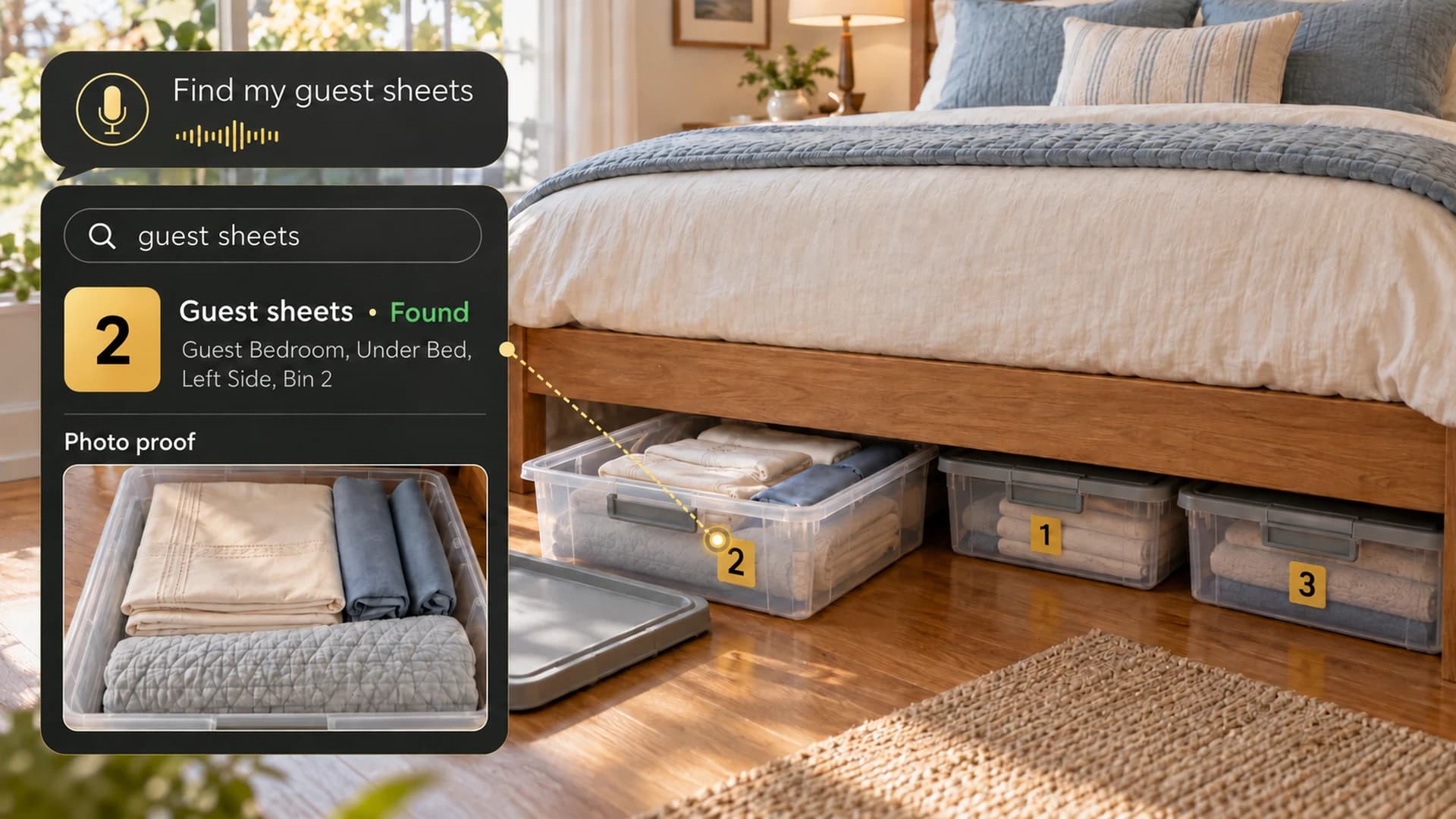
| 2 | Guest Bedroom, Under Bed, Left Side, Bin 2 | Ivory queen guest sheets, blue pillowcases, light quilt | Near the foot; pull out from the left |
| 3 | Guest Bedroom, Under Bed, Right Side, Bin 3 | Spare towels and summer bedding | Farther toward the headboard than Bin 1 |
If the bed is against a wall, name the reachable side or use a description such as “door side.” If bins sit in two rows, add “near edge” or “inner row” and explain how to reach the inner container.
The number identifies the bin. The saved location describes where it currently lives. Keep those separate so a move does not require renumbering every container.
Record the words someone will remember
Save a few specific item names, sizes, and colors. “Guest sheets,” “queen sheet set,” and “blue pillowcases” are useful search words. You do not need to list every sock in a seasonal clothing bin.
Add a contents photo while the container is open. Show the main groups clearly, then note anything covered or hidden. A photograph of the lid alone cannot tell you which sheet size is inside.
Update the record when something changes
When guest sheets go into the wash, note that they are temporarily out if someone else might look for them. When they return, put them back in the same bin or update the record.
After seasonal rotation, refresh the contents note and photo if the groups changed. After a move, update the room and position while leaving the bin number attached. A small accurate index is more useful than a detailed one that describes last year's arrangement.
Try the One-Bin Method
Use the container holding the item your household asks for most often.
- Measure its entry path and the space needed to pull it out.
- Check it while packed and closed.
- Group the contents around one useful purpose, such as a guest visit.
- Attach one clear number to the accessible outside face.
- Take a contents photo and record two or three recognizable items.
- Save the room, bed, side, and any position note.
- Close it, return it to its place, and ask someone to find the guest sheets using the record.
If they can identify the right bin and reach it comfortably, you have a workable starting point. Adjust the placement before adding more containers.
For a similar small first step across other storage areas, try the One-Tote Test.
How Totely Helps You Find Hidden Storage
The container handles the physical storage. Totely keeps the contents and location record searchable after the bin disappears beneath the bed.
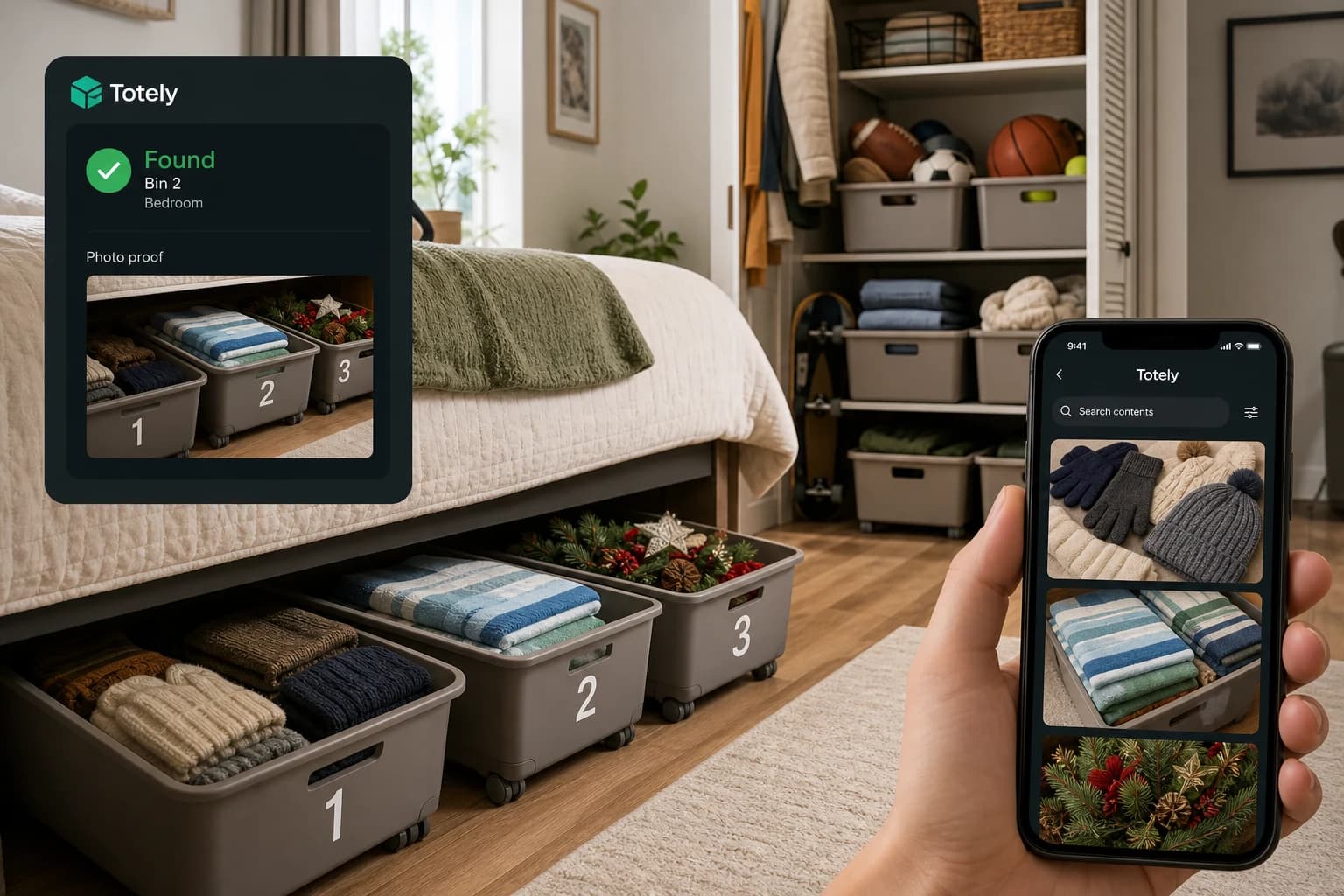
Number Bin 2 and photograph the guest sheets before closing it. Let Totely suggest an initial item list from the visible contents, then review and correct it. Add “queen guest sheets” or a note about a covered item that the photo cannot show.
Save “Guest Bedroom, Under Bed, Left Side, Bin 2” as the location. Add “near the foot; pull out from the left” as a position note.
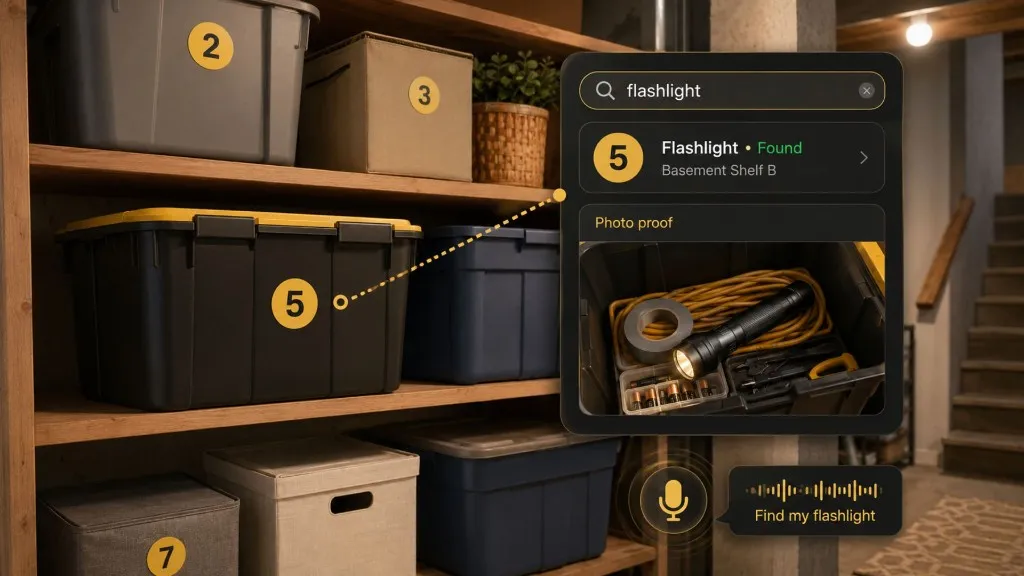
Later, search naturally for “guest sheets.” The saved description points you to Bin 2, and the photo helps confirm the contents before you pull out the container. If you move the bin to a closet, update its saved location so the same item record remains useful.
AI cannot identify every covered item or know that an ivory sheet set is reserved for guests unless you review the suggestions and add that context. You do not need QR codes, barcodes, or manual entry of every item to start with a useful bin-level record.
For the rest of a small home, see apartment storage ideas for renters and seasonal storage ideas for small homes.
Under Bed Storage FAQs
What size bin will fit under my bed?
Measure the lowest clearance along the entry path, the opening between supports, usable depth, and pull-out space. Compare these with the closed container's exterior dimensions, including its lid and wheels. Test the packed container rather than relying on a capacity label.
Is a plastic bin or fabric case better for sheets?
Either may work if it fits and suits the textiles. A rigid bin has a defined shape; a fabric case may be lighter or fold away when empty. Check the packed height, closure, handle, and care instructions before choosing.
Do under-bed bins need wheels?
No. A bin with a useful handle may be easy enough to move. Wheels can help in some layouts, but they add to the container's height and should be tested on your flooring and along the actual removal path.
Can I use under-bed bins in a rented apartment?
Freestanding bins can use existing space without adding shelving. Measure your current bed and walkway, choose containers you can move and clean around, and check any relevant rental or furniture instructions before modifying the setup.
How do I stop forgetting what is under the bed?
Number each container and keep a short record of its contents and exact position. Define which side you mean, include the room, and update the record when a bin moves or its contents change. A contents photo helps confirm the right container.
Do I need a separate record for every item?
No. Start with a bin-level photo, its location, and a few useful names such as “guest sheets” or “winter scarves.” Add individual details when a particular item, size, or family story needs them.
Make One Hidden Bin Easy to Find
Choose one container that fits, closes normally, and pulls out without a struggle. Give it a clear number, photograph its contents, and save the exact position.
The next time someone asks for the guest sheets, they should have a useful answer: Guest Bedroom, Under Bed, Left Side, Bin 2.