Small Apartment Storage Ideas for Renters Who Can't Drill Into Walls
Small apartment storage ideas for renters who can't drill: use no-damage shelves, under-bed bins, door storage, and Totely to find it all.
By Steve Watts · Co-Founder, Totely
May 27, 2026 · Updated August 27, 2026 · 14 min read
Small Apartment Storage Ideas for Renters Who Can't Drill Into Walls
Small apartments ask a lot from one space.
Your bedroom may also be your office. Your entryway may be three square feet by the front door. Your closet may be expected to hold clothes, coats, luggage, cleaning supplies, holiday decor, extra bedding, and the random box of things you swear you will sort later.
And if you rent, there is one more challenge: you may not be able to drill into the walls.
That means no permanent shelving, no built-ins, no wall-mounted cabinets, and no heavy-duty garage-style systems. But that does not mean you are stuck with clutter.
The best small apartment storage ideas for renters are flexible, movable, and easy to maintain. They use hidden space, vertical space, furniture with storage, and clearly labeled containers that can move with you when your lease ends.
The real goal is not just to fit more things into your apartment. The goal is to make your space easier to live in — and make sure you can actually find what you stored later.
Quick Links
Start With Renter-Friendly Storage Rules
Before buying more bins, shelves, or baskets, start with the limits of your space.
In a rental apartment, the best storage system should be:
- Non-permanent
- Easy to remove
- Simple to clean around
- Flexible enough to move
- Safe for walls, floors, and doors
- Easy to update as your needs change
That last point matters more than most people think.
A storage idea can look great on day one, but if it is difficult to maintain, it will eventually turn into another pile, basket, or mystery bin. Small apartments do not have much margin for that. When space is tight, every storage zone needs a clear purpose.
A simple rule: if a storage solution makes it harder to reach the things you use often, it is probably not solving the right problem.
Use Under-Bed Storage First
In a small apartment, the space under your bed is one of the most valuable storage zones you have.
It is hidden, usually underused, and does not require drilling, hanging, or installing anything. That makes it perfect for renters.
Use under-bed storage for items you do not need every day, such as:
- Off-season clothes
- Extra sheets
- Towels
- Shoes
- Gift wrap
- Holiday decor
- Keepsakes
- Workout gear
- Travel items
The best under-bed storage containers are shallow, lidded, and easy to pull out. If your bed is low, bed risers can create extra clearance, but measure first. The mistake many renters make is buying bins before checking the height under the frame.
For a cleaner look, use matching low-profile bins or fabric storage bags. For easier access, use bins with wheels or handles.
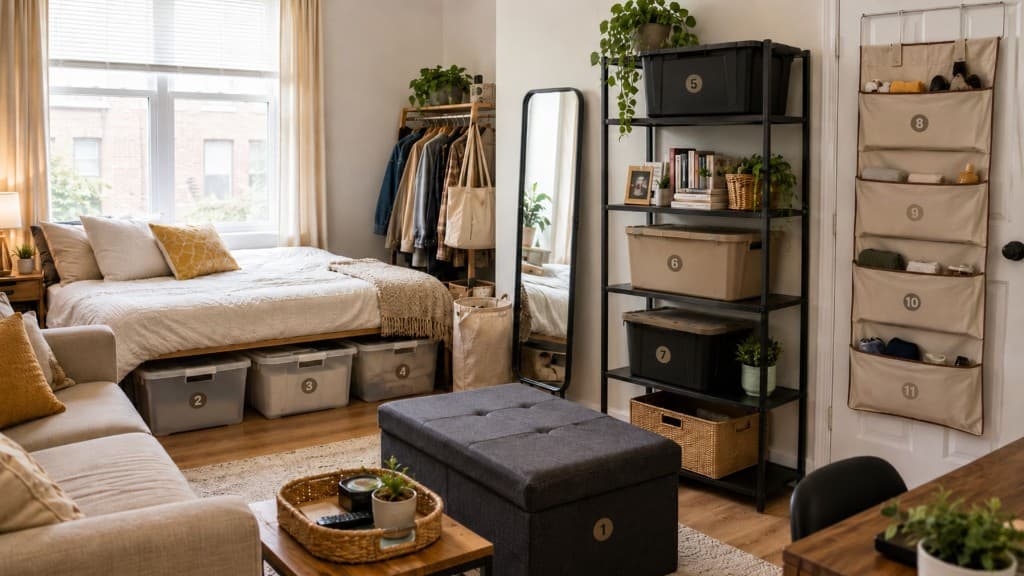
The key is to avoid turning under-bed storage into a forgotten zone. This is exactly where a simple inventory system helps. If you store winter clothes, extra bedding, or holiday items under the bed, label each container with a number and keep a quick record of what is inside.
That way, "under the bed" becomes searchable storage, not another hidden pile.
Choose Furniture That Stores More
When floor space is limited, furniture should do more than one job.
A storage ottoman can hold blankets, board games, pet supplies, or workout bands. A bench with storage can create an entryway drop zone. A coffee table with drawers can hide remotes, chargers, notebooks, and small electronics. A bed with built-in drawers can replace an extra dresser.
These pieces work well because they do not add storage as an afterthought. They make storage part of the room.
Good multifunctional pieces for renters include:
- Storage ottomans
- Lift-top coffee tables
- Storage benches
- Bed frames with drawers
- Nightstands with closed storage
- Slim cabinets
- Rolling carts
- Folding desks with shelves
The best choices are pieces you would still want to keep if you moved. Avoid anything too custom to one awkward corner unless it is inexpensive and easy to repurpose.
For small apartments, closed storage is often better than open storage. Open shelves can look beautiful, but they also expose every item to view. Closed storage helps reduce visual clutter, which makes a small apartment feel calmer.
Make Closets Work Harder Without Drilling
Apartment closets are rarely generous. Many have one rod, one shelf, and a lot of wasted vertical space.
You can improve most closets without drilling by using removable or freestanding organizers.
Start by dividing the closet into zones:
Daily items should be easiest to reach.
Occasional items can go higher or lower.
Seasonal items can go in labeled bins.
Backstock items should be grouped together so you do not buy duplicates.
No-drill closet upgrades include hanging shelves, stackable drawers, over-the-door organizers, slim bins, tension rods, and freestanding shelving units that fit inside the closet.
If your closet is deep, use bins with large number labels so you can pull the right one without digging through everything. If the closet is narrow, use vertical drawers or a tiered hanging organizer.
The goal is to make the closet behave like a system, not a stuffed storage cavity.
Use Doors, Corners, and Hidden Gaps
Small apartments often have storage potential in places people overlook.
Doors are especially useful because they create vertical storage without drilling into walls. Over-the-door organizers can work for shoes, cleaning supplies, hair tools, pantry items, accessories, gift wrap, or small household extras.
Corners can also become useful with freestanding corner shelves, narrow bookcases, or slim cabinets. The space beside a sofa, behind a bedroom door, next to a fridge, or between furniture pieces can often hold a narrow rolling cart or vertical bin.
Look for small unused zones like:
- Behind doors
- Under the sofa
- Under the bed
- On top of closets
- Inside suitcases
- Beside the fridge
- Above cabinets
- Beneath hanging clothes
- In entryway corners
- Under a desk
The trick is to use these areas intentionally. A basket behind the door is helpful. Five random bags behind the door are not.
Every hidden storage spot should have a purpose.
Use Vertical Space Without Wall Damage
Renters can still use vertical storage — they just need to avoid permanent installation.
Instead of drilling shelves into the wall, use freestanding shelving, leaning ladder shelves, tension pole systems, over-the-door racks, bookcases, or stackable cubes.
For kitchens, a rolling cart can add storage without changing cabinets. For bathrooms, an over-the-toilet shelf can create vertical storage without drilling. For closets, a freestanding drawer tower can add structure where the apartment only gave you one shelf.
Just be careful with weight. Tall shelves should be stable, and anything heavy should stay low. If a piece requires wall anchoring for safety, check your lease and use renter-approved options when possible.
Vertical storage is best for lightweight, contained items:
- Towels
- Baskets
- Pantry extras
- Paper goods
- Craft supplies
- Accessories
- Seasonal decor
- Small tools
- Office supplies
When vertical storage is visible, keep it simple. Use fewer containers, clearer categories, and matching bins where possible. Too many small baskets can make a room feel busier, not more organized.
Create Storage Zones by Use, Not Just Room
In a small apartment, rooms often have multiple jobs. So it helps to organize by how you use things, not only by where they technically belong.
For example, your living room might need a work-from-home zone, a pet zone, a hobby zone, and a guest bedding zone. Your bedroom might also hold seasonal clothes, documents, sentimental items, and luggage.
Instead of forcing everything into broad categories, create practical zones:
Everyday zone: items you use daily
Weekly zone: items you use often but not constantly
Seasonal zone: holiday decor, winter gear, summer gear
Backstock zone: paper goods, extra toiletries, pantry overflow
Memory zone: keepsakes, photos, sentimental items
Move-out zone: documents, lease items, packing supplies
This makes your storage easier to maintain because every item has a reason to be where it is.
It also helps prevent the classic small-apartment problem: random bins filled with unrelated things because there was nowhere else to put them.
Choose Bins That Are Easy to Move
For renters, storage should be portable.
You may move apartments. You may rearrange rooms. You may need to access storage from the top of a closet, under a bed, or inside a shared storage area. Heavy, awkward containers make that harder.
Choose bins that are:
- Lightweight when full
- Easy to pull out
- Stackable
- Lidded when used for long-term storage
- Clear or clearly numbered
- Sized for the actual storage spot
Avoid oversized bins in small apartments. They seem efficient, but they often become too heavy, too deep, and too vague. Smaller bins are easier to categorize and easier to move.
For apartment storage, medium and shallow bins usually beat huge totes.
Create a Searchable Storage System
The biggest mistake renters make is thinking storage ends once things are contained.
But putting items into bins only solves the first half of the problem. The second half is finding those items later.
This matters even more in small apartments because storage is often scattered. You might have winter clothes under the bed, tools in a closet bin, holiday decor above the wardrobe, gift wrap behind a door, and keepsakes inside a storage ottoman.
Without a system, you end up opening everything to find one thing.
A better approach is to make each bin searchable.
Give every storage container a simple number. Take a photo of what is inside. Record the key items. Add the location. Then label the outside clearly so the bin is easy to identify later.
For example:
Bin 4
Location: Under bed, left side
Contents: winter sweaters, gloves, scarves, thermal socks
Bin 7
Location: Hall closet, top shelf
Contents: batteries, extension cords, tape, small tools
Bin 11
Location: Storage ottoman
Contents: guest sheets, extra pillowcases, throw blanket
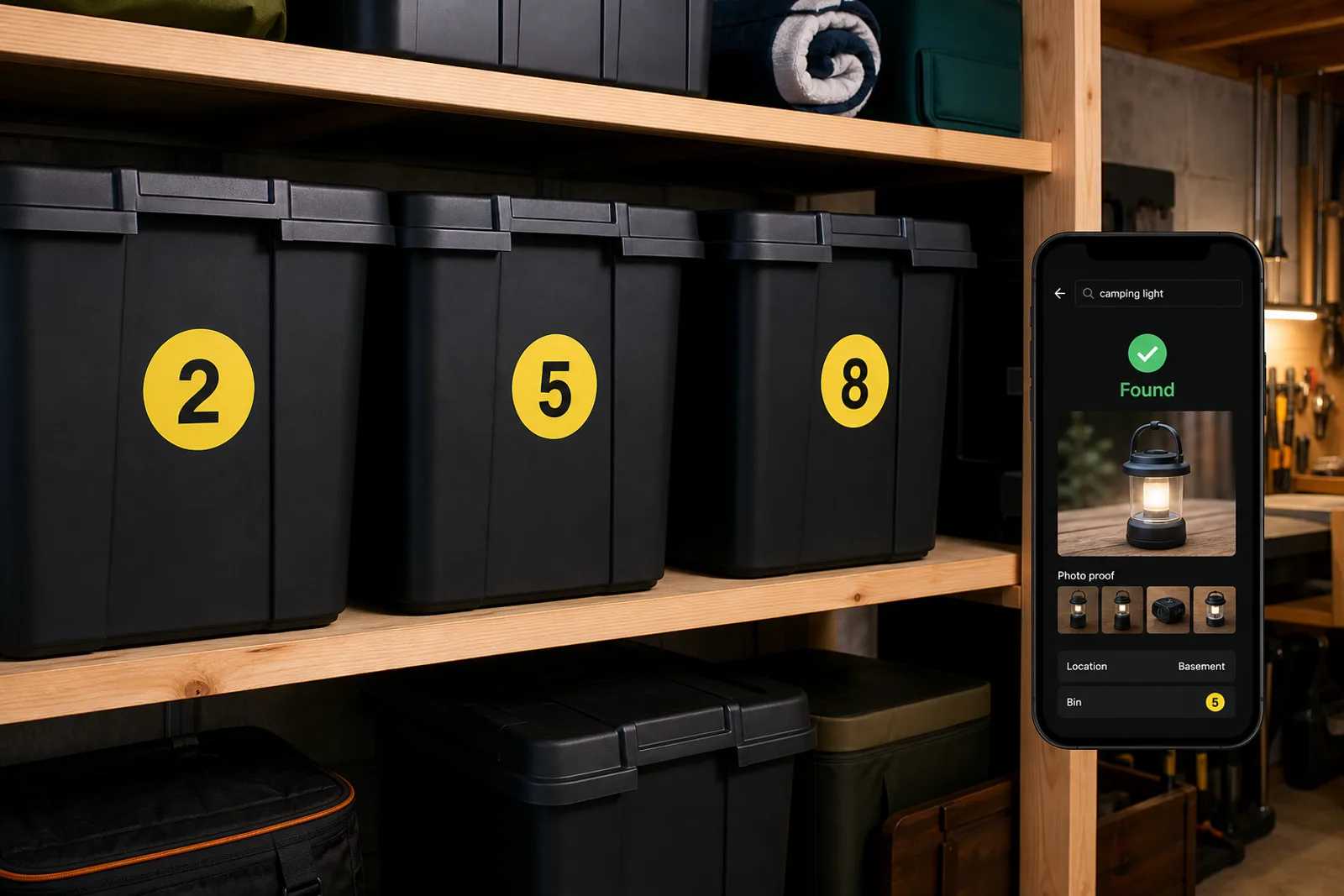
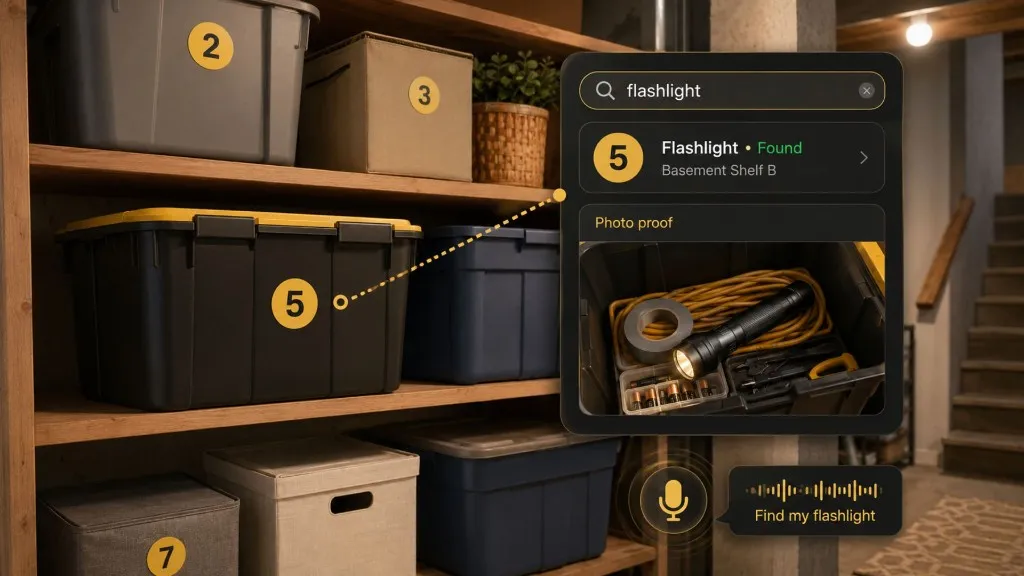
This is where Totely fits naturally. Totely helps renters turn bins, boxes, totes, and hidden storage spots into a simple searchable inventory. Instead of remembering which container has the thing you need, you can search for the item and find the right bin.
In a small apartment, that can be the difference between storage that helps and storage that hides your stuff.
Best No-Drill Storage Ideas by Apartment Area
Bedroom
Use under-bed bins for seasonal clothes, bedding, shoes, and keepsakes. Add slim nightstands with drawers instead of open tables. Use over-door hooks for robes, bags, or tomorrow's outfit. If your closet is limited, add hanging shelves or stackable drawers.
The bedroom should hold restful items first. Try not to let every category in the apartment migrate into the bedroom just because there is a little extra floor space.
Closet
Use hanging organizers, shelf dividers, stackable bins, and labeled containers. Keep daily clothes at eye level and seasonal items higher or lower.
If you store bins on the top shelf, number them clearly. A visible number is easier to recognize than a small handwritten label when the bin is above your head.
Kitchen
Use shelf risers, cabinet baskets, adhesive or no-screw drawer inserts, rolling carts, and over-cabinet organizers. Group pantry overflow, coffee supplies, cleaning items, and small appliances by use.
Small rental kitchens often have deep cabinets where items disappear. Pull-out bins or baskets can help you bring the back of the cabinet forward.
Bathroom
Use over-the-toilet shelving, rolling carts, drawer dividers, and under-sink bins. Keep daily products visible and backup products contained.
Bathrooms get cluttered quickly because many items are small. A few clear categories work better than one big basket of everything.
Entryway
Use a slim shoe rack, storage bench, wall-free coat stand, basket for returns, and a small tray for keys and mail.
Even if your apartment does not have a real entryway, create a landing zone. Otherwise, bags, shoes, mail, and keys will spread into the rest of the apartment.
Living Room
Use storage ottomans, lift-top coffee tables, baskets, media cabinets, and side tables with drawers. This is a good place for hidden storage, but be careful not to let every hidden compartment become a junk drawer.
If a living room bin holds important items, add it to your inventory. Hidden storage only works if you remember what is hidden.
The One-Bin Test for Renters
You do not need to organize your entire apartment at once.
Start with one bin.
Choose a container that already annoys you. It might be under the bed, in the closet, inside a cabinet, or tucked behind a door. Renters can use the same flow as starting with one tote — number, photo, location, search.
Then do five things:
- Empty it.
- Remove anything that does not belong.
- Group similar items together.
- Give the bin a number.
- Record what is inside and where it lives.
That one bin will show you what works. Once one storage spot becomes easier to use, repeat the process with the next one.
Small apartment organization is not about doing everything perfectly. It is about building a system you can actually maintain.
What to Avoid in Small Apartment Storage
Some storage ideas look good online but do not work well in real rental apartments.
Avoid storage that blocks walkways, makes daily items harder to reach, damages walls, overloads doors, or turns every visible surface into a display shelf.
Also avoid buying too many containers before sorting what you own. Bins do not create organization by themselves. They only hide clutter more neatly.
The better order is:
- Sort first.
- Decide what needs to be stored.
- Choose the right location.
- Pick the right container.
- Label and record what is inside.
That way, every bin has a job.
Small Apartment Storage FAQs
What are the best small apartment storage ideas for renters?
The best small apartment storage ideas for renters are under-bed bins, storage ottomans, rolling carts, over-the-door organizers, freestanding shelves, stackable drawers, and numbered storage containers. These solutions add storage without drilling into walls or making permanent changes.
How do I add storage to an apartment without drilling?
Use freestanding furniture, over-the-door racks, tension rods, rolling carts, stackable bins, under-bed containers, and storage furniture. Before using adhesive products, check the weight limit and your lease terms so you do not damage walls or cabinets.
How do I organize a small apartment with no closet space?
Use furniture with hidden storage, add a freestanding wardrobe or garment rack, store seasonal clothes under the bed, and use stackable drawers or bins for categories that do not fit in the closet. Keep only daily-use items in the easiest-to-reach places.
What should I store under my bed?
Under-bed storage works best for off-season clothing, shoes, extra bedding, gift wrap, holiday decor, keepsakes, and items you do not use every day. Use shallow bins or bags that are easy to pull out, and label or number them so you know what is inside.
Are storage bins good for small apartments?
Storage bins are helpful in small apartments when they are clearly labeled, easy to access, and used for specific categories. They become frustrating when they are too large, too vague, or filled with unrelated items. Numbered bins with a simple inventory are easier to maintain.
How can Totely help renters organize small apartments?
Totely helps renters create a searchable record of what is inside each bin, tote, box, or hidden storage spot. You can label a container, record what is inside, add its location, and search later instead of opening every bin.
Make Your Apartment Storage Searchable
Small apartments do not need more clutter disguised as storage.
They need smart, flexible systems that work with rental rules, protect your space, and make everyday life easier.
Start with the storage you already have: the bin under the bed, the basket in the closet, the box above the cabinet, or the tote inside the ottoman. Give it a number. Record what is inside. Put it back with a clear purpose.
With Totely, your apartment storage can become searchable — so even in a small space, you can know exactly where everything lives.