Searchable Storage: How to Stop Buying Duplicate Items You Already Own
Searchable storage helps you stop buying duplicate items by tracking what you already own inside bins, totes, boxes, closets, and hidden storage.
By Nick Stephan · Co-Founder, Totely
April 15, 2026 · Updated August 27, 2026 · 17 min read
Searchable Storage: How to Stop Buying Duplicate Items You Already Own
You know the feeling.
You are standing in the store, holding a pack of batteries, a roll of tape, a box of light bulbs, or a new set of storage bags, asking yourself:
Do we already have this at home?
You think you might. You probably do. But you cannot remember where it is.
Maybe it is in the garage. Maybe it is in the hall closet. Maybe it is inside the holiday bin, the junk drawer, the laundry cabinet, the storage ottoman, the moving box you never fully unpacked, or one of those mystery totes you promised yourself you would sort later.
So you buy it again.
That is how duplicate items happen. Not because you are careless. Not because you are disorganized. But because your home has storage spots you cannot quickly search.
Searchable storage fixes the real problem: you cannot use what you cannot find.
Instead of relying on memory, vague labels, or opening every bin, searchable storage gives every container a simple record of what is inside and where it lives. That means you can check what you own before you buy another duplicate.
Quick Links
Why We Buy Duplicate Items
Most duplicate purchases start with uncertainty.
You do not know whether you already have the item. Or you know you own it, but you do not know where it is. Or you remember seeing it somewhere, but not clearly enough to trust your memory.
That uncertainty turns into a purchase.
Professional organizers often warn that buying more storage products before checking what you already own can actually make clutter worse. Organizer-backed advice often recommends taking inventory before buying new bins or baskets, because checking what you already have helps prevent duplicate purchases and keeps clutter from sneaking back in.
That same rule applies far beyond storage bins.
Before buying another charger, gift bag, screwdriver, extension cord, candle, tape roll, or pantry backup, the most useful question is not, "Do I need this?"
It is:
Can I quickly check whether I already own this?
If the answer is no, your storage system is making you guess.
The Real Problem Is Not Too Much Stuff
Duplicate buying is easy to blame on clutter, but the deeper problem is usually poor visibility.
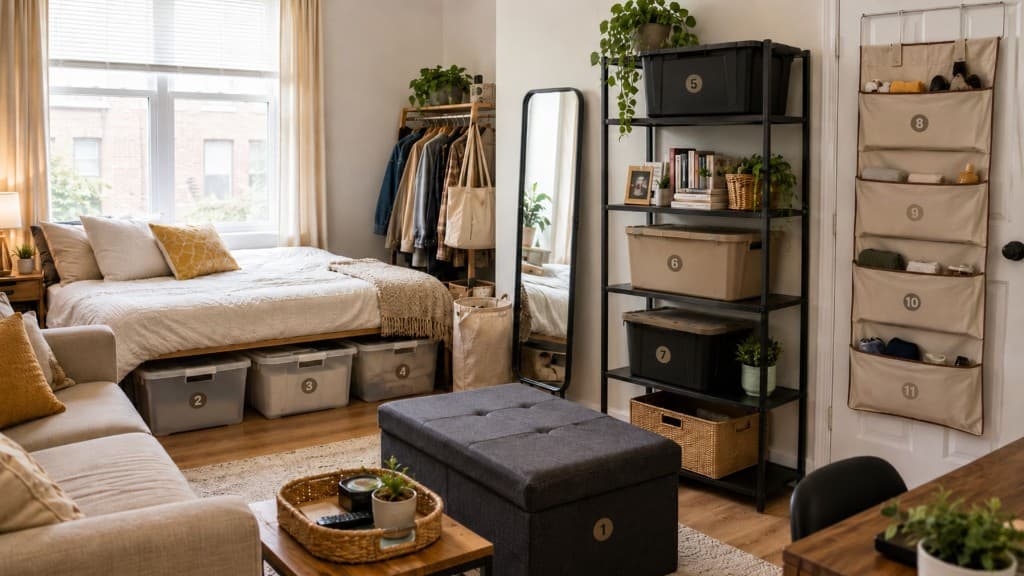
A home can look organized and still hide what you own. Matching bins, closed cabinets, under-bed boxes, storage ottomans, garage shelves, and closet baskets can all make a room look calmer. But they also hide information.
That is the tradeoff.
The more you put items out of sight, the more you need a way to remember what went where.
Without that memory layer, useful items become invisible. You may own three rolls of painter's tape, but if none of them are easy to find, you will still buy a fourth. You may have extra batteries, but if they are split between a kitchen drawer, garage bin, and holiday tote, you will still grab another pack at the store.
The item is not missing.
It is unsearchable.
The Hidden Cost of Unsearchable Storage
Duplicate purchases seem small in the moment. A few dollars here. A few dollars there. Another pack of batteries. Another bottle of glue. Another set of command hooks. Another box of zip bags.
But the real cost is bigger than the receipt.
Unsearchable storage creates three problems at once:
- You spend money on things you already own.
- You add more clutter to an already full space.
- You lose trust in your storage system.
That last one matters.
When you cannot find what you own, you stop believing your home is organized. You start opening random bins. You buy "just in case." You keep extras because you are not sure what is where. Eventually, the duplicates become part of the clutter that makes the next search harder.
It becomes a loop:
Can't find it → buy it again → store the duplicate → forget where it is → buy it again.
Searchable storage breaks that loop.
What Is Searchable Storage?
Searchable storage is a home organization system that lets you search for stored items before opening bins, boxes, totes, drawers, or cabinets.
It connects your physical storage to a simple digital record.
At its most basic, searchable storage answers four questions:
- What do I own?
- Which container is it in?
- Where is that container located?
- Can I confirm it before buying another one?
A searchable system might include numbered bins, numbered labels, photos, item names, locations, and notes. The goal is not to create a perfect catalog of every tiny object in your home. The goal is to make the items you actually look for easy to find.
That is the difference between storage that looks tidy and storage that works.
Why Labels Alone Do Not Stop Duplicate Buying
Labels help, but they have limits.
A bin labeled "Garage Supplies" might hold tape, gloves, bungee cords, hooks, batteries, small tools, light bulbs, and extension cords. That label tells you the category, but it does not tell you exactly what is inside.
A basket labeled "Gift Wrap" may have tissue paper, ribbon, tags, scissors, tape, and gift bags — or it may only have half of those things because someone used the rest months ago.
A box labeled "Holiday" might hold ornaments and lights, but it might also hold extra command hooks, batteries, candles, spare bulbs, wrapping supplies, and the extension cord you just bought again.
The label is not wrong. It is just incomplete.
Storage bin labels identify containers. Searchable storage identifies contents.
That is the shift that prevents duplicates.
The Most Common Duplicate Items at Home
Some items are especially easy to buy twice because they are small, useful, inexpensive, and often stored in multiple places.
Household Supplies
These are the classic "I know we have one somewhere" items: tape, scissors, batteries, light bulbs, glue, extension cords, command hooks, zip ties, labels, markers, cleaning refills, trash bags, and spare hardware.
They are practical enough to keep, but small enough to disappear.
Seasonal and Holiday Items
Seasonal storage is one of the biggest duplicate-purchase traps because months pass between uses.
You may forget that you already have gift tags, ornament hooks, outdoor timers, stocking holders, extra lights, wrapping paper, seasonal candles, Halloween window clips, or Thanksgiving table decor.
By the time the season comes around again, the easiest solution is often to buy more.
Kids' Clothes and Gear
Parents know this one well.
You buy another pair of gloves, another pack of socks, another raincoat, another lunchbox, or another size of seasonal clothing because the original is buried in a bin.
Kids' storage changes quickly, so labels like "3T Clothes" or "Winter Gear" often are not enough. You need to know what sizes, seasons, and items are actually inside.
Craft and Hobby Supplies
Craft supplies are especially prone to duplicates because they are often small, colorful, and scattered across bins, drawers, bags, and project boxes.
Paint, glue, yarn, fabric, beads, paper, markers, thread, cutting tools, and seasonal craft supplies are easy to overbuy when you cannot see your full inventory.
Tools and Garage Items
Garages often hold high-utility items that do not have a single obvious home.
That is how you end up with multiple tape measures, screwdrivers, flashlights, work gloves, extension cords, utility knives, bungee cords, and air pump attachments.
A garage shelf may look organized, but if you cannot search the contents, you still end up digging.
Pantry and Backstock Items
Duplicate pantry buying is slightly different because some extras are intentional. The problem is when backstock becomes invisible.
If you do not know what is already in the back of the cabinet, pantry bin, laundry shelf, or bulk storage area, you may keep buying more of the same thing while other items expire or go unused.
Start With the "Do I Already Own This?" List
You do not need to inventory your entire home to reduce duplicate buying.
Start with the items you most often rebuy by accident.
Make a short list of your household's usual duplicates. For many homes, that list includes batteries, tape, light bulbs, gift bags, extension cords, gloves, cleaning refills, craft supplies, and small tools.
This list becomes your first searchable inventory project.
The goal is not perfection. The goal is to make your most commonly misplaced items easier to check before you shop.
How to Build a Searchable Storage System
A good searchable storage system should be simple enough to keep using after the first big organizing day.
If it takes too long, you will avoid updating it. If it is too detailed, it will become another chore. If it only works when one person in the household remembers the system, it will not last.
Start small and build around real use.
Step 1: Choose One High-Duplicate Category
Pick one category that regularly causes duplicate purchases.
Good starting points include:
- Batteries and light bulbs
- Gift wrap and party supplies
- Small tools and hardware
- Kids' seasonal clothes
- Craft supplies
- Cleaning refills
- Holiday decor
- Pantry backstock
Choose the category that makes you say, "I know we have this somewhere" the most often.
Step 2: Gather the Duplicates in One Place
Before you create a searchable record, collect the scattered items.
Check the garage, kitchen drawers, closets, laundry room, storage bins, bathroom cabinets, under-bed boxes, and any "miscellaneous" containers.
This is usually the moment when people realize they do not have a shopping problem. They have a visibility problem.
You may find three tape rolls, four extension cords, six gift bags, five glue sticks, or enough batteries to skip the next store run entirely.
Step 3: Group Items by How You Use Them
Do not group items only by what they are. Group them by how your household searches for them.
For example, gift bags, tissue paper, tags, ribbon, scissors, and tape may belong together because they are used together. Batteries, flashlights, small screwdrivers, and extension cords may belong in a "quick household fixes" bin. Snow gloves, hats, scarves, and boot warmers may belong together because they all come out at the same time.
Good storage should match real life.
Step 4: Give Each Container a Number
Every bin, tote, box, drawer, or hidden storage spot should have a simple identifier.
Use clear numbers:
Bin 1
Bin 2
Tote 3
Box 4
The number does not need to be fancy. It just needs to be easy to see and easy to search.
A number is more reliable than a category label because categories change. A tote that starts as "Holiday Extras" may later include gift wrap, batteries, extension cords, and tape. But if it is always Tote 4, your inventory can change without replacing the physical label.
Step 5: Record What Is Inside
This is where searchable storage starts working.
For each numbered container, record the items people are likely to search for later. You do not need to list every tiny object. Focus on the things that would cause a duplicate purchase if forgotten.
For example:
Tote 4
Location: Hall closet, top shelf
Contents: gift bags, tissue paper, ribbon, gift tags, clear tape, birthday candles
Bin 7
Location: Garage shelf, second row
Contents: extension cords, zip ties, bungee cords, work gloves, small flashlight
Box 9
Location: Laundry cabinet
Contents: extra sponges, cleaning refill tablets, microfiber cloths, trash bags
This gives you a quick way to check before buying more.
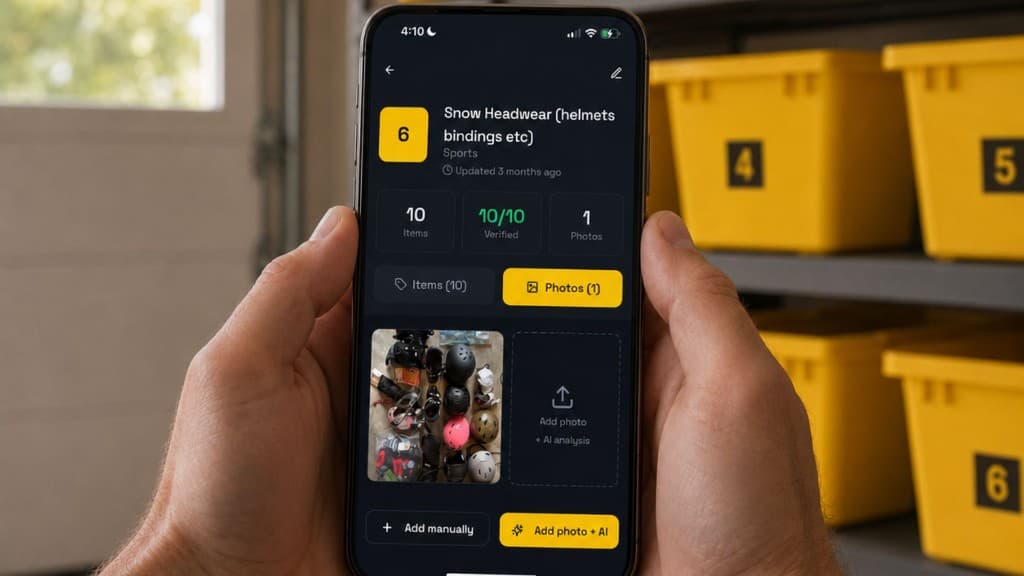
Step 6: Add Photos for Visual Proof
Photos make the system easier to trust.
A typed list is helpful, but a photo gives context. It shows the color of the gift bags, the type of extension cord, the size of the batteries, or the exact craft supplies you already own.
Photo-based inventory is especially helpful when item names are vague. You may not know whether to search for "cord," "charger," "adapter," or "black cable," but a photo can help you recognize the right item quickly.
A picture also helps other people in the household use the system without asking you.
Step 7: Check the Inventory Before You Shop
This is the habit that saves money.
Before buying a common duplicate item, search your storage first. Look up "batteries," "gift bags," "extension cord," "tape," "snow gloves," "glue," or whatever you are about to buy.
If it appears in your inventory, you know where to find it. If it does not, you can buy it with more confidence.
Search first. Shop second.
How Searchable Storage Helps Different Rooms
Duplicate buying does not happen in just one place. It happens anywhere items get hidden.
Kitchen and Pantry
Searchable storage helps with pantry backstock, baking supplies, party items, lunchbox extras, paper goods, and small appliances.
If your pantry has bins or deep shelves, record what is in the back so you do not keep buying duplicates of the same cans, spices, snack boxes, or storage bags.
Bathroom and Linen Closet
Bathroom duplicates often include shampoo, soap, toothpaste, cotton rounds, first-aid supplies, travel-size products, towels, and cleaning refills.
A simple inventory can help you separate true backstock from forgotten clutter.
Garage and Utility Spaces
Garages are one of the strongest use cases for searchable storage because they hold so many small, useful items.
Tools, cords, batteries, hardware, gloves, light bulbs, tape, car supplies, camping gear, and seasonal items can all become searchable with numbered bins and item records.
Kids' Rooms and Family Storage
Searchable storage helps families track toys, school supplies, seasonal clothing, sports gear, costumes, and hand-me-downs.
It also reduces the "we need another one" problem when the original is simply buried in a closet bin.
Holiday and Seasonal Storage
Holiday storage is full of items people forget they own until they buy them again.
A searchable inventory can help you find ornament hooks, lights, timers, candles, table linens, wreath hangers, gift wrap, party supplies, and seasonal decor before the next shopping trip.
Why Buying More Bins Is Not the First Fix
It is tempting to solve duplicate buying by buying more organizers.
But more bins do not automatically create more clarity. Sometimes they only create more hiding places.
Professional organizers often recommend editing and defining zones before buying more bins, because adding containers too early can hide clutter instead of solving it.
That is an important distinction.
A bin is useful when it has a job. A bin becomes a problem when it becomes a place to forget things.
Searchable storage makes bins more useful because it gives each container a memory. You are not just putting items away. You are creating a way to find them again.
How Totely Helps You Stop Buying Duplicates
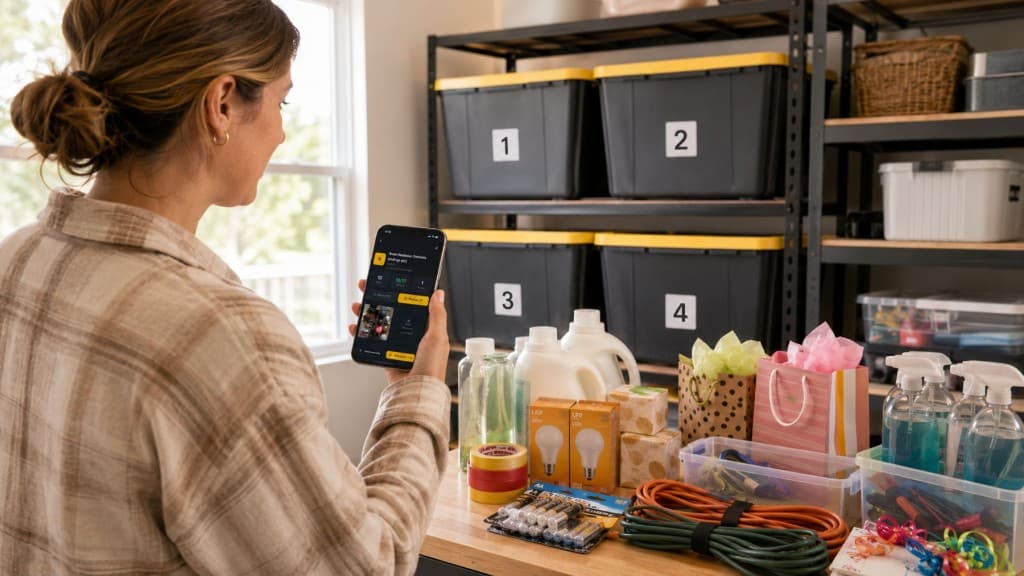
Totely is designed for the everyday moment when you are about to buy something and wonder, "Do I already have this?"
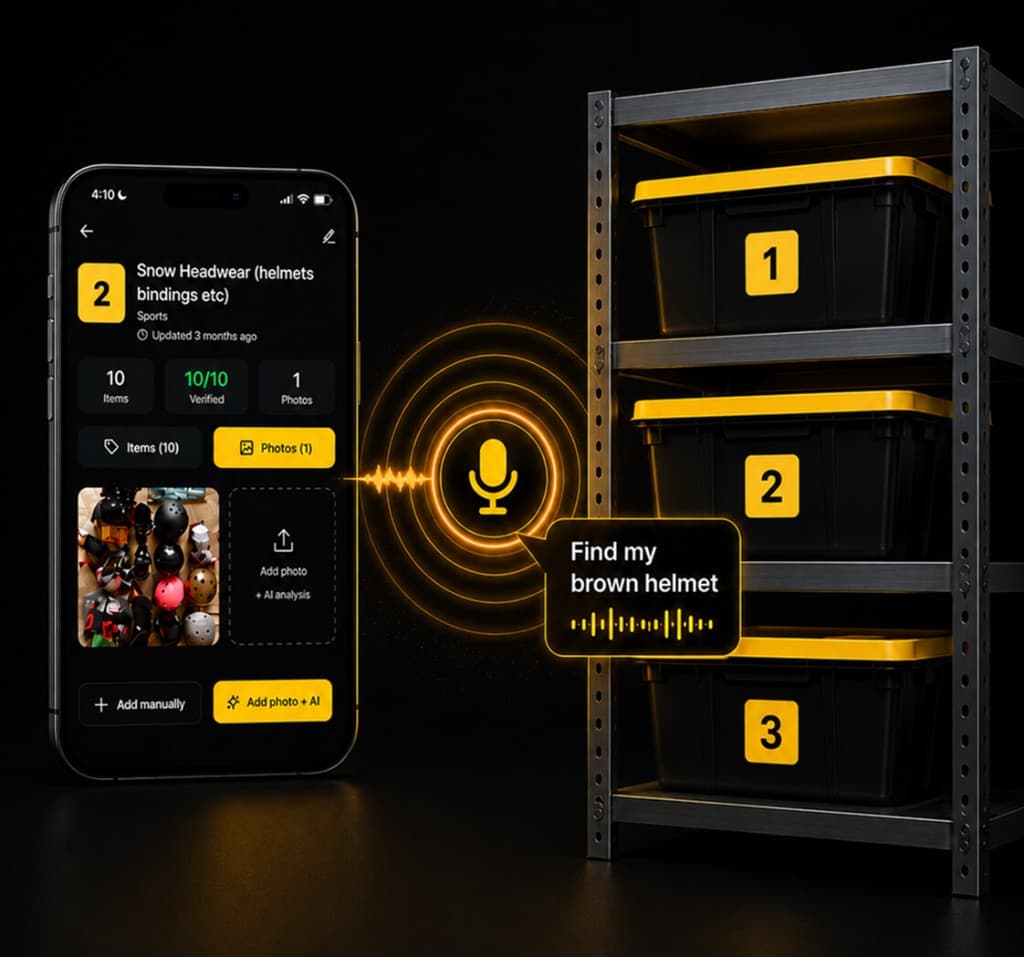
Instead of relying on memory or opening every container, Totely helps you make bins, totes, boxes, drawers, and hidden storage spots searchable so you can know what you already own before you rebuy.
With Totely, you can:
- Label a container with a simple number or numbered tag.
- Snap a photo of what is inside.
- Record key items so they are searchable.
- Add the location so you know where the container lives.
- Search before buying another duplicate.
That means the holiday bin, garage tote, craft drawer, under-bed box, storage ottoman, hall closet basket, and pantry backstock area can all become part of one searchable system.
Totely acts like a digital memory layer for your home.
Your containers hold the items. Totely helps you remember what is inside.
The "Duplicate-Proof" Storage Routine
The best system is the one you can keep up with in real life.
Use this simple routine:
- Before shopping, search your inventory for common duplicate items.
- When you buy something new, add it to the right container record.
- When you use the last of something, remove it or mark it low.
- When you move a container, update the location.
- When a bin gets messy, take a new photo.
That is it.
You do not need a perfect home inventory. You need a system that helps you answer the question:
Do we already have this, and where is it?
A Simple Starter Project: Batteries, Tape, and Light Bulbs
If you want the fastest win, start with one small household category.
Batteries, tape, and light bulbs are perfect because they are useful, easy to duplicate, and often scattered across the home.
Gather them from drawers, closets, garage shelves, toolboxes, holiday bins, and junk baskets. Put them into one numbered bin or one clearly defined area. Take a photo. Record the contents. Add the location.
Now the next time you are standing in the store wondering if you need batteries, you can check.
That small moment is the whole point.
Searchable storage does not just organize your home. It helps your home answer back.
Searchable Storage FAQs
What is searchable storage?
Searchable storage is a system that lets you search for stored items without opening every bin, box, tote, drawer, or cabinet. It usually combines numbered containers, item records, photos, and locations so you can quickly find what you already own.
How does searchable storage stop duplicate purchases?
Searchable storage helps you check what you already have before buying more. If you can search for "batteries," "gift bags," "extension cord," or "snow gloves" and see where the item is stored, you are less likely to buy another one by accident.
What items should I inventory first?
Start with items you commonly rebuy. Good first categories include batteries, tape, light bulbs, gift wrap, cleaning refills, kids' seasonal clothes, craft supplies, tools, hardware, and holiday decor.
Do I need to catalog everything I own?
No. You do not need to inventory every item in your home. Start with the items that are easy to forget, expensive to replace, seasonal, stored in bins, or often bought twice. The goal is findability, not perfection.
Are storage labels enough to prevent duplicates?
Labels help, but they are usually not enough on their own. A label like "Garage Supplies" or "Holiday Decor" tells you the category, but not the exact contents. A searchable inventory gives you item-level detail so you can find what is inside.
How can Totely help me make storage searchable?
Totely helps you label containers, photograph contents, record key items, add locations, and search later. It is designed for bins, totes, boxes, under-bed storage, closets, garage shelves, holiday decor, craft supplies, and other hidden household storage.
Make Your Storage Searchable Before You Buy Again
Duplicate buying does not mean you are bad at organizing.
It means your storage system is asking you to remember too much.
When items are hidden inside bins, closets, drawers, cabinets, and totes, your home needs more than labels. It needs a way to show you what you already own before you spend money on another duplicate.
Start with one category. Pick the items you rebuy most often. Put them in one place. Give the container a number. Take a photo. Record what is inside. Validate the habit with the One-Tote Test on that first duplicate-prone bin.
With Totely, your hidden storage can become searchable storage — so you can stop buying what you already own and start finding it faster.