Home Organization Gets Smarter: How AI Photo Cataloging Changes the Way You Store Everything
How AI photo cataloging changes home inventory—turn tote and bin photos into a searchable record without typing every item.
By Nick Stephan · Co-Founder, Totely
May 27, 2026 · Updated August 27, 2026 · 15 min read
Home Organization Gets Smarter: How AI Photo Cataloging Changes the Way You Store Everything
This article owns the AI photo cataloging angle for home inventory. For a no-spreadsheet how-to, see create a home inventory without a spreadsheet.
Most home organization advice starts the same way: sort your stuff, buy the bins, label everything, and put similar items together.
That is helpful — until real life happens.
The birthday candles get tossed into the holiday bin. The camping lantern ends up with garage tools. The extra sheets move from the linen closet to the storage ottoman. The winter gloves are technically "organized," but no one remembers which tote they landed in.
This is the gap traditional organizing does not always solve.
You can have neat shelves, matching bins, and a clean closet and still have no idea what is inside each container.
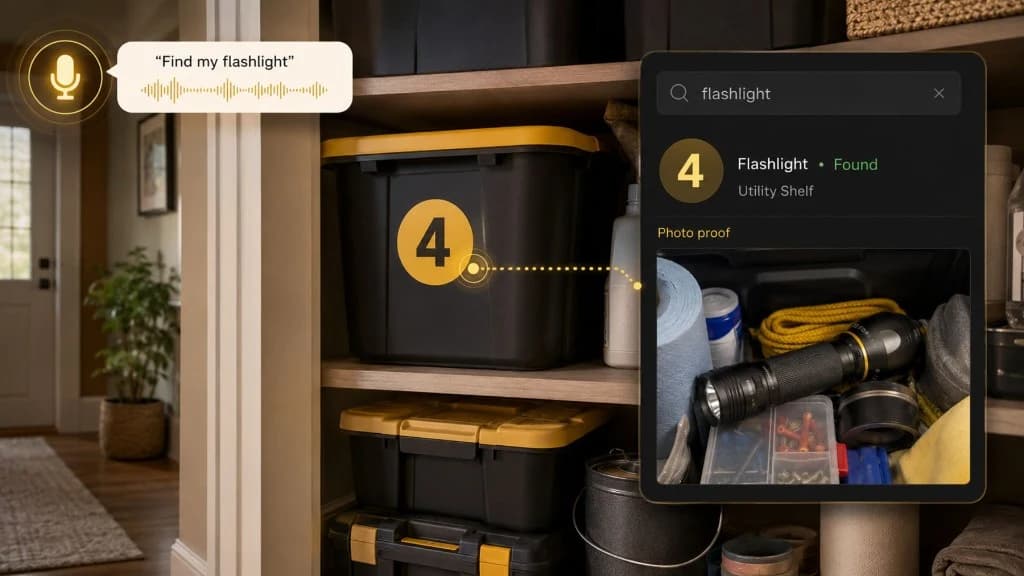
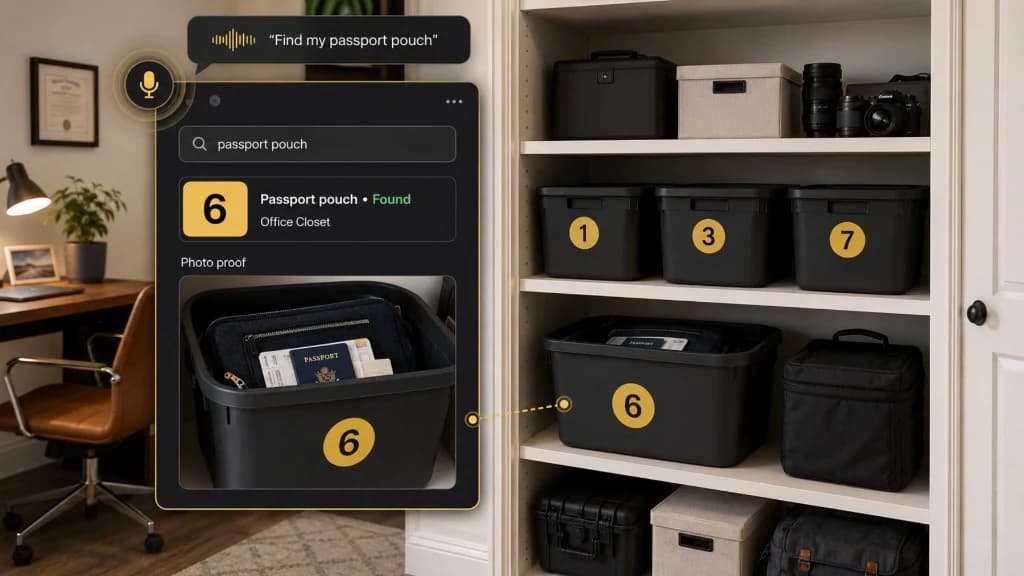
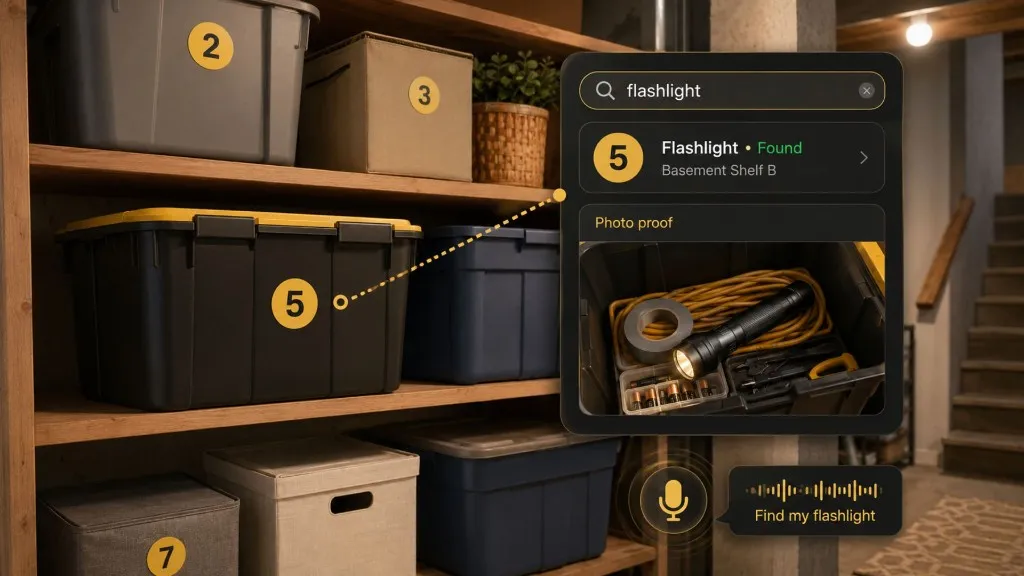
That is where AI photo cataloging changes the game. Instead of relying on memory, vague labels, or hand-typed lists, you can take a photo of what you are storing and turn that visual record into a searchable home inventory.
For a busy household, that is a big shift.
The goal is no longer just to put things away. The goal is to make your home easier to search later.
Quick Links
Why Traditional Home Organization Breaks Down
Traditional home organization is usually built around categories.
Holiday decor goes in one bin. Kids' clothes go in another. Tools go in the garage. Keepsakes go in the closet. Craft supplies go into drawers, baskets, or tubs.
That system works well in the beginning because everything has a place. The problem is that homes are not static.
People move things. Seasons change. Kids grow. Hobbies come and go. Closets get rearranged. A bin that started with one category quietly becomes a mixed container over time.
A label that says "Holiday Decor" may be technically true, but it does not tell you whether the tree lights, stocking hooks, gift tags, outdoor timer, or ornament hangers are inside.
That is the problem with most storage systems: they organize the container, not the contents.
A clean shelf can still hide a frustrating amount of uncertainty.
The Missing Layer: Household Memory
The real issue is not that people are bad at organizing. It is that most systems ask people to remember too much.
You are expected to remember what you stored, where you stored it, when you moved it, which bin changed, and whether someone else added something later.
That is a lot of mental load for normal household items.
A better system gives your home a form of digital memory. Instead of depending on future-you to remember every decision past-you made, the system keeps track of what is inside each bin, box, tote, drawer, or hidden storage spot.
This is especially helpful for things you do not use every day, such as seasonal decor, extra bedding, camping gear, baby clothes, tools, tax records, sentimental items, and spare household supplies.
Those items are not gone. They are just out of sight.
And when something is out of sight long enough, it becomes easy to lose track of.
What Is AI Photo Cataloging?
AI photo cataloging is the process of using photos to help identify, record, and organize items.
Instead of typing every item into a spreadsheet, you take a photo of what is inside a tote, box, bin, closet, drawer, or shelf. AI can then help recognize visible objects, suggest item names, and make the contents easier to search later.
For home storage, that matters because the hardest part of making an inventory is not usually the idea. Most people understand that an inventory would be useful.
The hard part is the data entry.
Typing every item takes time. Updating a spreadsheet feels tedious. Handwritten lists get lost or go out of date. Traditional labels run out of room almost immediately.
Photo cataloging lowers that friction. A quick image gives you a visual record, and AI can help turn that image into a searchable list.
It is the difference between saying, "I should really inventory this someday," and actually creating a usable record while you are already organizing.
Why Photos Make Home Inventory Easier
Photos are powerful because they capture context.
A written label might say "Winter Gear." A photo can show the gloves, hats, scarves, snow pants, boot warmers, and the specific blue coat you were trying to find.
That visual proof helps in three ways.
First, it makes stored items easier to recognize. Sometimes you do not remember the exact name of what you need, but you know it when you see it.
Second, it reduces duplicate buying. If you can search your stored items before heading to the store, you are less likely to buy another roll of tape, another pack of batteries, another extension cord, or another set of gift bags.
Third, it supports documentation. Home inventory experts often recommend photo or video records because they can help show what you own, especially for insurance-related situations. A recent home inventory guide notes that video can capture context across shelves, cabinets, walls, corners, and storage areas while creating a useful proof-of-ownership record.
That same logic applies to everyday organization.
A photo is not just a picture. It is a memory aid.
How AI Changes the Home Organization Workflow
The old home organization workflow looked like this:
- Sort items.
- Put them in bins.
- Add a label.
- Hope you remember where everything is.
The smarter workflow looks more like this:
- Sort items.
- Put them in the right container.
- Take a photo.
- Let AI help identify what is visible.
- Add the container location.
- Search later when you need something.
That final step is the important one.
The purpose of home organization is not just to make your space look calmer today. It is to make your home easier to use tomorrow, next month, and next season.
AI photo cataloging helps because it connects the physical item to a digital record. The tote still lives on the shelf, under the bed, in the closet, or in the garage — but now the contents are not trapped inside your memory.
They are searchable.
Where AI Photo Cataloging Helps Most
AI photo cataloging is most useful in the places where items are hidden, seasonal, mixed, or easy to forget.
Storage Totes and Bins
Totes are one of the biggest home organization traps because they make clutter disappear quickly.
That feels great at first. But later, every tote starts to look the same.
A numbered tote with a photo-based inventory is much easier to use than a vague label. Instead of opening five bins to find one item, you can search for the item and go straight to the right container.
This is especially useful for garage shelves, attic storage, basement bins, apartment closets, and storage units.
Seasonal Decor
Holiday and seasonal storage is a perfect use case because these items are packed away for most of the year.
By the time you need them again, it is easy to forget what you kept, what broke, what you donated, or what you bought on sale after the season ended.
Photo cataloging helps you track items like tree lights, ornaments, wreath hooks, outdoor timers, gift wrap, table linens, Halloween decor, birthday supplies, and seasonal candles.
Instead of opening every bin in November or December, you can search first.
Kids' Clothes and Hand-Me-Downs
Kids' clothing storage changes constantly.
Sizes, seasons, school needs, sports gear, shoes, coats, costumes, and special occasion clothes all move in and out of storage. A label that says "Kids Clothes" is rarely specific enough.
A photo-based system lets you record what is in each bin by size, child, season, or condition.
That can prevent one of the most frustrating parent storage moments: finding the right size after your child has already outgrown it.
Craft Supplies and Hobby Gear
Craft supplies are easy to overbuy because small items disappear into drawers, bins, and bags.
A searchable photo inventory helps you remember what you already own before buying more yarn, glue, paint, fabric, beads, paper, markers, or project tools.
This is where visual search can be especially helpful. You may not remember the exact name of a material, but a photo can help you recognize the color, shape, or project it belongs to.
Tools, Hardware, and Garage Items
Garage organization often fails because garage items do not always fit neat categories.
One bin may hold extension cords, tape, hooks, batteries, light bulbs, gloves, bungee cords, and spare parts. Another may hold camping gear, sports equipment, car supplies, and outdoor tools.
AI photo cataloging helps turn those mixed containers into a searchable system.
Instead of asking, "Which garage bin has the air pump?" you can search your inventory and find the tote, shelf, or box where it lives.
Keepsakes and Sentimental Items
Sentimental storage is different from everyday storage.
These items may not be used often, but they matter. Baby keepsakes, school papers, family photos, letters, cards, inherited items, wedding mementos, and childhood artwork deserve better than disappearing into a mystery box.
A photo record lets you remember what you saved without opening every container.
It also makes it easier to share, revisit, or eventually sort those items with more care.
Photo Cataloging Is Not Just for Insurance
Home inventory is often discussed in the context of insurance, and that is important. A clear record of belongings can help document what you own if something is damaged, lost, or stolen.
But photo cataloging is useful long before an emergency.
It helps with ordinary household questions:
Where are the extra sheets?
Do we still have gift bags?
Which bin has the winter gloves?
Where did I put the extension cord?
Did we save the 4T snow pants?
Which tote has the camping lantern?
Those are not dramatic questions. They are everyday friction points.
And they are exactly where smarter home organization can save time, money, and frustration.
Why "Subtle Storage" Needs Searchable Memory
One current home organization and small-space trend is subtle storage — storage that blends into furniture, benches, cabinets, ottomans, and everyday living areas instead of standing out as obvious storage.
That works beautifully from a design perspective.
But hidden storage creates one new problem: when storage becomes invisible, the contents can become invisible too.
A storage ottoman looks clean, but what is inside it? A bench with hidden storage keeps the entryway tidy, but did you store dog leashes, gloves, umbrellas, or guest blankets there? A cabinet may reduce clutter, but it can also become one more place where things disappear.
This is why hidden storage and photo cataloging work so well together.
The furniture hides the items visually. The inventory keeps them findable.
How to Start a Photo-Based Home Inventory
You do not need to catalog your entire home in one weekend.
Start with the area that causes the most frustration. That might be the garage, a closet, a storage unit, the attic, the basement, under-bed bins, or a few apartment storage boxes.
The best first project is usually one container you already open too often.
Step 1: Choose One Storage Zone
Pick one place where things disappear.
Good starting points include a holiday bin, kids' clothes tote, craft supply drawer, garage shelf, linen closet, storage ottoman, under-bed container, or moving box.
The goal is not to finish your whole home. The goal is to prove the system works.
Step 2: Group Items Before You Photograph
A photo is more useful when the contents are visible.
Before taking the picture, quickly group similar items together. Put smaller items on top when possible. Face labels outward. Open pouches, bags, or small boxes if they contain important items.
You do not need a styled photo. You just need a clear record.
Step 3: Take a Useful Photo
Take the photo from above or slightly angled so the contents are easy to see.
For deep totes, you may want one photo of the top layer and one photo after lifting the top items. For shelves or closets, take a wider photo first, then close-ups of important containers.
The point is to make future searching easier.
Step 4: Add Simple Item Names
AI can help identify visible items, but your own words still matter.
Use the names your household would actually search for. If your family says "snow gloves," use that phrase. If everyone calls something "camping bin," "guest sheets," or "birthday box," include those words.
A good home inventory should match how real people search, not how a store would categorize the item.
Step 5: Add the Location
A searchable item list is helpful. A searchable item list with location is much better.
Add where the container lives:
Garage shelf, top left
Under bed, right side
Hall closet, top shelf
Storage ottoman, living room
Basement rack, second shelf
Storage unit, back wall
When your inventory can tell you both what and where, the system becomes much easier to trust.
Step 6: Update When Things Change
The best system is the one you will actually maintain.
If you remove something permanently, update the record. If you add new items, snap another photo. If you move a tote to a different room, update the location.
Do not aim for perfection. Aim for a system that stays close enough to real life that you still believe it.
How Totely Makes Hidden Storage Searchable
Totely is built for the exact problem that traditional home organization leaves behind: knowing what is inside every tote, box, bin, or hidden storage spot without opening it.
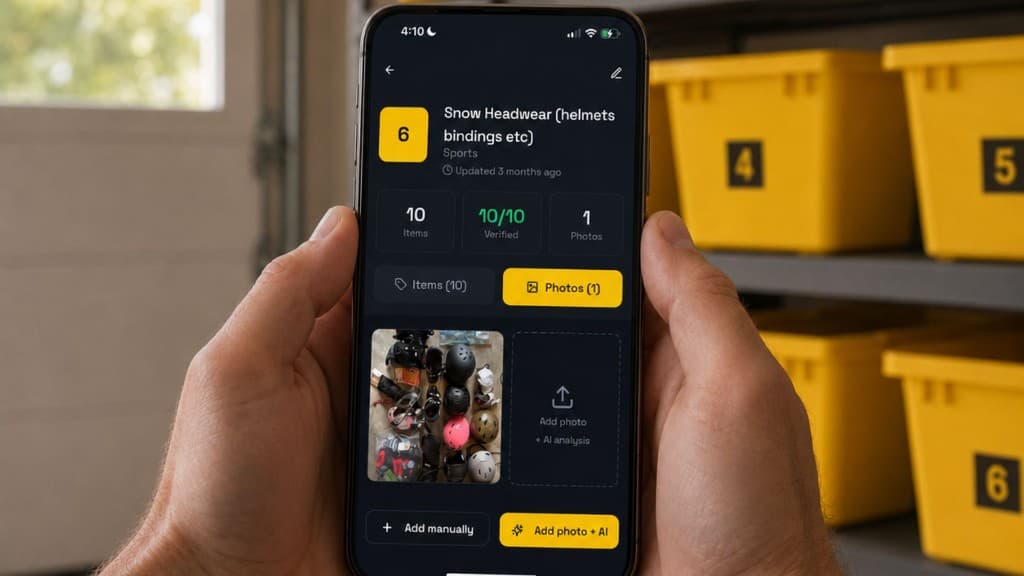
Instead of relying only on broad labels, Totely helps you create a searchable record connected to the physical container. For the full product view, see Totely as a home inventory app for stored belongings.
Here is the simple Totely flow:
- Label the container with a clear numbered tag.
- Snap a photo of what is inside.
- Record the contents so the items are searchable.
- Add the location so you know where the container lives.
- Search later instead of opening every bin.
That means your garage totes, closet bins, under-bed boxes, storage ottomans, seasonal containers, craft drawers, and moving boxes can all become part of one searchable system.
Totely acts like a digital memory layer for your home.
Your containers still do the physical storage. Totely helps you remember what is inside.
The Difference Between Organized and Searchable
A home can look organized and still be hard to use.
Matching bins can hide clutter. Pretty labels can hide missing details. Hidden furniture storage can hide items so well that you forget they exist.
Searchable home organization goes one step further.
It answers the questions that matter later:
- What do I own?
- Where did I put it?
- Which container is it in?
- Can I confirm it before opening anything?
- Can someone else in my household find it too?
That is the difference between a storage system that looks good and a storage system that works.
The future of home organization is not just prettier bins.
It is storage you can search.
Home Organization FAQs
What is AI photo cataloging for home organization?
AI photo cataloging uses photos to help identify, record, and organize household items. For home organization, it can help turn bins, boxes, totes, drawers, and shelves into searchable records so you can find stored items later without opening everything.
How is photo cataloging different from regular labels?
Regular labels usually describe a broad category, such as "Holiday Decor" or "Garage Tools." Photo cataloging shows what is actually inside the container and can help create a more detailed inventory. A label helps identify the bin, while a photo-based record helps identify the contents.
Do I need to inventory every item in my home?
No. Start with the items you actually search for or forget about. Seasonal decor, kids' clothes, craft supplies, tools, camping gear, keepsakes, documents, and extra household supplies are good starting points. The goal is not perfection — it is findability.
Is a photo-based home inventory useful for insurance?
Yes, a photo or video record can support proof of ownership and help document what you own. It is also useful for everyday organization because it helps you remember what is stored in bins, closets, drawers, and hidden spaces.
How can Totely help with home organization?
Totely helps you label containers, photograph contents, record what is inside, add locations, and search later. It is designed to make bins, boxes, totes, under-bed containers, closet storage, and hidden household storage easier to find and maintain.
What should I catalog first?
Start with one high-friction storage area. Choose the bin, tote, box, drawer, or closet shelf that you open too often when searching for something. Once one container becomes searchable, it is easier to repeat the process throughout your home.
Make Home Organization Searchable
Good home organization should do more than make your space look tidy today.
It should help you find what you need tomorrow.
AI photo cataloging gives your storage system a better memory. Instead of depending on vague labels or trying to remember every container, you can create a visual, searchable record of what is inside your home.
Start small. Pick one tote, one closet bin, one under-bed box, or one hidden storage spot. Take a photo. Record what is inside. Add the location — or run a single-tote starter before expanding photo cataloging.
With Totely, your bins, boxes, totes, and hidden storage can become searchable — so you can stop digging and start finding.