How to Organize Kids Clothes by Size in Storage Totes
Organize kids clothes by size and season in storage totes—so you can find the next size and avoid buying clothes you already stored.
By Steve Watts · Co-Founder, Totely
June 4, 2026 · Updated August 27, 2026 · 15 min read
Kids' clothes move fast.
One week the 2T pajamas fit. The next week they are too short. The 3T shorts are perfect in May and forgotten by August. School uniforms multiply in the laundry. Rain boots hide in the back of the closet. Snow pants appear after the first storm, but only after you have already bought another pair.
If you have more than one child, hand-me-downs add another layer. You are not just storing clothes. You are trying to remember which size, which season, which child, what condition, and whether each item is worth saving for later.
That is why the best way to organize kids clothes by size is not to toss everything into one "kids clothes" tote.
A better system sorts clothes by size first, then season, child, condition, category, future usefulness, and hand-me-down flow. That way, when you need 4T winter coats, size 6 school uniforms, backup daycare clothes, or outgrown shoes for the next child, you can find them before the child has already moved into the next size.
This post is focused on toddler, preschool, and school-age clothes. Baby clothes have their own special storage needs—see How to Store Baby Clothes for the Next Child—but once kids start moving through pajamas, uniforms, activities, shoes, sports gear, and seasonal layers, the system needs to work a little harder.
Quick links
Start with size first
Size should be the foundation of your kids' clothing storage system.
When you are looking for 3T shorts, you do not want to open a tote full of size 6 pajamas, baby sleep sacks, and outgrown shoes. When school starts, you do not want to dig through winter coats to find uniforms that fit right now.
Start by sorting clothes into clear size ranges.
For younger kids, that might look like:
2T
3T
4T
5T
For preschool and school-age kids, it might look like:
Size 5–6
Size 7–8
Size 10–12
Youth small / medium / large
If you have a lot of clothes, use one tote per size. If you have fewer items, combine close sizes but keep the contents clearly separated inside the tote.
For example:
Tote 1: 2T
Tote 2: 3T
Tote 3: 4T and 5T
Tote 4: Size 6–8
Tote 5: Size 10–12
This helps you avoid the classic hand-me-down problem: finding the right size after the younger child has already outgrown it.
A tote labeled "Kids Clothes" is too broad. A tote labeled by size gives future-you a real starting point.
Size-first is a strong foundation, but it is not the only workable physical system. Larger collections may also use size plus season bags inside each tote, or type-plus-size grouping (for example school clothes by size, then pajamas by size). Choose the method that fits your household. Totely adds the digital memory layer—so whichever grouping you use, the tote stays searchable.
Add season so clothes are useful later
Size is the first layer. Season is the second.
Kids grow quickly, and seasonal clothes have a short window. A pair of 3T shorts may be useful only if the child is in 3T during warm weather. Snow pants, rain boots, winter coats, holiday outfits, and sports jerseys are even more time-sensitive.
Inside each size group, separate clothes by season.
A simple seasonal system could be:
Warm weather: shorts, T-shirts, swimsuits, sandals, lightweight pajamas.
Cold weather: winter coats, snow pants, fleece layers, hats, gloves, boots.
School year: uniforms, pants, cardigans, school shoes, backup daycare clothes.
Special occasions: holiday outfits, dress clothes, recital clothes, picture day pieces.
Activities: sports jerseys, dance leotards, practice gear, cleats, team shirts.
You do not need fancy dividers. Smaller bags inside a tote can work well. One bag can hold 3T shorts and summer shirts. Another can hold 3T pajamas. Another can hold winter layers or activity clothes.
This is especially helpful for clothes you only need during specific moments, like snow pants before the first storm, rain boots during spring, or holiday outfits before family photos.
When size and season are stored together, the tote becomes much more useful.
Sort by child when hand-me-downs matter
If you are storing clothes for multiple kids, sort by child when it helps.
This does not mean every child needs a completely separate storage system. But it does help to note where clothes came from and who they are likely going to next.
For example:
Tote 2
Size: 3T
Season: Warm weather
From: Older child
For: Younger child next summer
Contents: 3T shorts, T-shirts, lightweight pajamas, sandals
This kind of note helps when kids have different builds, preferences, school requirements, or activity needs.
One child's winter coat might not fit another child in the same size. A dance leotard may be saved for one child but not needed for another. Sports jerseys may be tied to a team, season, or league. School uniforms may only be useful if the next child attends the same school.
A child-based note also helps with sentimental or special items. Maybe one holiday outfit is saved because it was worn by both kids. Maybe one sports jersey is not going into the regular hand-me-down flow because it belongs in a memory box.
Check condition before storing
Before clothes go into a storage tote, do a quick condition check.
Kids' clothes work hard. They get stained, stretched, muddy, painted on, grass-marked, patched, outgrown, and loved. That does not mean everything has to be perfect. It just means the condition should be clear before you store it.
Use simple condition groups:
Ready to wear: clean, useful, and worth saving.
Play clothes: stained or worn but still comfortable.
School or activity only: uniforms, jerseys, dance leotards, practice gear, or specific-use pieces.
Needs attention: items to wash, mend, stain-treat, or find a missing button.
Pass along or donate: useful clothes you do not need to store.
Not worth storing: damaged items that will only create more work later.
This avoids the disappointing moment of opening a tote and realizing half the clothes need decisions before anyone can wear them.
Condition matters most for items like winter coats, snow pants, rain boots, outgrown shoes, school uniforms, and backup daycare clothes. These are the pieces you often need quickly. If the zipper is broken, the boots leak, or the uniform is stained beyond use, it is better to know now than on a school morning.
This step is not about guilt. It is about saving your future self time.
Group clothes by category
Once clothes are sorted by size, season, child, and condition, group them by category inside the tote.
This keeps the tote from turning into a fabric pile.
Helpful categories include:
Pajamas: 2T pajamas, footed pajamas, warm sleepers, lightweight pajama sets.
Everyday clothes: shirts, shorts, pants, leggings, sweatshirts.
School clothes: school uniforms, polos, cardigans, school pants, backup daycare clothes.
Outerwear: winter coats, rain jackets, snow pants, hats, gloves.
Shoes: rain boots, sandals, sneakers, outgrown shoes worth saving.
Activities: sports jerseys, dance leotards, practice clothes, team gear.
Special: holiday outfits, dress clothes, picture day outfits, recital pieces.
Small categories can go into smaller bags inside the tote. Shoes can go in a separate pouch. Seasonal accessories like gloves or socks can go into a small zip bag so they do not disappear to the bottom.
For example, a 4T tote might include one pouch for pajamas, one stack of everyday clothes, one bag for school or daycare backups, and one separate section for winter gear.
A little structure inside the tote makes the whole system easier to use later.
Think about future usefulness
Not every outgrown item is equally useful.
Some clothes are clear winners: a clean winter coat, barely worn rain boots, sturdy school uniform pieces, good-quality pajamas, a dance leotard in great condition, or sports jerseys that may be needed again.
Other items are less certain. A holiday outfit may be adorable but only useful for one short window. Outgrown shoes may be worth saving if they are in good shape, but not if they are worn down or uncomfortable. Backup daycare clothes are useful, but only if the size and season still make sense.
Ask a few practical questions before storing:
Will another child likely wear this?
Will the season line up?
Is it comfortable and easy to wash?
Is it in good enough condition to use again?
Is it specific to a school, team, class, or activity?
Would I be happy to find this later?
This keeps storage totes from filling with things you technically saved but will not actually use.
Future usefulness is not only about practicality. Some clothes may be worth keeping because they matter. A favorite holiday outfit, first school uniform, recital leotard, or championship jersey may belong in a keepsake area instead of the hand-me-down tote.
That distinction matters.
Useful clothes should be easy to wear again. Sentimental clothes should be easy to protect and remember.
Plan the hand-me-down flow
A good kids' clothes system should move with your family.
The hand-me-down flow is the path clothes take from one child to the next, or from active use to storage, donation, resale, or keepsake.
A simple flow might look like this:
Current size: clothes in drawers or closets.
Next size up: easy-access tote or shelf.
Future sizes: stored by size and season.
Outgrown but useful: sorted into the next child's future tote.
Outgrown and not needed: donate, pass along, sell, or recycle.
Sentimental: keepsake box or memory tote.
The most useful part of this system is the "next size up" area.
If a child is currently wearing 3T, keep 4T easy to reach. If school starts soon, keep the next size of uniforms visible. If winter is coming, make sure snow pants, rain boots, and winter coats are not buried behind summer clothes.
Hand-me-down storage works best when it is not all long-term storage. Some of it should be ready to rotate into daily life.
That way, you can pull the next size before the current one stops fitting.
See the baby clothes storage use case for infant and newborn storage, or the Home Storage Organization Guide for the broader system.
Number every storage tote
Once the clothes are sorted, number each tote.
Use large, simple numbers:
1
2
3
4
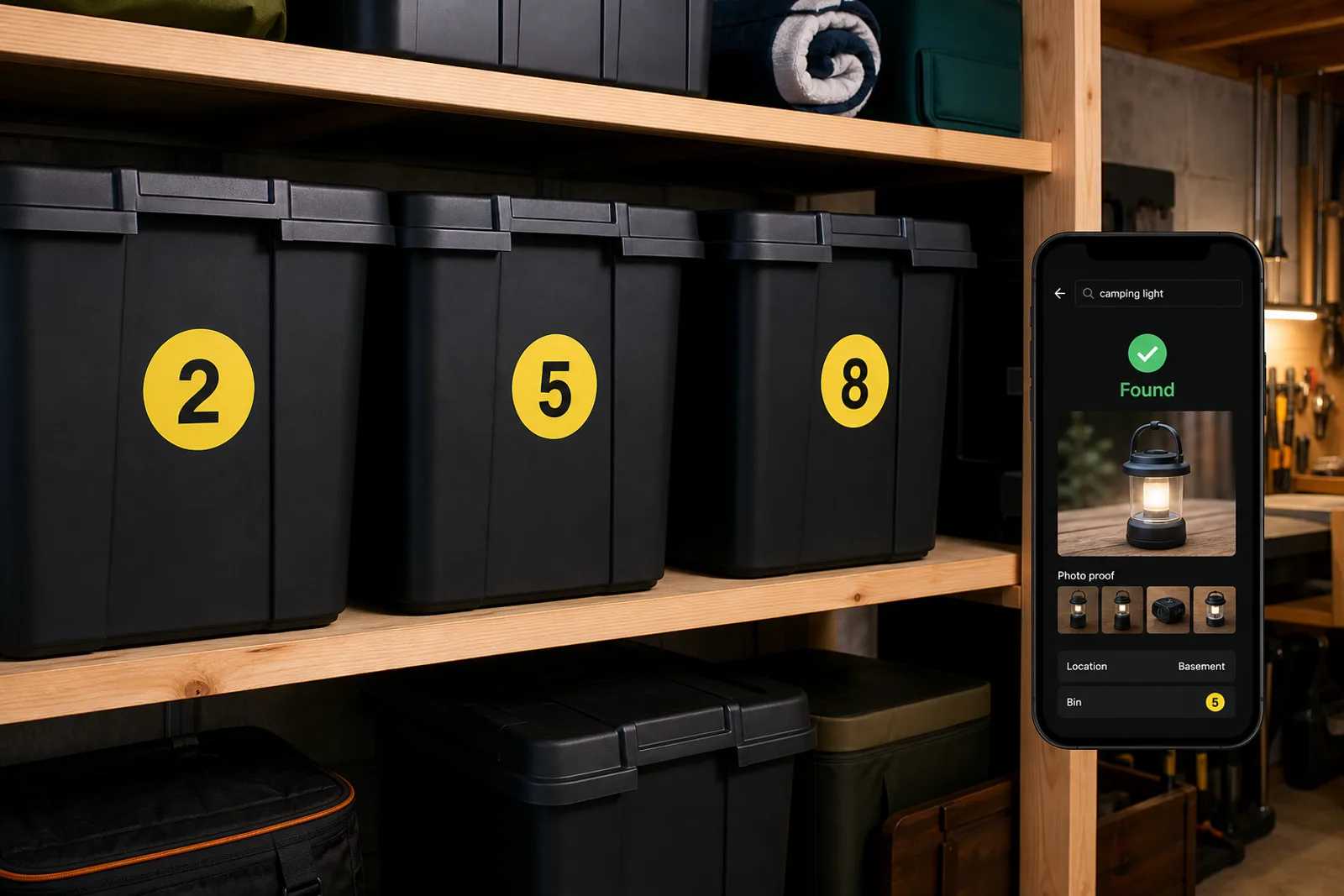
The number gives the tote a stable identity. The size, season, and contents can change, but the tote number stays the same. That is the same label storage bins approach Totely uses across kids’ closets, garages, and seasonal shelves.
For example:
Tote 1
Size: 2T
Contents: 2T pajamas, play clothes, backup daycare clothes, rain boots
Location: Hall closet, top shelf
Tote 2
Size: 3T
Contents: 3T shorts, T-shirts, lightweight pajamas, sandals, holiday outfit
Location: Nursery closet, lower shelf
Tote 3
Size: 4T–5T
Contents: winter coats, snow pants, school uniforms, sports jerseys
Location: Garage shelf, second row
Tote 4
Size: Size 6–8
Contents: school uniforms, dance leotards, outgrown shoes, cold-weather layers
Location: Primary bedroom closet
This is much more helpful than a stack of totes that all say "Kids."
A number makes the tote easy to identify. The record behind the number tells you what is inside.
Save the tote location clearly
A kids' clothes storage system only works if you can find the tote later.
Write the location in a way someone else could understand.
Instead of:
Closet
Use:
Hall closet, top shelf
Instead of:
Garage
Use:
Garage shelf, second row, right side
Instead of:
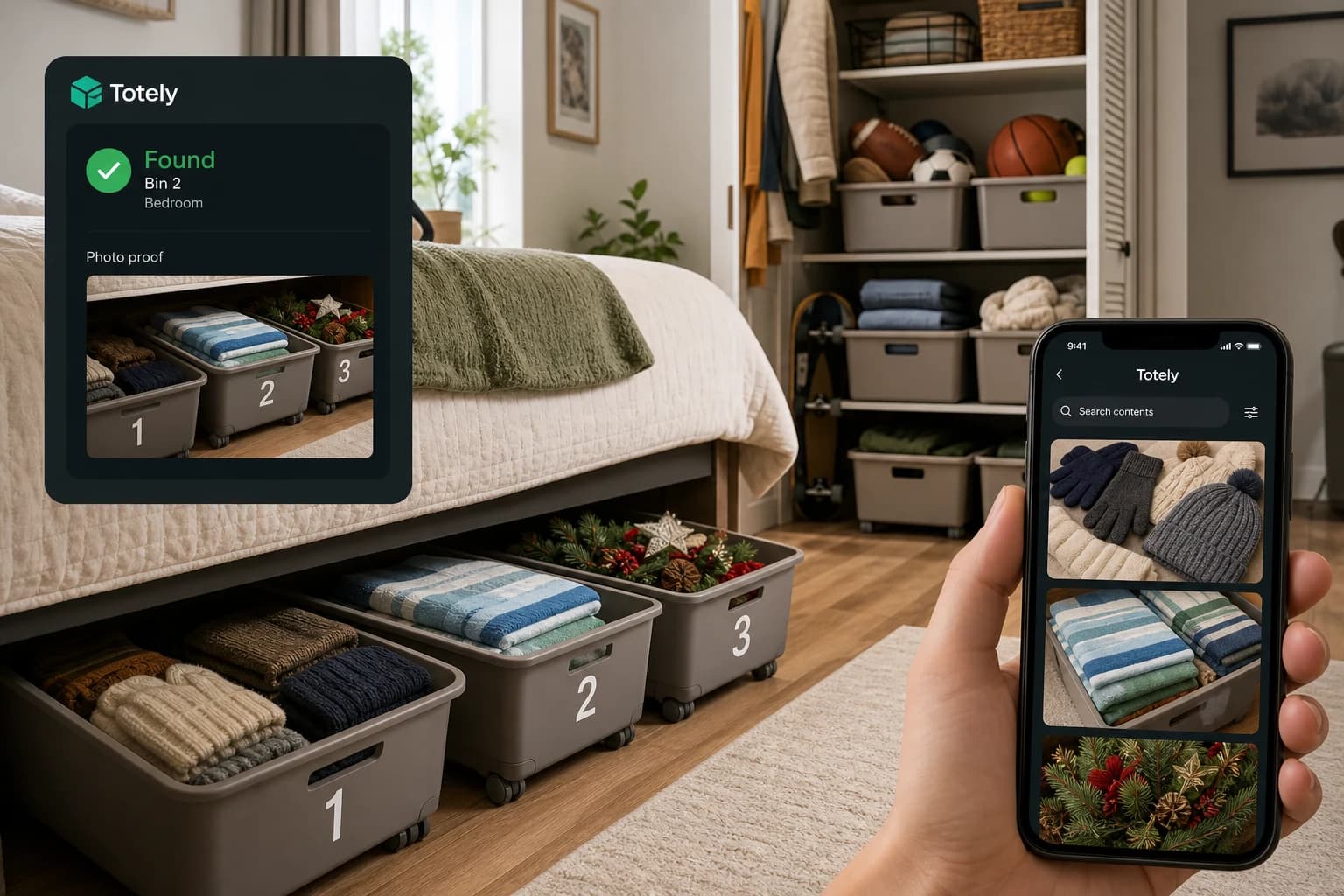
Under bed
Use:
Guest room bed, left side
This matters when clothes are stored in multiple places. You may have next-size clothes in a bedroom closet, future sizes in the garage, keepsakes in a hallway closet, and seasonal outerwear in a mudroom bin.
If you do not save the location, the system still depends on memory.
And memory has enough to do when you are parenting.
How Totely helps you find kids clothes later
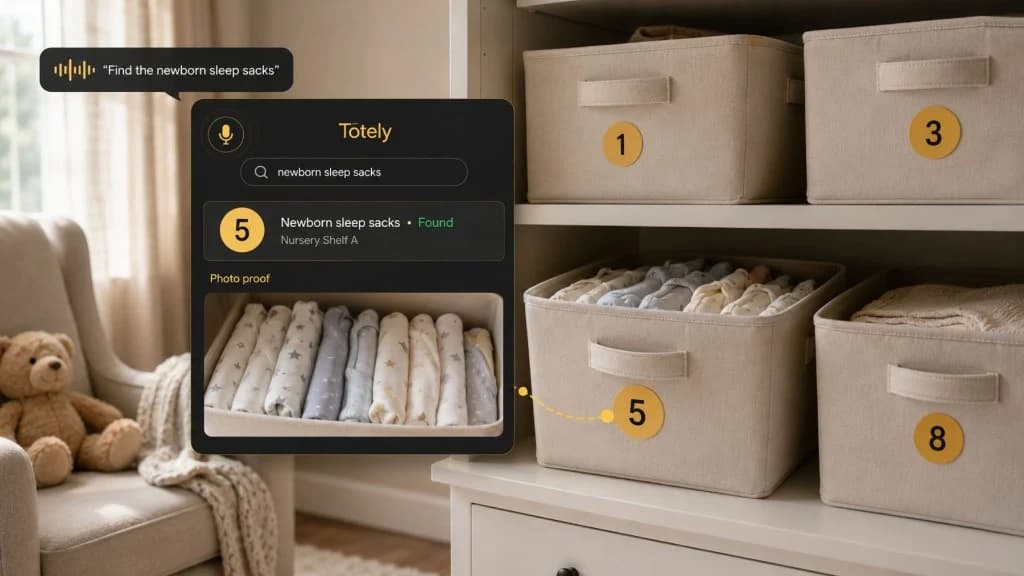
Totely is useful because kids' clothes storage has a lot of tiny details. Track sizes and seasons in a searchable family inventory so the next size is one search away.
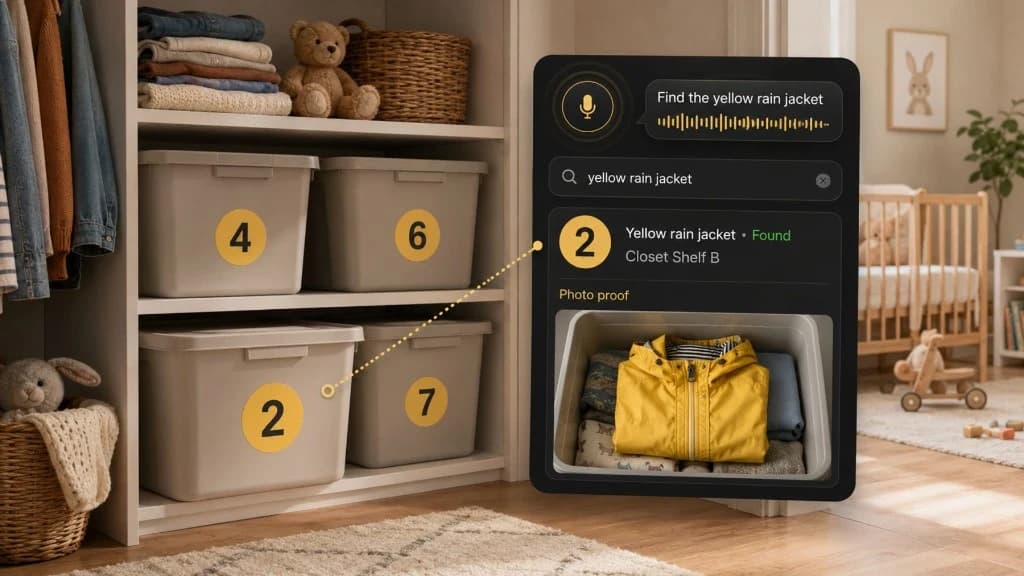
You may remember saving snow pants, but not whether they were 4T or size 6. You may know there are rain boots somewhere, but not whether they are in the garage, closet, or mudroom. You may think you saved school uniforms, sports jerseys, or dance leotards, but not which tote they landed in.
With Totely, you can make kids' clothing totes searchable without manually typing every item into a long list.
Here is the simple flow:
Number the tote
so it has a clear identity.
Snap a photo
before you close the lid.
Let AI build the item list
from what it can see.
Review or edit if needed
so the words match how your household searches.
Save the tote location
so you know where it lives.
Search naturally later
for things like "2T pajamas," "3T shorts," "school uniforms," "rain boots," "snow pants," "sports jerseys," or "holiday outfit."
Use photo proof
to confirm what is inside before opening the tote.
That means you can find the right size, season, or hand-me-down faster—and check what is already stored before buying another coat, pair of boots, or school uniform you may already own.
Totely works as the digital memory layer behind your physical storage. The totes hold the clothes. Totely helps you remember what is inside and where it is.
Browse storage templates and checklists for a printable starting point.
A kids' clothes storage system you can copy
Here is a practical structure you can adapt.
A Kids' Clothes Storage System You Can Copy
Tote 1
2T Everyday and Pajamas — 2T pajamas, play clothes, backup daycare clothes, extra socks, rain boots
Tote 2
3T Warm Weather — 3T shorts, T-shirts, lightweight pajamas, sandals, swimsuits, summer daycare backups
Tote 3
4T–5T Cold Weather — winter coats, snow pants, fleece layers, hats, gloves, rain jacket
Tote 4
School and Activities — school uniforms, sports jerseys, dance leotards, practice clothes, picture day outfits
Tote 5
Shoes and Outerwear — rain boots, outgrown shoes worth saving, winter boots, dress shoes, seasonal jackets
Tote 6
Special and Keepsake — holiday outfits, recital pieces, first school uniform, favorite jersey, sentimental items
Kids clothes storage FAQs
What is the best way to organize kids clothes by size?
The best way to organize kids clothes by size is to sort by size first, then season, child, condition, and category. Use a separate tote for each size range when possible, or separate nearby sizes inside one tote with bags or dividers.
Should I store kids clothes by size or season?
Start with size, then sort by season inside each size group. Size helps you find what fits, and season helps you know whether the clothes will be useful when the child reaches that size.
How do I organize hand-me-down clothes?
Organize hand-me-down clothes by size, season, condition, and the child they are likely going to next. Keep the next size up easy to access, and store future sizes in numbered totes with photos and saved locations.
What kids clothes should I save?
Save clothes that are clean, useful, comfortable, and likely to be worn again. Good candidates include pajamas, school uniforms, winter coats, rain boots, snow pants, sports jerseys, dance leotards, backup daycare clothes, and special outfits in good condition.
How do I keep kids clothes from getting mixed up in storage totes?
Use one tote per size range when possible. Inside each tote, group clothes by category, such as pajamas, school clothes, outerwear, shoes, and special outfits. Add a tote number, take a photo, let AI create the first item list, and save the location so the contents are easy to find later.
How can Totely help with kids clothes storage?
Totely helps you number each tote, snap a photo, let AI build the item list, review or edit details, save the tote location, and search naturally later. Photo proof shows what is inside so you can find the right size or season without opening every tote.
Make the next size easier to find
Kids grow quickly, and storage systems need to keep up.
If you organize kids' clothes by size, season, child, condition, category, future usefulness, and hand-me-down flow, you can find what you need before the window passes.
Start with one tote before the next size disappears into the back of a closet. Choose one size, add the pajamas, shorts, uniforms, coats, rain boots, snow pants, activity clothes, shoes, and special outfits that belong there, then number the tote, snap one photo, and save the location.
With Totely, your kids' clothing storage can become searchable, so the right size is easier to find when your child is ready for it.