How to Store Baby Clothes for the Next Child
Learn how to store baby clothes by size, season, condition, and sentiment so they stay protected and easy to find for the next child.
By Steve Watts · Co-Founder, Totely
June 4, 2026 · Updated June 5, 2026 · 14 min read
Baby clothes are tiny, but somehow they take up a lot of space.
The newborn sleep sacks, onesies, footed pajamas, baby hats, tiny socks, swaddles, winter bunting, holiday outfit, and special coming-home outfit all pile up quickly. Some pieces are practical. Some are sentimental. Some are stained but still useful for messy days. Some are so small and sweet that deciding what to do with them feels unexpectedly hard.
If you are saving baby clothes for the next child, the goal is not to make perfect decisions about every single item right now.
The goal is to store baby clothes in a way that keeps them protected, organized, and easy to find when you need them again.
That means sorting by size, season, condition, category, sentimental value, and future usefulness before everything goes into totes. Then each tote needs a clear number, a photo, a simple item record, and a location you can actually remember later.
Because the most frustrating baby clothes storage problem is not usually putting the clothes away.
It is opening a tote months or years later and realizing the newborn pajamas are mixed with 18-month summer clothes, the tiny socks are scattered everywhere, and the special outfit you wanted is somewhere in a mystery bin.
Quick links
Start with what you want to save
Before you fold a single onesie, decide what you are actually saving for.
You may be storing baby clothes for a future child, a family member, a keepsake box, a memory quilt, resale, donation later, or simply because you are not ready to decide yet. All of those are valid.
Baby clothes are different from ordinary household storage because they often carry memory. A tiny newborn hat is not just fabric. A coming-home outfit is not just an outfit. A holiday sleeper might remind you of a whole season of life.
So start gently.
Make broad groups first:
Save for next child: useful pieces you would happily use again.
Keepsake: sentimental pieces you want to protect even if they may not be worn again.
Donate or pass along: items you are ready to let someone else use.
Recycle or discard: items too worn, damaged, or stretched out to save.
Sort baby clothes by size first
Size is the most important sorting category when storing baby clothes for a future child.
When you need newborn clothes, you do not want to dig through 12-month rompers. When the baby grows into 6–9 months, you do not want to discover the right size after the season has already passed.
Start with size groups that match how babies actually move through clothing.
Helpful size groups include:
- Newborn
- 0–3 months
- 3–6 months
- 6–9 months
- 9–12 months
- 12–18 months
- 18–24 months
- 2T and up
If you have a lot of clothes, keep each size in its own tote or packing cube. If you have fewer pieces, combine nearby sizes but make the label clear.
For example:
Tote 1: Newborn and 0–3 months
Tote 2: 3–6 months
Tote 3: 6–12 months
Tote 4: 12–24 months
The mistake to avoid is packing by vague categories like "Baby Clothes" or "Tiny Stuff." That might make sense today, but it will not help much when you are looking for 0–3 month footed pajamas later.
A size-based system gives future-you a starting point.
For older sizes, see How to Organize Kids Clothes by Size in Storage Totes.
Separate clothes by season
After size, sort by season.
This matters because baby clothing is both size-sensitive and weather-sensitive. A winter bunting in 0–3 months may be perfect for one baby and completely unusable for another depending on the season they are born.
Seasonal sorting helps you quickly see what is actually useful.
For example, within the newborn and 0–3 month group, separate:
Cold-weather items: winter bunting, fleece sleepers, hats, mittens, warm footed pajamas.
Warm-weather items: short-sleeve onesies, lightweight rompers, sun hats, breathable swaddles.
All-season basics: simple onesies, socks, soft pants, neutral sleepers, everyday bibs.
This does not need to be fussy. You can use smaller bags inside the tote or simple folded stacks.
A practical tote record might look like this:
Tote 1
Size: Newborn and 0–3 months
Season: Mixed
Contents: newborn sleep sacks, white onesies, footed pajamas, baby hats, tiny socks, lightweight swaddles, winter bunting
Location: Nursery closet, top shelf
That one record tells you far more than "Baby Clothes."
Sort by condition without guilt
Condition matters because not every baby item needs to be stored the same way.
Some pieces are ready for a future baby. Some are play clothes. Some need stain treatment. Some are keepsakes. Some are not worth storing again.
Before packing, check each item for:
- Stains
- Odors
- Worn snaps
- Loose elastic
- Missing buttons
- Stretched necklines
- Pilling or rough fabric
- Broken zippers
- Age-yellowing on white or light clothing
For baby clothes, the practical version is simple: wash and fully dry what you plan to store, avoid damp storage areas, and give delicate pieces a little extra protection. Clean, dry clothing is much less likely to come out of storage smelling musty or needing another full round of decisions.
Use condition groups like:
Ready to wear: clean, useful, and easy to reuse.
Play clothes: stained or worn but still comfortable.
Needs attention: items to stain-treat, repair, or wash again.
Keepsake only: sentimental pieces you want to preserve.
Do not store: items too damaged to be useful.
This keeps future-you from opening a tote and finding a pile of clothes that still need decisions.
Group baby clothes by category
Once size, season, and condition are handled, group the clothes by category inside each tote.
This makes it easier to use the tote later without turning it into a laundry pile.
Within each size group, organize categories like:
- Onesies
- Footed pajamas
- Sleep sacks
- Swaddles
- Pants and leggings
- Baby hats
- Tiny socks
- Bibs and burp cloths
- Holiday outfits
- Outerwear
- Special outfits
You can use small fabric bags, clear pouches, packing cubes, or simple folded stacks. The container inside the tote matters less than the consistency.
For example, a newborn tote might have one soft bag for socks and hats, one stack of onesies, one stack of footed pajamas, and one small pouch for swaddles. A 6–12 month tote might separate everyday clothes from holiday outfits and outerwear.
Tiny items deserve special attention. Baby hats, mittens, socks, and little accessories disappear quickly when tossed loosely into a large tote. Put them in a smaller bag or pouch before they go into storage.
That way, when you search for "tiny socks" or "baby hats" later, you know they are not floating around at the bottom of a bin.
Protect sentimental baby clothes
Some baby clothes are not being saved because they are practical.
They are being saved because they matter.
The special coming-home outfit, first holiday outfit, handmade sweater, hospital hat, tiny shoes, or favorite swaddle may deserve a different kind of storage than everyday onesies.
Separate sentimental items from regular hand-me-down storage. This prevents special pieces from getting lost, overhandled, or mixed into everyday use by accident.
For keepsakes, consider:
- Washing or cleaning before storage when safe for the fabric
- Letting items dry completely
- Wrapping delicate pieces in soft tissue if needed
- Storing flat instead of tightly packed
- Avoiding overstuffed bins
- Keeping items away from direct light, damp areas, and extreme heat
For a baby keepsake outfit, that might mean folding the coming-home outfit gently, adding soft tissue between layers if the fabric is delicate, and storing it in a smaller keepsake box inside a larger tote.
Do not feel pressure to keep every sentimental item forever. But for the ones you do keep, make them easy to identify.
A keepsake record might look like this:
Tote 5
Category: Baby Keepsakes
Contents: special coming-home outfit, hospital hat, first holiday outfit, handmade cardigan, favorite swaddle
Location: Primary bedroom closet, top shelf
Note: sentimental; do not use as everyday hand-me-downs
This gives the keepsakes a home and a boundary.
Decide what is useful for a future child
Future usefulness is its own category.
Some items are clearly useful: clean onesies, footed pajamas, sleep sacks, swaddles, soft pants, baby hats, and outerwear in good condition.
Other items may depend on season, gender expression, climate, family preferences, or how much storage space you have.
Ask practical questions:
Will this be comfortable for another baby?
Is it easy to wash?
Is it still soft?
Does it match the season for the size?
Would I reach for this again?
Is it special enough to keep even if it is not worn again?
A winter bunting may be incredibly useful if the next baby is born before cold weather. A holiday outfit may only be useful for a short window, but still worth saving if you love it. A pile of tiny socks may be practical if they are clean and paired, but frustrating if half are missing.
The goal is not to predict everything perfectly.
The goal is to separate "likely useful" from "only sentimental" so you are not making every decision later with a baby in your arms.
Number each tote before it goes away
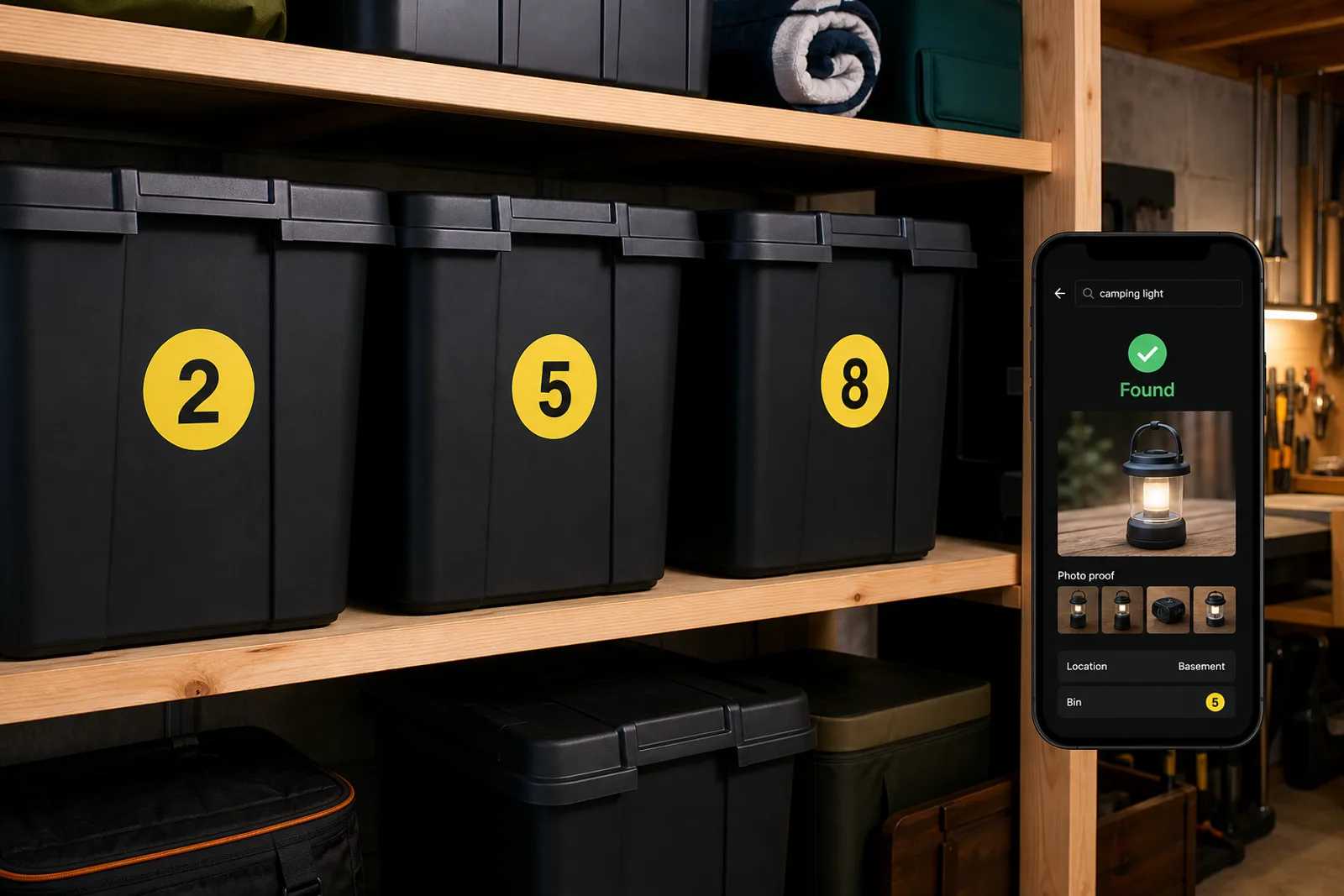
Once the clothes are sorted, give each tote a simple number.
Use large, easy-to-read numbers:
1
2
3
4
The number should be the permanent ID for the tote. The contents can change, but the tote number stays stable.
For example:
Tote 1: Newborn and 0–3 months
Tote 2: 3–6 months
Tote 3: 6–12 months
Tote 4: 12–24 months
Tote 5: Sentimental baby keepsakes
If you want a broad category on the storage record, add it there. But keep the outside label simple and easy to see.
This is especially helpful if baby clothes are stored under a bed, in a closet, in the garage, in a basement, in a storage unit, or on a high shelf. A visible number makes the tote easier to identify from a distance.
The number is not the whole system.
It is the shortcut into the system.
Save the location clearly
Knowing what is inside a tote is helpful. Knowing where the tote lives is even better.
A good location should be specific enough that someone else could find it.
Instead of:
Closet
Use:
Nursery closet, top shelf
Instead of:
Garage
Use:
Garage shelf, second row, left side
Instead of:
Under bed
Use:
Guest room bed, right side
This matters because baby clothes often move. A tote may start in the nursery, shift to a closet, move to the garage, or end up in a shared storage space.
When you save the location, you reduce the chance that the right size will be found too late.
How Totely helps you find baby clothes later
Totely is useful because baby clothes storage has two hard parts: the details are tiny, and the timeline is long.
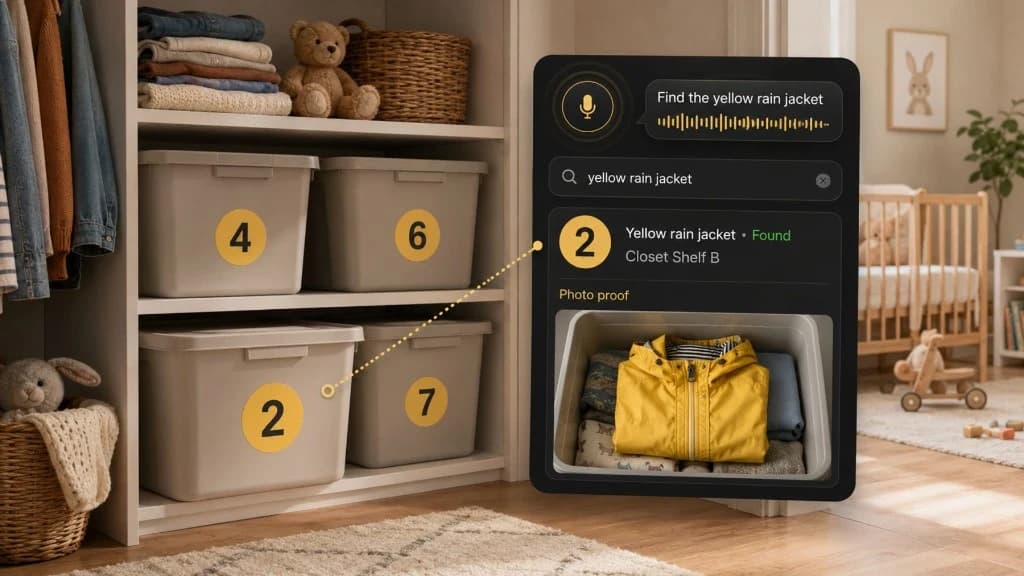
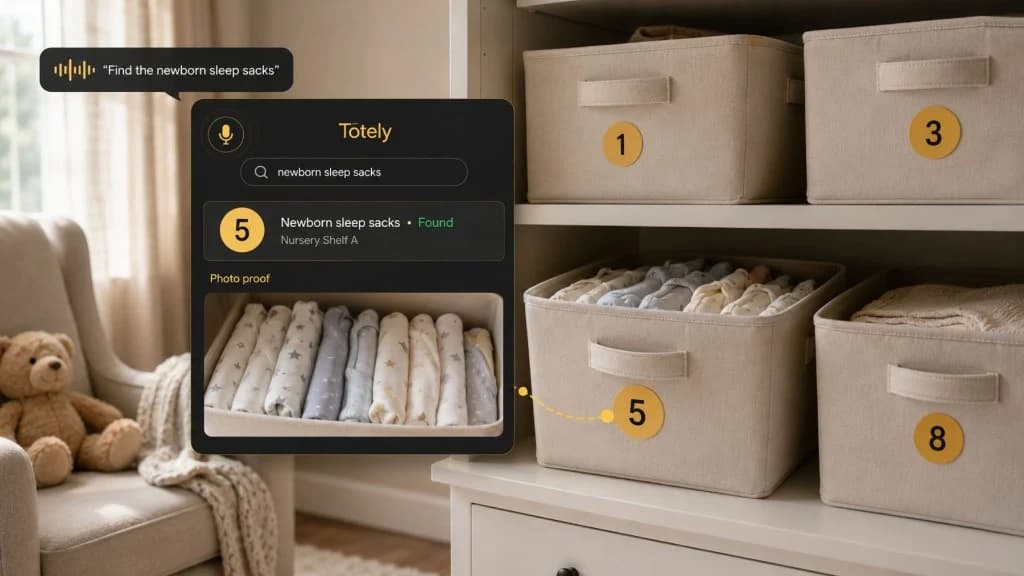
You may pack newborn clothes away today and not need them again for months or years. By then, it is easy to forget which tote has newborn sleep sacks, which one has 6–12 month footed pajamas, and where the special coming-home outfit ended up.
With Totely, you can make baby clothes searchable without manually typing every item into a long list.
Here is the simple flow:
Number the tote
so it has a clear identity.
Snap a photo
of the clothes before closing the lid.
Let AI build the item list
from what it can see.
Review or edit if needed
so the words match how you would search later.
Save the tote location
so you know where it lives.
Search naturally later
for things like "newborn sleep sacks," "footed pajamas," "baby hats," "winter bunting," or "holiday outfit."
Use photo proof
to confirm what is inside before opening the tote.
That means future-you can search for "0–3 month onesies" or "special coming-home outfit" and know which tote to pull.
Totely works as the digital memory layer behind your physical storage. The tote holds the clothes. Totely helps you remember what is inside.
See the baby clothes storage use case for a full walkthrough, or browse storage templates and checklists for a printable starting point.
A baby clothes storage system you can copy
Here is a simple structure that works well for saving clothes for a future child.
A Baby Clothes Storage System You Can Copy
Tote 1
Newborn and 0–3 Months — newborn sleep sacks, onesies, footed pajamas, baby hats, tiny socks, swaddles, soft pants
Tote 2
3–6 Months — everyday onesies, sleepers, lightweight outfits, warm layers if needed, bibs, seasonal basics
Tote 3
6–12 Months — footed pajamas, play clothes, pants, shirts, outerwear, socks, holiday outfit if the size fits
Tote 4
12–24 Months — toddler basics, pajamas, coats, shoes if worth saving, seasonal pieces, daycare extras
Tote 5
Special and Sentimental — special coming-home outfit, hospital hat, first holiday outfit, handmade items, favorite swaddles
Simple does not mean careless.
Simple means you can actually maintain it.
Baby clothes storage FAQs
What is the best way to store baby clothes for the next child?
The best way to store baby clothes for the next child is to sort by size, season, condition, category, sentimental value, and future usefulness. Wash and fully dry the clothes, group similar items together, place tiny accessories in smaller pouches, number each tote, take a photo, and save the location.
Should I store baby clothes by size or season?
Start with size first, then separate by season inside each size group. Size helps you find the right stage quickly, while season helps you know whether the clothes will be useful for the weather when the next baby needs them.
How do I store sentimental baby clothes?
Store sentimental baby clothes separately from everyday hand-me-downs. Clean them when safe, dry them fully, wrap delicate pieces in soft tissue if needed, store them flat or gently folded, and keep them in a labeled or numbered keepsake tote.
What baby clothes are worth saving?
Useful basics are usually worth saving if they are clean and in good condition: onesies, footed pajamas, sleep sacks, swaddles, baby hats, tiny socks, soft pants, and weather-appropriate outerwear. Special items like a coming-home outfit or holiday outfit may be worth saving for sentimental reasons even if they are not everyday pieces.
How do I keep baby clothes from getting mixed up in storage?
Use one tote per size group when possible, or separate size groups with smaller bags inside a tote. Add a number to each tote, take a photo of what is inside, let AI create the first item list, and save the location so you can find the right clothes later without digging.
How can Totely help with baby clothes storage?
Totely helps you number each tote, snap a photo, let AI build the item list, review or edit the details, save the tote location, and search naturally later. Photo proof helps you confirm what is inside before opening the tote.
Make baby clothes easier to find when you need them again
Storing baby clothes for a future child is part practical, part emotional.
You are saving tiny things for a future version of your family, and that deserves a system that is gentle, simple, and easy to trust.
Start with one tote. Sort by size. Separate by season and condition. Pull out the sentimental pieces. Group the tiny socks, baby hats, swaddles, onesies, and footed pajamas so they are easy to find later.
Then number the tote, snap a photo, save the location, and let Totely help make the contents searchable.
With Totely, baby clothes can be stored safely out of sight without disappearing from memory.