Small Storage Unit Ideas: Store Less, Find More
Small storage unit ideas that help you store less, organize better, and find what you need later with numbers, photos, and search.
By Ben Stallsworth · Co-Founder, Totely
September 4, 2026 · Updated September 4, 2026 · 18 min read
A small storage unit can feel like a relief when your closets are full.
You open the door, slide in a few boxes, stack a couple of totes, tuck seasonal things in the back, and suddenly the house feels lighter.
Then a few months pass.
You need the label rolls. Or the winter gloves. Or the guest sheets. Or the box with printer ink you were sure you already bought.
Now the small storage unit feels different.
It is not a clean little overflow space anymore.
It is a compact wall of boxes, bins, and “I think it’s in there somewhere.”
That is the trap with small storage units.
They are useful because they force you to use space carefully.
They are frustrating because there is no room to dig.
The goal is not to fit as much as possible.
The goal is to store less, group better, and find more.
Quick Links
- What Counts as a Small Storage Unit?
- The Best Small Storage Unit Idea: Store Less First
- What Belongs in a Small Storage Unit
- What Does Not Belong in a Small Storage Unit
- Small Storage Unit Layout Ideas
- A Simple Small Unit Map You Can Copy
- Small Storage Unit Organization Ideas That Actually Help
- How Totely Helps a Small Storage Unit Stay Findable
- Small Storage Unit FAQ
What Counts as a Small Storage Unit?
A small storage unit is usually one of the smallest rentable spaces at a storage facility.
Common examples include:
- storage lockers
- mini storage lockers
- 5x5 storage units
- 5x10 storage units
- sometimes 5x15 storage units, depending on the facility
A small unit is usually best for overflow, not whole-home storage.
Think closet-sized or small-room storage.
Good use cases include:
- seasonal decor
- winter clothing
- sports gear
- small business supplies
- file boxes
- dorm overflow
- small furniture
- luggage
- hobby supplies
- household backstock
- boxes you do not need every week
A small storage unit can be a smart choice when you are trying to clear space at home without paying for a larger unit.
But because the space is limited, the system matters more.
In a large unit, you might be able to walk around and browse.
In a small unit, you need to know where things are before you start moving boxes.
The Best Small Storage Unit Idea: Store Less First
Most storage advice starts with containers, shelves, or labels.
Those help.
But the best small storage unit idea starts earlier:
Do not pay to store things you do not actually need.
Before renting or loading the unit, sort the items into four groups.
Keep and store
These are items you want to keep but do not need at home right now.
Examples:
- holiday decorations
- off-season clothing
- guest linens
- hobby gear
- college supplies
- small business materials
- sentimental boxes you are not ready to sort yet
Keep nearby
These are items you use often enough that putting them in off-site storage will annoy you.
Examples:
- current-season clothes
- tools you use weekly
- active paperwork
- everyday sports gear
- frequently used kitchen items
- chargers or tech accessories you reach for often
Donate, sell, or recycle
These are items that are taking up paid space without earning their place.
Examples:
- duplicate decor
- clothes that no longer fit
- broken small appliances
- outdated office supplies
- boxes you have not opened in years
- cheap items that cost less to replace than to store
Do not store
These are items that may be unsafe, prohibited, or not worth the risk.
Examples:
- food
- plants
- hazardous materials
- flammable items
- liquids that can leak
- anything living
- irreplaceable documents
- valuables that need special protection
Always check your storage facility’s rental agreement and prohibited-item list.
A small unit works best when it holds the right things, not more things.
What Belongs in a Small Storage Unit
A small storage unit is ideal for compact, grouped, non-urgent items.
Good categories include the following.
Seasonal decor
Store:
- holiday lights
- wreaths
- ornaments
- outdoor clips
- wrapping paper
- seasonal table linens
- Halloween decor
- patio cushion covers
Best system:
Keep seasonal bins together and label the season in the digital record, not necessarily on the outside of every box.
Winter or off-season clothing
Store:
- coats
- scarves
- gloves
- hats
- snow pants
- rain jackets
- boots
- hand warmers
Best system:
Store clothes by season or person. Add a note like check sizes before winter if the box includes kids’ items.
Dorm or student overflow
Store:
- bedding
- books
- mini fridge
- dorm decor
- small furniture
- off-season clothes
- bins of supplies
Best system:
Keep “move back first” items near the front so move-in day does not start with digging.
Small business supplies
Store:
- label rolls
- printer ink
- envelopes
- mailers
- signage
- sample inventory
- event supplies
- folded tablecloths
- packaging tape
Best system:
Track these carefully so you do not reorder supplies you already own.
Hobby and sports gear
Store:
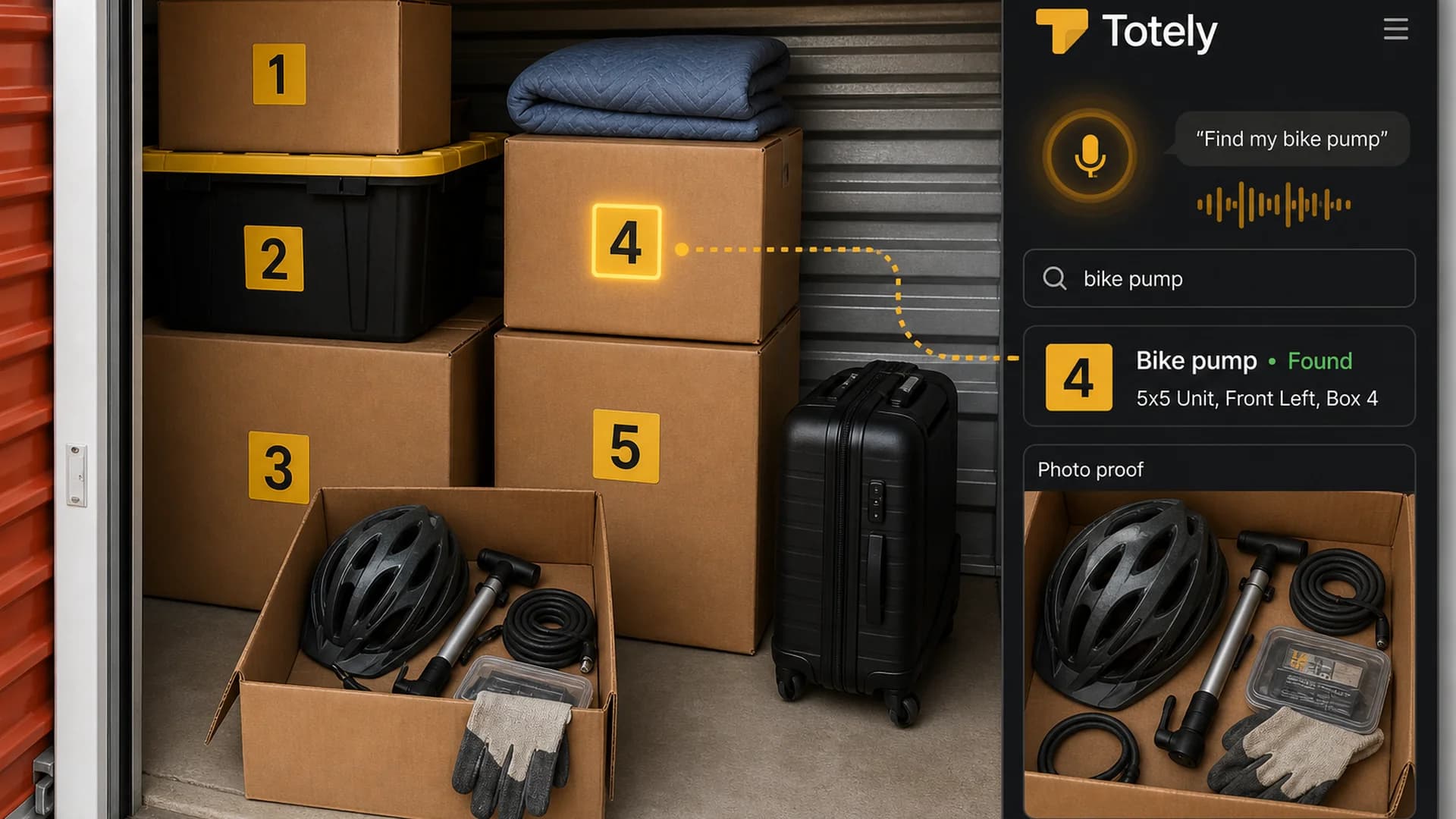
- bike pump
- helmet liner
- tennis gear
- camping lantern
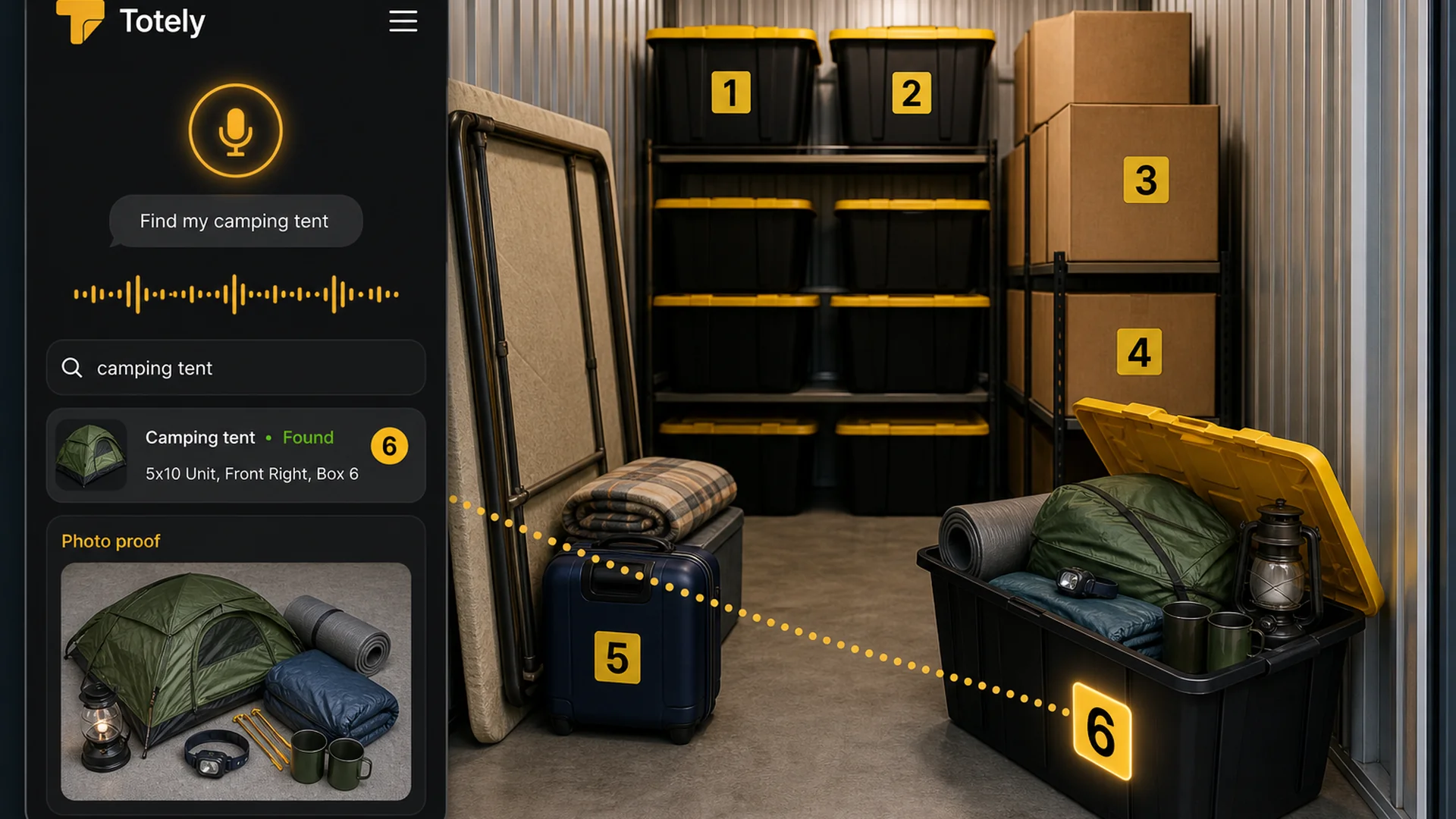
- small tent
- fishing gear
- craft supplies
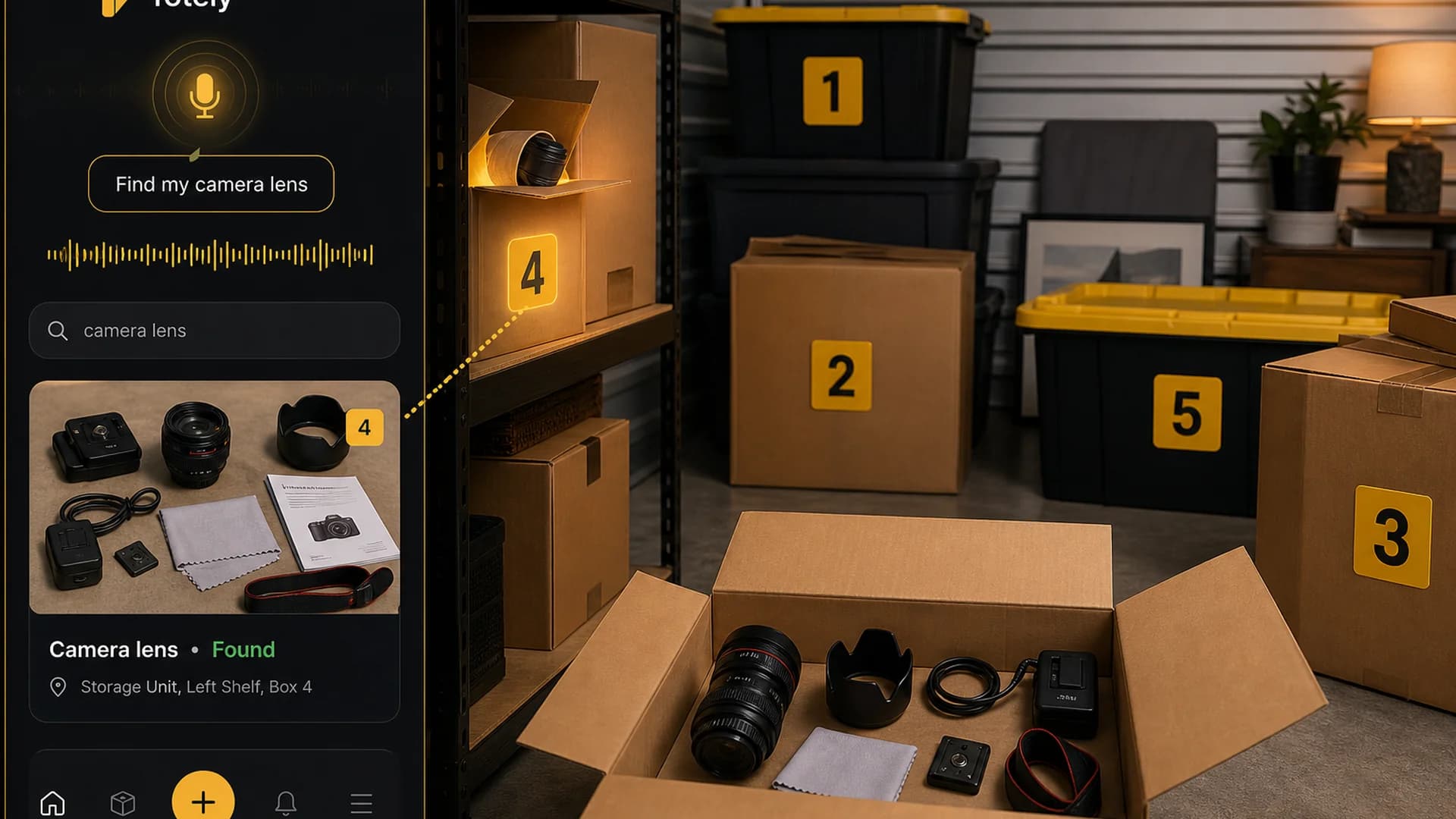
- camera gear boxes
- sewing kit
Best system:
Group by activity, not by container type. It is easier to search for camping lantern than to remember which tote was “garage misc.”
File boxes and records
Store only what makes sense to keep off-site.
Examples:
- archived paperwork
- tax folders
- business records
- old project files
- manuals or documents you rarely need
Best system:
Use clear date ranges in the record. Keep truly important documents somewhere safer and easier to access if they are irreplaceable.
What Does Not Belong in a Small Storage Unit
A small unit should not become a dumping ground.
Be careful with items that are:
- too large
- too heavy
- too fragile
- too valuable
- climate-sensitive
- needed frequently
- prohibited by the facility
- cheaper to replace than store
Skip large furniture if it blocks everything
One small chair or nightstand may be fine.
A couch, dresser, mattress, or table can quickly take over the entire unit.
If one large item forces every box behind it, the unit may be too small or the layout may need to change.
Avoid heavy mystery boxes
Books, files, tools, hardware, and dense supplies get heavy fast.
If you store them, use smaller boxes, keep them low, and number them clearly.
Do not stack a heavy box on top of soft goods or fragile items.
Do not store prohibited items
Rules vary by facility, but storage facilities commonly restrict or prohibit unsafe, hazardous, illegal, perishable, and living things.
Common no-go categories include:
- food
- plants
- animals
- hazardous materials
- flammable materials
- fuel
- propane
- ammunition
- illegal items
- leaking liquids
- anything that creates odor, pests, or safety risk
Ask the facility if you are unsure.
Totely can help you remember what is stored, but it does not replace facility rules, insurance guidance, climate-control guidance, or common-sense safety.
Small Storage Unit Layout Ideas
A small unit needs a layout before it needs more bins.
If you put everything in without a plan, you will create a compact mystery pile.
Use these layout ideas instead.
Idea 1: Create a Front-Access Zone
The front of the unit is the most valuable space.
Use it for things you may need soon.
Good front-access items include:
- label rolls
- printer ink
- winter gloves
- holiday lights
- luggage
- event supplies
- important file box
- sports gear in season
- small business supplies
- travel items
- school move-in items
Do not waste the front on boxes you will not touch for a year.
Put active storage near the door.
Put parked storage farther back.
Idea 2: Store by Retrieval, Not Just Category
A category system sounds clean:
- holiday
- office
- clothes
- sports
- documents
But retrieval is more useful.
Ask:
- What will I need first?
- What might I need unexpectedly?
- What is expensive to rebuy?
- What is seasonal and coming up soon?
- What can stay buried until move-out?
- What would be annoying to reach?
This changes the layout.
A box of label rolls may deserve front access even if it is small.
A box of extra decor may be fine in the back even if it looks prettier on the shelf.
Idea 3: Use Vertical Space Without Losing Access
Small units usually need vertical storage.
Stacking helps, but only if the stacks are stable and readable.
Use these rules:
- heavy boxes low
- light boxes high
- fragile items protected and not crushed
- box numbers facing outward
- same-size containers together when possible
- no unstable leaning stacks
- no mystery bins behind mystery bins
Vertical space is useful.
Unreachable vertical space is not.
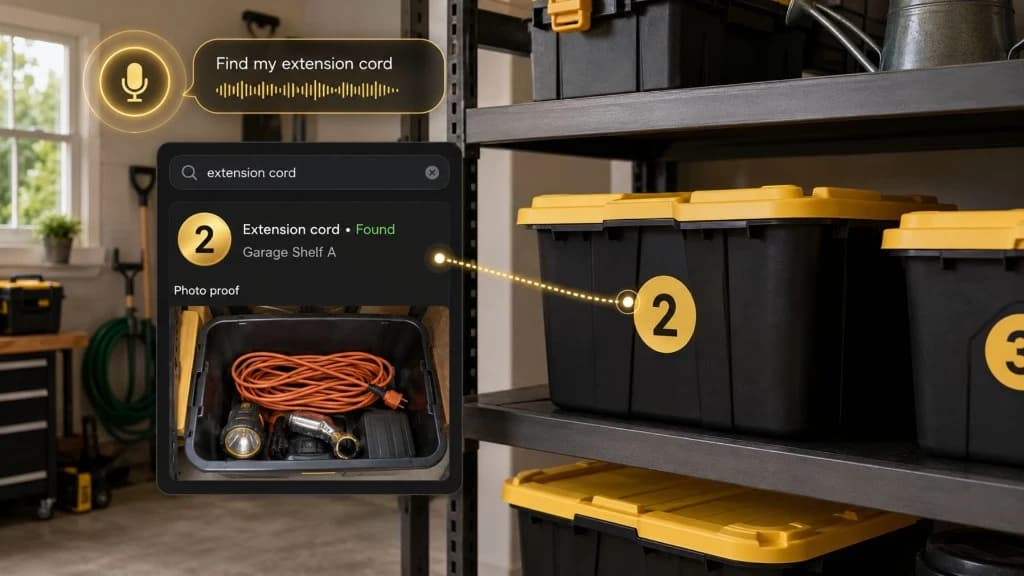
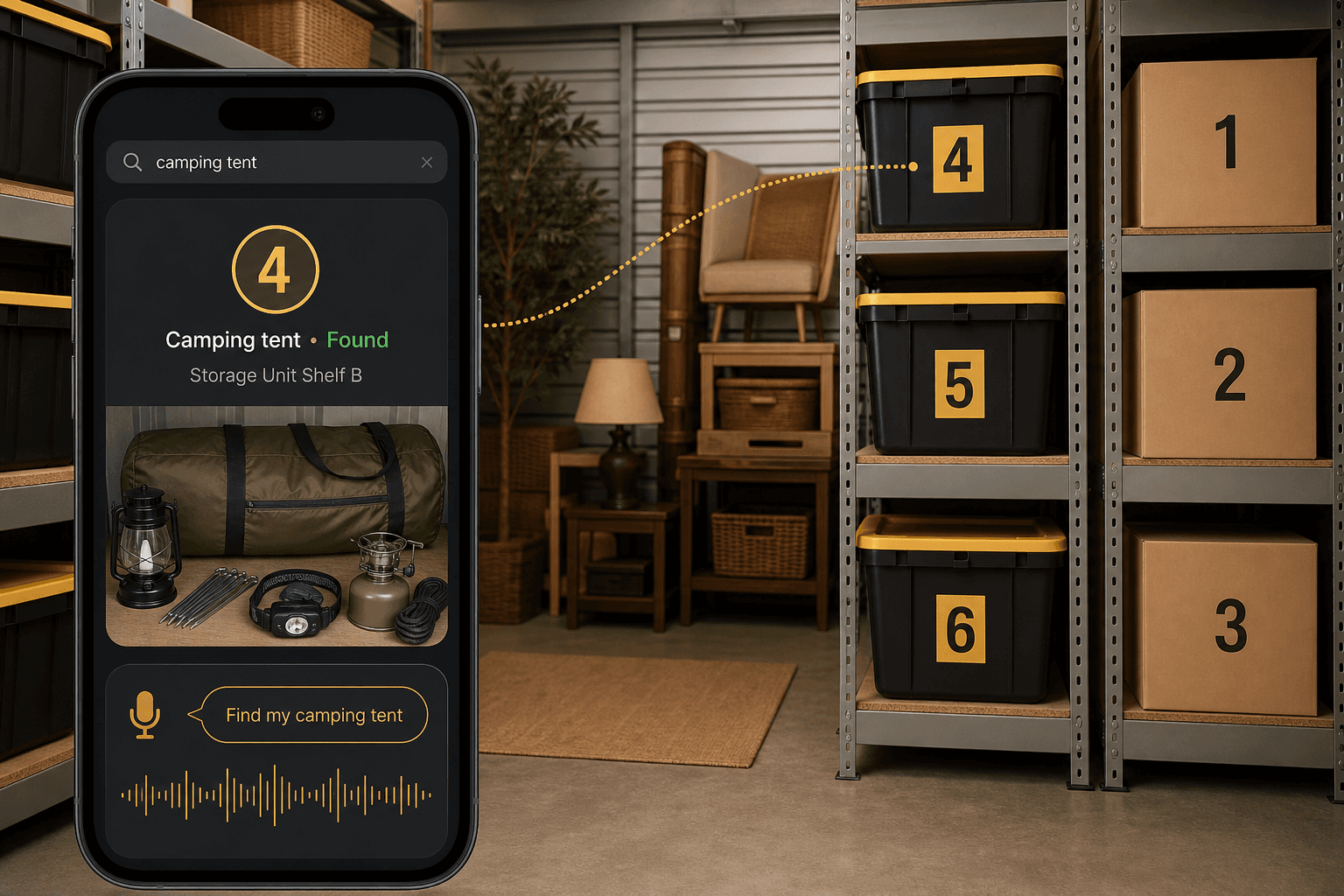
Idea 4: Number Every Box, Bin, Tote, or Shelf Zone
Do not rely on long handwritten labels.
They get messy. They get outdated. They are hard to read from the doorway.
Use simple visible numbers instead:
- Box 1
- Tote 2
- Bin 3
- Shelf 4
- Bag 5
Then keep the details in a searchable record.
The outside stays simple.
The inside record stays specific.
Idea 5: Photograph Before You Stack
Before each container goes in, open it and take a photo.
This is one of the easiest ways to make a small storage unit easier to use later.
A photo helps you confirm:
- what is inside
- whether the item is actually there
- what is missing
- what is packed with it
- whether the box is worth opening
If the container has layers, take two photos.
If the photo shows only the top layer, add a quick note for what is underneath.
Idea 6: Keep a Small Unit Map
A small unit does not need a warehouse-style map.
It needs simple location names.
Use zones like:
- Front Left
- Front Right
- Back Wall
- Left Stack
- Right Stack
- Top Layer
- Floor Layer
- Door Side
- Shelf 1
- Shelf 2
Then combine the zone with the container number.
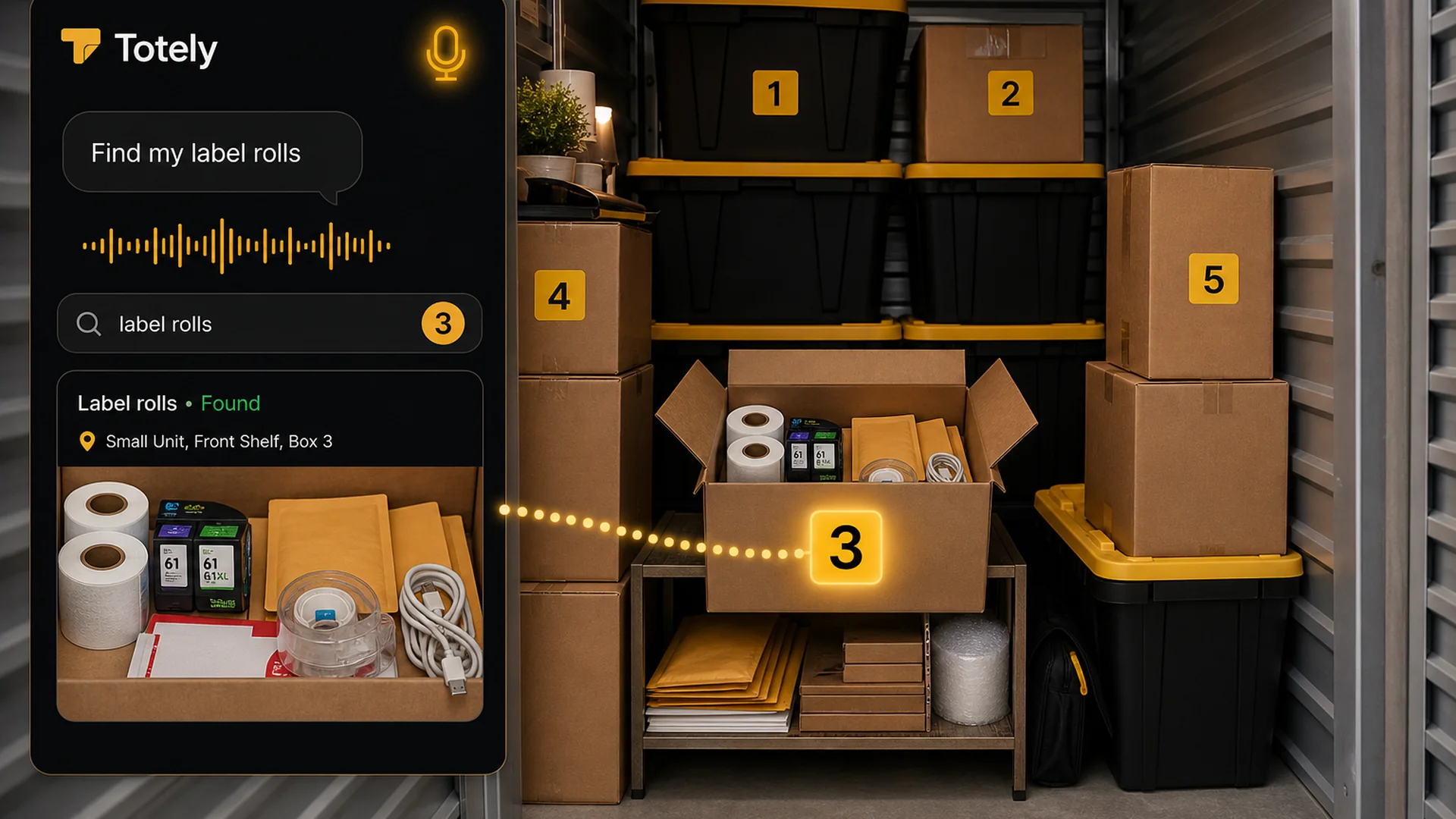
Example:
Small Unit, Front Shelf, Box 3
That is much more useful than:
Storage unit
The more exact the location, the less digging later.
A Simple Small Unit Map You Can Copy
Use this for a small storage unit, mini unit, or compact storage locker.
| Container | Location | Contents | Access note |
|---|---|---|---|
| Box 1 | Back Wall, Floor Layer | holiday decor, ribbon, ornament hooks | seasonal |
| Tote 2 | Back Wall, Top Layer | off-season clothes, scarves, hats | check in fall |
| Box 3 | Front Shelf | label rolls, printer ink, envelopes, tape | front access |
| Bin 4 | Left Stack | guest sheets, towels, pillowcases | medium access |
| Box 5 | Right Stack | file folders, old project records | keep dry |
| Bag 6 | Front Right | luggage, travel adapters, small toiletry bag | front access |
This map does not try to track every tiny item.
It tracks the things someone will search for later.
That is the point.
A small storage unit should not require perfect inventory.
It should have enough memory to prevent repeat digging.
Small Storage Unit Organization Ideas That Actually Help
These ideas are simple because small spaces do not need complicated systems.
They need systems you will actually maintain.
Use one job per container
Each box or tote should have one main job.
Good:
Box 3 — shipping suppliesTote 2 — winter accessoriesBin 4 — guest linensBox 5 — archived records
Too vague:
miscgaragerandomstuffback room
When every container is a catchall, the unit becomes impossible to search.
Keep a “do not bury” list
Some items should never end up in the back.
Write them down before move-in.
Examples:
- printer ink
- label rolls
- winter gloves
- holiday lights
- travel bags
- event supplies
- documents
- camping lantern
- bike pump
- small tool kit
These items either save money, solve urgent problems, or get used seasonally.
Give them the good spots.
Use smaller boxes for heavy things
A small box of books is better than a large box of books.
A small file box is better than a giant heavy tote.
Dense items should be easy to lift and should stay low.
Use small containers for:
- books
- files
- tools
- hardware
- paper records
- office supplies
- small appliances
Use larger containers for:
- pillows
- bedding
- clothing
- lightweight decor
- soft seasonal items
Make the first layer useful
The first thing you see when you open the door should help you.
That means the visible side of the unit should show:
- container numbers
- front-access items
- a clear small path or reach zone
- no labels turned toward the wall
- no oversized item blocking everything
A small unit is won or lost at the front.
Do not over-shop storage products
Shelves, bins, clear containers, and labels can help.
But they do not fix an overfilled unit.
Before buying more products, ask:
- Do I actually need to store this?
- Is this worth paying for every month?
- Will I need it soon?
- Can I find it without opening five boxes?
- Would a photo and number solve this better than another label?
A small storage unit should make life easier.
It should not become a monthly fee for delayed decisions.
Clear Bins vs Opaque Bins in a Small Unit
Clear bins help when you can actually see them.
They work well for:
- eye-level shelves
- simple categories
- bulky visible items
- kids’ clothes
- craft supplies
- seasonal decor
Opaque bins work well when:
- the unit would look visually chaotic
- items are not attractive
- you want a consistent stack
- the bins are stored below eye level
- the details live in your app or inventory record
Both can work.
The real question is not clear vs opaque.
It is:
Can you find what you need without opening everything?
A clear bin can still hide small items.
An opaque bin can be perfectly searchable if it has a number, photo, saved location, and item record.
When to Size Up Instead of Forcing a Small Unit
Sometimes the best small storage unit idea is to not use a small storage unit.
Size up when:
- you need to store a couch
- you need to store multiple furniture pieces
- you need frequent access
- you cannot leave any kind of reach zone
- the boxes will stack above safe lifting height
- long items do not fit
- you are storing a full room or apartment
- you are likely to keep adding more items
A too-small unit can cost more in wasted time, broken items, and repeat trips.
The right size is not always the cheapest size.
The right size is the one that holds what you need and still lets you retrieve it.
How Totely Helps a Small Storage Unit Stay Findable
Totely gives a small storage unit a digital memory layer.
That matters because small units do not leave much room for searching.
Here is the workflow:
- Number every box, bin, tote, bag, shelf, or storage zone.
- Take a photo before the container goes into the unit.
- Let AI build the first item list from what it can see.
- Review or edit the words so they match how you would search later.
- Save the exact location, such as
Small Unit, Front Shelf, Box 3. - Add notes for front access, fragile, seasonal, heavy, important, restock, or check-before-buying.
- Search naturally later for
label rolls,printer ink,holiday lights,guest sheets,winter gloves, orbike pump. - Use photo proof before opening the wrong container.
The unit stores the stuff.
Totely remembers what is where.
That is the difference between paying for extra space and actually using it well.
A Small Storage Unit Plan You Can Start Today
Start with six containers.
Do not start with the whole unit.
Container 1: Seasonal decor
Store:
- lights
- ribbon
- hooks
- wreath hangers
- small decorations
Location:
Back Wall, Floor Layer
Container 2: Off-season clothes
Store:
- winter gloves
- scarves
- hats
- rain jacket
- seasonal shoes
Location:
Back Wall, Top Layer
Container 3: Small business or household supplies
Store:
- label rolls
- printer ink
- envelopes
- tape
- small mailers
- spare charging cable
Location:
Front Shelf
Container 4: Guest linens
Store:
- guest sheets
- towels
- pillowcases
- light blanket
Location:
Left Stack
Container 5: Documents or files
Store:
- archived folders
- old project records
- manuals
- papers you rarely need
Location:
Right Stack, Floor Layer
Container 6: Travel or event items
Store:
- luggage
- travel adapters
- event signs
- small bags
- supplies for upcoming trips
Location:
Front Right
Once those are mapped, add more only if the system still feels easy.
The goal is not to fill the unit.
The goal is to make the stored items findable.
Small Storage Unit FAQ
What is considered a small storage unit?
A small storage unit usually includes storage lockers, 5x5 units, and 5x10 units. Some facilities may also group 5x15 units into small or small-medium storage. Exact sizes and availability vary by facility.
What fits in a small storage unit?
A small storage unit usually fits boxes, totes, seasonal decor, off-season clothing, sports gear, dorm overflow, small business supplies, documents, small appliances, luggage, and small furniture. The exact fit depends on the unit size, height, door access, and how often you need to retrieve items.
Is a 5x5 storage unit a small storage unit?
Yes. A 5x5 is one of the most common small storage unit sizes. It is usually about 25 square feet and is often compared to a small closet or half bathroom.
Is a 5x10 storage unit still considered small?
Usually, yes. A 5x10 is often treated as a small storage unit because it is about 50 square feet. It can hold more than a 5x5, but it still needs careful layout planning if you want access later.
How much does a small storage unit cost?
The cost of a small storage unit varies by location, size, availability, facility, access type, climate control, fees, and promotions. Always check current local pricing rather than relying on a single national estimate.
How do I organize a small storage unit?
Organize a small storage unit by access frequency. Put low-access items in the back, keep frequent-use items near the front, place heavy items low, keep fragile items protected, number every container, photograph contents, and save exact locations.
Should I use shelves in a small storage unit?
Shelves can help if the facility allows them and if they do not waste too much floor space. They are most useful for smaller boxes, business supplies, and containers you need to access often. Avoid shelves if they make the unit harder to load or retrieve from.
Should I use clear bins in a small storage unit?
Clear bins can help when contents are large and easy to see. Opaque bins can work just as well if each bin has a visible number, a photo record, and a searchable contents list.
What should I keep near the front of a small storage unit?
Keep anything you may need soon near the front: documents, travel bags, label rolls, printer ink, winter gloves, holiday lights, camping gear, sports gear, and small business supplies.
What should I not put in a small storage unit?
Do not put food, plants, animals, hazardous materials, flammable materials, illegal items, or anything prohibited by your storage facility into the unit. Be careful with valuables, important documents, electronics, artwork, photos, and climate-sensitive items.
Store Less. Find More.
A small storage unit should not be a place where forgotten boxes go to disappear.
It should be a focused overflow space.
Use it for the things you want to keep but do not need at home every day. Skip the things that are not worth storing. Give every box a number. Photograph contents before stacking. Save the exact location while you still remember it.
The smaller the space, the more important the memory layer becomes.
With Totely, your small storage unit can stay simple on the outside and specific on the inside.
Stored, not lost.