What Storage Unit Size Do I Need? Start With an Inventory First
Use a simple inventory to choose the right storage unit size and keep boxes, totes, furniture, and seasonal items easy to find.
By Ben Stallsworth · Co-Founder, Totely
June 4, 2026 · Updated August 27, 2026 · 14 min read
Choosing a storage unit size can feel like a guessing game.
You look around at the boxes, furniture, seasonal decor, tools, bikes, baby gear, holiday bins, camping gear, and extra household items, then try to imagine how much space it all needs. Too small, and everything gets crammed into a stressful wall of cardboard. Too large, and you may pay for empty space month after month.
A better first question is not, "What size unit should I rent?"
It is: What exactly am I storing?
Before you rent a storage unit, make a simple inventory of what is going inside. Not a complicated spreadsheet. Not a perfect catalog. Just a clear record of the boxes, totes, furniture, bulky items, fragile items, and things you may need to find later.
A storage unit size guide can help you estimate square footage. Your own inventory helps you choose with more confidence, avoid duplicate boxes, reduce overpacking, and keep stored items findable after move-in. If you want a searchable record instead of a static list, see how to create a searchable home inventory before you sign a lease.
Quick Links
Why Storage Unit Size Is Hard to Guess
Storage unit size is hard to estimate because household items do not behave like neat measurements.
A couch is bulky but obvious. A stack of boxes looks manageable until you realize there are forty of them. A dining table may be easy to measure, but the chairs, rug, dishes, holiday decor, and kitchen overflow around it change the space you actually need.
The second problem is that storage is usually emotional and practical at the same time. You may be storing items during a move, renovation, downsizing, seasonal rotation, new baby stage, college transition, or garage reset. Those moments are busy, and busy households tend to pack quickly.
That is how storage units become hard to use later.
Boxes get labeled broadly. Totes are stacked without a clear map. Furniture blocks access to seasonal items. Duplicate boxes appear because nobody knows what has already been packed. Then, months later, you know you own the holiday lights, guest sheets, camping tent, coffee maker, or winter coats — but not which box or tote holds them.
A storage unit should give you breathing room, not create another place where belongings disappear. For a broader storage unit inventory workflow, the same numbered-photo-location-search loop works off-site as well as at home.
Start With an Inventory Before You Rent
A storage unit inventory helps you choose a better size because it turns "a lot of stuff" into a visible plan.
Start with a simple walkthrough. Move room by room, closet by closet, and storage area by storage area. Write down or photograph the items that are likely going into storage.
You do not need a perfect list. You need enough detail to estimate space and find things later.
Capture the big categories first:
- Large furniture: sofas, mattresses, bed frames, dressers, dining tables, chairs, desks, shelving units.
- Bulky household items: bikes, strollers, patio cushions, small appliances, lamps, rugs, sports gear, camping gear.
- Boxes and totes: moving boxes, storage totes, holiday bins, baby clothes bins, craft bins, garage bins, book boxes.
- Fragile or sensitive items: glassware, framed artwork, electronics, documents, sentimental items, heirlooms, delicate decor.
- Items you may need to access: seasonal decor, winter gear, tools, business inventory, kids' clothes, guest linens, records, camping supplies.
Think of this as a packing memory. You are not trying to create a perfect warehouse system. You are trying to make sure future-you knows what went into storage and where it landed.
Match Your Inventory to Common Storage Unit Sizes
Once you know what you are storing, you can compare your inventory to common storage unit sizes.
Storage companies usually provide size examples, but the exact fit depends on your furniture, box count, ceiling height, packing style, and whether you need walk-in access. Use common size ranges as a starting point, not a guarantee.
5x5 storage unit
A 5x5 unit is often compared to a small closet. It can be useful for a small batch of boxes, seasonal decor, compact sports gear, holiday bins, small furniture, or household overflow.
This size can work if your inventory is mostly boxed, lightweight, and compact. It is usually not ideal for large furniture or anything you need to access often.
5x10 storage unit
A 5x10 unit can work for a studio-style amount of belongings, a mattress set, small furniture, or a larger batch of boxes and totes.
This is often a useful size for seasonal overflow, dorm storage, a partial household storage project, or a move where you are storing a limited number of rooms.
10x10 storage unit
A 10x10 unit gives you more room for furniture plus boxes. This may be the right range if you are storing apartment furniture, multiple rooms of boxes, or larger household overflow.
If you choose this size, think carefully about access. A fully packed 10x10 may hold a lot, but it can become difficult to search if every box is stacked wall to wall.
10x15 storage unit
A 10x15 unit gives you more flexibility for multiple rooms, larger furniture, appliances, boxes, and awkwardly shaped items.
This size can help when you want room to access items without stacking everything too tightly. It may also make sense during renovations, longer moves, or storage situations where you will visit the unit more than once.
10x20 and larger storage units
A 10x20 unit or larger may be appropriate for multi-room household storage, larger moves, furniture sets, appliances, many moving boxes, or some vehicle storage situations, depending on the facility.
The key is this: do not choose based only on bedrooms. Choose based on your actual inventory and how often you need to retrieve items. If moving boxes are part of the plan, label moving boxes before a move so they stay findable after the truck is unloaded.
Group Items by Access, Not Just Category
Once you know what you are storing, group items by how often you will need them.
This matters because the right storage unit size is not only about fitting everything inside. It is about being able to retrieve items without unpacking the whole unit. Once you choose a size, organize a storage unit with zones, an access path, and numbered boxes so retrieval stays realistic.
Use three access groups:
Need soon: tools, documents you are comfortable storing off-site, kids' seasonal clothes, business supplies, pet items, guest linens, school items, first-week moving boxes.
Need seasonally: holiday decor, camping gear, winter coats, beach gear, sports gear, patio cushions, wrapping supplies, luggage.
Long-term storage: furniture, archived boxes, extra kitchenware, sentimental items, books, rarely used decor, bulky household overflow.
Put "need soon" items near the front. Put seasonal items in a clearly numbered section. Put long-term furniture and boxes farther back if you will not need them soon.
A tightly packed unit may technically fit your items, but a slightly larger unit with a walkway may be more usable if you plan to visit often.
Avoid Duplicate Boxes and Mystery Totes
A storage unit inventory helps prevent duplicate boxes before they happen.
Without an inventory, it is easy to pack three "garage" boxes, two "holiday" bins, and several "miscellaneous" totes. Later, you may not know which box has batteries, extension cords, wrapping paper, baby clothes, snow boots, craft supplies, or holiday lights.
That can lead to duplicate purchases.
You buy another extension cord because the first one is buried. You buy more ornament hooks because the holiday bin is impossible to identify. You buy another air pump because the camping gear is somewhere in storage. You buy more guest sheets because you cannot remember which tote holds linens.
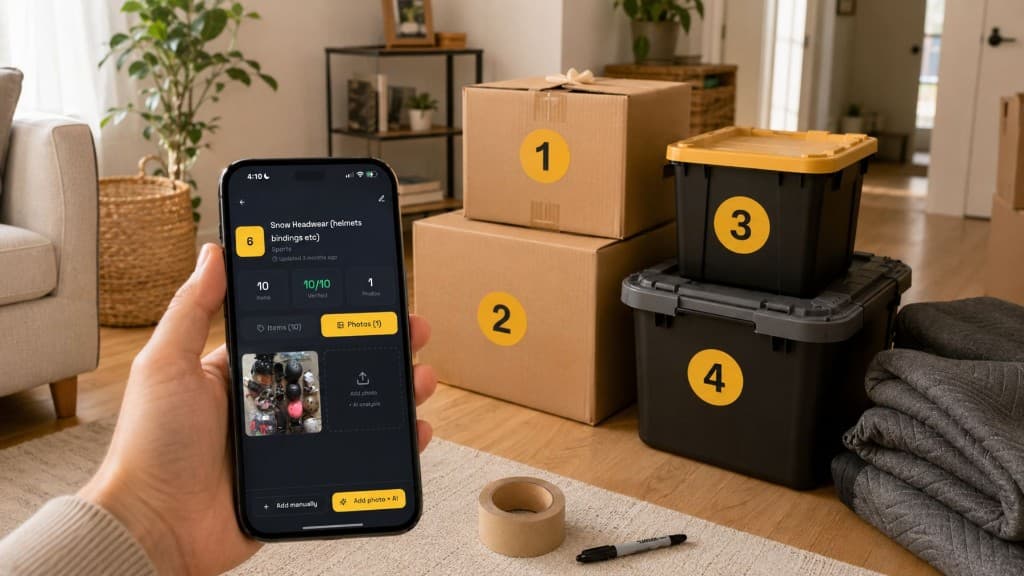
Instead, give every box, tote, or storage bin a simple number.
Example:
- Box 1: kitchen overflow — coffee maker, mugs, filters, small appliances.
- Tote 2: holiday decor — lights, extension cords, gift tags, ribbon, tree skirt.
- Bin 3: kids' winter gear — snow pants, gloves, hats, boots, winter coats.
- Box 4: garage utility — batteries, extension cords, tape, hooks, sprinkler parts.
- Tote 5: guest linens — sheets, extra blankets, towels, pillowcases.
A numbered inventory keeps the outside simple and the contents specific. Pair numbered storage tote labels with photos and search so the number still means something months later.
The outside stays simple. The details stay searchable.
Plan for Walkways, Shelves, and Front-Access Items
When choosing a storage unit size, decide whether you need access or only storage.
Those are different goals.
If you are storing items for a short move and do not expect to open the unit until everything comes out, you may be able to pack more tightly. If you will visit the unit seasonally or monthly, you need more room to move.
Build your plan around access.
Leave a center aisle if you need to retrieve items. A narrow walkway can make the difference between "easy to grab" and "everything has to come out."
Keep frequently used items near the door. Seasonal decor, tools, sports gear, winter bins, business inventory, or kids' clothing should not be buried behind furniture.
Use shelves if allowed and useful. Shelving can help prevent stacked boxes from becoming unstable and can keep smaller bins visible.
Put heavier boxes lower. This protects lighter items and makes the stack easier to manage.
Store fragile items where they will not be crushed. Use cautious packing and follow item-specific care guidance.
And before you move anything in, check facility rules for sensitive or restricted items. Food, damp items, toxic or flammable materials, irreplaceable valuables, and certain vehicle-related items may be unsafe or prohibited. Climate control may also be worth considering for belongings that are vulnerable to temperature swings, moisture, mold, mildew, pests, or environmental damage.
Totely can help you remember where things are stored, but it does not replace facility rules, safety guidance, manufacturer instructions, insurance documentation, or proper storage requirements.
How Totely Helps Make a Storage Unit Searchable
Totely is useful because a storage unit often becomes an off-site extension of your home.
That means it needs memory.
You may not visit often. You may store boxes from multiple rooms. You may have seasonal decor, moving boxes, household backstock, furniture, tools, kids' clothing, camping gear, business inventory, sentimental items, and garage overflow all in one place.
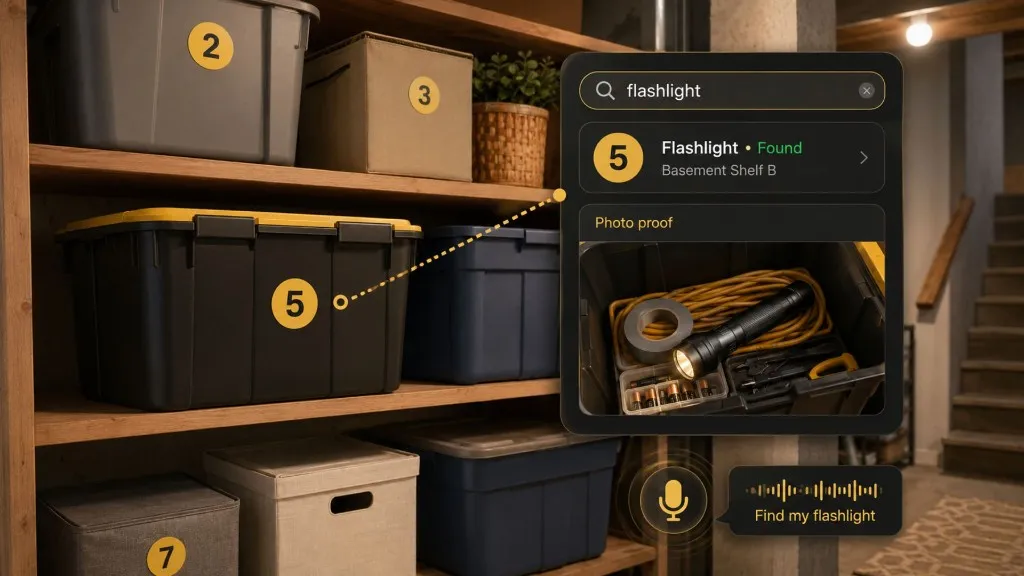
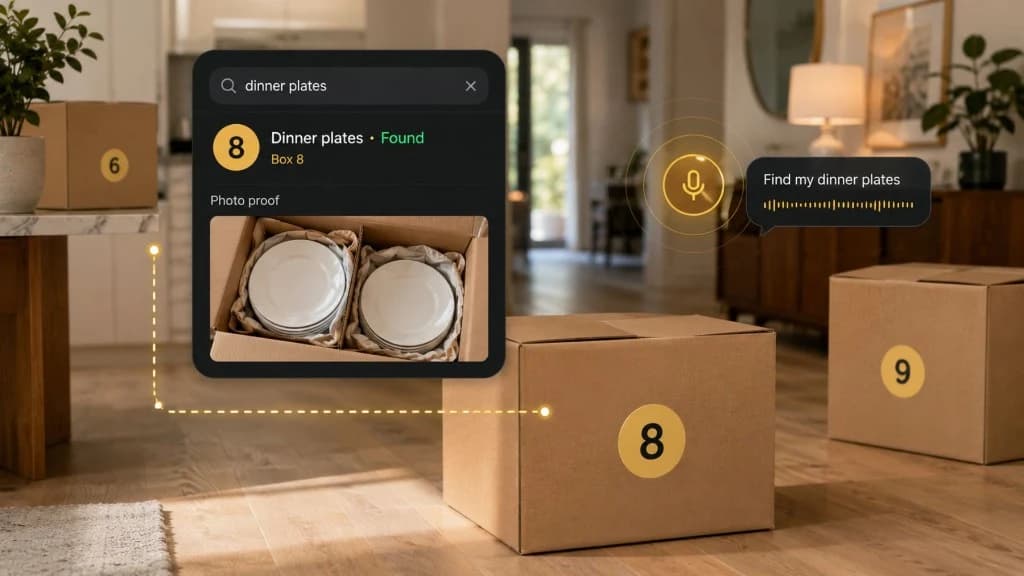
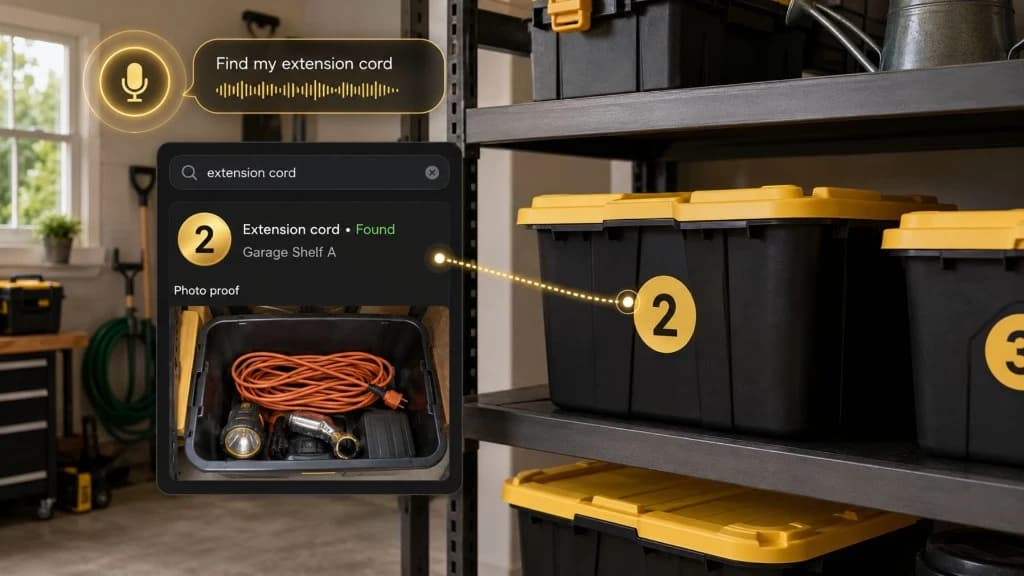
Totely helps make storage boxes, totes, and hidden storage searchable.
Here is the simple flow:
Number each container
Give every box, tote, bin, shelf, or storage zone a clear identity.
Snap a photo
Capture what is inside before the container goes into the unit.
Review the item list
Let AI create the first list from what it can see, then edit words to match how you search.
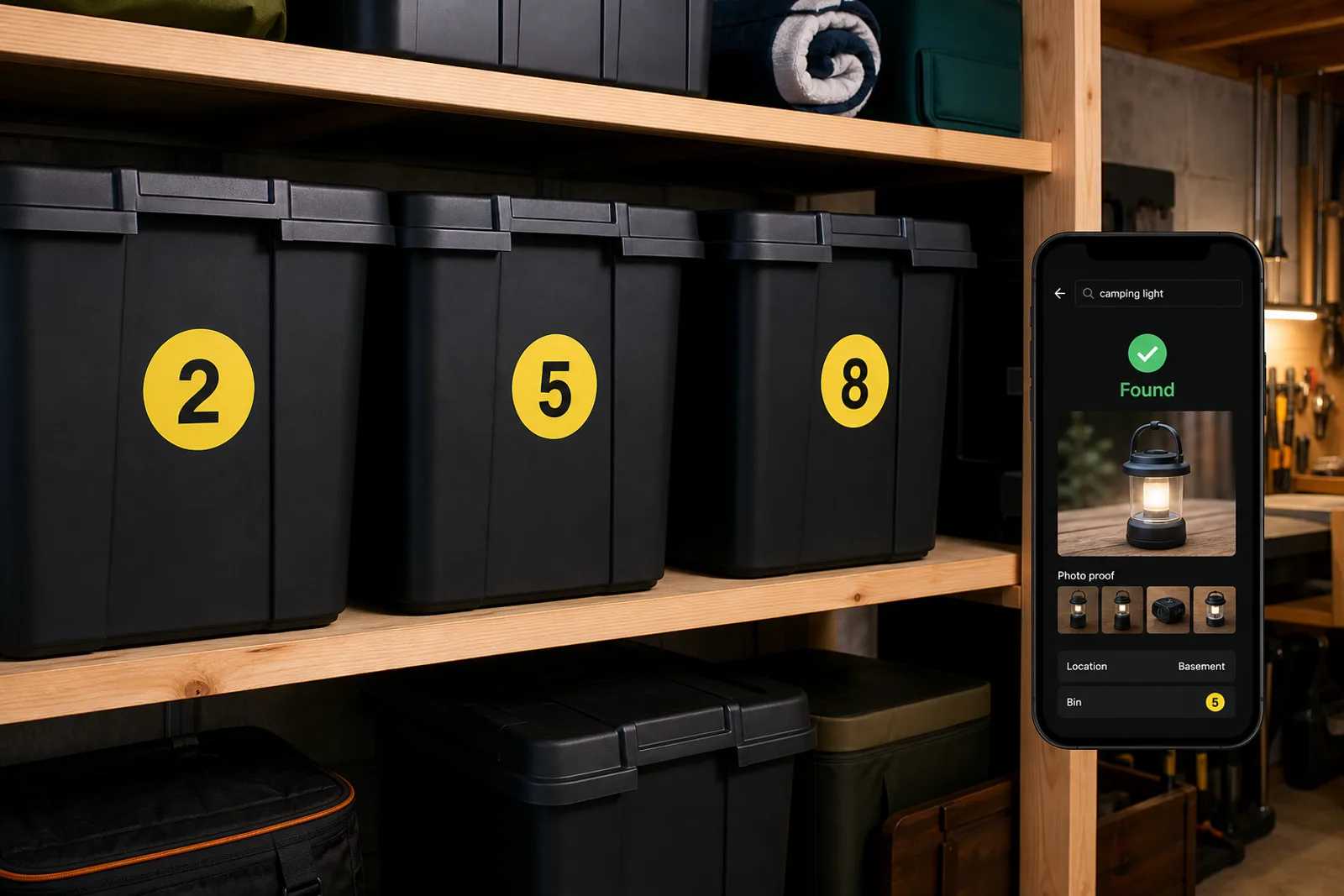
Save the location
Record storage unit front left, back wall shelf, aisle right side, or Box 12 under table.
Search naturally later
Look for holiday lights, guest sheets, coffee maker, winter coats, extension cord, baby clothes, or camping tent.
Use photo proof
Confirm what is inside before opening every box.
A storage unit inventory works best when it is visual, searchable, and easy to update. Totely reduces the memory burden by pairing a simple number with a photo record, saved location, and natural search.
No overpacked mystery boxes. No "I know it is in there somewhere." Just a clearer way to find what you stored. Learn more in the storage unit inventory use case, or start with the printable Storage Unit Inventory Checklist.
A Storage Unit Inventory System You Can Copy
Use this simple system before you rent. It mirrors the same loop you would use to build a storage organization system at home — just applied off-site.
Step 1: Make a quick inventory
Walk through your home and list what is going into storage:
- Furniture: sofa, mattress, dresser, table, chairs.
- Boxes: kitchen overflow, books, office supplies, tools, documents.
- Totes: holiday decor, baby clothes, craft supplies, camping gear, seasonal clothing.
- Bulky items: bikes, rugs, lamps, small appliances, outdoor gear.
- Sensitive items: fragile decor, sentimental items, electronics, fabric, paperwork, valuables.
Step 2: Count containers
Count how many boxes and totes you expect to store. If you have many half-full boxes, consolidate before renting. If you have duplicate "misc" boxes, sort them enough to know what each contains. See keep track of storage bins for a practical tracking habit that survives location changes.
Step 3: Identify oversized items
Measure or note anything awkward: mattress, sofa, dining table, shelving unit, bike, stroller, kayak, large rugs, or patio furniture.
Step 4: Decide what needs front access
Mark items you may need soon.
Front access might include tools, winter gear, holiday decor, business inventory, kids' clothing, guest linens, and camping gear. Back storage might include furniture, archived boxes, long-term decor, and rarely used household overflow.
Step 5: Choose the unit size with access in mind
Compare your inventory to common unit sizes. If you need to retrieve items often, consider space for a walkway, shelves, and front-access zones.
Step 6: Number and photograph everything
Before moving items in, number each box or tote and photograph the contents. Save the location once it lands in the unit.
The goal is not a perfect warehouse system.
The goal is to know what you stored, where it lives, and how to find it later.
Storage Unit Size FAQs
What storage unit size do I need?
The storage unit size you need depends on your actual inventory: furniture, box count, bulky items, and how often you need access. A 5x5 may work for small seasonal storage, a 5x10 for studio-style storage, a 10x10 or 10x15 for larger apartment contents, and a 10x20 or larger for multi-room household storage. Use storage company size guides as estimates, then compare them to your item list.
How do I estimate storage unit size before renting?
Start by making an inventory. Count boxes and totes, list large furniture, note bulky or awkward items, and decide which items need front access. Then compare your inventory to common storage unit dimensions and ask the facility about ceiling height, access, climate control, and layout.
Should I make an inventory before renting a storage unit?
Yes. A simple inventory helps you avoid guessing, choose a better unit size, reduce duplicate boxes, prevent overpacking, and find items later. It also helps you decide whether you need front access, shelves, a walkway, or climate control.
Is a bigger storage unit always better?
Not always. A larger unit can be helpful if you need walkways, shelves, or frequent access, but paying for unused space may not make sense. The better choice is the smallest unit that fits your inventory safely and still allows the access you need.
What should I put near the front of a storage unit?
Put items you may need soon near the front: seasonal decor, winter gear, tools, business inventory, kids' clothes, guest linens, camping gear, and frequently accessed household overflow. Long-term furniture and rarely used boxes can usually go farther back.
How can Totely help with storage unit inventory?
Totely helps you number boxes, totes, bins, shelves, and storage zones, snap photos, create a first item list, save exact storage unit locations, and search naturally later. Photo proof helps you confirm what is inside before opening every box.
Choose the Size With a Plan, Not a Guess
A storage unit should not become a second place to lose things.
Before you rent, start with an inventory. Count the boxes. Photograph the totes. List the large furniture. Decide what needs front access. Think about walkways, shelves, climate needs, and how often you will visit.
Then choose the storage unit size that fits the way you will actually use the space.
With Totely, your storage unit can become searchable from the beginning. Give each box or tote a number. Snap a photo. Save the location. Search later for the exact item you need.
Start with one tote — one box, one bin, or one storage zone. The right size gets much easier from there.