A Moving Box Organization System That Still Works After Moving Day
Build a moving box organization system that helps you pack, unpack, and find stored items after moving day without opening every box.
By Ben Stallsworth · Co-Founder, Totely
March 8, 2026 · Updated August 27, 2026 · 14 min read
A Moving Box Organization System That Still Works After Moving Day
Moving boxes are supposed to help you get from one home to the next.
But most moving box systems stop working the minute the truck is unloaded.
You label a box "Kitchen." Another says "Bedroom." Another says "Office." A few say "Misc," which always feels harmless while packing and deeply suspicious later. Then moving day happens, boxes get stacked in the wrong rooms, the essentials box disappears behind a chair, and suddenly you are opening six boxes just to find the coffee maker.
That is why a real moving box organization system needs to do more than get boxes onto a truck.
It needs to help you pack, unload, unpack, and still find things weeks later if some boxes stay closed.
The best moving box organization system uses simple box numbers, room labels, priority levels, photos, and a searchable inventory. That way, you are not relying on memory when you are tired, surrounded by cardboard, and trying to find one specific thing.
Quick Links
Why Most Moving Box Systems Fail
Most moving box labels are created under pressure.
You are packing late at night, trying to finish one room, and hoping future-you will understand what "Kitchen stuff" means. The problem is that future-you will be unpacking in a new home, surrounded by boxes, probably tired, and possibly missing scissors, chargers, bedding, medication, tools, or the coffee scoop.
A vague label feels fast while packing, but it becomes expensive later in time, stress, and duplicate buying.
Professional moving and organizing advice consistently points to the same idea: labels need to be clear enough to help you find boxes after they are stacked, moved, and separated. The Spruce recommends labeling moving boxes with the destination room and key contents, plus marking first-day essentials as "Open First." Better Homes & Gardens also recommends labeling all sides of boxes, numbering boxes, and keeping an inventory on your phone so you are not digging through ten similar boxes for one item. (The Spruce, Better Homes & Gardens)
The issue is not that people forget to label boxes.
The issue is that most labels are not built for the whole move.
They help movers place a box in a room. They do not always help you find the exact item inside that box two weeks later.
The Best Moving Box Organization System
A moving box organization system should answer five questions:
- Which box is this?
- Which room should it go to?
- How soon do I need to open it?
- What important items are inside?
- Can I search for one item without opening every box?
That means every box needs more than a room name.
A strong system uses:
- A simple box number
- A destination room
- A priority level
- A short contents summary
- A photo or inventory record
- A final location after the move
This may sound like extra work, but it saves time when you are living between boxes.
It also keeps your move useful after moving day, especially if some boxes become temporary storage in a garage, closet, basement, attic, or spare room.
Step 1: Declutter Before You Pack
The easiest box to organize is the one you never have to pack.
Before you start filling boxes, do a quick edit. You do not need a dramatic whole-home declutter. Just make sure you are not paying to pack, move, store, and unpack things you already know you do not want.
Good Housekeeping's recent moving guidance recommends decluttering before packing and creating "throw away" and "giveaway" boxes to simplify the move. Southern Living also notes that organizers often recommend donating or selling unused items before moving because fewer belongings mean fewer supplies, fewer boxes, and less work. (Good Housekeeping, Southern Living)
Start with easy decisions:
- Broken items
- Expired pantry goods
- Old cords you cannot identify
- Worn-out towels or linens
- Duplicate kitchen items
- Outgrown clothes
- Décor you no longer use
- Unfinished projects you do not want to move
This is not about becoming perfectly minimalist. It is about not turning your next home into a storage unit for your old one.
The fewer unnecessary items you move, the easier your organization system becomes.
Step 2: Number Every Moving Box
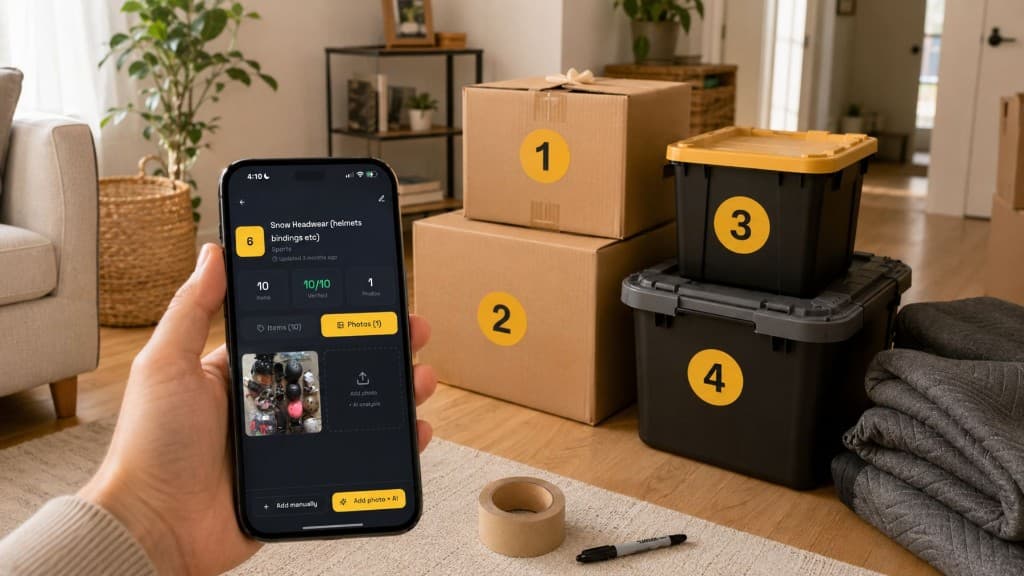
Every moving box should have a number.
Not just a room label. Not just a color. A number.
Use a simple format:
Box 1
Box 2
Box 3
Box 4
The number gives every box a fixed identity. Room labels can change. Contents can be updated. Boxes can be moved. But the number stays stable.
This is especially helpful when you have several boxes from the same room. "Kitchen" is not enough when you have twelve kitchen boxes. "Kitchen — Box 6" is much better.
A numbered system also works after moving day. If you do not unpack everything right away, the box number lets you keep tracking what is still stored.
For example:
Box 14
Room: Kitchen
Priority: Open First
Contents: coffee maker, mugs, filters, dish towels, scissors
Box 22
Room: Office
Priority: Later
Contents: printer paper, old files, extra notebooks, spare chargers
Box 31
Room: Bedroom
Priority: Seasonal
Contents: winter sweaters, scarves, gloves, extra blanket
That is much easier than opening every box labeled "Bedroom."
Step 3: Label by Room, Priority, and Contents
A useful moving label should be simple, but specific.
At minimum, write:
Box number
Destination room
Priority level
Key contents
The room helps movers. The priority helps you unpack. The contents help you find things.
The priority level is where many moving systems get better fast.
Use three simple levels:
Open First: items needed in the first 24–48 hours
Open Soon: items needed in the first week
Open Later: items that can wait
This matters because not every box in the same room has the same urgency.
A kitchen box with coffee, plates, utensils, and paper towels is different from a kitchen box with holiday serving dishes. A bedroom box with sheets and pajamas is different from one with off-season sweaters. A bathroom box with medication and toiletries is different from one with backup towels.
The Spruce specifically recommends labeling essential boxes as "Open First" and transporting first-day essentials where you can access them immediately. That advice is simple, but it can make the first night in a new home much less stressful. (The Spruce)
A good label does not need to list everything. It only needs to list the things you would panic-search for later.
Step 4: Create a Searchable Moving Inventory
This is the part that makes the system last.
A box label helps when the box is in front of you. A searchable inventory helps when you are standing in the new house wondering where something went.
Your moving inventory can be simple:
Box 9
Room: Bathroom
Priority: Open First
Contents: toiletries, medication, towels, shower curtain, toilet paper
Location after move: Primary bathroom closet
Box 17
Room: Living Room
Priority: Open Soon
Contents: remotes, charging cords, framed photos, candles, bookshelf décor
Location after move: Living room corner
Box 28
Room: Storage
Priority: Open Later
Contents: holiday lights, gift bags, ornament hooks, wrapping paper
Location after move: Garage shelf, right side
This is where photos help.
Take a quick photo before closing each box, especially for boxes that contain mixed items, valuables, cords, hardware, décor, seasonal items, or anything you may not unpack right away. Better Homes & Gardens recommends photographing important items and keeping an inventory, and Good Housekeeping recommends labeling wires and hardware in clearly marked plastic bags so reassembly is easier later. (Better Homes & Gardens, Good Housekeeping)
Photos are useful because you may not remember the perfect search word.
You might not know whether to search "cord," "adapter," "charger," or "black cable." But a photo helps you recognize the thing you need.
Step 5: Label More Than One Side of the Box
Boxes get stacked, rotated, carried, and pushed against walls.
If the label is only on the top, you may not be able to see it once boxes are piled. If the label is only on one side, that side may face the wall.
Label at least two sides of every box. For important boxes, label three.
Write the box number large enough to read from a few feet away. If you use colored tape or stickers for rooms, place them on multiple sides too.
Better Homes & Gardens specifically recommends labeling all sides because boxes get stacked, and visible labels make it easier to locate items in the new home. (Better Homes & Gardens)
This is a small detail that makes a huge difference when your living room is temporarily a cardboard city.
Step 6: Make an Open-First Box for Each Person or Room
Most moving advice mentions an essentials box. That is good advice.
But for families, roommates, kids, pets, or larger homes, one essentials box can quickly become overloaded.
Instead, create open-first boxes by person or area.
Examples:
Kitchen Open First: coffee, mugs, paper towels, dish soap, snacks, basic utensils
Bathroom Open First: toiletries, medication, towels, toilet paper, shower curtain
Bedroom Open First: sheets, pajamas, chargers, change of clothes
Kids Open First: favorite blanket, pajamas, school items, bedtime basics
Pet Open First: food, bowls, leash, medication, litter, cleanup supplies
Tool Open First: scissors, box cutter, screwdriver, tape, batteries, light bulbs
This makes the first night easier because you are not searching through twenty boxes for the few things that make a home functional.
The goal is not to unpack everything immediately.
The goal is to make the first 48 hours livable.
Step 7: Plan for the Boxes You Will Not Unpack Right Away
Not every box gets unpacked immediately.
Some boxes turn into temporary storage. Some go into the garage. Some go into closets. Some stay sealed while you figure out the new layout. Some contain seasonal items you will not need for months.
This is where most moving systems break.
They are built for moving day, not the months after.
Your organization system should include a plan for "still packed" boxes. Once a box lands in its temporary or long-term storage location, update the record.
For example:
Box 28
Room: Storage
Contents: holiday lights, gift wrap, ornament hooks
New location: Garage shelf, bottom row
Box 34
Room: Office
Contents: old tax files, extra notebooks, printer supplies
New location: Hall closet, top shelf
Box 41
Room: Bedroom
Contents: off-season clothes, winter scarves, spare blanket
New location: Under bed, left side
That way, moving boxes do not become mystery storage.
They become searchable storage.
What Not to Do When Labeling Moving Boxes
A moving box organization system should make the move easier, not more complicated.
Avoid these common mistakes.
Do Not Use "Miscellaneous" as a Label
A box labeled "Misc" is almost always a future problem.
If the box truly contains mixed items, label the key contents. Write the things you would actually look for later, like "batteries, candles, tape, small frames, chargers."
A mixed box is fine. A mystery box is not.
Do Not Mix Rooms Unless You Have a Reason
Packing by room is one of the simplest ways to keep a move organized. Real Simple's expert moving advice recommends packing by room and keeping boxes limited to one room whenever possible, even if there is extra space in the box. (Real Simple)
There are exceptions, especially for open-first boxes or small apartment moves. But in general, avoid tossing random items from different rooms into one box just to fill space.
That small shortcut usually costs time later.
Do Not Make the Label Too Tiny
Moving labels need to be readable while boxes are stacked.
A tiny label might look neat, but it is not useful when you are standing across the room trying to find Box 18.
Use large numbers, clear handwriting, or printed labels.
Do Not Trust Yourself to Remember
Moving is mentally crowded.
Even if you think you will remember which box has the printer cable, the spare keys, or the dog leash, write it down.
Your future self deserves less guessing.
How Totely Helps After Moving Day
Totely is built for the exact problem moving creates: you packed everything, but now you need to find one thing fast.
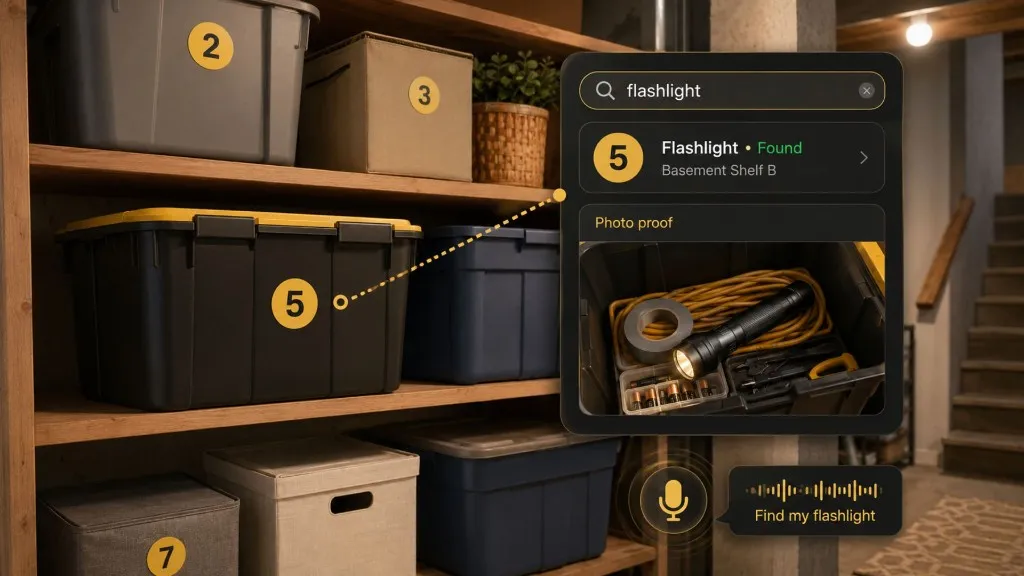
Instead of relying only on handwritten labels, Totely helps you turn moving boxes into searchable records.
With Totely, you can:
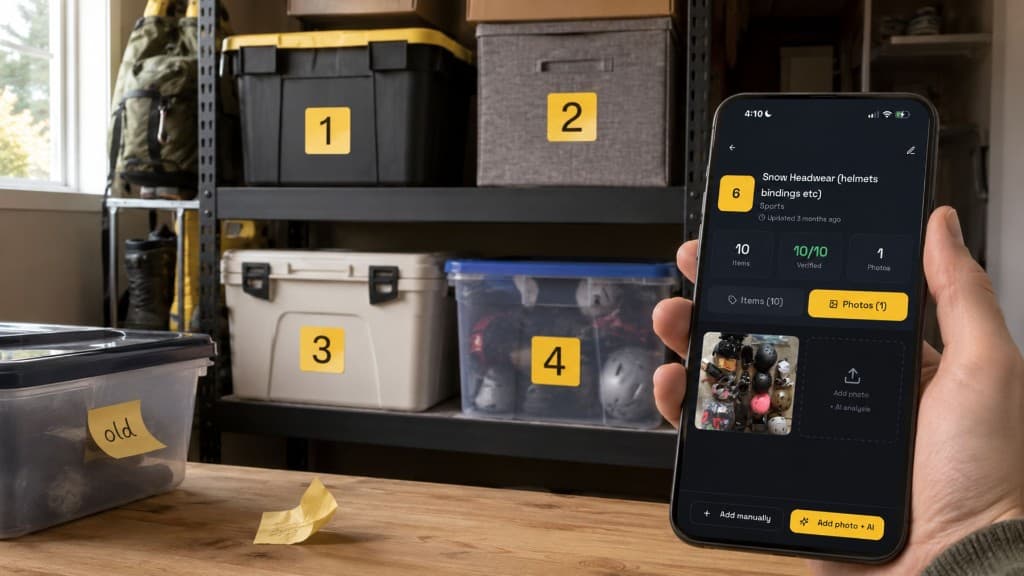
- Label each box with a simple number or numbered tag.
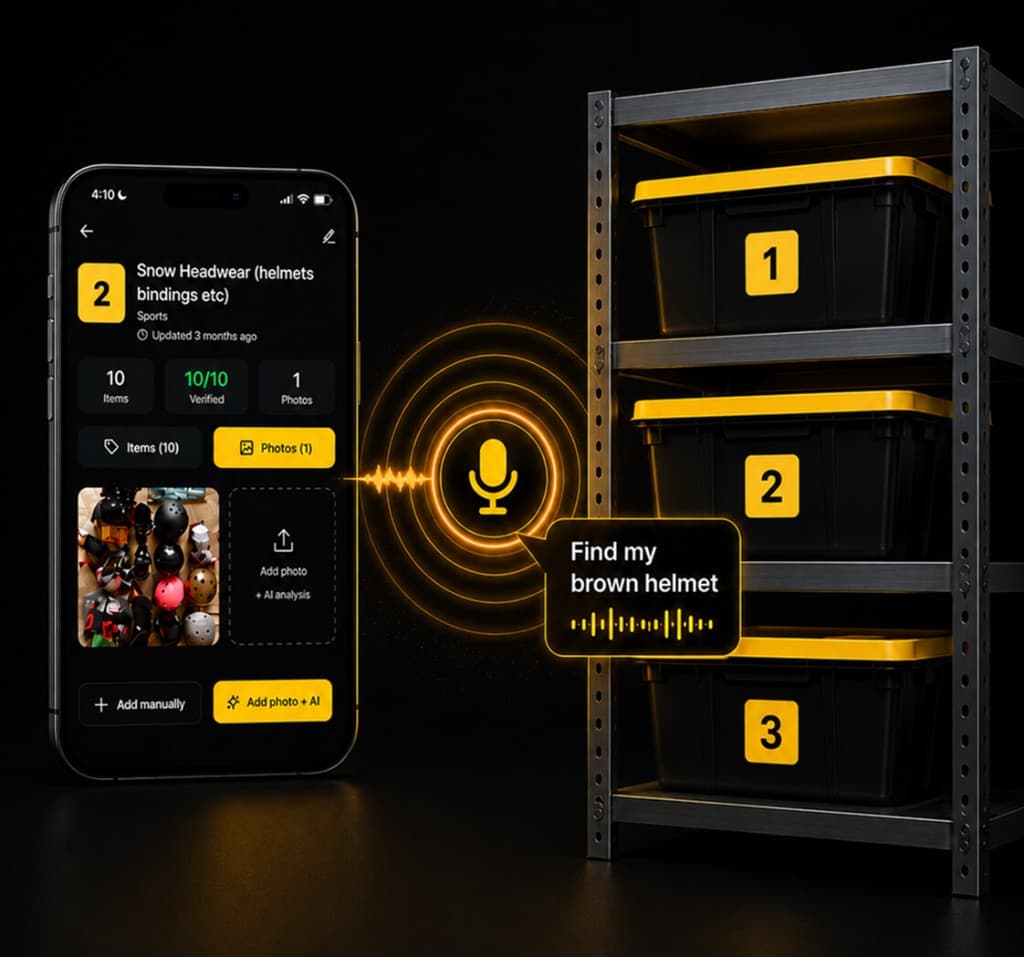
- Snap a photo before closing the box.
- Record key items so they are searchable.
- Add the destination room before moving day.
- Update the final location after the move.
That means a moving box can continue to work even if it becomes a closet box, garage box, under-bed box, storage unit box, or seasonal box. Boxes headed off-site benefit from the same numbering habit plus a plan to keep a storage unit searchable after unload day.
Totely acts like a digital memory layer for your move.
Your boxes hold the items. Totely helps you remember what is inside and where they ended up.
A Simple Moving Box System You Can Copy
Use this format for every box:
Box Number: Box 12
Room: Kitchen
Priority: Open Soon
Contents: mixing bowls, measuring cups, baking pans, oven mitts
Photo: taken before closing
Final Location: pantry cabinet, lower shelf
Keep the physical label simple:
Box 12
Kitchen
Open Soon
Then keep the details in your searchable record.
This gives you a clean box label without losing the contents.
The First Week Unpacking Plan
A good organization system should help you unpack in the right order.
Start with function, not perfection.
Day 1: Essentials
Open the boxes that let you sleep, shower, eat, take medication, charge devices, care for pets, and safely open other boxes.
Do not worry about decorating yet.
Days 2–3: Daily Rooms
Focus on the kitchen, bathroom, bedrooms, and work-from-home needs.
These are the spaces that reduce daily stress fastest.
Days 4–7: Storage and Extras
Once daily life is functional, sort the boxes that may become longer-term storage.
This is the moment to update final locations so boxes do not disappear into closets, garages, or spare rooms.
Moving day ends when the truck is empty.
But the organization system should continue until every box is either unpacked, stored intentionally, or ready to leave your home.
Moving Box Organization FAQs
What is the best moving box organization system?
The best moving box organization system uses box numbers, destination rooms, priority labels, short contents summaries, photos, and a searchable inventory. This helps you find items during packing, moving day, unpacking, and long-term storage.
How should I label moving boxes?
Label each moving box with a large box number, destination room, priority level, and a few key contents. Label more than one side so the information is visible when boxes are stacked or turned.
Should I number moving boxes?
Yes. Numbering moving boxes gives each box a stable identity. A room label tells movers where to place the box, but a number lets you connect that box to a more detailed inventory or photo record.
What should go in an open-first moving box?
An open-first box should include the items you need in the first 24–48 hours, such as toiletries, medication, chargers, basic kitchen items, bedding, towels, toilet paper, scissors, tape, pet supplies, and a change of clothes.
How do I keep track of what is inside each moving box?
Use a simple inventory system. Record each box number, room, priority, key contents, photo, and final location. You do not need to list every item, but you should record anything you are likely to search for later.
How can Totely help with moving boxes?
Totely helps you label moving boxes, photograph contents, record key items, add destination rooms, and update final locations after moving day. It turns moving boxes, storage boxes, totes, and hidden storage into searchable storage.
Make Moving Boxes Searchable Before They Become Mystery Boxes
A move does not end when the boxes arrive.
It ends when you can find what you need in your new home.
A better moving box organization system helps you pack with less guessing, unpack with less stress, and keep track of the boxes that stay closed after moving day.
Start with one simple rule: every box gets a number.
Then add the room, priority, contents, photo, and final location.
With Totely, your moving boxes can become searchable, so you can stop opening every box and start finding what you need faster.