How to Label Storage Totes Better: Numbered Labels vs. Sticky Notes
Numbered labels vs sticky notes for storage totes—which wins for findability, durability, and searchable household storage.
By Ben Stallsworth · Co-Founder, Totely
March 22, 2026 · Updated August 27, 2026 · 15 min read
How to Label Storage Totes Better: Numbered Labels vs. Sticky Notes
This is a decision guide—numbered labels versus sticky notes. Once you choose numbers, follow how to label storage bins. For the broader numbered storage labels system with photos and search, see Totely’s labeling pillar.
Sticky notes are tempting.
You are organizing the garage, closet, attic, basement, or storage room, and you need a quick way to label storage totes before you forget what is inside. So you grab whatever is nearby: a sticky note, a marker, a strip of tape, maybe an old shipping label.
For a little while, it works.
The tote says "Holiday." Another says "Kids." Another says "Garage." One says "Misc," which always feels useful in the moment and suspicious later.
Then a few months pass.
The sticky note peels. The ink fades. Someone moves the tote. The contents change. The label says "Winter," but now the tote also has batteries, gift bags, spare gloves, and the extension cord you bought again because you could not find the first one.
That is the problem with temporary labels: they help you put things away, but they rarely help you find things later.
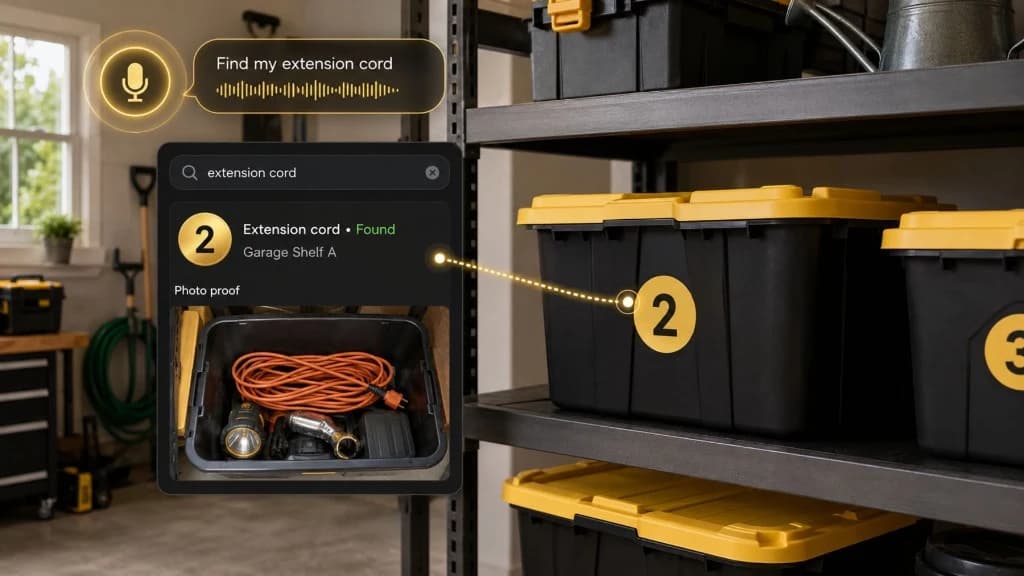
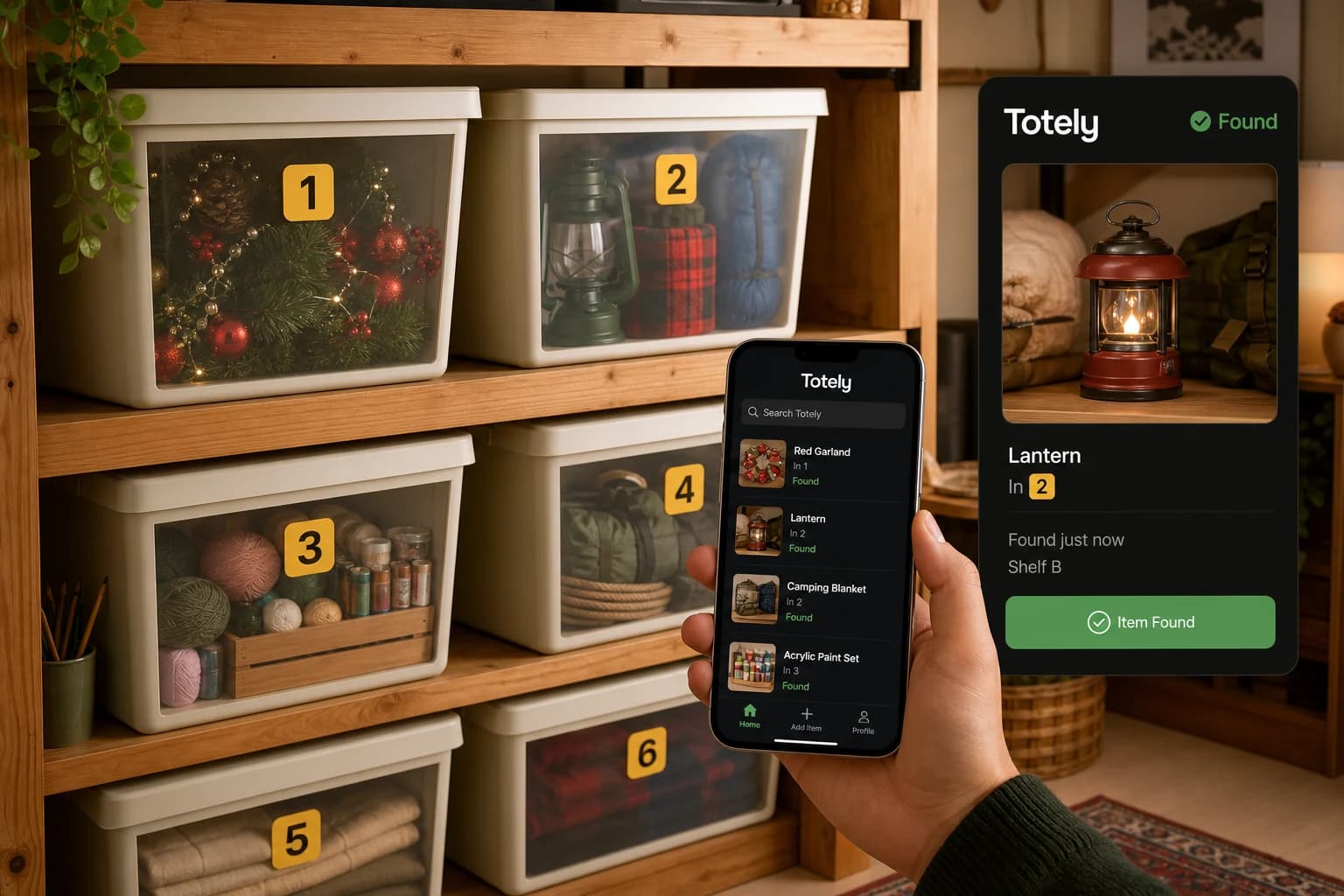
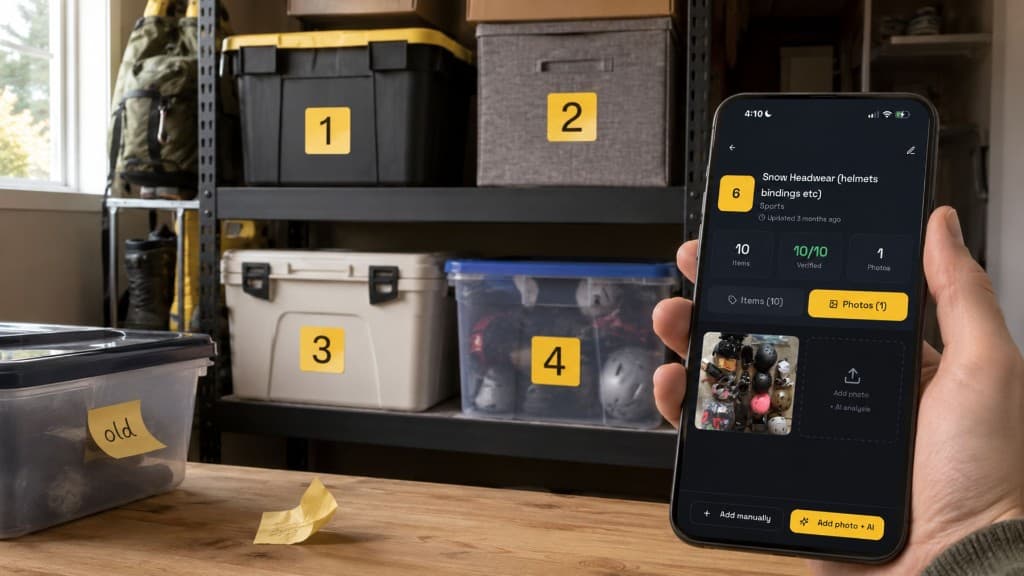
A better way to label storage totes is to use numbered labels connected to a simple searchable record. The number identifies the tote. The record tells you what is actually inside.
That small change turns a tote from a mystery box into searchable storage.
Quick Links
Why Sticky Notes Fail on Storage Totes
Sticky notes are useful for reminders. They are not built to be a long-term storage system.
They fall off when totes are moved. They curl in garages and basements. They lose stickiness in heat, cold, dust, or humidity. They get covered when bins are stacked. They are easy to replace, but that is also part of the problem: they are easy to ignore.
The bigger issue is that sticky notes usually capture a moment in time.
You label a tote based on what was inside that day. But household storage keeps changing. After one holiday cleanup, one closet reset, one move, or one "just put it anywhere for now" moment, the label starts drifting away from reality.
A sticky note might say:
Decor
But inside the tote, there may be candles, gift wrap, ornament hooks, extension cords, batteries, picture frames, and table linens.
The sticky note is not exactly wrong. It is just not specific enough to be useful later.
That is why sticky notes tend to create a false sense of organization. They make the tote look labeled, but they do not make the contents easy to find.
Why Numbered Labels Work Better
Numbered labels work because they give every tote a stable identity.
Instead of trying to fit the full contents onto the outside of a bin, you give the tote a simple number:
Tote 1
Tote 2
Tote 3
Tote 4
That number stays the same even when the contents change.
This matters because categories are flexible. A tote that starts as "Holiday Decor" might later include gift bags, tape, spare batteries, wrapping supplies, and outdoor timers. If the outside label only says "Holiday," it becomes less helpful over time.
But if the tote is simply Tote 8, you can update the contents behind the scenes without replacing the physical label.
The number becomes the anchor.
The detailed inventory becomes the memory.
That is the better system: simple outside, specific inside.
The Problem With Category-Only Labels
Most people label storage totes by broad category.
That usually looks like:
- Holiday
- Garage
- Baby Clothes
- Tools
- Keepsakes
- Crafts
- Camping
- Miscellaneous
These labels are better than no label at all, but they do not answer the question you usually have when you are searching.
You are rarely looking for an entire category. You are looking for one specific item.
You are not asking, "Where is the holiday tote?"
You are asking:
Where are the ornament hooks?
Where is the air mattress pump?
Where are the 4T snow pants?
Where did I put the extension cord?
Do we still have birthday candles?
A category label helps you guess which tote to open. A numbered label connected to a searchable record helps you know.
That is the difference between storage that looks organized and storage that actually works.
Sticky Notes vs. Numbered Labels
Sticky notes and numbered labels are trying to solve the same problem, but they do it very differently.
| Label Type | Best For | Weakness |
|---|---|---|
| Sticky notes | Temporary sorting while organizing | Fall off, fade, and become outdated |
| Tape and marker | Quick category labels | Usually too vague for long-term tracking |
| Printed category labels | Clean-looking shelves | Hard to update when contents change |
| Numbered labels | Long-term storage tracking | Needs a simple record behind each number |
| Numbered labels + inventory | Searchable storage systems | Works best when paired with photos and item lists |
The best system is not necessarily the prettiest label. It is the label that still works months later when you need one thing fast.
For most homes, that means using a numbered label on the outside and a searchable inventory behind it.
How to Label Storage Totes the Right Way
A good storage label should do two jobs.
First, it should help you identify the tote from the outside.
Second, it should connect that tote to the contents inside.
That does not mean you need a complicated system. In fact, the simpler the system is, the more likely you are to maintain it.
Step 1: Give Every Tote a Simple Number
Start with plain numbers.
Use:
1, 2, 3, 4
Avoid overly complicated systems like:
GAR-HOL-DEC-004
That may look organized, but it becomes harder to maintain once your storage changes.
A simple number is easier to read from a distance, easier to search, and easier for everyone in the household to understand.
If the tote is on a high shelf, in a dark garage, or stacked behind other bins, make the number large enough to see clearly.
Step 2: Add a Broad Category Only If It Helps
A category can still be useful, but it should not carry the whole system.
For example:
Tote 4 — Holiday
Tote 7 — Kids Clothes
Tote 9 — Garage Supplies
The number is the permanent ID. The category is just a quick visual clue.
This is important because the category may change. The tote number should not.
Step 3: Take a Photo Before Closing the Tote
A photo gives your label context.
Before you close the lid, take a quick picture of what is inside. It does not need to be styled or perfect. It only needs to be useful enough to help you recognize the contents later.
Photos are especially helpful for mixed storage, like holiday decor, craft supplies, kids' clothing, garage tools, keepsakes, and camping gear.
A label may say "Tote 6." A photo shows what Tote 6 actually looked like when you packed it.
That visual proof can save you from opening three bins just to check.
Step 4: Record the Items You Actually Search For
You do not need to list every tiny object.
Record the items your household is likely to search for later.
For example, a holiday tote might include:
- Tree lights
- Gift bags
- Ornament hooks
- Stocking holders
- Outdoor timer
- Birthday candles
A kids' clothing tote might include:
- 4T snow pants
- Size 5 rain boots
- Winter coat
- Soccer cleats
- Halloween costume
A garage tote might include:
- Extension cords
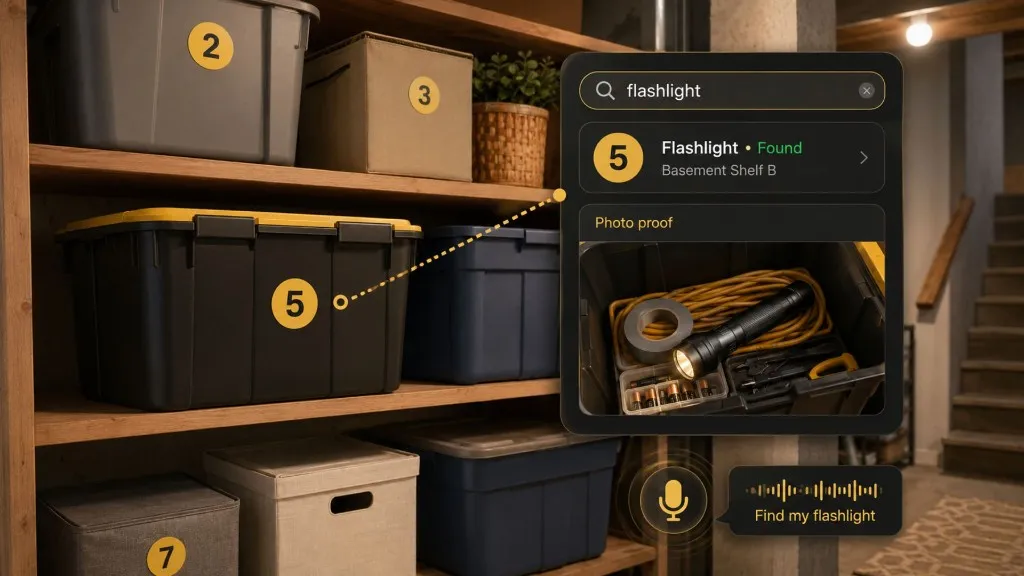
- Flashlight
- Bungee cords
- Work gloves
- Air mattress pump
Use normal household words. If your family calls something "camping light," use that phrase. Your storage system should match how people actually search.
Step 5: Add the Tote Location
A label tells you which tote is which. A location tells you where to find it.
Instead of writing:
Garage
Use:
Garage shelf, top row, left side
Instead of:
Closet
Use:
Hall closet, top shelf
Instead of:
Under bed
Use:
Primary bedroom, under bed, right side
The more storage zones you have, the more important this becomes.
If your items are spread across a garage, attic, basement, closet, storage unit, or apartment storage area, the location is just as important as the label.
What to Track Behind Each Numbered Label
The outside of the tote should stay simple.
The record connected to that tote can hold the details.
For each numbered tote, track:
- Tote number
- Broad category
- Exact location
- Photo of contents
- Key searchable items
- Notes if needed
- Last updated date
For example:
Tote 8
Category: Holiday
Location: Garage shelf, second row
Contents: white tree lights, red ornaments, stocking hooks, gift bags, tissue paper, outdoor timer
Notes: fragile ornaments are in the red box
That is much more useful than a sticky note that only says "Christmas."
This is the heart of searchable storage: the physical label identifies the container, while the digital record remembers what is inside.
Why Numbered Labels Help Families Stay Organized
Storage systems often fail when only one person understands them.
One person knows that the Halloween candles are in the holiday tote. Someone else thinks they belong with decor. Another person puts them in the closest available bin because the label is vague.
Numbered labels reduce that confusion.
Instead of explaining the whole system, you can say:
It goes in Tote 6.
Or:
Search it and check the tote number.
That is simpler than expecting everyone to remember your personal category logic.
A numbered system also helps kids, partners, roommates, and extended family members use the same storage setup. The goal is not to make everyone think the same way. The goal is to make the system clear enough that people can find and return items without guessing.
When Sticky Notes Still Make Sense
Sticky notes are not useless. They are just not the final label.
They can be helpful during the sorting stage.
Use sticky notes when you are still deciding what belongs together. They are great for temporary piles like "Donate," "Move to Garage," "Ask About," "Holiday," or "Needs a Better Home."
But once the tote is packed and going into storage, replace the sticky note with something more durable.
Think of sticky notes as a planning tool.
Think of numbered labels as the long-term system.
Common Labeling Mistakes to Avoid
A labeling system should make storage easier, not more complicated.
Avoid these common mistakes.
Using Labels That Are Too Vague
Labels like "Misc," "Stuff," "House," or "Garage" are not specific enough to help later.
They feel convenient when you are tired, but they create mystery bins.
Writing Too Much on the Outside
A crowded label is hard to read, especially from a distance.
If you need to list ten items, those details belong in the inventory record, not on the outside of the tote.
Changing the Label Every Time Contents Change
This is where category labels become frustrating.
If the outside label needs to be rewritten constantly, the system will not last. Use a stable number and update the contents behind the scenes instead.
Forgetting the Location
A perfectly labeled tote is still hard to find if you do not know where it lives.
Always connect the tote number to a location.
Making the System Too Complicated
The best storage system is the one you will actually use.
If it feels like a warehouse database, most households will abandon it. Keep the outside simple. Keep the record practical.
Best Places to Use Numbered Storage Labels
Numbered labels are especially useful anywhere bins look similar or contents change over time.
Garage Storage
Garages often hold tools, cords, sports gear, outdoor supplies, seasonal items, car supplies, and random household extras.
Numbered labels make it easier to find the right tote without pulling everything down.
Holiday Decor
Holiday totes are classic mystery boxes.
A numbered label plus searchable inventory can help you find lights, ornament hooks, gift wrap, stocking holders, outdoor timers, seasonal candles, and table decor before buying duplicates.
Kids' Clothes and Hand-Me-Downs
Kids' storage changes quickly.
Numbered totes help you track sizes, seasons, shoes, coats, costumes, and items to donate or pass along.
Craft and Hobby Supplies
Craft supplies are easy to scatter across bins and drawers.
A numbered system helps you track paint, yarn, glue, fabric, beads, paper, tools, and project materials.
Moving Boxes
Numbered boxes are incredibly helpful during a move, especially if you will not unpack everything right away.
Instead of writing a long list on every box, number the box and keep the detailed contents in a searchable record.
Keepsake Storage
Sentimental items deserve better than mystery boxes.
Numbered labels and photos can help you remember which tote holds baby keepsakes, school papers, family photos, letters, cards, and inherited items.
How Totely Makes Storage Labels Searchable
Totely is built for the moment when regular labels stop being enough.
A sticky note can tell you what you thought was inside a tote on the day you packed it. A numbered label can identify the tote. But Totely helps connect that tote to a living, searchable record.
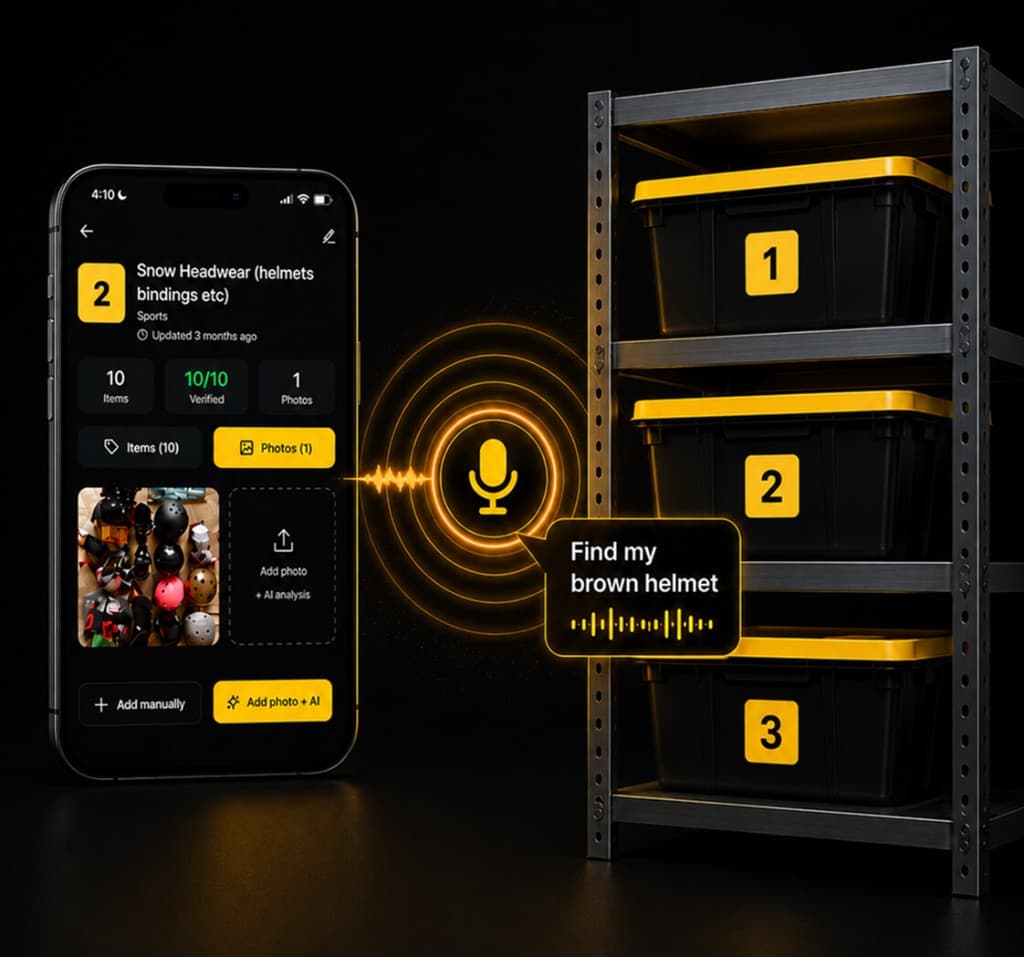
With Totely, you can:
- Label the tote with a clear number or numbered tag.
- Snap a photo of what is inside.
- Record key items so they are searchable.
- Add the location so you know where the tote lives.
- Search later instead of opening every container.
That means bins, totes, boxes, under-bed storage, closet containers, garage shelves, holiday bins, and hidden storage spots can all become part of one searchable system.
Totely acts like a digital memory layer for your storage.
Your labels identify the container. Totely helps you remember what is inside.
A Simple Label Storage Test
If you are not ready to relabel everything, start with one tote.
Choose the tote that annoys you most. Maybe it is the holiday tote you open every year, the garage tote with random cords, the kids' clothes bin, the craft supply box, or the keepsake container you do not want to forget.
Remove the sticky note. Add a clear number. Take a photo. Record the key contents. Add the location.
Then, the next time you need something, search before opening it.
That one tote will show you the difference between a temporary label and a system that actually helps you find things. Try one numbered tote in Totely before you relabel the whole stack.
Label Storage FAQs
What is the best way to label storage totes?
The best way to label storage totes is to use a large numbered label on the outside and keep a searchable record of what is inside. The number identifies the tote, while the record can include photos, item names, notes, and the tote's location.
Are sticky notes good for labeling storage bins?
Sticky notes are useful for temporary sorting, but they are not ideal for long-term storage labels. They can fall off, fade, curl, or become outdated when the tote contents change. Use sticky notes while organizing, then switch to a more durable numbered label.
Should I label storage totes by number or category?
Use both if helpful, but make the number the permanent ID. A category like "Holiday" or "Garage" gives quick context, but the number lets you update the contents over time without replacing the outside label.
Why are numbered storage labels better?
Numbered storage labels are better because they give every tote a stable identity. Even if the contents change, the number stays the same. You can then update the item list, photos, and location connected to that number.
What should I include in a storage label system?
A good storage label system should include a visible tote number, a broad category if needed, a photo of the contents, a short item list, and the tote's location. This makes the container easier to identify and the contents easier to find.
How can Totely help me label storage totes?
Totely helps you label storage totes with a clear number or numbered tag, record what is inside, add photos, save locations, and search later. It turns regular bins, totes, boxes, and hidden storage into searchable storage.
Make Your Storage Labels Work Harder
Sticky notes are fine for sorting.
But they should not be the system you rely on six months from now when you need one specific thing.
If you want to label storage totes in a way that actually lasts, keep the outside simple and make the inside searchable. Use a numbered label, take a photo, record the items that matter, and add the location.
With Totely, your storage labels can do more than name a bin. They can help you find what is inside — without opening every tote.