How to Store Yarn Without Tangles—or Losing the Skein You Need
Learn how to store yarn by project, weight and fiber, protect skeins from common storage risks, and find the exact color or dye lot later.
By Steve Watts · Co-Founder, Totely
October 30, 2026 · Updated October 30, 2026 · 15 min read

You remember the teal yarn. There were at least two skeins, probably enough for the next project, and the ball band may still be tucked into one of them. But the yarn could be in a project bag, a cube with the wool, or the bin that became a home for leftovers.
The short answer is to give active projects, ready stash, and long-term reserve yarn different homes. Keep every skein clean and completely dry, retain its identifying band, and sort it by the details you actually use—often project, yarn weight, fiber, and then color. Choose containers for access frequency and the risks in your space rather than assuming one bin is best for every stash.
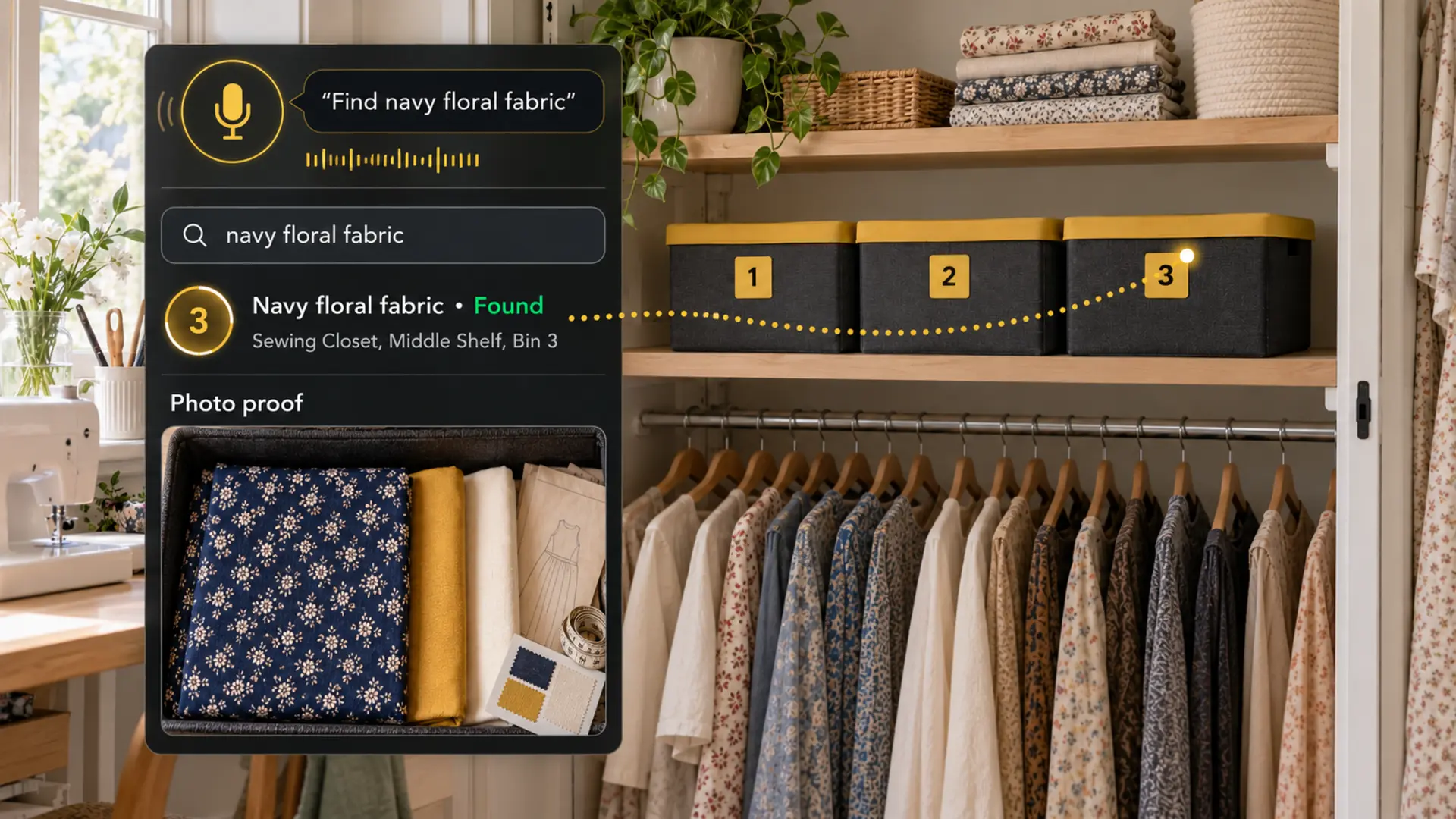
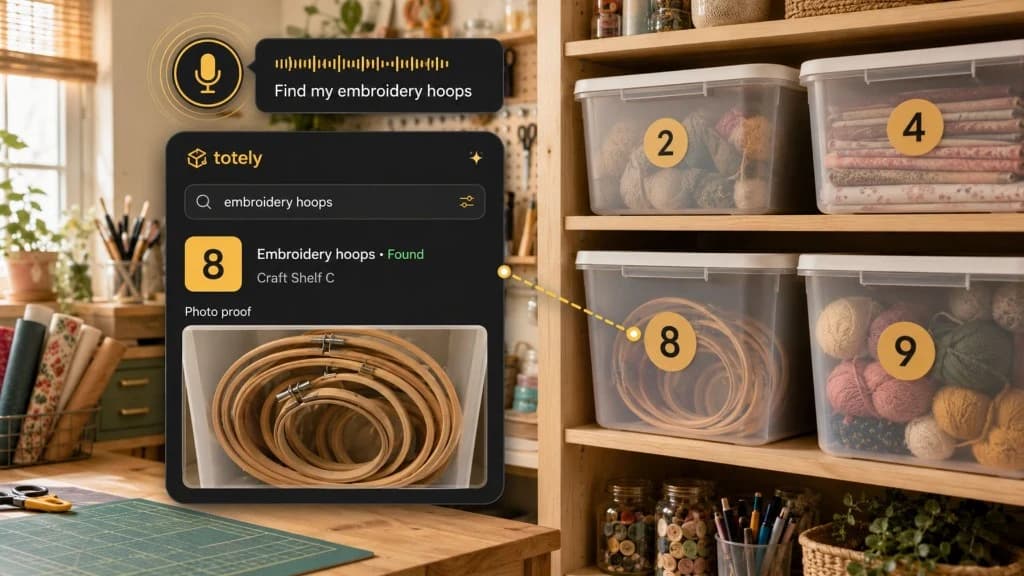
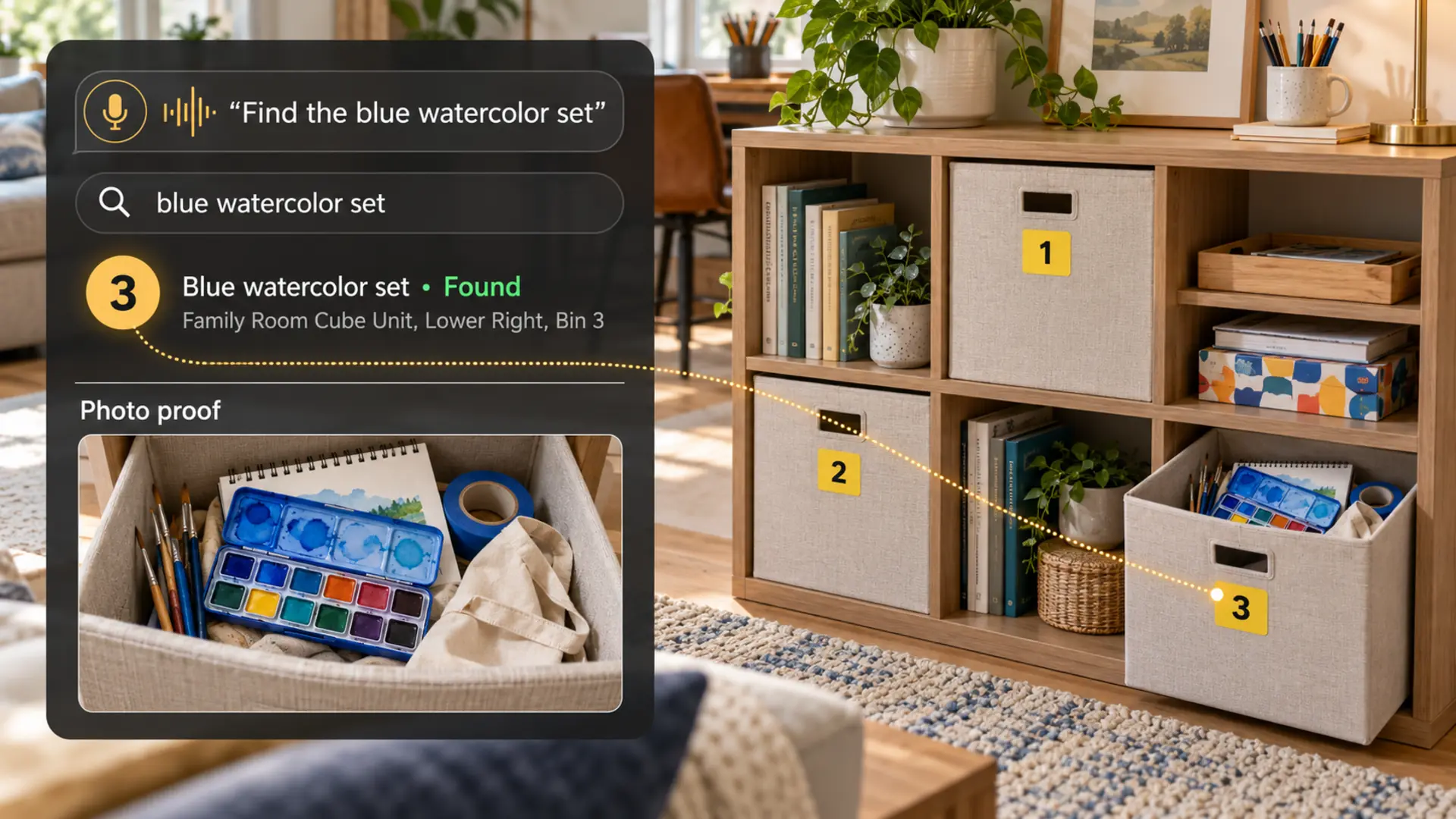
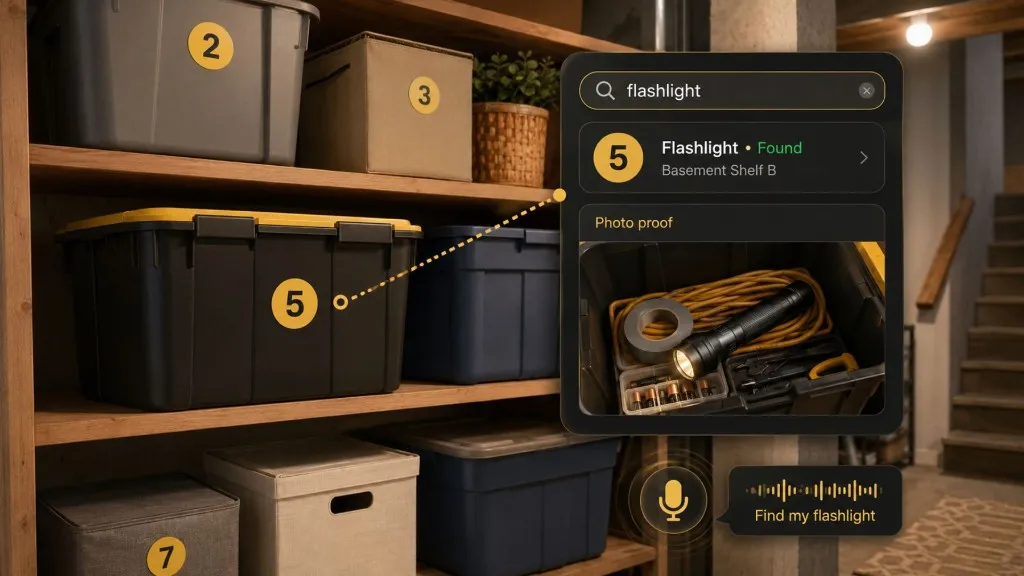
Solve that physical system first. Then number each closed bin, save its exact shelf address, and connect it to a reviewed list and photo. That makes “teal yarn skeins” a useful search instead of a tour of every basket in the house.
Quick Links
- Build a Three-Layer Yarn System
- Prepare the Yarn Before Storage
- Sort by the Way You Choose Yarn
- Choose a Yarn Storage Container
- Pick a Stable Indoor Location
- Keep Ball Bands and Leftovers Useful
- Build an Exact Yarn Bin Map
- How Totely Helps
- Use an Intake and Return Rule
- Yarn Storage Mistakes to Avoid
- Yarn Storage FAQs
Build a Three-Layer Yarn System
Do not start by buying matching shelves. Start by separating yarn according to how soon and how completely you need to access it.
1. Active projects
An active project is more than yarn. It may include a hook or needles, a pattern, swatch, row or round notes, notions, and one or more working skeins. Give each project its own supported bag, basket, or container so the setup can move without tangling or borrowing pieces from another project.
Write a project name on the container or add a removable tag. If spare skeins stay in the main stash, note that they are reserved rather than available.
2. Ready stash
This is yarn you expect to browse and use in the near term. Keep it reachable and divided into groups you can scan without pulling every skein from a deep pile. Shallow drawers, supported cubbies, baskets, or smaller bins can work when they fit the room and the yarn.
The ready stash should be easy to return to. If one removal causes the rest of a vertical row to collapse, add an appropriate divider or make the group smaller.
3. Long-term reserve
Reserve yarn includes full project quantities, special purchases, discontinued colors, inherited skeins, and materials you use infrequently. It needs a defined indoor location, protection appropriate to the fiber and local risks, and enough identification that it does not become an anonymous box.
Keep valuable, historic, fragile, mold-affected, or actively infested material outside the ordinary workflow until you have advice suited to its condition. A household inventory can locate yarn; it cannot identify a fiber from sight, value a collection, or treat damage.
Prepare the Yarn Before Storage
Work on a clean, dry surface with one manageable group at a time. Remove loose tools, pins, food, drinks, and anything that could snag or soil the yarn.
For each skein, ball, cake, or hank:
- Check that it is dry. Do not close damp yarn into a container.
- Look for a reliable identity. Keep the original band or supplier information with the yarn when possible.
- Contain loose ends. Tuck them without knots that distort the yarn; use a separate breathable sleeve or other suitable containment if a partial ball keeps unraveling.
- Separate uncertain material. Inspect inherited, secondhand, or long-ignored yarn before mixing it into a clean stash.
- Pause for damage. Isolate yarn with active insects, webbing, unusual debris, dampness, or visible mold and seek appropriate help instead of testing a treatment on the whole stash.
The Canadian Conservation Institute's textile guidance identifies water, inappropriate humidity and temperature, pests, dust, light, and poor storage among the risks to textiles. It also notes that clothes moth and carpet beetle larvae are particularly damaging to wool and other keratinous fibers. This is conservation guidance for collections—not a promise that one household container eliminates those risks.
Follow the yarn maker's care instructions for the actual fiber. If the band is missing or the fiber is uncertain, record that uncertainty rather than assigning a material from appearance alone.
Sort by the Way You Choose Yarn
A rainbow shelf looks satisfying, but color is not always the first question a project asks. A pattern may require a particular yarn weight, fiber, construction, quantity, and gauge range before color becomes relevant.
Choose one primary sort that matches your decisions:
- By project: best for yarn already committed to a specific make.
- By weight: useful when patterns and substitutions begin with weight.
- By fiber or care group: helpful when material and washing requirements guide the project.
- By color family: useful inside a weight or fiber group, or for a mostly uniform stash.
- By full quantity versus leftovers: keeps project-ready groups from disappearing among partial balls.
Do not force a mixed stash into one rule. Active projects can be grouped by project, reserve yarn by weight and fiber, and leftovers by a minimum useful size or intended use.
Keep complete dye-lot groups together when the band provides that information. A matching color name does not prove two skeins share a dye lot or will look identical in a finished piece.
For mixed tools, notions, and work-in-progress labels across the room, see the craft storage labels guide. This page stays focused on yarn identity, condition, and location.
Choose a Yarn Storage Container
There is no universal best yarn container. The practical choice depends on how often you use the yarn, whether you need to see it, the shelf dimensions, dust and pest concerns, and whether the room stays clean and dry.
| Storage choice | Useful for | Check before choosing it |
|---|---|---|
| Project bag or portable basket | One active project and its working yarn | Smooth interior, secure tools, enough room to avoid crushing, and a clear project name |
| Shallow drawer or tray | Ready stash and small groups you browse often | You can see and remove one group without dragging yarn across hardware |
| Open cubby or basket | Frequently used yarn in a clean, low-risk interior space | Light, dust, pets, children, snag points, and how long the yarn will sit exposed |
| Lidded bin | Defined reserve groups or yarn needing more enclosure | Yarn is fully dry; the lid closes without compression; the filled bin is accessible and manageable |
| Smaller containers inside a bin | Leftovers, dye-lot groups, or specialty skeins | Inner groups remain identifiable and do not hide dampness or damage |
Clear containers help with color recognition, but they do not block light. Opaque containers reduce visibility, but they do not make a damp basement or hot attic appropriate. A closed container can reduce dust exposure; it also makes the condition of the yarn easier to ignore unless you inspect it.
Do not overfill. Skeins should keep their shape, the lid should not press down, and you should be able to remove one group without pulling a tangled chain behind it. Follow the container and shelving makers' load, stacking, installation, and cleaning directions.
Vacuum storage is not a default yarn solution. Compression can obscure ball bands, deform packaging, and make the contents hard to inspect. Follow the yarn maker's guidance for the actual material before compressing it for long storage.
For cubby openings and removal clearance, use the measurements in the cube storage bins guide.
Pick a Stable Indoor Location
Choose a clean, stable interior area away from direct sunlight, plumbing leaks, damp walls, extreme heat, and routine temperature swings. Keep yarn off the floor and away from water paths. Do not rely on a lid to correct the room.
Use this location test:
- Dry: no condensation, damp flooring, musty wall, or recurring leak.
- Away from light: no direct sun on exposed yarn or transparent containers.
- Clean: no workshop dust, food crumbs, smoke, or pet-access problem.
- Stable: not beside a radiator, fireplace, hot appliance, or exterior space with large swings.
- Raised: containers sit on a sound shelf rather than the floor.
- Reachable: you can remove a filled bin without climbing over other storage or pulling down a tall stack.
The Library of Congress explains that light damage is cumulative and that light exposure during storage should be minimized. That supports a simple household rule: do not leave a decorative yarn display in direct sunlight just because you rotate projects occasionally.
If you use mothballs, remember that they are pesticides—not general open-air repellents. The National Pesticide Information Center says to follow the product label exactly, notes that current mothball products work by building vapor inside airtight containers, and warns against exposure to people and animals. Keep all pesticides out of reach of children and pets, and do not improvise a use that the label does not permit.
Keep Ball Bands and Leftovers Useful
The band can carry information that is difficult or impossible to recover by looking at the yarn: maker, line, fiber content, weight, yardage or meterage, color name or number, dye lot, and care instructions.
Keep the band around the skein when it remains secure. If it slips off, place it with that yarn in a small suitable sleeve or attach it to a non-yarn containment layer without putting adhesive on the fiber. When several identical skeins share one band, record how many the band actually describes.
For a useful search record, capture only what you can verify:
| Field | Why it helps | Honest fallback |
|---|---|---|
| Recognizable name | Supports natural-language search | “Teal yarn skeins” |
| Maker and line | Distinguishes similar yarns | “Band missing; maker unknown” |
| Weight | Narrows candidates for a pattern | “Weight unverified” |
| Fiber and care | Guides project and cleaning decisions | Copy the band; do not guess from touch |
| Color and dye lot | Keeps matching production groups together | Record color description only if no code is present |
| Quantity | Shows whether a group might fit a project | Count full skeins; mark partial balls separately |
| Project status | Prevents reserved yarn from looking available | “Reserved for blue cardigan” |
| Exact location | Gets you to the right container | Room / shelf / bin number |
Do not invent remaining yardage for a partial ball. If you have not measured or calculated it using a method appropriate to the yarn, write “partial ball; amount unverified.” A precise-looking guess is worse than a current uncertainty.
Build an Exact Yarn Bin Map
A label that says “YARN” describes the category but not the location of the teal skeins. Give each main container a simple visible number, then keep the richer details in the record.
- Put one unique physical number on each closed bin: 1, 2, 3, 4.
- Save an exact address such as Craft Closet / Shelf 2 / Yarn Bin 3.
- Photograph the visible contents while the bin is open and the groups are supported.
- Add only identities you can verify from a band or your own knowledge.
- Review the item list against the physical bin.
- Close the bin and test one real search.
| What you remember | Reviewed record | Saved location | Photo proof |
|---|---|---|---|
| teal yarn skeins | Two full teal skeins; maker, line, weight, fiber, color code, and dye lot copied from bands if present | Craft Closet / Shelf 2 / Yarn Bin 3 | Overview shows the teal group beside cream and rust skeins |
| cream leftover from the scarf | Partial cream ball; amount unverified; original project noted | Craft Closet / Shelf 2 / Yarn Bin 3 / Leftover Pouch | Photo shows the contained partial ball and its saved band |
| yarn reserved for the cardigan | Verified skein group with project status “reserved” | Blue Cardigan Project Bag / Studio Hook 2 | Project-bag photo shows yarn, pattern note, and tools without claiming hidden contents |
The example does not prove those yarns share care requirements. If different materials need different storage, they can live in different inner groups or bins while the saved address remains specific.
How Totely Helps
Totely adds a search layer after the yarn is clean, dry, grouped, contained, and assigned a sensible shelf.
For Yarn Bin 3:
- Put the number 3 on the closed bin.
- Take an overview photo while the yarn is visible.
- Let Totely create a first item list from the photo.
- Review and edit the list using the ball bands and the names you would search.
- Save Craft Closet / Shelf 2 / Yarn Bin 3.
- Search later for “teal yarn skeins.”
- Check the green Found result, exact location, bin number, and photo proof before opening anything.
The review step matters. A photo cannot reliably confirm fiber content, yarn weight, dye lot, yardage, care instructions, or what is hidden behind another skein. Totely helps locate the record you saved; it is not a fiber-identification, pattern-planning, pest-control, or quantity-measurement service.
Start with one ordinary, low-risk bin rather than a valuable inherited collection. The One-Tote Test works for yarn too: one number, one photo, one reviewed list, one exact location, and one real search.
Use an Intake and Return Rule
The system stays accurate only when yarn movement creates an update.
When yarn arrives
- Inspect it before mixing it with the stash.
- Keep its band and verify the identifying details.
- Decide whether it belongs to an active project, ready stash, or reserve.
- Put it in a group with enough room and suitable protection.
- Add or update the record and photo when needed.
When yarn starts a project
Move the required yarn into the project container and change its saved location or status. Do not leave the record saying “available in Bin 3” after the skeins have moved to the living room project basket.
When leftovers return
Contain loose ends, keep the band if it still identifies the yarn, and record that the amount is partial or unverified. Return the yarn to the correct group—or to a defined leftovers group—then update the location.
If the whole bin moves, keep its physical number and replace the saved room and shelf. The storage-bin tracking guide covers that broader habit.
Yarn Storage Mistakes to Avoid
- Buying containers before separating active and reserve yarn: frequent-use skeins end up buried behind long-term storage.
- Sorting only by color: a beautiful teal group may mix incompatible weights, fibers, care instructions, and dye lots.
- Discarding every ball band: appearance alone may not recover the information needed for a safe substitution or matching purchase.
- Sealing damp or uncertain yarn: enclosure does not correct moisture or an active problem.
- Treating a clear bin as light protection: visibility and light blocking are different jobs.
- Assuming one material needs no pest awareness: soils and mixed-fiber storage complicate simple fiber rules.
- Using mothballs as an open-air repellent: they are pesticides and must be used only as the label directs.
- Overfilling or vacuum-compressing by default: the yarn, bands, and groups become harder to inspect and retrieve.
- Guessing partial-ball yardage: record the amount as unverified until you use a reliable method.
- Numbering two containers “3”: physical identifiers must be unique within the storage system.
- Accepting an AI item list without review: the photo may hide or misread the exact yarn details.
- Skipping the move update: the search result becomes wrong as soon as the yarn joins a project or changes shelves.
Yarn Storage FAQs
What is the best way to store yarn?
Separate active projects, ready stash, and long-term reserve. Keep yarn clean and completely dry, retain identifying ball bands, and group it by the details you use—often project, weight, fiber, and color. Choose a container that fits the access frequency and your room's risks, then keep it in a clean, stable indoor location away from direct sun, leaks, damp, and extreme heat.
Should yarn be stored in airtight containers?
There is no universal container rule for every yarn and room. A well-chosen closed bin can reduce dust and pest access, but yarn must be dry before enclosure and the surrounding space still needs to be suitable. Follow the maker's guidance for the actual yarn, inspect stored material, and get condition-specific advice for valuable or damaged fibers.
Is it better to organize yarn by color, weight, or fiber?
Use the first detail that guides your project choice. Many people benefit from weight or project as the primary group, fiber or care as another divider, and color within that group. Keep dye-lot groups together and separate active projects from unassigned stash.
How do I store leftover yarn without tangles?
Secure the loose end without a tight knot, keep the ball band with the yarn when it still applies, and place small or unstable leftovers in a defined pouch or divided group. Record the amount as partial or unverified unless you have measured it reliably.
How should I protect wool yarn from moths?
Start with clean, dry yarn, inspect incoming and stored material, and keep wool in a suitable household storage system away from food, dirt, and neglected dark corners. If you use a pesticide such as mothballs, follow the label exactly; do not use it in the open or around children and animals. Isolate suspected infestation and seek appropriate pest or conservation advice rather than improvising treatment.
Can AI identify yarn weight, fiber, or dye lot from a photo?
Not reliably. A photo can help you recognize a color and locate the right bin, but use the ball band, supplier record, or your verified notes for weight, fiber, care, color code, and dye lot. Review and correct any suggested item list before relying on it.