Craft Storage Labels That Keep Supplies Easy to Find
Learn how to label craft supplies by material, project, color, size, and use so yarn, vinyl, beads, and tools stay easy to find.
By Steve Watts · Co-Founder, Totely
June 4, 2026 · Updated June 5, 2026 · 14 min read
Craft supplies are joyful until they start disappearing.
You know you have fabric scissors somewhere. You are sure there are extra glue sticks in a bin. The ribbon was with the gift wrap, unless it moved to the sewing box. The embroidery hoops might be in the closet. The vinyl rolls are probably in the craft cart. The beads, cardstock, paint pens, sewing thread, and unfinished project kits are technically organized, but not easy to find when you are ready to make something.
That is where craft storage labels matter.
Not because every bin needs a perfect label. Not because your craft space has to look like a magazine. But because creative supplies are easy to scatter across drawers, carts, totes, shelves, pouches, and project bags. If the label only says "Crafts," it may help you put things away, but it will not help you find the exact item later.
The best craft storage system uses labels as the front door to a better system: material type, project type, frequency of use, color or size when useful, unfinished projects, duplicate-prone supplies, photos, and a searchable list built from what is actually inside.
That way, your supplies stay creative, not chaotic.
Quick links
Why craft storage labels often fail
Craft storage labels usually start with good intentions.
You label a bin "Yarn." Another says "Paper." Another says "Sewing." A drawer says "Paint." A tote says "Misc Crafts," which feels useful for about ten minutes and then becomes the place where supplies go to hide.
The problem is not that labels are bad.
The problem is that craft supplies are more specific than broad labels.
A "paper" bin might hold cardstock, scrapbook paper, vellum, envelopes, sticker sheets, paper scraps, and shipping mailers if you sell handmade items. A "sewing" tote might hold sewing thread, needles, fabric scissors, elastic, buttons, ribbon, and unfinished project pieces. A "vinyl" drawer might hold permanent vinyl, heat-transfer vinyl, transfer tape, scraps, and tools.
The label gives you a category. But when you need one specific thing, the category is not always enough.
A better craft label system should answer:
- What type of supplies are inside?
- What projects do they support?
- How often do I use them?
- Are they sorted by color, size, or material?
- Is there an unfinished project in this container?
- Do I already own more of this supply somewhere else?
Start with material type
Material type is usually the easiest place to begin.
Instead of labeling everything "Crafts," create labels around the main materials you actually use.
For example:
Yarn and fiber: yarn, crochet hooks, knitting needles, pom-poms, embroidery floss.
Paper crafts: cardstock, scrapbook paper, envelopes, stickers, cutting mats.
Vinyl and cutting supplies: vinyl rolls, transfer tape, weeding tools, heat-transfer vinyl.
Painting and lettering: paint pens, brushes, markers, palettes, acrylic paint.
Sewing: fabric scissors, sewing thread, needles, pins, elastic, fabric scraps.
Jewelry and beads: beads, findings, wire, clasps, pliers, storage trays.
Adhesives: glue sticks, hot glue, tape runners, craft glue, double-sided tape.
Material labels work because they match how your brain usually searches.
When you need embroidery hoops, you are probably thinking "embroidery" or "fiber," not "craft bin." When you need glue sticks, you are thinking "adhesives." When you need cardstock, you are thinking "paper."
Keep the outside label simple, but make the inside more specific.
For example:
Bin 4 — Paper Supplies
Contents: cardstock, envelopes, sticker paper, paper scraps, shipping tags
That is far more helpful than a bin that only says "Paper."
Organize by project type
Material type works well for everyday supply storage, but project type works better when supplies are used together.
If you make the same kinds of projects often, group supplies by project rather than scattering them by category.
Project-based storage might include:
Embroidery kits: embroidery hoops, floss, needles, fabric, pattern printouts.
Vinyl projects: vinyl rolls, transfer tape, scraper, weeding tools, blank labels.
Gift wrapping: ribbon, tags, tissue paper, cardstock, tape, scissors.
Handmade shop orders: product inserts, shipping mailers, tissue paper, stickers, thank-you cards.
Sewing repairs: thread, needles, buttons, fabric scissors, measuring tape.
Kids' craft projects: glue sticks, washable markers, construction paper, beads, pom-poms.
This approach is especially helpful for unfinished project kits.
If you started a holiday embroidery project, a baby blanket, a vinyl label set, or a handmade gift project, keep the needed materials together instead of returning each item to its broad category. Otherwise, you may have the pattern in one place, the thread in another, and the hoops somewhere completely different.
A project label should tell you what the kit is and what is inside.
Example:
Box 8 — Embroidery Project Kit
Contents: embroidery hoops, floral pattern, blue floss, needle packet, linen fabric
Location: Craft cart, bottom shelf
That kind of label helps you restart the project instead of spending your creative time searching.
See the craft supply inventory use case for a full walkthrough of searchable craft storage.
Sort by frequency of use
Not every craft supply deserves the easiest-to-reach spot.
Some supplies are used every week. Others are seasonal. Some are backups. Some are special materials you only use for certain projects.
Sort your craft storage by how often you reach for each item.
Everyday supplies should be close: fabric scissors, glue sticks, favorite pens, sewing thread, tape, rulers, cutting tools, common cardstock, and current project materials.
Occasional supplies can go slightly farther away: specialty ribbon, extra vinyl rolls, holiday cardstock, beads, embroidery hoops, and less-used paint pens.
Backup supplies should be stored clearly but not in prime space: extra glue sticks, refill blades, spare shipping mailers, duplicate thread, blank cards, and bulk supplies.
Special supplies should be protected and easy to identify: expensive yarn, delicate fabric, high-quality paper, sentimental project materials, or supplies for custom orders.
This keeps your craft space easier to use. The things you reach for most are not buried under materials you only touch twice a year.
A simple label system might look like:
Drawer 1 — Everyday Tools
Fabric scissors, ruler, glue sticks, pencil, seam ripper.
Bin 3 — Backup Adhesives
Glue sticks, craft glue, tape runner refills, double-sided tape.
Tote 6 — Seasonal Ribbon and Wrap
Holiday ribbon, gift tags, tissue paper, specialty cardstock.
The label should reflect how you actually use the supplies, not just what the supplies technically are.
Use color or size when it actually helps
Color sorting is beautiful, but it is not always the most useful first step.
Use color when color is how you choose the supply. That makes sense for yarn, ribbon, vinyl rolls, beads, cardstock, paint pens, embroidery floss, and sewing thread.
For example, a vinyl drawer might be easier to use if rolls are grouped by color family: neutrals, brights, metallics, seasonal colors, and scraps. A cardstock bin might be sorted into white, neutral, bright, patterned, and specialty paper. A bead box might be sorted by color, size, or finish depending on how you design.
Use size when size is the key decision.
That might apply to embroidery hoops, envelopes, shipping mailers, vinyl scraps, fabric pieces, beads, or blank cards.
Bin 2 — Vinyl Rolls by Color
Black, white, gold, pink, green, seasonal red, transfer tape.
Drawer 5 — Shipping Mailers by Size
Small padded mailers, rigid mailers, large craft mailers, product insert cards.
Box 7 — Embroidery Hoops by Size
4-inch hoops, 6-inch hoops, 8-inch hoops, mini hoops.
The rule is simple: sort by the detail you search for first.
If you search by color, sort by color. If you search by size, sort by size. If you search by project, sort by project.
Track unfinished project kits
Unfinished projects deserve their own storage system.
Not because they are a problem, but because they are easy to lose track of. A project may pause because life gets busy, a missing supply is needed, the season changes, or you move on to something else for a while.
The tricky part is that unfinished projects usually contain mixed supplies.
A sewing project may include fabric, thread, pattern pieces, buttons, and notes. A vinyl project may include cut designs, transfer tape, blank items, and scraps. A bead project may include beads, wire, clasps, and half-finished pieces. A craft seller might have a partially packed batch of product inserts, ribbon, shipping mailers, and order materials.
If those items get separated, the project becomes harder to finish.
Create a dedicated label type for unfinished projects:
Project Kit — Floral Embroidery
Project Kit — Holiday Vinyl Labels
Project Kit — Baby Blanket
Project Kit — Craft Fair Packaging
Project Kit — Beaded Bracelet Set
Inside the project kit, include the supplies, pattern, notes, and any next-step reminder. Take a photo before putting it away. That photo can be surprisingly helpful later because it shows the project stage and materials together.
For unfinished projects, the best label is not just "WIP."
It should tell you what the project is and what you need to continue.
Prevent duplicate craft supply buying
Craft supplies are easy to buy twice.
Glue sticks, paint pens, sewing thread, ribbon, vinyl rolls, beads, cardstock, and shipping mailers are all common duplicate-prone supplies because they are useful, small, and often scattered across different storage spots.
Duplicate buying usually happens when you cannot quickly check what you already own.
You are at the store or shopping online, and you think, "Do I still have gold vinyl?" or "Did I run out of white cardstock?" or "Do I have enough large craft mailers?"
If the answer is hidden in a drawer, cart, closet, tote, or bin, it is easier to buy more.
A better craft storage label system should make duplicate-prone supplies easy to search.
Bin 3 — Adhesives
Glue sticks, craft glue, hot glue sticks, double-sided tape, tape runner refills.
Drawer 6 — Paint Pens
White paint pens, black paint pens, gold paint pens, metallic set, fine-tip set.
Tote 9 — Craft Seller Shipping
Large craft mailers, small padded mailers, tissue paper, thank-you cards, product inserts.
When you can find what you own, you can stop buying backups you do not need.
Related: Storage Tote Labels That Work and Keep Track of Storage Bins.
Number the bin, drawer, tote, or cart
Craft storage is not always one type of container.
You may use drawers, carts, rolling bins, closet totes, tackle boxes, bead organizers, paper trays, shelf bins, project bags, or under-bed containers.
That is why a consistent numbering system helps.
Give every main storage container a simple number:
1
2
3
4
The number is the stable identity. The category can change, but the container number stays the same.
For example:
Drawer 1: Everyday tools
Bin 2: Vinyl rolls
Tote 3: Yarn and fiber
Box 4: Shipping mailers
Cart 5: Current project kits
This is much easier than relying on long labels that get outdated.
The outside label can stay simple:
3
The record behind it can hold the details:
Bin 3
Category: Yarn and Fiber
Contents: cotton yarn, wool yarn, embroidery hoops, embroidery floss, crochet hooks
Location: Craft closet, middle shelf
Simple outside. Specific inside.
That is the system.
How Totely helps you find craft supplies later
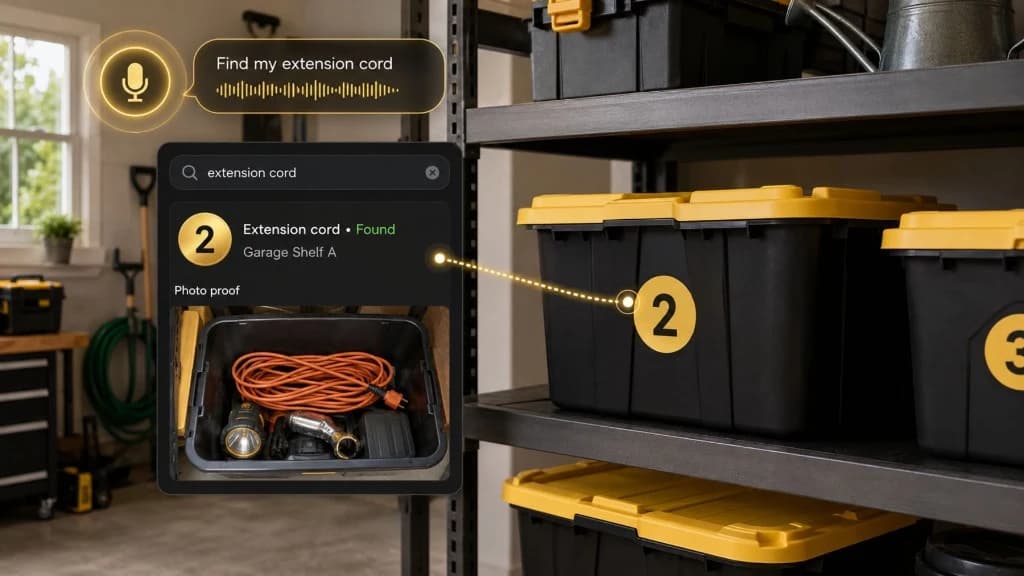
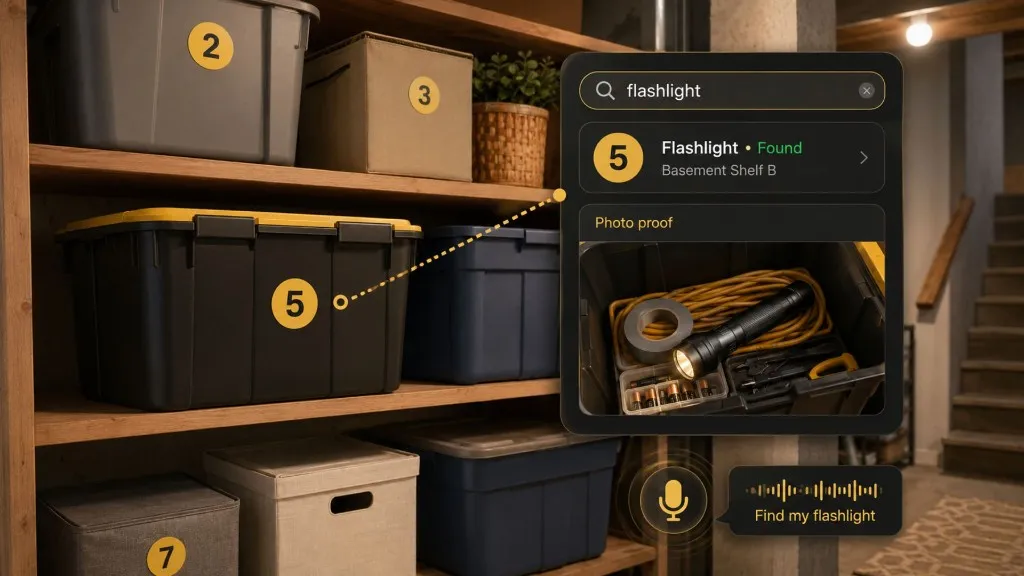
Totely is helpful because craft supplies are visual, detailed, and easy to scatter.
You may remember owning red ribbon, gold vinyl, or tiny beads, but not where they landed. You may know you have shipping mailers somewhere, but not whether they are in the craft closet, office drawer, or packing tote.
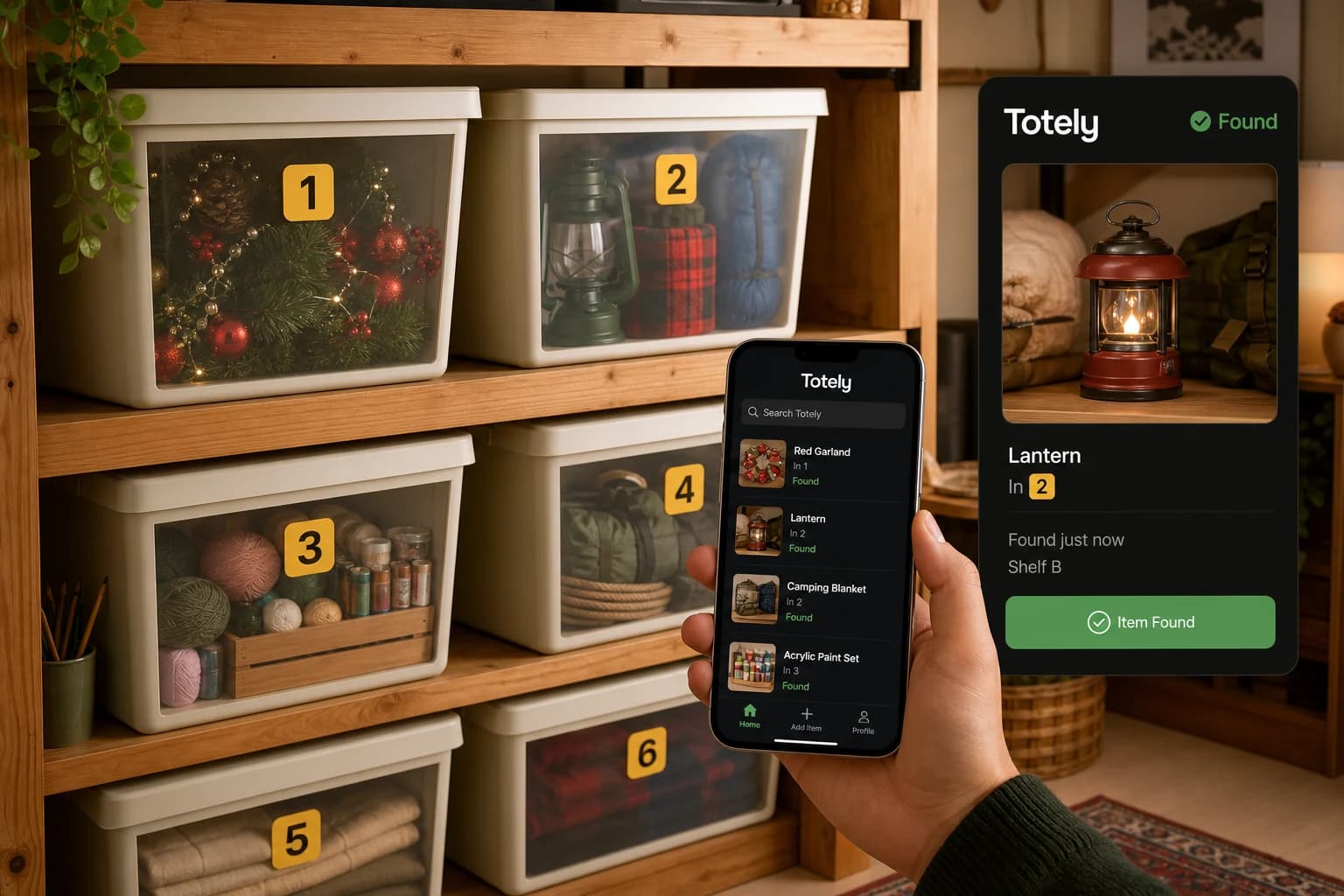
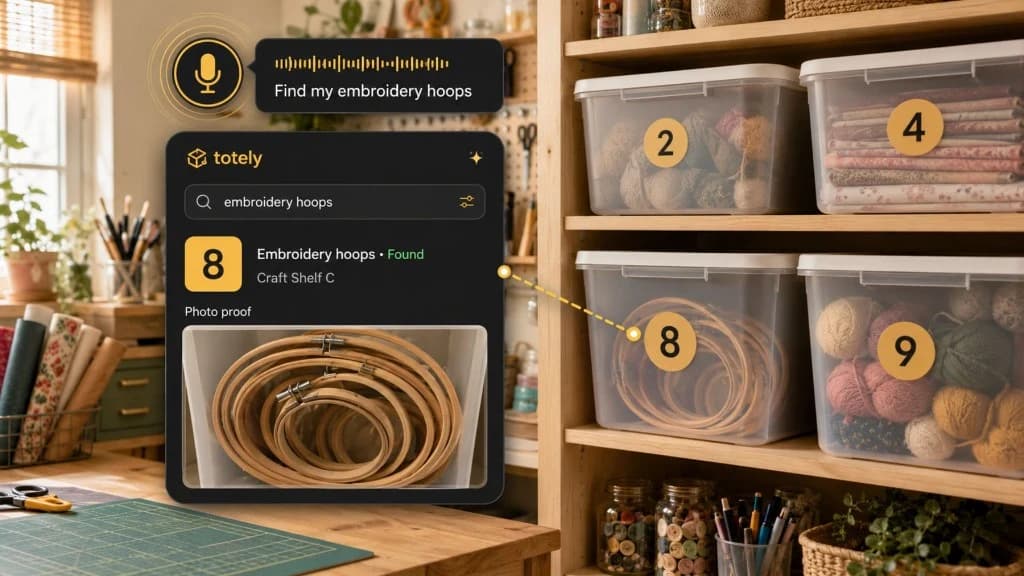
With Totely, you can make craft storage searchable without manually typing every supply into a long list.
Here is the simple flow:
Number the tote, bin, drawer, or craft cart
so it has a clear identity.
Snap a photo
of what is inside.
Let AI build the item list
from what it can see.
Review or edit if needed
so the words match how you search.
Save the storage location
so you know where it lives.
Search naturally later
for "gold vinyl," "fabric scissors," "paint pens," "embroidery hoops," "large craft mailers," or "glue sticks."
Use photo proof
to confirm what is inside before opening the container.
That means you do not have to remember whether the ribbon is in the gift wrap bin, sewing drawer, holiday craft tote, or current project kit. You can search for it and go straight to the right place.
Totely works as the digital memory layer behind your creative storage. Your bins and drawers hold the supplies. Totely helps you remember what is inside.
Browse storage templates and checklists for a printable starting point.
A craft storage label system you can copy
Here is a simple craft label system you can adapt to your own space.
A Craft Storage Label System You Can Copy
Drawer 1
Everyday Tools — fabric scissors, ruler, pencil, seam ripper, glue sticks, tape, cutting blade
Bin 2
Paper and Cardstock — white cardstock, colored cardstock, patterned paper, envelopes, sticker paper, paper scraps
Bin 3
Vinyl Rolls — black vinyl, white vinyl, gold vinyl, heat-transfer vinyl, transfer tape, vinyl scraps
Tote 4
Yarn and Fiber — yarn, embroidery hoops, embroidery floss, crochet hooks, project notes
Box 5
Beads and Jewelry Supplies — beads, clasps, findings, wire, pliers, unfinished bracelet kits
Cart 6
Current Project Kits — unfinished embroidery kit, holiday vinyl labels, baby blanket materials, craft fair packaging
Tote 7
Craft Seller Shipping — shipping mailers, product inserts, thank-you cards, tissue paper, ribbon, label rolls
You can make this smaller or larger depending on your space. The important part is that each container has a number, a clear purpose, a photo, and a location.
Craft storage label FAQs
What are the best craft storage labels?
The best craft storage labels are simple on the outside and specific behind the scenes. Use a clear number or short category on the container, then keep a photo and searchable item list for details like yarn type, vinyl color, glue sticks, beads, cardstock, ribbon, or project kits.
Should I organize craft supplies by material or project?
Use both when helpful. Store everyday supplies by material type, such as yarn, paper, vinyl, beads, paint pens, or sewing thread. Store active or unfinished work by project type so the supplies, notes, and next steps stay together.
How do I organize craft supplies by color?
Color sorting works best for supplies you choose visually, such as yarn, ribbon, vinyl rolls, beads, cardstock, sewing thread, embroidery floss, and paint pens. Keep the color groups simple and only use color sorting when it helps you find supplies faster.
How do I label unfinished craft projects?
Label unfinished project kits with the project name, not just "WIP." Include the main supplies, notes, and next step if useful. Take a photo before storing the kit so you can see the project stage and materials later.
How do I stop buying duplicate craft supplies?
Track duplicate-prone supplies like glue sticks, paint pens, ribbon, vinyl rolls, beads, cardstock, sewing thread, and shipping mailers. Number the container, take a photo, save the location, and search before buying more.
How can Totely help with craft storage?
Totely helps you number craft bins, drawers, totes, or carts, snap a photo, let AI build the item list, review or edit details, save the location, and search naturally later. Photo proof shows what is inside so you can find supplies without opening every container.
Make your craft supplies easier to find
Craft storage should support creativity, not interrupt it.
When supplies are grouped by material, project, frequency of use, color, size, unfinished project, and duplicate risk, it becomes easier to start making instead of searching.
Start with one container before your supplies disappear back into the drawer. Number it, snap one photo, and let Totely help remember what is inside. Then search naturally later for the fabric scissors, gold vinyl, embroidery hoops, ribbon, paint pens, beads, glue sticks, cardstock, sewing thread, unfinished project kit, or shipping mailers you need next.
With Totely, your craft supplies can stay stored, organized, and easy to find when inspiration hits.