How to Store Vinyl Records Without Warping—or Losing—the Album You Want
Learn how to store vinyl records upright, protect discs and jackets, choose shelves or boxes, and find one album later.
By Steve Watts · Co-Founder, Totely
October 28, 2026 · Updated October 28, 2026 · 14 min read
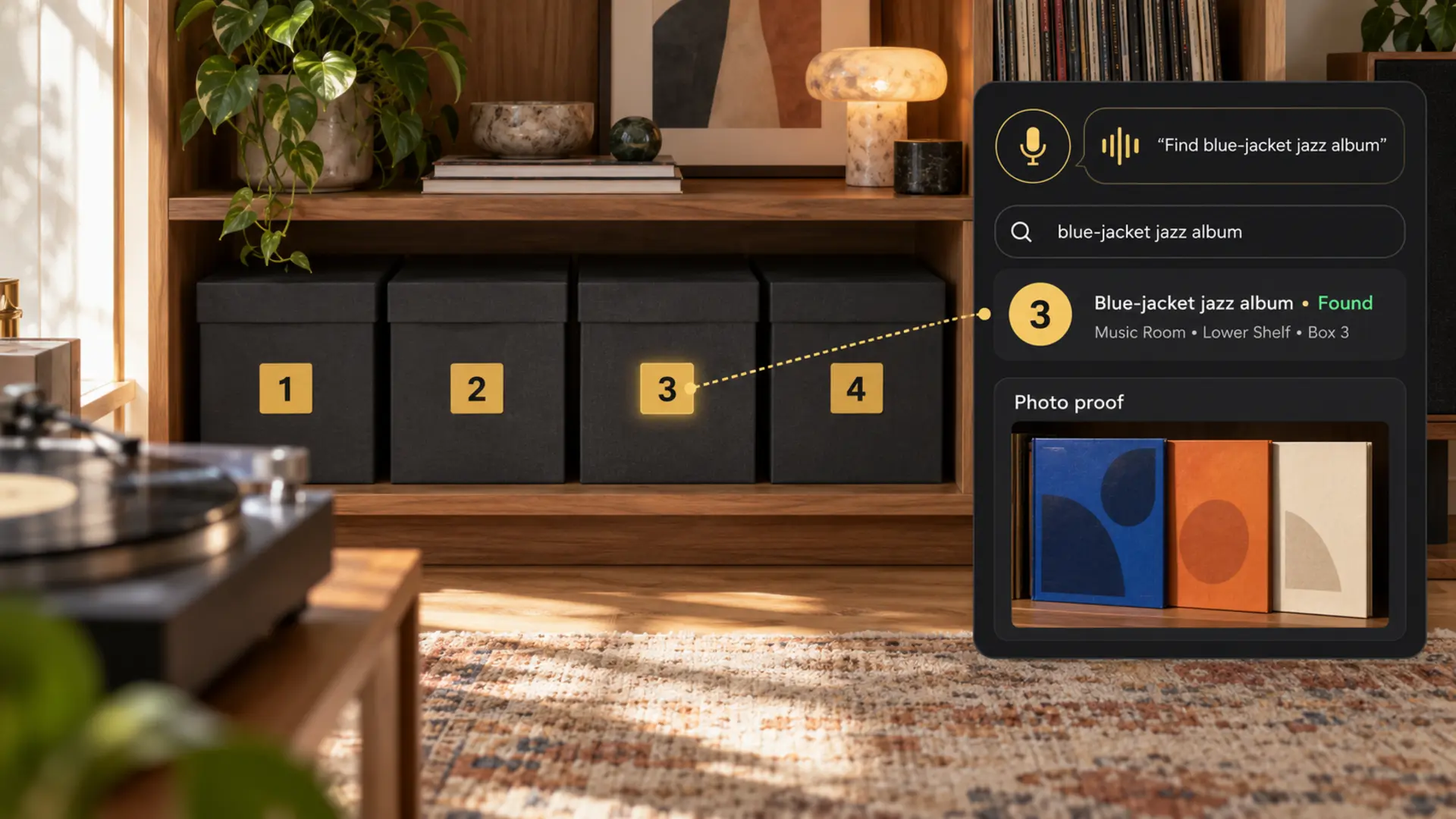
The album you want is not in the row beside the turntable. It may be in the overflow shelf, a moving box, or the closed archive box that looks exactly like three others. The collection is organized enough to protect the records, but not specific enough to find one blue-jacket jazz album.
The short answer is to store vinyl records upright in their sleeves, supported so they do not lean, on a sturdy shelf or in a square record-sized box. Keep them in a clean, stable indoor location away from direct sunlight, heaters, leaks, and floor-level water risk. Do not stack a collection flat or squeeze records so tightly that you have to force one out.
That physical system comes first. After the discs and jackets are protected, give every closed overflow box a simple number and exact location. Add a reviewed album list and an overview photo so you can search for one record without opening the whole archive.
Quick Links
- Sort by Access and Risk
- Prepare Records Before Storage
- Choose a Shelf or Box
- Store Records Upright and Supported
- Use Sleeves Without Overpromising Protection
- Choose a Stable Indoor Location
- Pack Records for Moving or Overflow
- Make One Album Findable
- How Totely Helps
- Vinyl Storage Mistakes to Avoid
- Vinyl Record Storage FAQs
Sort by Access and Risk
Do not begin with matching crates. Begin with how often you play each record and whether it needs more care than an ordinary household collection can provide.
Make four groups:
- Playing now: albums in current rotation that belong near the turntable.
- Regular collection: records you browse often enough to keep visible and easy to remove.
- Boxed overflow: ordinary records you want to keep but do not need every week.
- Special care: rare, historically important, unusually valuable, damaged, wet, musty, or mold-affected records.
| Record group | Practical first choice | Check before storing |
|---|---|---|
| Playing now | Short supported row near the turntable | No direct sun, radiator, drink shelf, or unstable furniture |
| Regular collection | Strong shelving with dividers or bookends | Records stand vertical and slide out without force |
| Boxed overflow | Square, sturdy record-sized box on a raised shelf | Box supports jackets fully and remains manageable to lift |
| 7-inch singles or other formats | Separate divider or correctly sized box | Smaller records are supported instead of disappearing between LPs |
| Special-care records | Individual assessment and appropriate enclosure | Do not assume a generic sleeve or app record is preservation advice |
This split prevents two opposite mistakes: hiding the albums you actually play, and leaving every record in a crowded open row just because the covers look good.
For a valuable or irreplaceable collection, general household guidance is not a condition assessment. A specialist can advise on the disc, jacket, inner sleeve, mold, cleaning, and enclosure as a system. An inventory can document what you have and where it is; it cannot authenticate, grade, value, or conserve a record.
Prepare Records Before Storage
Work on a clean, dry surface with enough room for one jacket and disc. The goal is not an elaborate restoration project. It is to avoid adding fingerprints, grit, moisture, or pressure while you reorganize.
The U.S. National Archives recommends storing disc recordings vertically in their sleeves or albums and choosing a stable environment protected from flooding, pollutants, and sunlight. Its guidance also treats suspected mold as a handling concern rather than a routine cleaning job.
Handle the disc by safe areas
The turntable maker U-Turn Audio recommends handling a record by its outer edge and center label rather than touching the grooves. Use clean, dry hands. Set drinks, food, lotion, and household cleaners away from the work surface.
If a record needs cleaning, follow the record or equipment maker's instructions and use tools intended for records. Do not improvise a universal cleaning recipe from household products. A wet, mold-affected, cracked, flaking, or unusually valuable record deserves advice appropriate to its condition.
Inspect the whole package
Look at the disc, inner sleeve, jacket, inserts, and outer sleeve. Separate anything damp or actively mold-affected from the clean collection. Replace a torn enclosure only after identifying what material and fit are appropriate; keep printed original sleeves or inserts with the album even if the disc receives a separate protective inner sleeve.
Create a temporary working order
Use broad groups that help you finish the storage project: active rotation, regular shelf, overflow box, and special care. Alphabetical order, artist, genre, or catalog number can come later. The first pass should protect the records and give each group a safe destination.
Choose a Shelf or Box
A shelf is better for records you browse. A box is useful for moving, overflow, or a collection that must share a closet. Neither option works if it bends, sags, lets the row lean, or sits in a damaging location.
| Situation | Better starting point | Why | Main risk to check |
|---|---|---|---|
| Daily listening | Open shelf or cabinet near the turntable | Easy browsing and return | Sun, heat, drinks, vibration, and weak furniture |
| Growing collection | Compartment shelving with short supported rows | Dividers limit leaning when albums are removed | Shelf load rating and wall/furniture stability |
| Small apartment | One active cube plus numbered overflow boxes | Keeps favorites accessible without crowding the room | Carrying weight and losing the overflow address |
| Moving | Sturdy square record box | Supports jackets and keeps the row vertical | Overpacking, lifting, impact, and a hot vehicle |
| Long-term household overflow | Fitted box on a raised interior shelf | Shields a less-used group from dust and traffic | Damp, heat, leaks, and forgotten contents |
Records are heavier than an empty cube makes them look. Follow the shelf or cabinet maker's load limits, installation instructions, and anchoring guidance. Avoid a long unsupported span that sags in the middle. Keep heavy boxes low enough to lift safely, but off the floor where a minor leak can reach them.
Do not use a random tapered tote simply because it has a lid. Sloped sides and rounded corners can leave an LP row without full, square support. A record box should fit the jacket height and width, keep the discs vertical, and allow the lid to close without pressing on the tops.
Store Records Upright and Supported
Store ordinary LPs vertically on their edges, with their jackets upright and close to perpendicular to the shelf. Do not lay a collection in a flat pile. Do not let a half-empty row lean diagonally for months.
Use these checks:
- The shelf or box base is flat and does not sag.
- The row has a divider or stable bookend when it is not full.
- Jackets stand straight instead of fanning across a wide gap.
- You can remove one album without scraping or forcing it.
- The row does not shift when another record is returned.
- LPs and smaller formats have separate support suited to their size.
The goal is supported, not compressed. A row that is too loose leans; a row that is too tight turns every retrieval into a tug. Add or move a divider as the collection changes.
Keep dividers smooth, stable, and tall enough to support the jacket without a sharp edge pressing into it. A decorative rack that displays several covers may be fine for a short active rotation, but it is not automatically the right home for the full collection.
Use Sleeves Without Overpromising Protection
The record's inner sleeve protects the playing surface from direct contact with the jacket. The jacket protects and identifies the album. An optional outer sleeve can reduce shelf scuffs, fingerprints, and dust on the jacket.
Sleeve advice becomes confusing when every seller calls a different material archival. Use a cautious process:
- Keep one record per inner sleeve.
- Make sure the sleeve is clean, dry, smooth, and correctly sized.
- Retain original printed sleeves and inserts with the album.
- Choose replacements from a reputable record-care or preservation supplier.
- Avoid a sleeve that is sticky, cloudy from deterioration, torn, too tight, or transferring residue.
- Ask a conservator about rare or historically important items instead of assuming the newest retail sleeve is universally best.
Orient openings so the disc cannot roll out during normal handling. Do not seal a damp record or jacket inside plastic. A sleeve is a barrier against routine handling and dust; it is not a substitute for a stable room, sound shelving, or appropriate mold treatment.
Choose a Stable Indoor Location
For a household collection, favor a clean interior room with moderate, steady conditions. Avoid direct sunlight, radiators, heating vents, fireplaces, unregulated attics, hot garages, damp basements, and shelves below plumbing or known leaks.
The National Archives gives numerical ranges for institutional audio storage, but a household should not treat one number as a guarantee. Stability matters, and the disc, jacket, sleeve, and building all respond differently. If you monitor temperature and humidity, use the readings to spot swings and problem areas rather than to declare a risky room safe because it met a target once.
Use a simple room check:
- Light: no direct sun falling on the row or box.
- Heat: no radiator, vent, fireplace, or hot appliance beside it.
- Moisture: no condensation, musty smell, damp wall, or recurring leak.
- Water: collection is raised off the floor and away from plumbing risk.
- Air and cleanliness: area is clean, not visibly dusty, and not exposed to workshop fumes or smoke.
- Stability: furniture is level, rated for the load, and installed as directed.
- Access: you can remove an album or box without an unsafe reach.
A lidded box can reduce dust and accidental contact. It cannot turn a hot attic, wet basement, or flood-prone floor into an appropriate storage environment.
Pack Records for Moving or Overflow
The U-Haul record-packing guide recommends square boxes that support album corners, keeping records vertical, grouping similar sizes, and balancing the row so it is neither loose enough to lean nor too tight to remove.
For a manageable box:
- Inspect the empty box for moisture, odors, insects, sharp edges, and weak seams.
- Add clean dividers or suitable filler so the row remains vertical.
- Keep LPs with LPs and smaller records in a properly sized section or separate box.
- Do not press a lid against the tops of the jackets.
- Lift the partly filled box before finishing. If it is awkward, use more smaller boxes.
- Mark the outside with a simple number and an upright orientation cue.
- Transport records inside a temperature-controlled passenger area when practical, not in a hot parked vehicle.
- Move the boxes to their final raised indoor shelf promptly.
Do not write a valuable-record list on the outside. A neutral number avoids advertising contents and stays accurate when the box changes.
Make One Album Findable
Alphabetical shelving works until half the collection moves into closed boxes. A label that says “RECORDS” describes every box and locates none of them.
Build a small album map instead:
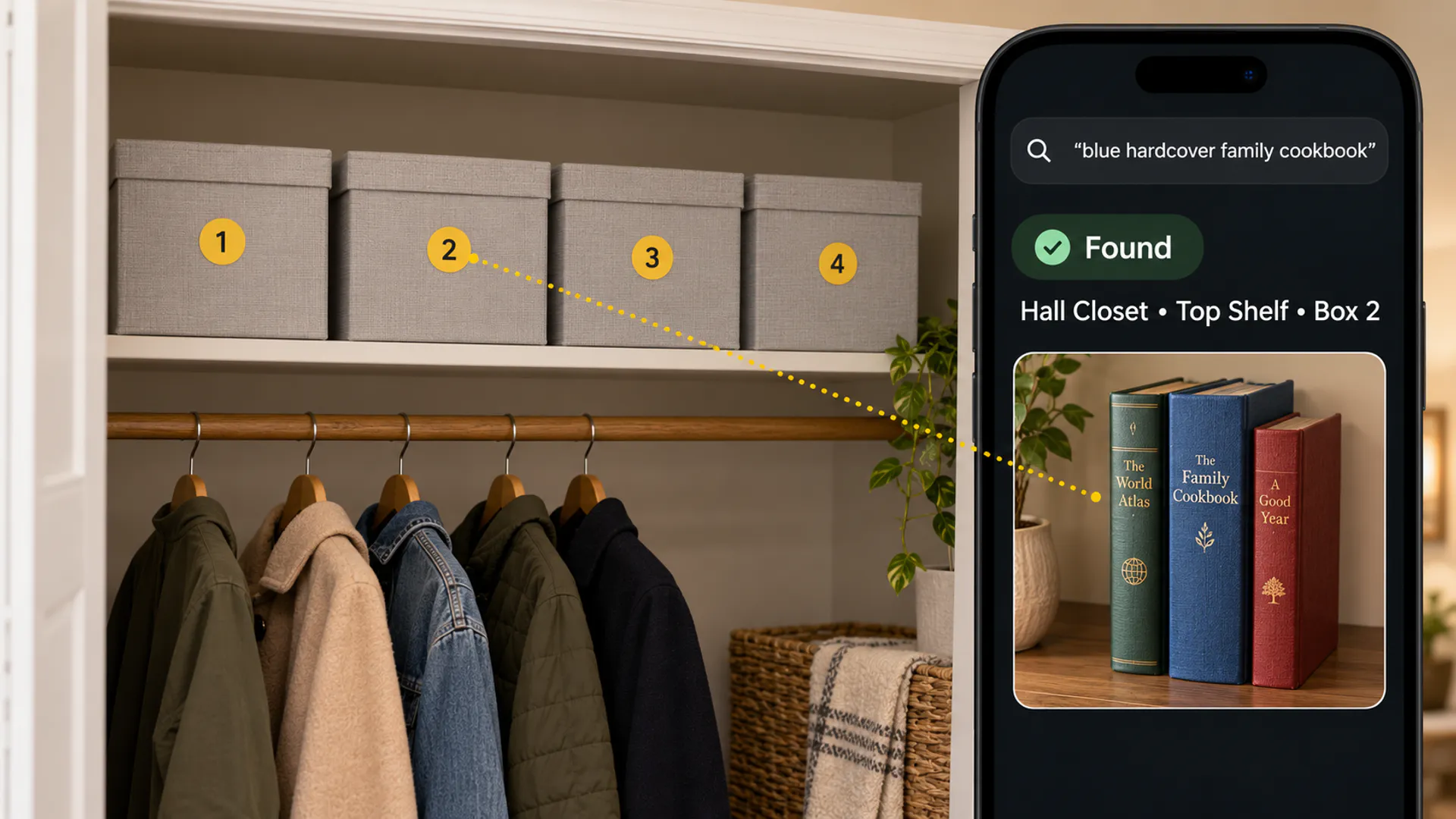
- Put one visible number on each closed box: 1, 2, 3, 4.
- Give each box an exact address, such as Music Room / Lower Shelf / Box 3.
- Photograph the supported row before closing the box.
- Add album-level details you can verify: artist, title, format, jacket color, pressing note, or family nickname.
- Review the list against the physical records.
- Update the record when an album or box moves.
| Search memory | Reviewed record | Saved location | Photo proof |
|---|---|---|---|
| blue-jacket jazz album | Blue-jacket jazz LP; artist and title verified from jacket | Music Room / Lower Shelf / Box 3 | Overview shows the blue jacket between an orange funk album and cream classical album |
The visual description helps when you remember a cover before a title. The verified artist and title prevent the description from becoming a guess.
How Totely Helps
Totely adds search to the physical storage system after the records are safely supported and located.
For one overflow box:
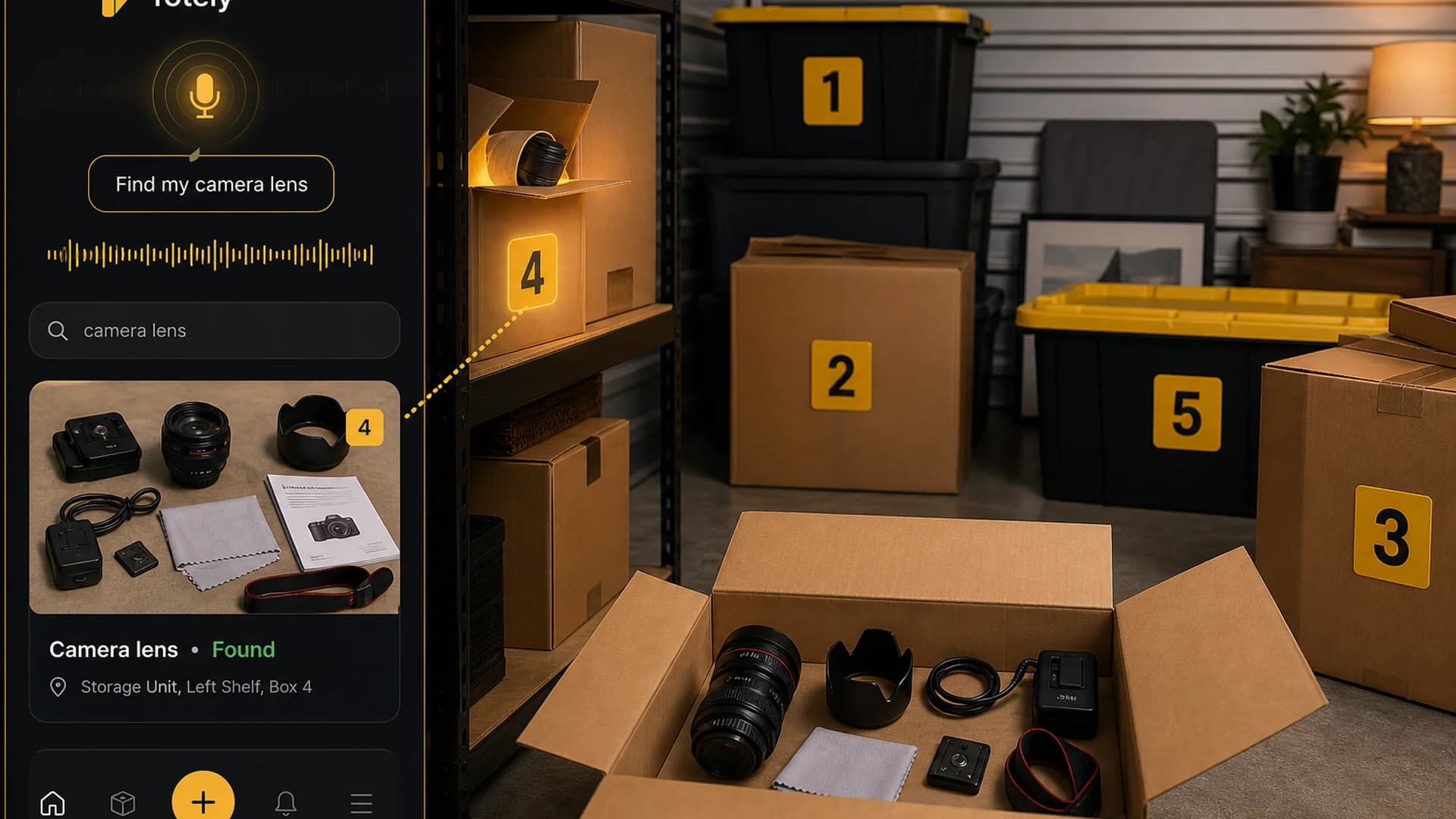
- Put a simple number on the outside.
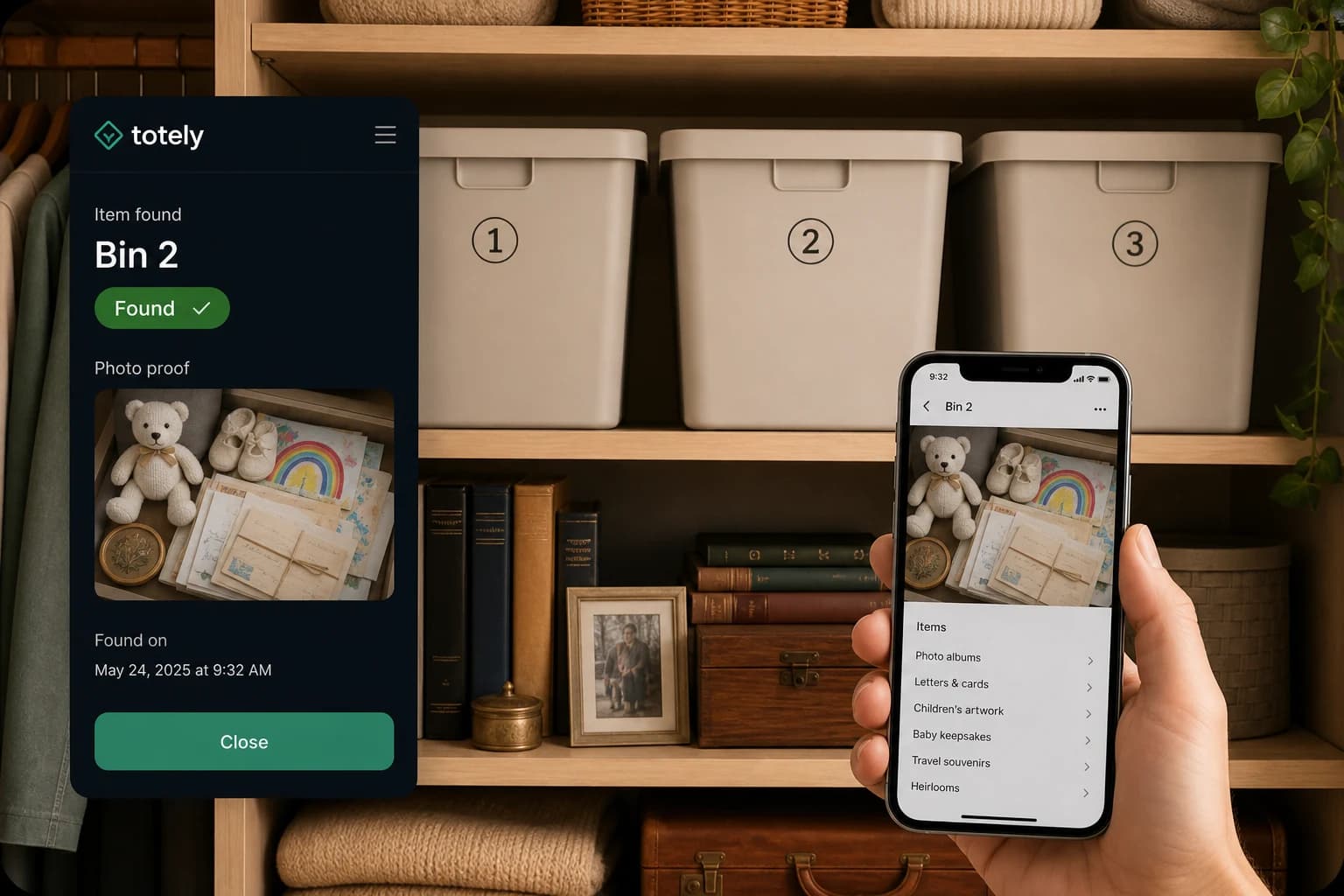
- Photograph the records before closing it.
- Let Totely build a first list from the visible items.
- Review and edit the list so artist, title, and visual description are accurate.
- Save the exact location.
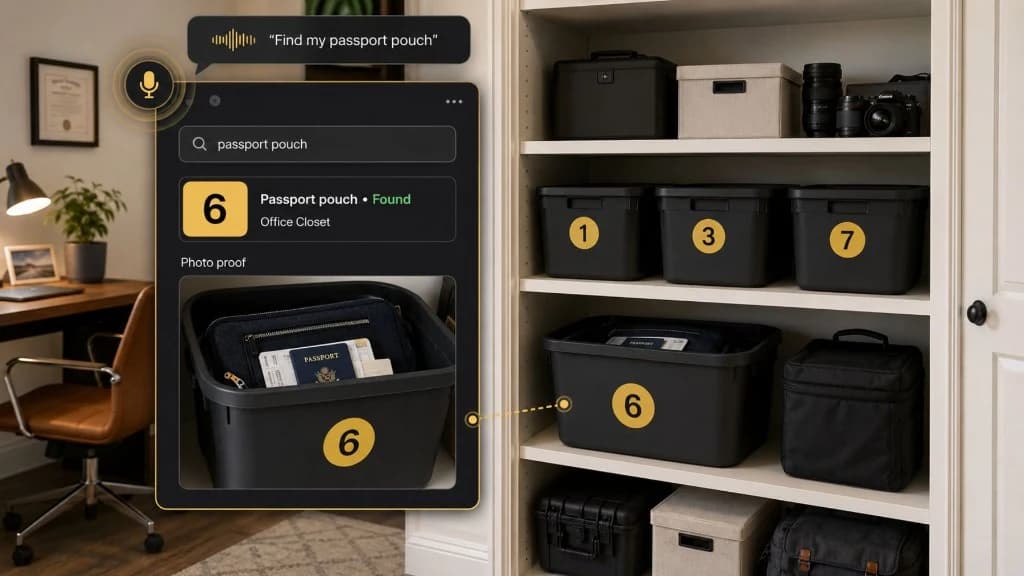
- Search later in natural language, such as “blue-jacket jazz album.”
- Check the saved number, location, and photo proof before opening the box.
The review step is essential. A photo may not show every spine, edition, pressing, insert, or condition detail. Totely helps locate the record you saved; it does not authenticate, grade, value, clean, conserve, insure, or guarantee the condition of a collection.
Start with a low-risk overflow box, not the most valuable part of the archive. The One-Tote Test works with a box or shelf zone as well as a tote: one number, one photo, one location, and one real search.
Vinyl Storage Mistakes to Avoid
- Stacking the collection flat: the pile adds pressure and makes lower records hard to inspect or retrieve.
- Letting a short row lean: unsupported jackets and discs take uneven pressure.
- Overpacking the shelf: forcing an album out can scuff sleeves and bend jackets.
- Using a weak or sagging shelf: record weight needs furniture rated and installed for the load.
- Choosing a tapered bin: rounded corners and sloped walls may not support LP jackets squarely.
- Storing beside heat or sun: a tidy display can still be in a damaging location.
- Trusting a lid to solve moisture: a box does not correct a damp room or wet item.
- Cleaning with a household shortcut: use record-appropriate instructions and escalate damaged or mold-affected items.
- Mixing formats without support: 7-inch records can disappear or lean between LPs.
- Writing only “records” on the box: the label cannot identify one album or the box's exact shelf.
- Skipping the update: the map becomes unreliable as soon as an album moves and the record does not.
Vinyl Record Storage FAQs
What is the best way to store vinyl records?
Store vinyl records upright in clean, correctly fitted sleeves, supported so the row does not lean, on a sturdy shelf or in a square record-sized box. Choose a clean, stable indoor location away from direct sun, heaters, leaks, and floor-level water risk. Keep frequently played albums accessible and place less-used records in manageable overflow boxes.
Should vinyl records be stored flat or upright?
Store ordinary LPs upright on edge, not in a flat stack. Use a divider or stable bookend so a partially filled row remains vertical. The row should be supported without being packed so tightly that you have to force a record out.
Can vinyl records be stored in plastic bins?
Only if the bin is clean, dry, sturdy, correctly sized, and square enough to support the jackets vertically. Many household totes have tapered sides or rounded corners that leave records leaning. A lid can reduce dust, but it cannot correct heat, moisture, or a poor fit.
How do I store vinyl records long term?
Separate special-care items, inspect and sleeve ordinary records appropriately, stand them vertical with full support, and use a sturdy shelf or fitted box in a stable indoor room. Keep the collection off the floor, away from direct sun and heat, and inspect the location periodically for leaks, damp, pests, dust, and shelf movement.
How tightly should vinyl records be packed?
Support the row closely enough that records do not fan or lean, but leave enough room to remove one album without force. Adjust a divider as the collection grows or shrinks. “Supported” is the goal; neither loose nor compressed is ideal.
How can I organize vinyl records so I can find one later?
Use any browsing order that matches how you listen—alphabetical, genre, artist, or rotation—but add an exact address for closed overflow. Number each box, photograph the supported row, review an album-level list, and save the room, shelf, and box number. Update the map whenever an album moves.