How to Store Ties Without Creases—and Find the Right One
Learn how to store ties by material and use: roll, lay flat, or hang with care, then map the drawer or box so the right tie is easy to find.
By Steve Watts · Co-Founder, Totely
October 24, 2026 · Updated October 24, 2026 · 12 min read
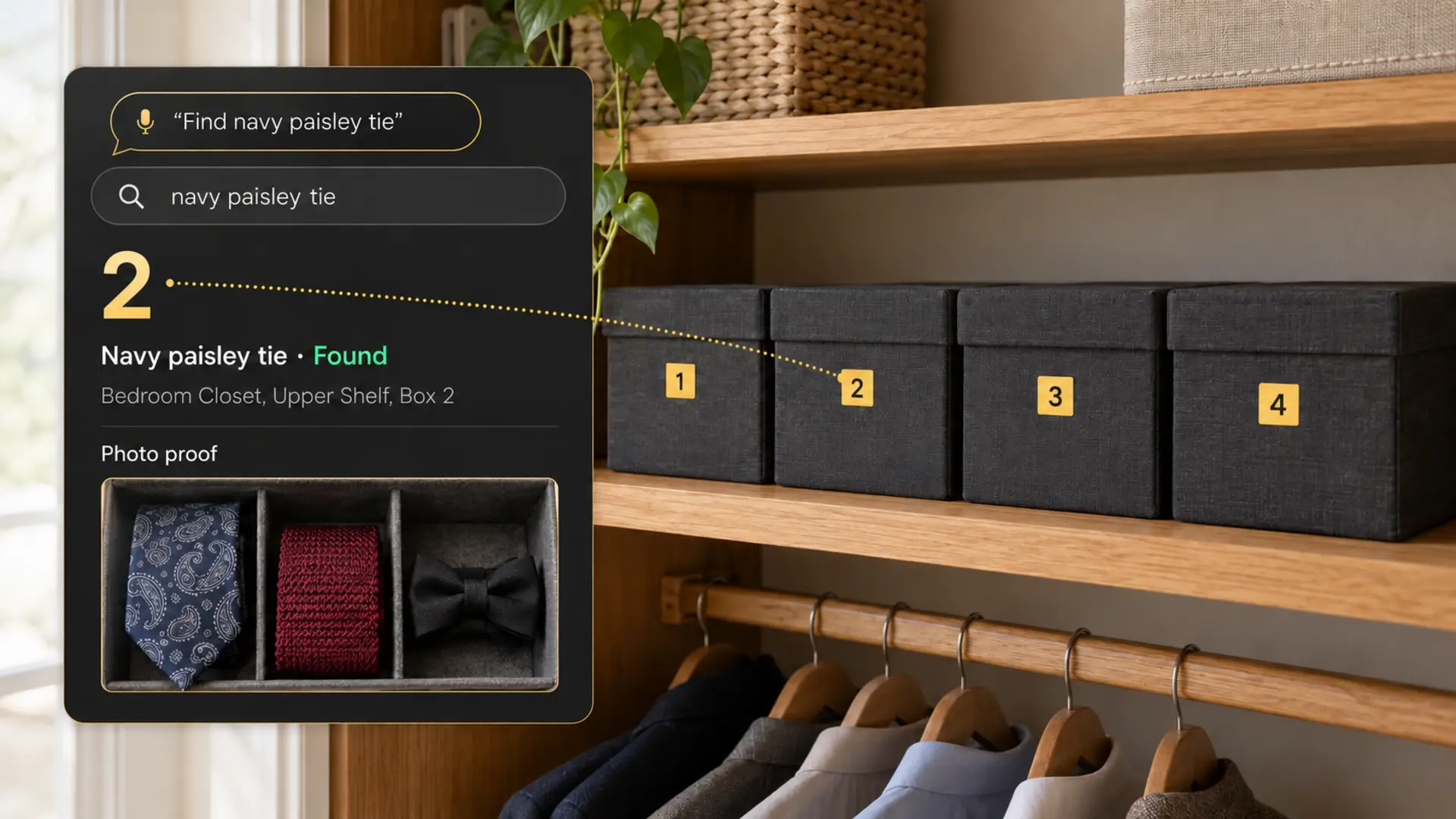
The navy paisley tie is not missing. It is resting in one of four closed accessory boxes on the upper closet shelf, beside ties that look almost identical when the lids are on.
Learning how to store ties starts with the tie itself, not the organizer. A loosely rolled silk tie, a knitted tie, a pre-tied bow tie, and a bolo tie do not necessarily need the same support. Check the material, construction, condition, care label, and how often you wear it before choosing a drawer, rack, or box.
Then solve the second problem: retrieval. Give each drawer section, rack position, or closed box a simple address so you can find one tie without disturbing the whole collection.
Quick Links
Should You Roll, Lay Flat, or Hang Ties?
There is no universal answer. Even established tie-care guides disagree: some favor dedicated racks, while a silk specialist may recommend loose rolling and warn that crowded hanging can create creases. Treat that disagreement as a reason to check the actual tie rather than as permission to choose a rule for the entire drawer.
Use this table as a starting point, then follow the maker's instructions when they are available:
| Tie type or situation | Practical first choice | What to check |
|---|---|---|
| Modern silk or woven tie | Loose roll or supported flat position | Care label, interlining, existing creases, and room without compression |
| Knitted tie | Loose roll or lay flat | The knit is not stretched, snagged, or pressed under another item |
| Everyday tie with maker-approved hanging | Dedicated smooth position with space around it | The tie hangs fully untied and does not bunch with neighboring ties |
| Bow tie | Untie adjustable styles; use a divided drawer or suitable box | Clips, hooks, and shaped sections cannot press on the fabric |
| Bolo tie | Lay out or hang as its maker directs | Cord stays free of sharp bends; slide and tips cannot scratch other items |
| Vintage, handmade, damaged, or irreplaceable tie | Individual support and material-specific advice | Weak fabric, unstable dye, loose stitching, or unknown construction |
The organizer must fit the resting shape. If a compartment requires a tight roll, a sharp fold, or pressure from the lid, it is too small for that tie.
Why silk-tie advice can conflict
Different makers build ties with different fabrics, linings, stitches, and intended care. Turnbull & Asser's silk-care guidance recommends a loose roll for its ties and cautions that crowded hanging can create creases. It also advises a cool, dry place away from direct sunlight.
Tie Solution's manufacturer guidance allows either loose hanging or loose rolling, while treating knitted ties differently and emphasizing complete untying. These are useful principles, but neither page can identify the construction of a tie from another maker.
When the care label or maker gives specific instructions, use those. If the tie is valuable, historic, or already deteriorating, seek advice suited to its materials and condition.
Prepare a Tie Before Storage
Storage should begin after the knot comes out, not while the tie is still carrying the shape of the day.
Untie it completely
Reverse the knot instead of pulling the narrow end through a tightened loop or slipping the knot over your head. Once untied, let the tie rest as its maker recommends before returning it to storage.
Do not keep an adjustable bow tie fastened merely to save time next week unless its care instructions call for that shape. Store removable clips or hardware so they cannot press against another tie.
Inspect before you clean
Check for a fresh stain, loose stitch, snag, twisted lining, or damaged fitting. Record the problem so it is not rediscovered five minutes before an event.
Do not automatically wash, iron, steam, or spot-treat a tie because it is going into storage. Fiber, dye, interlining, and finish all matter. Direct heat, water, rubbing, or an unsuitable cleaner can make the problem worse. Follow the care label or maker's method; use a cleaner familiar with the item when the guidance calls for it.
Only return a tie to a closed box or drawer when it is appropriately clean and dry.
Separate hardware and rough surfaces
Tie bars, pins, clips, cuff links, bolo slides, and sharp bow-tie hardware need their own small compartment or suitable pouch. Do not let metal pieces rattle against silk or catch a knitted surface.
Keep a matching accessory with the tie when practical. If it lives elsewhere, record the second location: “Navy paisley tie in Box 2; silver tie bar in Dresser Top Drawer, Right Tray.”
How to Store Ties in a Drawer
A shallow drawer or divided accessory box can keep a collection visible without stacking. The key is enough horizontal room for each tie to rest loosely.
Make a loose roll
For a tie whose care guidance allows rolling:
- Lay the fully untied tie on a clean, dry surface.
- Follow the maker's preferred starting end and orientation.
- Guide it into a broad, relaxed roll without pulling the fabric tight.
- Place the roll in a compartment wide enough to hold it without squeezing.
- Close the drawer slowly and check that the top does not touch or flatten it.
One visible layer is easier to use than two compressed layers. If you have to push the row sideways to fit the last tie, reduce the number in that drawer or use a larger compartment.
Lay ties flat when the space supports them
A long, shallow drawer can support ties flat without a tight bend. Keep each tie smooth and separate, and do not place heavier clothes, boxes, or accessories on top.
If the drawer is shorter than the tie, do not create a hard fold simply to make the length disappear. Check the maker's guidance for an alternative arrangement.
Organize for removal, not display alone
Sorting by color makes a drawer attractive, but frequency often makes it easier to use. Keep regular work ties in the most accessible row. Put occasional, seasonal, or sentimental ties in a protected reserve section.
Leave enough space to lift one roll or flat tie without rubbing the next one. The best-looking grid is not useful if removing the navy tie disturbs every blue tie around it.
How to Store Ties in a Closet
A dedicated rack can work for ties whose construction and maker guidance suit hanging. Choose smooth, appropriately shaped supports, and give each tie its own position where practical.
The tie should be completely untied, able to hang without touching the floor, and clear of rough garments, zippers, hook-and-loop fasteners, and crowded hardware. Do not layer several ties so tightly that the back ones disappear or develop pressure points.
If a rack uses a clamp, clip, or narrow edge, check where it contacts the tie. A storage accessory that leaves a mark is not protecting the item merely because it keeps the closet tidy.
Number the useful positions—Hook 1, Hook 2, and so on—or record the order in groups. “Closet rack” is not a complete location when the rack holds 30 similar ties.
Use closed boxes for reserve ties carefully
A suitable closed accessory box can keep dust off ties you wear rarely. Confirm that the interior is clean, dry, and large enough for the recommended resting shape. Do not treat a sealed box as a fix for dampness or an unstable storage location.
Keep boxes on a stable interior shelf away from direct sunlight, heat sources, leaks, and known damp areas. Make sure you can lift the box without tilting it or moving an unsafe stack.
For adjacent accessories, see how to store belts, store handbags, and store hats without forcing different objects into one organizer.
Store Special and Sentimental Ties
A wedding tie, inherited bow tie, school tie, or handmade piece can carry meaning that a photograph does not reveal. Give it suitable individual support, then record one accurate sentence about why it matters.
For example: “Navy paisley tie worn at Maya's wedding; matching pocket square underneath the divider.” If the date or origin is uncertain, say so instead of inventing a precise history.
Avoid extra handling solely for inventory photography. If a fragile tie already rests safely in suitable housing, photograph the housing and add a reliable description, or use an existing reference image.
Do not describe ordinary tissue, cardboard, foam, wood, or plastic as archival unless you know its specifications and suitability for the item. A valuable or deteriorating textile may need conservation advice beyond a household storage guide.
Build a Tie Map You Can Search
A label that says “ties” identifies the category. It does not tell you which closed box contains the navy paisley tie.
Give each box, drawer section, or rack position a short visible number. Keep the descriptive details in a paper index or searchable record:
| Number | Exact location | Main contents | Useful search words |
|---|---|---|---|
| 1 | Bedroom Closet, Door Rack, Hook 1 | Black work ties | black tie, solid tie, work tie |
| 2 | Bedroom Closet, Upper Shelf, Box 2 | Navy paisley tie and occasion ties | navy paisley tie, wedding tie, blue patterned tie |
| 3 | Dresser, Top Drawer, Left Section | Knitted ties | burgundy knit tie, green knit tie |
| 4 | Dresser, Top Drawer, Right Section | Bow ties and tie hardware | black bow tie, tie bar, collar pin |
Now “Where is the navy paisley tie?” has a usable answer: Bedroom Closet, Upper Shelf, Box 2.
If Box 2 contains several items, add a simple section map:
| Box 2 section | Contents | Note |
|---|---|---|
| A | Navy paisley tie | Loose roll; wedding tie |
| B | Burgundy silk tie | Matching pocket square beneath divider |
| C | Black formal tie | Keep separate from tie bar pouch |
Take one safe overview photo while the contents are visible. Update the map when a tie moves, goes to a cleaner, or returns to a different section. Accuracy matters more than a complicated catalog.
For the same principle applied to larger containers, see how to keep track of storage bins.
How Totely Helps
The drawer, rack, or box protects the ties physically. Totely adds the digital memory layer that helps you retrieve a particular one later.
Use the same straightforward workflow:
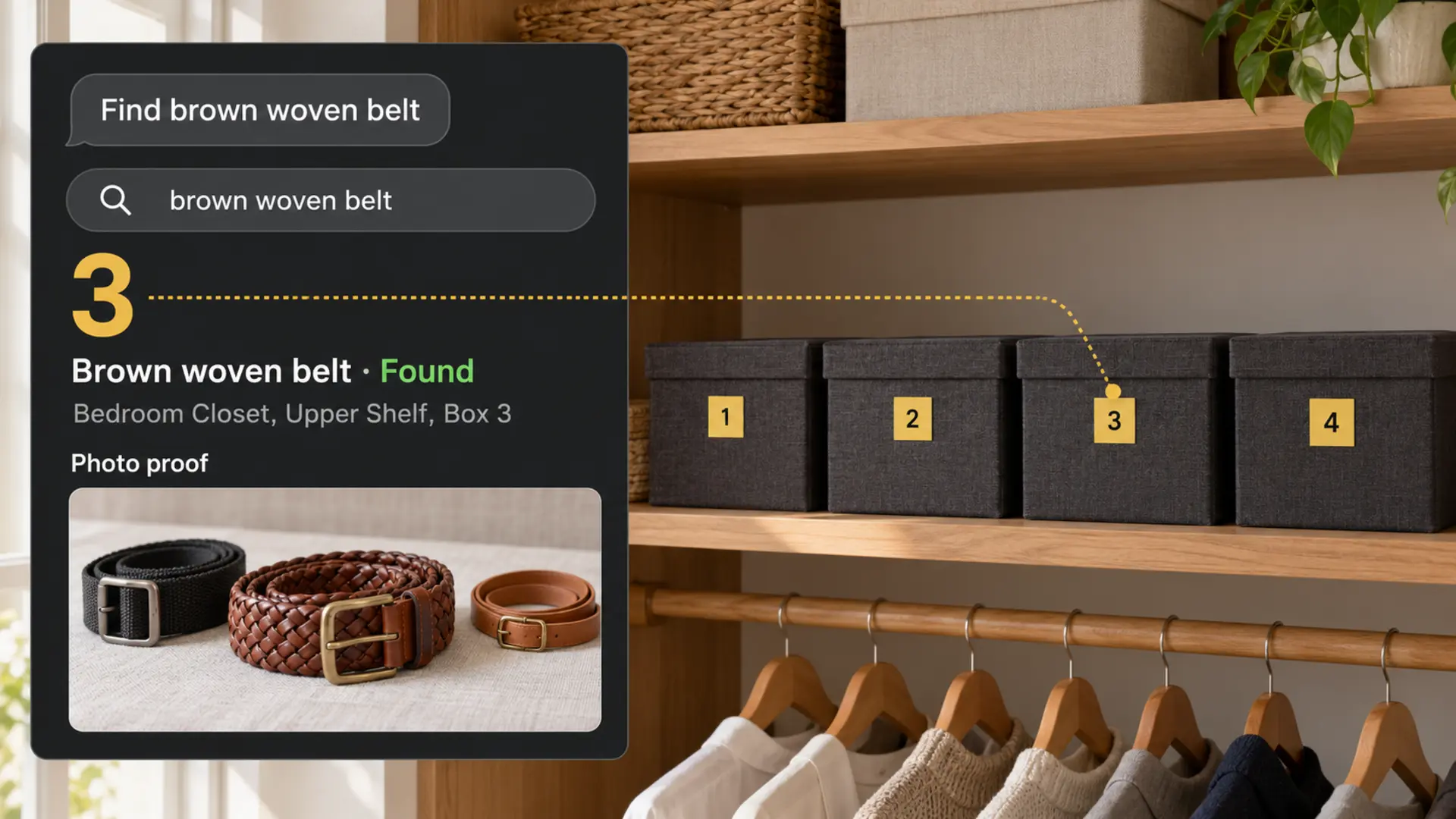
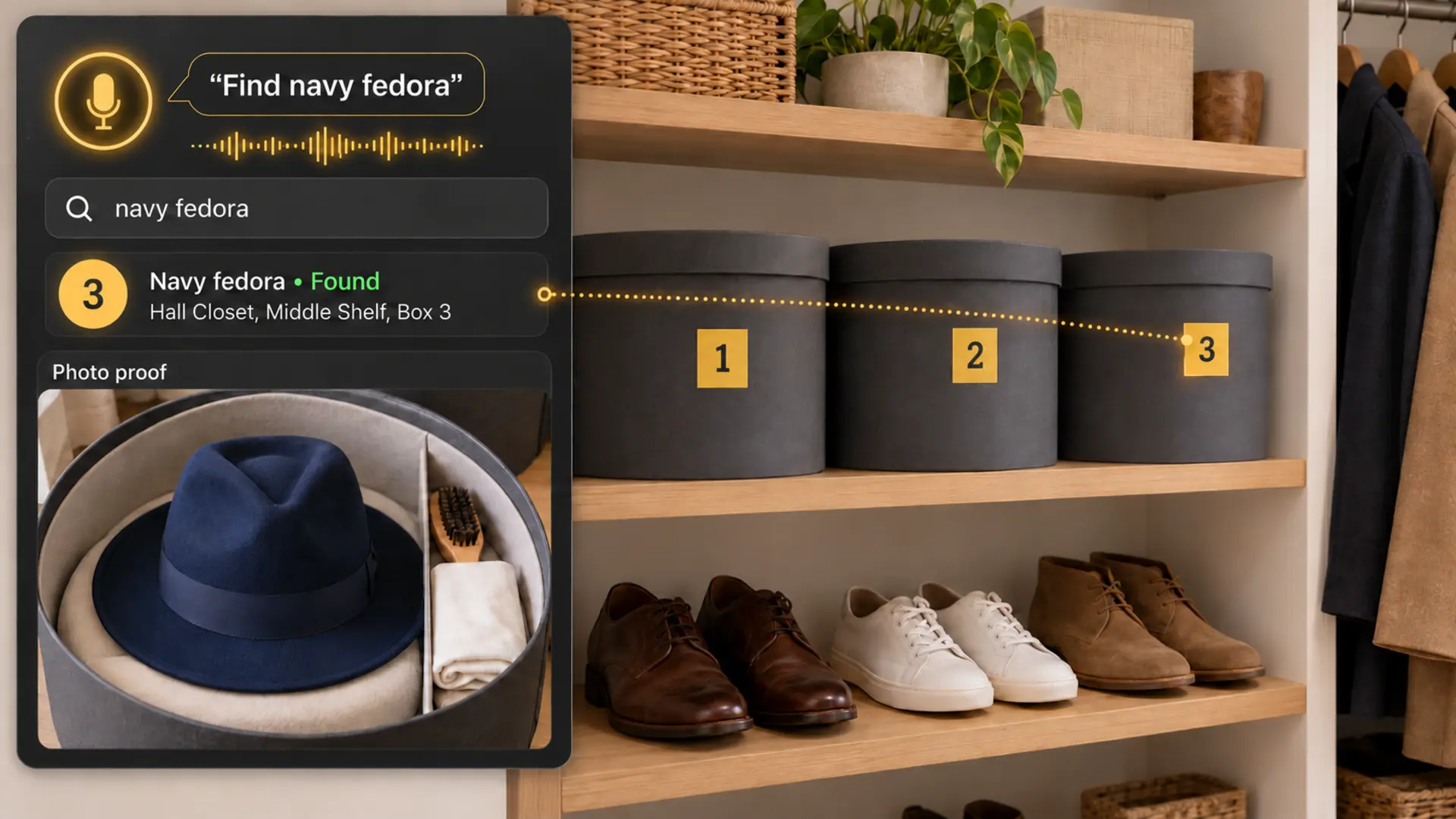
- Put a clear yellow number 2 on the outside of the closed tie box.
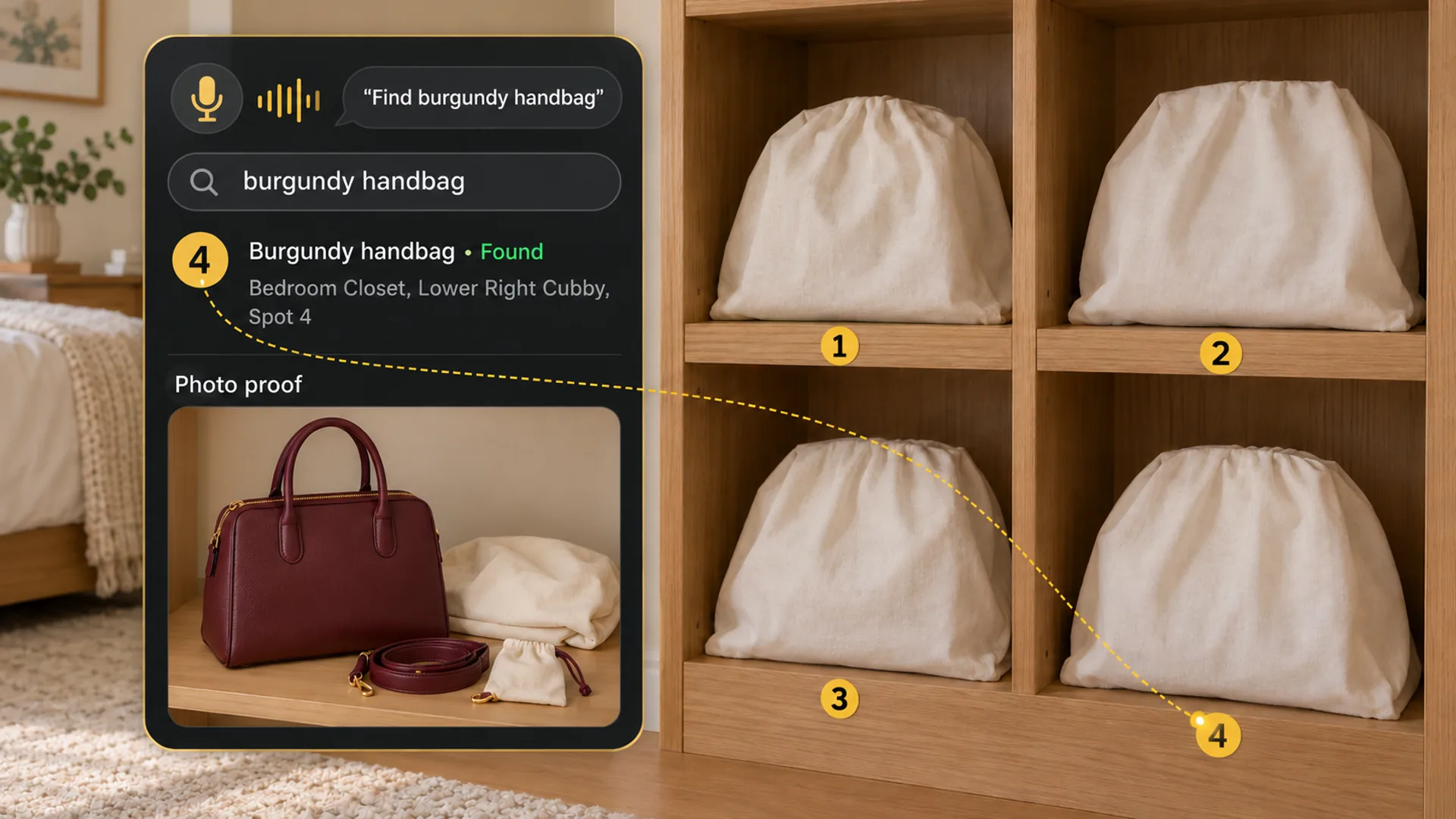
- Take a safe reference photo while the ties are visible.
- Let the app suggest an initial list of visible items, then review and correct it.
- Add “navy paisley tie” and any useful story or matching-accessory note.
- Save Bedroom Closet, Upper Shelf, Box 2 as the exact location.
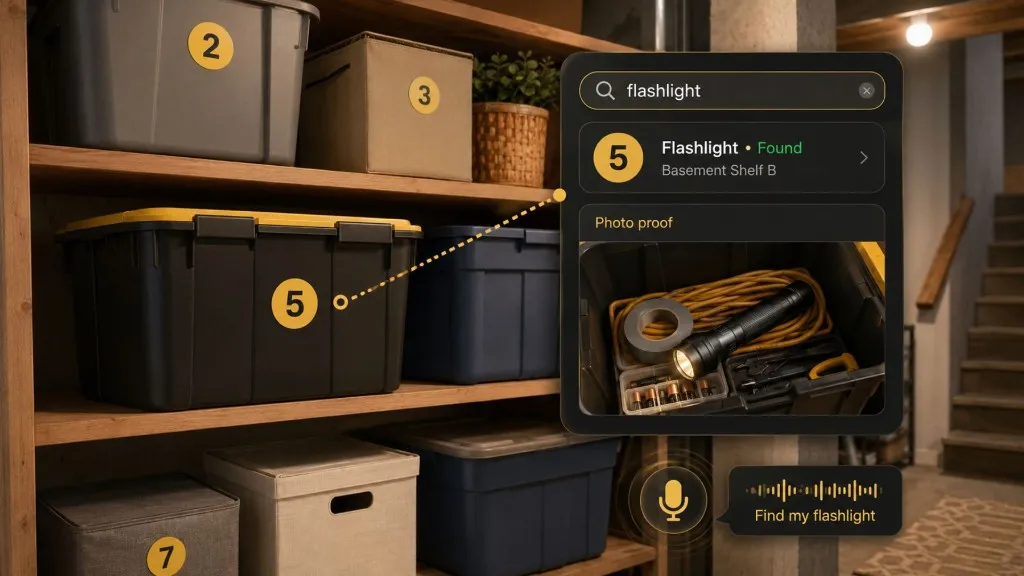
- Later, search naturally for “navy paisley tie.”
- Use the saved number, location, and photo proof to confirm the correct box before opening it.
A photograph cannot reveal a tie hidden under another item, and AI cannot reliably determine a tie's fiber, maker, care requirements, or sentimental history from appearance alone. Human review matters. You do not need QR codes, barcodes, or manual entry for every stitch and pattern to begin.
The One-Box Starter Method
You do not need to reorganize every tie at once.
- Choose one drawer section, rack, or closed accessory box.
- Fully untie each item and check its label, construction, and condition.
- Choose loose rolling, flat support, or appropriate hanging for each tie.
- Separate hardware and anything that could snag or press on fabric.
- Give the section or box a simple visible number.
- Take one safe overview photo and review the item descriptions.
- Save the exact closet or drawer location.
- Ask another person to find the navy paisley tie using the record alone.
If they can retrieve it without opening every box or unrolling the whole drawer, the system is already useful.
Tie Storage FAQs
Is it better to roll or hang ties?
It depends on the tie's material, construction, condition, and maker guidance. A loose roll or supported flat position suits many ties, while some everyday ties may use a dedicated rack. Avoid tight rolls, sharp folds, crowding, and one universal rule for the whole collection.
How do I store silk ties?
Start with the tie's care label or maker. Turnbull & Asser recommends a loose roll for its silk ties, a cool and dry location, and protection from direct sunlight. Do not assume every silk tie has the same interlining, dye, or construction.
How do I store ties in a drawer without wrinkles?
Use a shallow drawer or divider with enough room for a loose roll or supported flat position. Keep ties in one accessible layer, avoid compression, and make sure the closed drawer does not press on them.
Should ties be stored knotted?
Generally, no. Fully undo a standard necktie after wearing it, reversing the knot rather than pulling it tight over the narrow end. Follow the maker's instructions for pre-tied or specially constructed bow ties.
Can I keep ties in a plastic box?
A clean, suitable closed box can hold dry reserve ties when it provides enough room and sits in an appropriate interior location. The container does not correct dampness, heat, direct light, compression, or uncertain material needs.
How do I find one tie in a closed box?
Number the outside, save the exact shelf, and record a short item list or section map with a reference photo. “Navy paisley tie—Box 2, section A” is more useful than a broad “ties” label.
Store the Shape, Then Save the Address
The best tie storage idea is not the rack with the most hooks or the drawer with the smallest compartments. It is the arrangement that respects the tie's construction and lets you remove one item without pressing, snagging, or rearranging the others.
Choose the resting method first. Then add a visible number, an exact location, and a reviewed photo. Ready to wear, easy to find.