How to Store Belts: Hang, Roll, and Find the Right One
Learn how to store belts by material, buckle and use: hang, lay flat or coil loosely, then map the drawer or box so the right belt is easy to find.
By Steve Watts · Co-Founder, Totely
October 21, 2026 · Updated October 21, 2026 · 12 min read
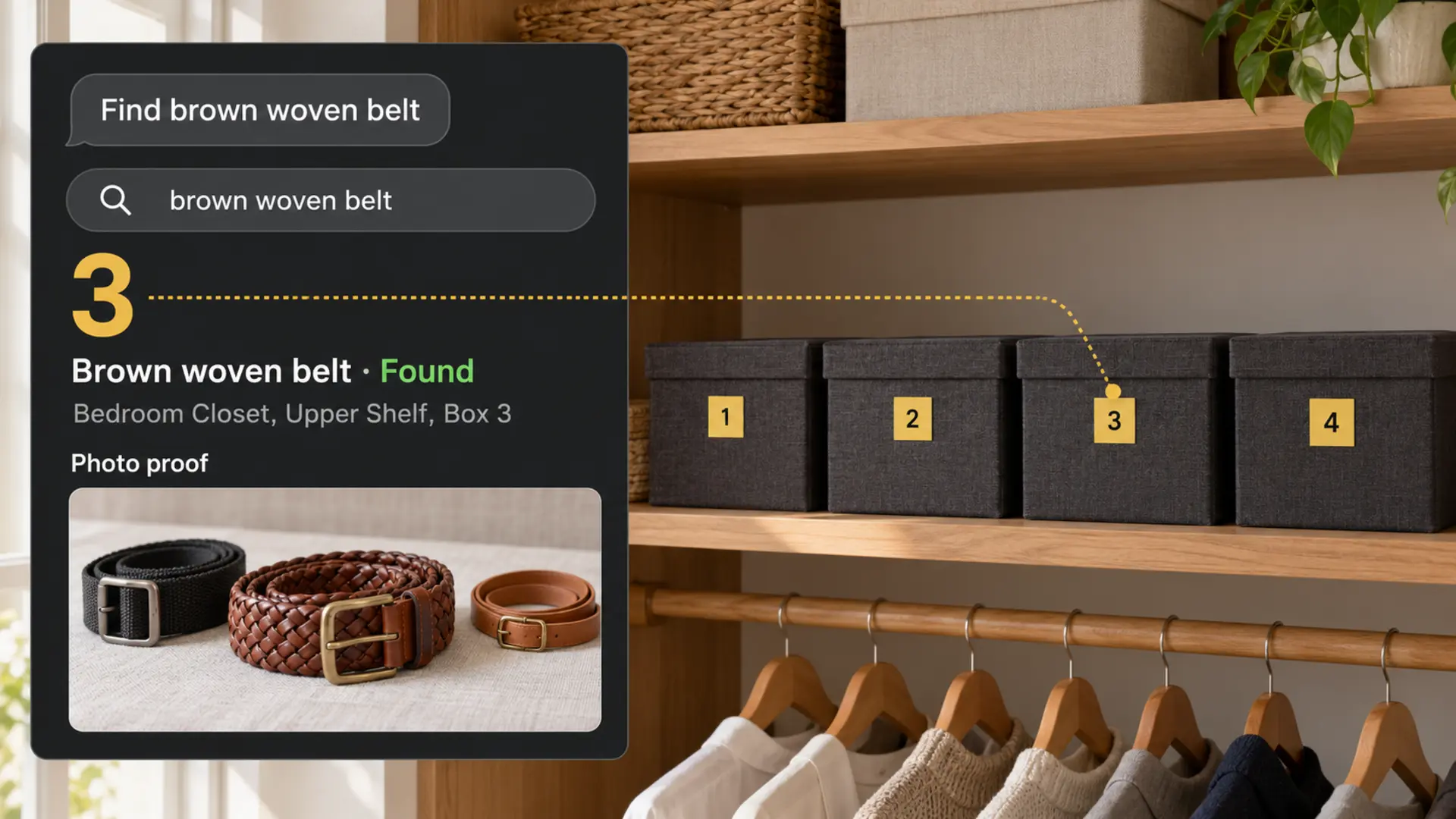
The brown woven belt is not lost. It is in one of the accessory boxes on the upper closet shelf—along with black, tan and navy belts that look almost identical through a half-open lid.
Learning how to store belts starts with a more useful question than “Which organizer should I buy?” Ask what resting shape suits each belt, whether its buckle needs separation, and how often you wear it. Then give every belt or small group a definite address.
The practical choices are straightforward: hang a suitable belt without stretching it, lay a stiff or delicate belt flat, or make a relaxed coil for an ordinary flexible belt. Avoid sharp folds, pressure from an overloaded drawer and hardware rubbing against finished surfaces. The maker's care instructions take priority when they are available.
Quick Links
Choose the Resting Shape Before the Organizer
Empty the current belt pile onto a clean, dry surface and look at the belts themselves. A soft canvas belt can tolerate a different arrangement from a stiff dress belt, a braided leather belt or a piece with a heavy decorative buckle.
Use this as a starting point, then check the maker's guidance for the actual belt:
| Belt type | Practical first choice | What to check |
|---|---|---|
| Everyday belt with a suitable buckle or hanging point | Hang straight on a smooth, dedicated hook or rail | The belt is not stretched, pinched or supporting other belts |
| Flexible fabric, webbing or ordinary leather belt | Make a relaxed coil in a divided drawer | No sharp crease; coil fits without being compressed |
| Stiff, wide or highly structured belt | Lay flat with full support | Buckle and stiff sections have clearance; nothing rests on top |
| Heavy, sharp or decorative buckle | Store separately or in its own divided space | Hardware cannot scratch another belt or carry the belt's full weight |
| Braided, woven, embellished, vintage or damaged belt | Follow maker or specialist guidance; often use individual support | No snagging, pressure, flaking or unsupported weak areas |
Do not force every belt into the same method just because a rack has enough hooks. Capacity is not the same as fit.
Sort by use before you sort by color
Make two useful groups:
- Front row: belts you wear regularly and need to reach without moving other items.
- Reserve: occasional, seasonal or special belts that can live in a protected drawer section or numbered box.
Within each group, separate anything with a buckle or finish that could mark its neighbor. Color can help you scan the collection, but frequency and safe fit determine the actual storage position.
This is also the moment to notice a loose stitch, damaged hole, bent fitting or surface change. Record the issue accurately. Do not turn a storage project into an improvised repair or conditioning session.
How to Hang Belts Without Crowding Them
Hanging works well when the belt's construction and care instructions suit it, the hook is smooth, and the belt can hang freely.
Choose a dedicated belt hanger, short closet rail or set of rounded hooks with enough spacing for the buckles. Check the installed organizer's load and mounting instructions. Then hang one belt per position where practical, rather than building a heavy stack on the front hook.
The belt should not drag on the floor, press against the closet door or bend sharply around a thin edge. Keep buckles from knocking into painted furniture, handbags or neighboring belt surfaces.
If you hang by the buckle, check that the chosen opening is a suitable support point. Do not suspend a fragile buckle, a weak stitched area or an embellished section merely because it fits over the hook.
A crowded multi-hook hanger may technically hold the collection while making the back belts invisible. If you must remove six belts to reach one, the arrangement has solved capacity but not retrieval.
Give the hooks simple positions—1 through 6, for example—and keep the most-used belts at the front. A position number is more reliable than “somewhere on the black hanger.”
How to Store Belts in a Drawer
A shallow drawer with adjustable dividers can work well for flexible everyday belts. The dividers should hold relaxed coils in place without squeezing them into hard rings.
To make a loose coil:
- Fasten or arrange the buckle only as the maker recommends.
- Begin with a broad curve rather than folding the strap back on itself.
- Let the belt follow a relaxed circular shape without pulling it tight.
- Place it in a compartment wide enough for the buckle and full coil.
- Close the drawer slowly the first time and check that nothing catches on the drawer above.
Do not stack heavy coils on a decorated buckle or compress the row until the dividers bow. Use a small suitable pouch or separate compartment for hardware that could rub against another belt. Avoid adhesive labels on the belts themselves.
For a wide, stiff or shaped belt, the drawer may be useful only if it can lie flat. Measure the usable interior after the drawer is closed, including any shallow tray or rail above it. A belt that fits only when flexed against the drawer wall does not truly fit.
How to Store Leather Belts
“Leather” does not describe one finish, construction or condition. Check the maker's care instructions before cleaning, conditioning, rolling or hanging a particular belt. If you cannot identify the material or the surface is flaking, sticky, powdery or cracked, pause before experimenting.
The Canadian Conservation Institute's general guidance for leather objects explains that unsupported leather can flatten, crease or deform under physical forces. It recommends appropriate support and protection from unsuitable environments. Its more specific conservation note warns against sharp folds, direct light, localized heat and large humidity changes; for long leather objects in collections, it describes horizontal support.
That museum guidance is evidence for being cautious about shape, light, heat and damp—not a demand that every household belt receive museum treatment. For an ordinary modern belt, use the manufacturer's instructions and a stable, dry interior closet as the practical baseline. For a valuable, historic or seriously deteriorated belt, seek advice appropriate to its materials and condition.
Do not invent a universal conditioning schedule. A product suitable for one leather or finish may not suit another, and storage is not the time to apply an untested treatment.
Protect Buckles, Braids and Embellishments
A buckle can damage both its own belt and the belt next to it. Give large or angular hardware clearance. Use a suitable soft barrier or its own compartment where necessary, and make sure the barrier does not transfer dye, shed fibers or trap a damp item.
Braided and woven belts need room so raised strands do not snag on hooks or adjacent hardware. Do not pull a braid tight to make a smaller coil. Keep chain sections and removable buckles with the correct belt, but prevent them from rattling against finished surfaces.
If a removable buckle is stored separately, write down the exact paired location. “Brown woven belt in Box 3; buckle in the small cotton pouch inside the same box” prevents a second search later.
Choose a Stable Storage Location
Use a dry, relatively stable interior closet or drawer. Avoid direct sunlight, radiators, hot pipes and known damp areas. Do not assume an attic, shed, garage or basement is suitable just because it has spare shelf space.
Before you choose an upper shelf, test the full routine. Can you lift the box safely without tilting it? Can you read its number without moving an unstable stack? Can you return it to the same place?
Closed boxes keep dust off reserve belts and make a shelf orderly, but they also hide what you own. Use boxes that fit the belts without sharp bends or compression, and do not place a heavy stack on top of a light accessory box.
For accessories that remain visible, see our guides to storing handbags and storing hats. The same principle applies: the physical support comes before the inventory system.
Build a Belt Map You Can Search
A label that says “belts” names a category. It does not identify the box holding the brown woven belt.
Give each box, drawer zone or hook a short visible number. Then keep the descriptive detail in a paper index or searchable record:
| Number | Exact location | Main contents | Useful search words |
|---|---|---|---|
| 1 | Bedroom Closet, Door Rail, Hook 1 | Black work belt | black belt, work belt, silver buckle |
| 2 | Dresser, Top Drawer, Left Section | Tan dress belts | tan belt, narrow dress belt |
| 3 | Bedroom Closet, Upper Shelf, Box 3 | Brown woven belt and reserve fabric belts | brown woven belt, braided belt, canvas belt |
| 4 | Dresser, Top Drawer, Right Section | Occasion belts | navy belt, decorative buckle, occasion belt |
Now “Where is the brown woven belt?” has a usable answer: Bedroom Closet, Upper Shelf, Box 3.
If Box 3 contains several belts, add a small internal map:
| Box 3 section | Contents | Note |
|---|---|---|
| A | Brown woven belt | Buckle in matching cotton pouch |
| B | Black canvas belt | Relaxed coil |
| C | Tan narrow belt | Kept clear of darker fabric |
Take one safe overview photo while the box is open. The photo should confirm the arrangement, not replace the written location. Do not repeatedly unpack a delicate belt just to improve an inventory image.
Update the map when a belt moves. A simple accurate record beats a detailed list that still points to last year's drawer.
For more examples of numbered containers and exact addresses, see how to keep track of storage bins.
The One-Drawer Starter Method
You do not need to reorganize every accessory at once.
- Pick one belt drawer, rack or box.
- Separate frequent-use belts from reserve belts.
- Check each belt's construction, condition and maker guidance.
- Choose hanging, flat support or a relaxed coil for each belt.
- Protect buckles and leave enough room to remove one belt cleanly.
- Number the positions or the outer box.
- Take one overview photo and record the exact location.
- Ask another person to find the brown woven belt from your note alone.
If they can retrieve it without opening every box, the system is already doing its job.
How Totely Helps
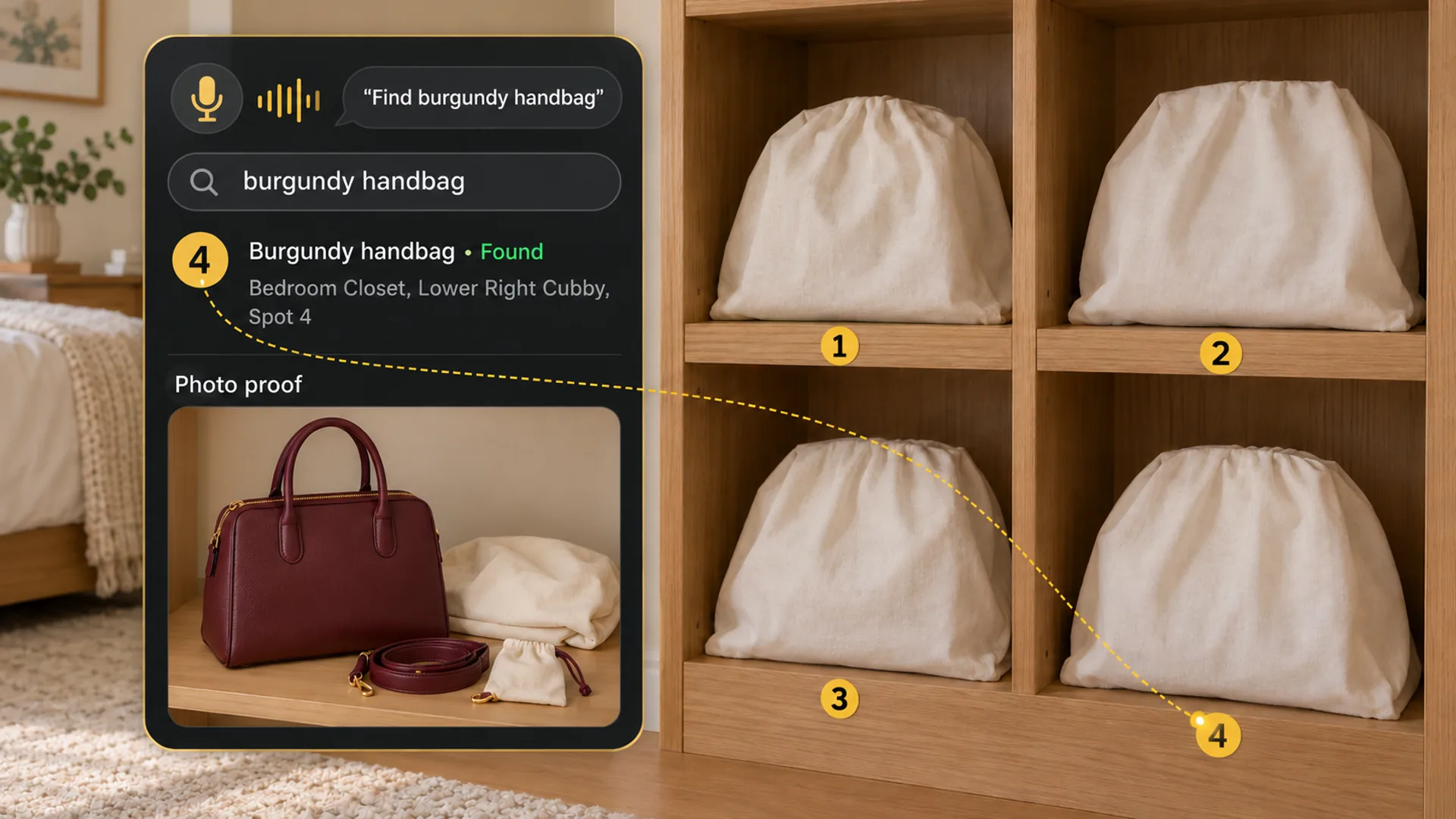
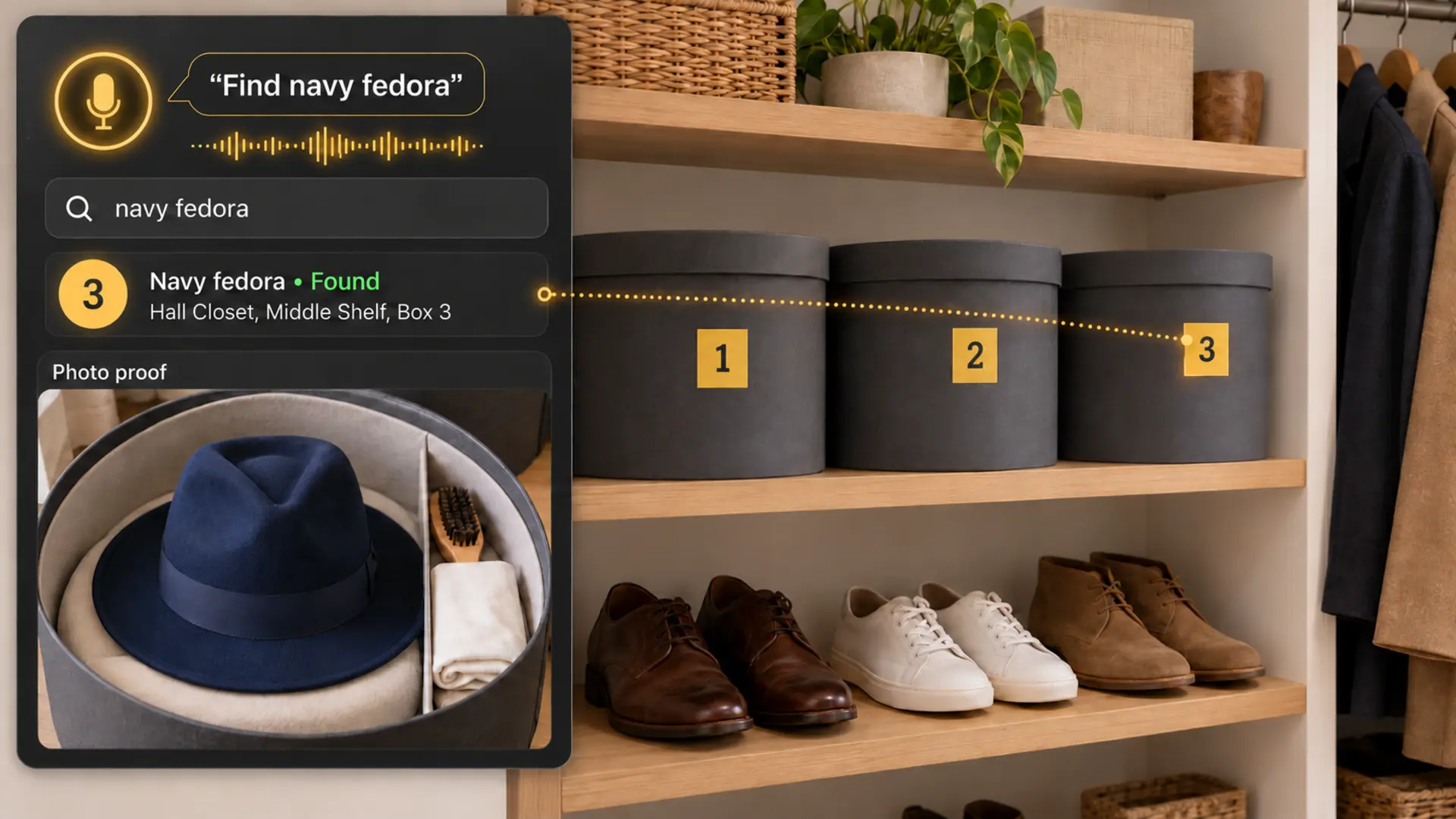
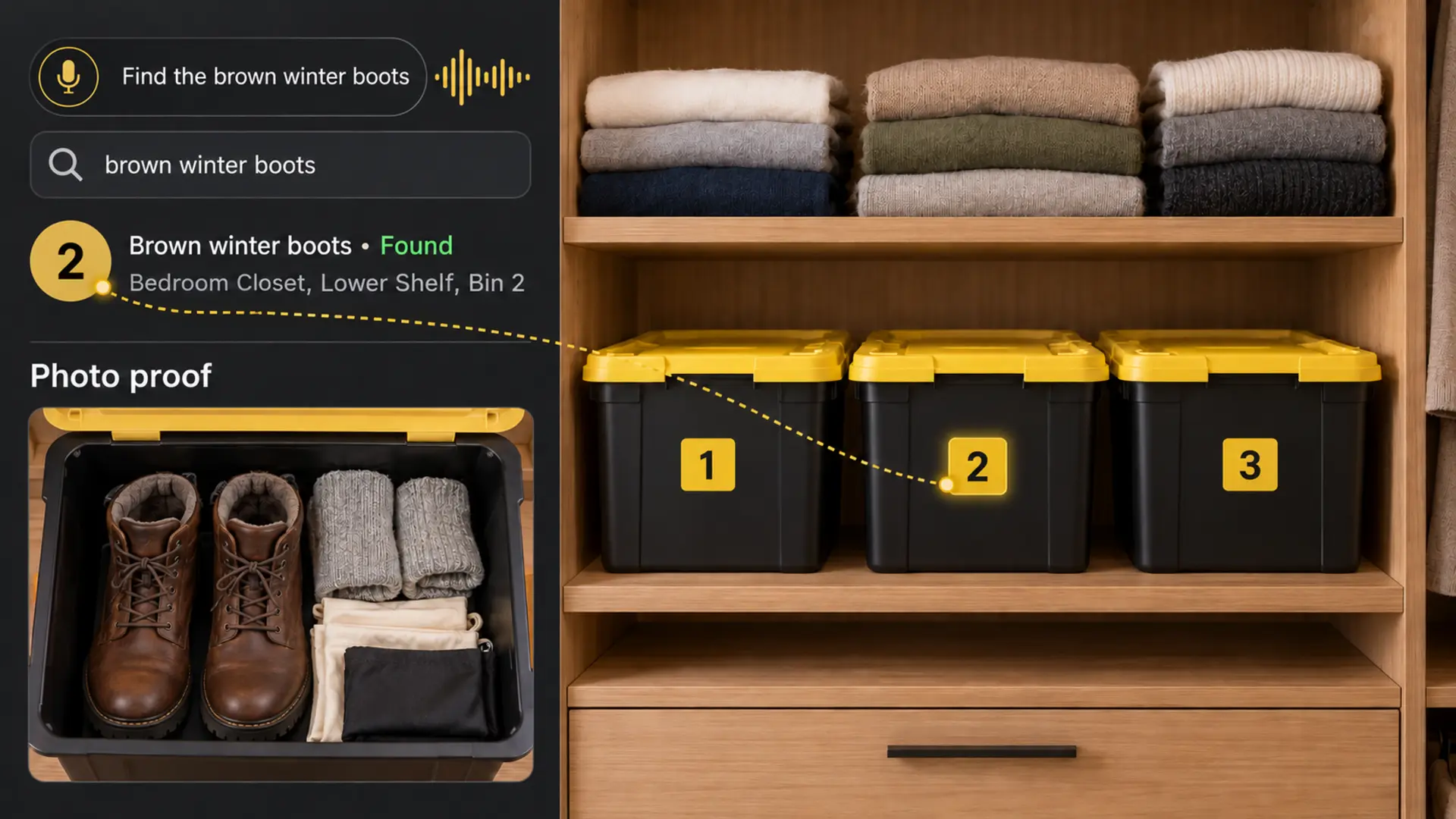
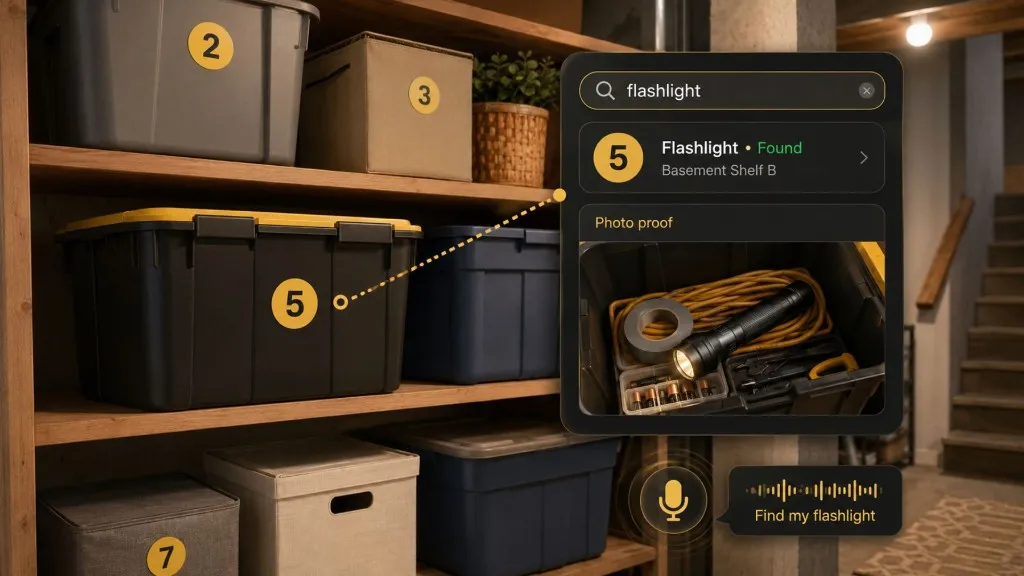
The organizer protects and separates the belts. Totely provides the digital memory layer that helps you find a particular one later.
Use the same straightforward workflow:
- Put a clear yellow number 3 on the outside of the closed belt box.
- Take a reference photo while the belts are safely visible.
- Let the app suggest an initial list of visible items, then review and correct it.
- Add the description “brown woven belt” and any important buckle note.
- Save Bedroom Closet, Upper Shelf, Box 3 as the exact location.
- Later, search naturally for “brown woven belt.”
- Use the saved number, location and photo proof to confirm the correct box before opening it.
A photo cannot identify a belt hidden beneath another item, and AI cannot know a material, maker or family story simply by looking. Human review matters. You do not need QR codes, barcodes or a separate data-entry project to start.
Belt Storage FAQs
Is it better to hang or roll belts?
It depends on the belt. A suitable everyday belt may hang straight from an appropriate support. A flexible belt may rest in a loose coil. A stiff, shaped, decorated or fragile belt may need flat, individual support. Follow the maker's care instructions and avoid stretching, sharp folds and pressure.
Can leather belts be stored rolled?
Some flexible modern leather belts can rest in a broad, relaxed coil when their maker's guidance allows it. Do not pull the coil tight or create a hard crease. Stiff, vintage, damaged or unusually finished leather may need a different method.
How do I store belts in a small closet?
Keep frequently used belts on a compact, properly mounted rack or in a divided drawer, then place occasional belts in a suitable numbered box. Measure the full belt and buckle arrangement before buying an organizer, and keep the retrieval path clear.
How do I stop buckles from scratching other belts?
Give large or sharp buckles their own compartments or suitable soft barriers, and do not stack them against finished surfaces. Keep removable hardware with the correct belt and record its location.
Can I store belts in a plastic bin?
A clean, suitable container can be useful for ordinary reserve belts if the belts fit without sharp bends, are dry and are kept in an appropriate interior location. Follow material-specific guidance; a sealed bin is not a remedy for dampness, unstable finishes or uncertain conservation needs.
How do I find one belt stored in a box?
Number the outer box, record its exact shelf and save a short contents list with a useful photo. A description such as “brown woven belt—Box 3, section A” is more useful than a broad label such as “accessories.”
Store the Shape, Then Save the Address
The best belt storage idea is not the organizer with the most hooks. It is a setup that respects the belt's shape, keeps its buckle from damaging neighboring pieces and lets you retrieve one item without dismantling the closet.
Choose the resting method first. Then add a visible number, an exact location and a reviewed photo. Protected, searchable, and ready to wear.