How to Store Hats: Give Every Brim Enough Room
Learn how to store hats by shape and use, check box and shelf clearance, and keep caps, sun hats and a favorite fedora easy to find without crushing them.
By Steve Watts · Co-Founder, Totely
October 19, 2026 · Updated October 19, 2026 · 12 min read
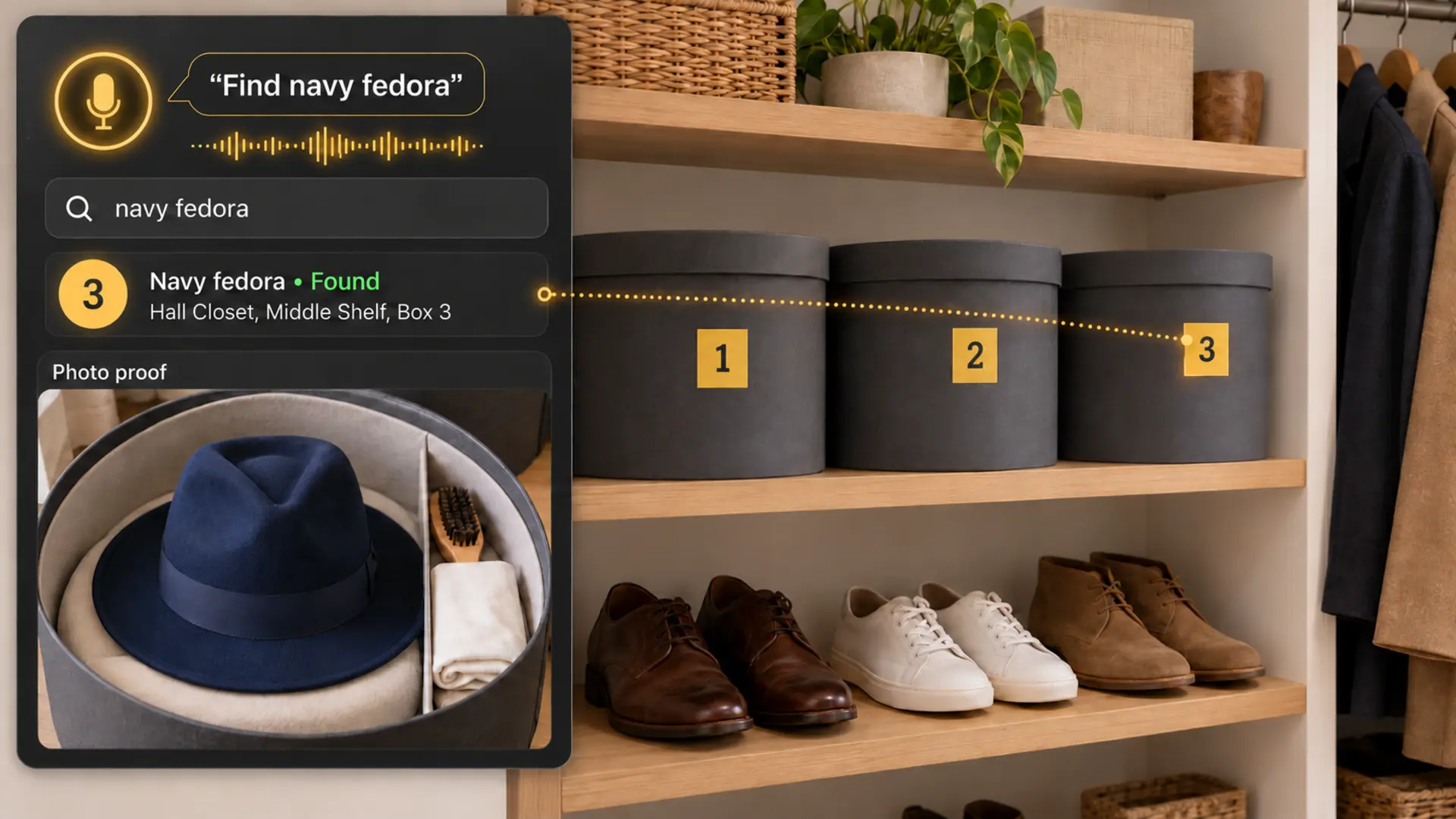
The navy fedora is not on the hook with the everyday caps. You put it somewhere more protective. Now there are three closed hat boxes on the closet shelf, and getting dressed has turned into opening lids.
Learning how to store hats starts with a different question from “Where can I fit these?” Ask what will support each hat without pressing on its crown, brim or decoration. A cap, a soft beanie and a structured sun hat should not all be squeezed into the same arrangement.
Keep a small everyday selection reachable. Give shaped or delicate hats suitable support and enough room inside their housing, following the maker's instructions. Then add a clear record of what the closed boxes hold.
The box should protect the hat. The record should spare you the unnecessary unpacking.
Quick Links
How to Store Hats Without Pressing on Their Shape
Look at construction before choosing an organizer. “Hat” is a category, not a storage instruction.
- Everyday baseball cap: Start with a reachable shelf row, roomy drawer section or suitable cap rack. Check that the front panel and bill are not bent by the organizer or neighboring caps.
- Soft knit hat: Use a suitable drawer or separate section without tight packing. Follow the actual care instructions and leave room for any decoration.
- Structured felt or straw hat: Use maker-recommended support, with a suitable box for protection when needed. The crown, brim and trim need clearance, with nothing resting heavily on the hat.
- A hat sold as packable: Use the packing method specified for that particular style. “Packable” does not tell you which fold, direction or storage duration is appropriate.
- Fragile vintage or embellished hat: Choose individual housing and support appropriate to its condition. Weak areas and projecting details may need advice from a conservator or specialist.
An ordinary baseball cap can also have a stiff front panel, delicate embroidery or a bill you do not want reshaped. A soft-looking hat may contain components that change how it should be handled. Read the label or the product's care page rather than guessing from appearance.
You do not need one elaborate organizer for the whole collection. It may make more sense to keep regular caps in a drawer and reserve a separate shelf for hat boxes.
Fit the Hat Before You Fit the Box
A lid that closes is not enough. It can close while touching the crown or holding the brim in an unwanted bend.
Check the hat in its intended storage position, including any support. Consider the full width of the brim, the height of the crown and anything that projects beyond the basic shape. Interior space matters more than the box's advertised outer dimensions.
Find out what should carry the weight
For its felt and straw hats, Stetson's care guidance recommends crown-down storage on a clean surface or in a hat box to keep the brim from flattening.
That is useful manufacturer advice, not permission to turn every hat upside down. A fragile crown, an unusual trim or a different construction may need another arrangement.
The Canadian Conservation Institute's guidance for costume accessories calls for support suited to the whole hat, including the crown and brim. It also cautions that a form should fit without forcing the hat onto it. This is conservation guidance for collections; the practical lesson at home is to check the actual contact points, not to assume any head-shaped stand will fit.
For a valuable or weakened piece, get appropriate advice before improvising a mount.
Test the lid, the sides and the shelf
Place the supported hat into the proposed box without pushing it into position. Check that the sides do not squeeze it and the lid has room above it. Do not press down on the lid to make an overfilled box work.
Next, try the box on its shelf. Can you take it out without scraping the lid against the shelf above? Can you hold it securely with both hands? Will a coat sleeve catch on it when the closet door opens?
If the answer is no, change the location or housing. A protective box is less useful if retrieving it requires tilting it sharply or pulling it out from under a heavy stack.
Do not use another hat as the support
Nesting can look efficient, but the lower hat may be carrying pressure it was not designed to carry. Do not force one shaped crown into another just because their sizes appear similar.
For structured or delicate hats, individual supported spaces are a more cautious starting point. Follow specific manufacturer guidance if a particular set is designed to nest.
Put Everyday Caps Where Hands Already Go
The cap you use for a morning walk should have a home you can reach easily. Otherwise, it is likely to return to the chair, counter or top of the shoe pile.
Choose one practical location near the existing routine: a drawer by the closet, a shelf near the coats or a suitable organizer where you already put your outdoor things.
A drawer row lets you see several caps without lifting a stack. Leave enough space that the drawer closes freely and no bill catches against its edge. Arrange caps so removing one does not drag the neighboring ones along.
A cap rack can also work, provided its contact points suit the caps. Check how the hat hangs rather than relying on the product's capacity number. A rack that technically holds a collection may still crowd the bills or press caps against a door.
Check what happens when the closet moves
Open the door. Slide the coats. Close the drawer. These ordinary movements reveal problems a still photograph can hide.
Do not assume that an adhesive hook will leave every surface undamaged, or that an over-door organizer fits every door. Follow the organizer's installation instructions and any renter restrictions. If installation is not appropriate, a shelf or drawer arrangement may be enough.
Our renter-friendly storage guide covers ways to use existing space without rebuilding the closet.
Keep only the hats you currently use in the easiest-access position. The rest can have a more protective home without becoming an anonymous seasonal pile.
Box Seasonal and Delicate Hats with Care
Check the hat's condition before you close the lid. A storage reset is a good time to notice a loose band, damaged trim or an area that needs cleaning. It is not a reason to experiment with water, sprays or steam.
Use the maker's cleaning and drying instructions. Do not put a hat away while it is still damp from wear or cleaning, and do not use direct heat as a shortcut.
Check original packaging rather than automatically replacing it
If the hat came with fitted packaging or a support, look at whether it still fits and is in sound condition. Reusing a suitable insert can be more sensible than squeezing the hat into a smaller box.
Keep care information with the record or packaging. Do not describe ordinary tissue, foam or a decorative box as archival without knowing what it is.
The Museum of Fine Arts Boston's hat-storage examples use individual mounts and trays to support hats and help with handling. They illustrate why delicate objects need more consideration than simply finding an empty container. They are not a do-it-yourself recipe for restoring an old hat.
For a meaningful family piece, our sentimental-item storage guide covers recording the story alongside the physical location.
Choose a suitable interior home
Look for a stable interior storage area away from direct sunlight and heat sources. Check for dampness, leaks and anything that could press against the boxes.
A hat box does not correct an unsuitable location. Nor does it mean you can pile heavy household totes on top.
When the season changes, inspect the hat and its housing before returning it to use. If you find suspected pest activity, moisture or new damage, address that separately with appropriate advice rather than adding another hat to the same box. This article does not provide infestation treatment or repair instructions.
For the wider seasonal changeover, see seasonal storage in a small home.
Make Closed Hat Boxes Easy to Identify
A neat row of identical boxes can still make you open every one.
Use a simple visible number on each outer box. Keep the useful description somewhere you can search or consult without handling the hat.
Here is an illustrative three-box record:
| Box | Saved location | Contents and useful note |
|---|---|---|
| 1 | Hall Closet, Middle Shelf, Box 1 | Cream summer hat; original care sheet kept with the box |
| 2 | Bedroom Closet, Upper Shelf, Box 2 | Occasion hat with ribbon trim; individual support retained |
| 3 | Hall Closet, Middle Shelf, Box 3 | Navy fedora with plain navy band; soft brush and folded dust cover in a separate section |
The description should sound like the hat you remember. “Navy fedora with plain band” is more useful than “accessories.” Add the owner, occasion or a distinctive detail only when it helps.
Copy material information from a reliable label or maker record. A photo alone cannot confirm whether a hat is wool felt, fur felt, paper braid or another material.
Photograph without rearranging a delicate hat
Take a reference photo while the hat is safely accessible, preferably before closing its box. Include the support or packaging that helps you recognize the setup.
Do not repeatedly remove fragile trim or unpack a vulnerable piece just to improve the picture. A photo of its housing plus an accurate note may be more appropriate.
If a brush, dust cover or separate accessory lives with the hat, keep it from bearing on the crown or brim. The inventory photo should describe a suitable arrangement, not persuade you to fit more things around the hat.
Update the record when the box moves or the hat is stored elsewhere. The storage-record maintenance guide explains that habit in more detail.
How Totely Helps
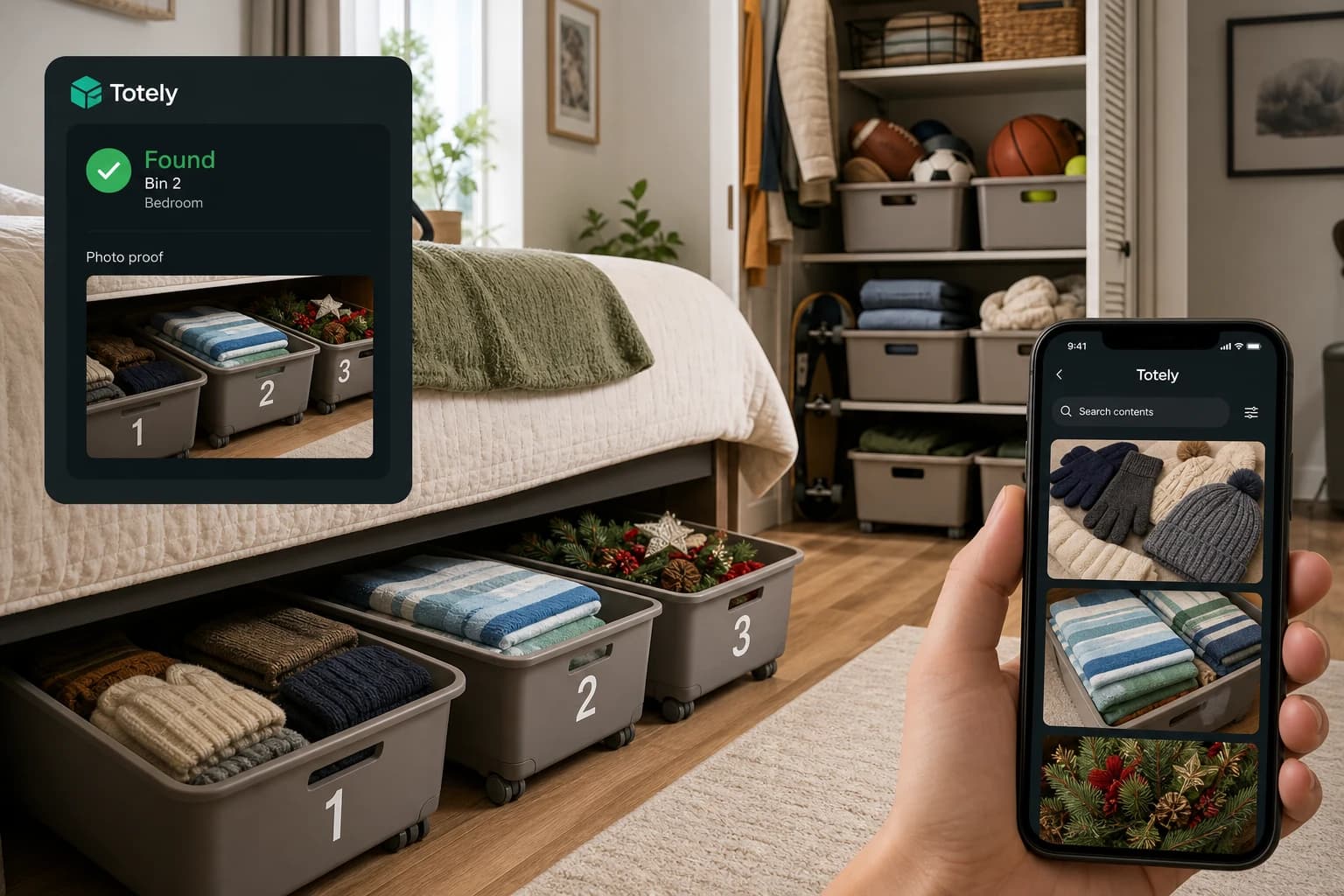
Totely adds a digital memory layer after the hat has a suitable physical home.
Number the outer box, take a contents photo and let Totely suggest a first list from what is visible. Review and correct that list. Add “navy fedora,” its identifying details and “Hall Closet, Middle Shelf, Box 3.”
Later, say or type “navy fedora.” The saved number and exact location point you toward Box 3, while photo proof helps confirm the match before you start opening similar boxes.
Add a manual note for anything the photo cannot show, such as a care sheet inside an envelope or a hat hidden by protective packaging. Totely cannot certify a support's fit, identify hidden materials or diagnose damage from an ordinary inventory photo. An unrecorded move also needs a human update.
You do not need QR codes, barcodes or manual entry of every accessory to start with one useful box record.
A One-Hat Fit Test
Start with the hat you most want to protect or most often struggle to find.
- Check its maker's care and storage guidance.
- Identify the crown, brim or trim that needs support and clearance.
- Try the proposed support and housing without forcing the hat.
- Check that the lid closes without pressure.
- Put the box in a suitable location and test removing it.
- Add a visible box number.
- Take a safe reference photo and save a recognizable description with the exact shelf.
- Use the record to find the hat, then return it to that home.
If the lid presses on the hat, fix the physical fit first. A better record cannot compensate for a box that is too small.
Hat Storage FAQs
Should all hats be stored upside down?
No. Stetson recommends crown-down storage for its felt and straw hats, but other constructions and fragile pieces may need different support. Follow the maker's guidance and consider the condition of the crown, brim and decoration.
Is it okay to stack hats inside one another?
Only when that arrangement suits the particular hats and their guidance. Do not force structured crowns together or let one hat's weight distort another. Individual supported spaces are a cautious option for delicate pieces.
Can baseball caps go in a drawer?
Yes, if the drawer has enough room for their actual shapes. Check that the front panels and bills are not squeezed, and that the drawer opens and closes without catching fabric or bending a bill.
Can I store a hat box under the bed?
Only if the housing, support and location suit the hat. Check the packed height and access without compressing the crown or brim. A low space that works for a soft cap may not fit a supported fedora.
Does packable mean I can leave a hat folded?
Not necessarily. Follow the packing and storage instructions for that particular style. Do not apply a fold or roll from a different hat simply because both are described as packable.
How can I find a hat without opening every box?
Number the outer boxes and keep a photo or description with each exact location. Use identifying words such as “navy fedora with plain band,” then update the record when the hat or box moves.
Give the Shape Room, Give the Box an Address
Good hat storage leaves enough space for the hat as it is, not the shape it can be squeezed into.
Choose suitable support, check the closure and keep everyday pieces within reach. For the hats that go behind a lid, add one clear number and a location you can trust. Stored, not lost.