Toy Storage Bins: A System Parents Can Actually Maintain
Choose toy storage bins that fit complete sets, separate daily play from stored toys, and keep an accurate record of missing pieces and exact locations.
By Steve Watts · Co-Founder, Totely
October 11, 2026 · Updated October 11, 2026 · 13 min read
The red toy train is back in favor. You remember putting its track away, but the engine might be in a playroom basket. The bridge could be in the closet. A matching row of toy storage bins looks organized until someone asks for a set you cannot assemble.
Useful toy storage bins do two jobs: hold the toys in a way that suits everyday handling, and keep the pieces you expect together. For toys put away between uses, a short, accurate contents record adds a third benefit: you can find the right bin and know what still needs checking.
Start with one playable set. Choose its container, decide who will retrieve it, and give it a clear home. You can build the rest of the system around that small success.
Quick Links
Choose Bins Around the Toys
Lay out the set before buying its container. Include the awkward part: the bridge, doll furniture, long track section or instruction booklet. A bin that holds the small pieces but leaves the essential accessory elsewhere creates another location to remember.
If you already own containers, try one with the actual contents first. The right size is the one that lets you put the set away without forcing pieces, burying an important part or making the filled bin difficult to handle.
| Bin format | A practical use | What to check with your toys |
|---|---|---|
| Shallow open bin | Everyday toys that suit the child's age and access needs | Can the child see and retrieve the intended toys without digging through a deep pile? |
| Small lidded bin | A set an adult brings out and returns to storage | Does the entire set fit, and can the adult comfortably carry and open it? |
| Divided tray or inner case | Related small components inside a larger set | Do parts remain together without being squeezed, and is access appropriate for the children nearby? |
| Fabric basket | Soft toys or larger loose items | Does the basket keep its shape and fit the shelf without snagging or spilling? |
| Original fitted box inside a larger bin | A toy with shaped inserts or components that need particular support | Is the packaging still sound, and does it suit the manufacturer's care guidance? |
Measure the usable interior rather than relying only on a capacity label. Tapered sides can make the bottom narrower than the rim. Check the shelf footprint too, including handles and latches, and leave room to remove the bin and open it.
Clear sides help identify objects near the edge. They cannot show every piece beneath a track bundle or inside a closed case. Opaque bins can work just as well when the contents have a reliable address.
For a closer look at enclosure choices, see storage bins with lids. Avoid buying a large matching collection until one filled bin works in the space you have.
Separate Daily Play From Stored Toys
Decide which toys belong in the current play area and which an adult will retrieve from storage. Those two groups need different access.
For everyday play, use categories your household understands: vehicles, dress-up clothes or the building set used this week. A child who asks for “the red train” may not recognize an adult's label such as “transportation manipulatives.” Use familiar names in your notes too.
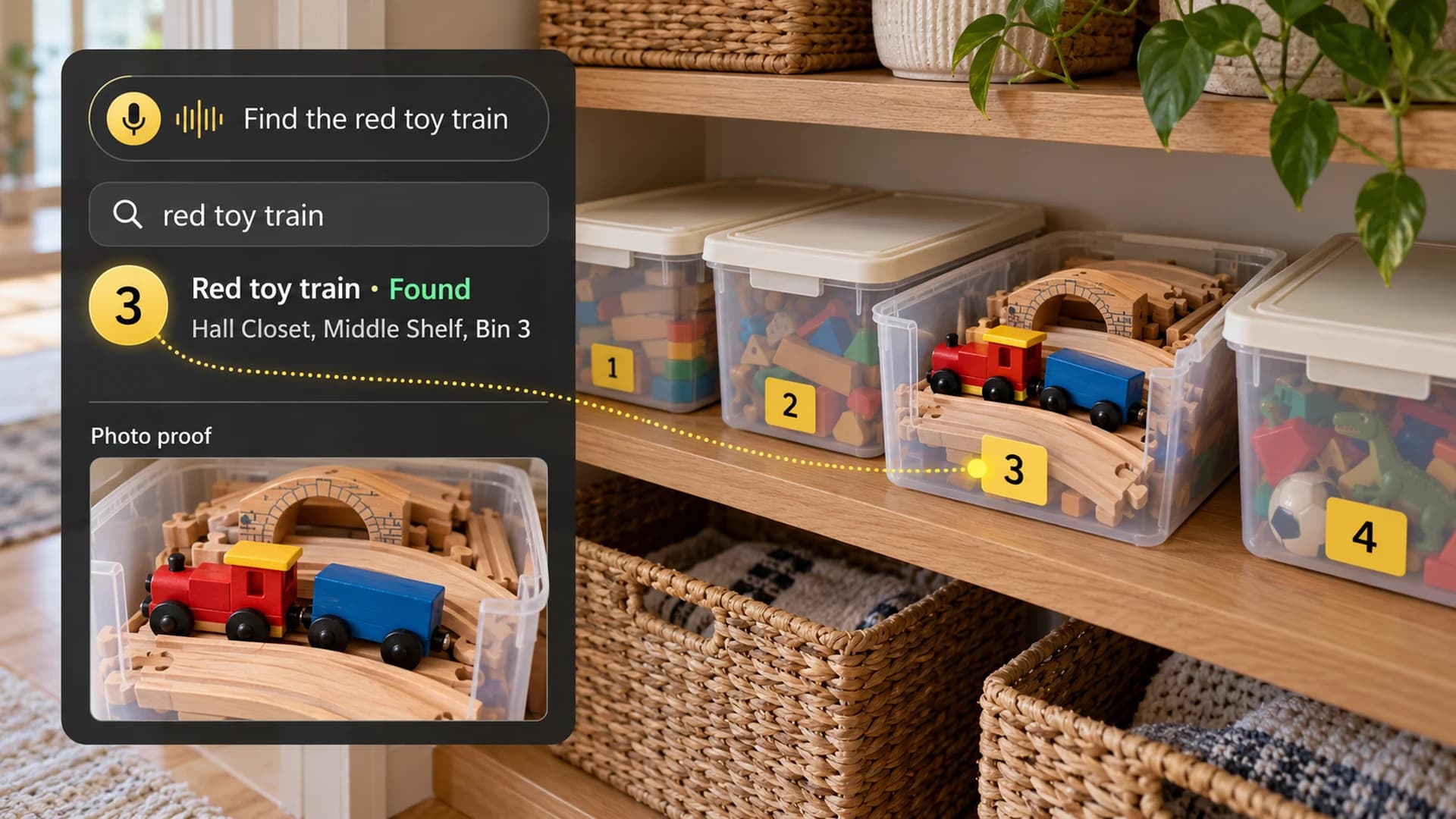
For stored toys, keep each useful set together and give the outer container a stable number. Save an exact location such as Hall Closet, Middle Shelf, Bin 3. Choose a dry interior spot suitable for the particular toys, with manageable access for the adult doing the lifting. Follow the toy and container manufacturers' guidance; a garage or attic is not automatically suitable for every material.
Make toy rotation optional
You can put a set away and bring it back when someone wants it. You do not need a fixed rotation interval or a prescribed fraction of toys on display.
If you use toy rotation storage, record which sets are put away and which have returned to play. Let the available space, your children's requests and your ability to maintain the arrangement guide the exchange.
A favorite toy can stay available while another set waits in the closet. The useful question is whether you can retrieve and return the stored set without creating a new pile.
Give each bin one understandable job
A train-set bin might contain the engine, carriage, tracks and bridge. A broad “small toys” bin may mix unrelated pieces that are harder to reunite later.
You do not need a separate outer bin for every tiny collection. Several sets can share a manageable container if each has suitable inner housing and a clear note. Keep their pieces distinguishable, and review whether younger siblings can access them before choosing a shared play-area location.
Check Access, Lids and Safety
Storage choices should support the safety guidance for the actual toys and the children in the household. A lid or a high shelf does not establish that a toy is safely inaccessible.
The U.S. Consumer Product Safety Commission's toy guidance says to follow age and safety information and keep small balls and toys with small parts away from children younger than three. Consider younger siblings as well as the child who owns the set. A bin number helps adults find an item; it is not a safety barrier.
For toy chests, consider the opening mechanism before treating them as another storage bin. CPSC's toy-chest guidance describes falling-lid and entrapment hazards. An open container or light removable lid avoids the falling-hinged-lid hazard, but does not make every storage arrangement safe. Follow the specific product instructions and official guidance rather than improvising a chest repair.
Shelving also needs attention. CPSC's Anchor It guidance recommends furniture anchoring as part of childproofing and choosing the appropriate kit. Follow the furniture and anchoring instructions for the actual setup. Do not encourage children to climb to reach stored toys.
Keep filled bins manageable, check shelf and container limits, and plan how an adult will remove a bin. The attractive arrangement is only useful if the household can use it appropriately.
Keep Sets Together and Record Missing Pieces
Before packing, check the pieces you care about finding next time. Use an existing parts list or instructions if you have them. If you do not know the original piece count, leave it uncertain.
Three descriptions are useful:
- Checked: you have verified the named items are present.
- Not yet checked: you have not confirmed something, such as every curved track section.
- Known missing: you looked for a specific part and have not found it.
These notes describe what you know. A contents photo alone is not proof that a puzzle or construction set is complete.
Here is a hypothetical family storage map. The toy names and notes are examples to adapt, not a tested inventory or a manufacturer's set list.
| Bin | Exact stored location | Contents to search for | Honest set note |
|---|---|---|---|
| 1 | Hall Closet, Middle Shelf, Bin 1 | Dress-up cape and pretend-play clothes | Cape checked; accessories not yet reviewed |
| 2 | Hall Closet, Middle Shelf, Bin 2 | Animal figures and play mat | Named figures checked against the family's list |
| 3 | Hall Closet, Middle Shelf, Bin 3 | Red toy train, blue carriage, wooden track and bridge | Train and bridge checked; curved track count not yet confirmed |
| 4 | Hall Closet, Middle Shelf, Bin 4 | Large floor puzzle in its original box | One identified corner piece missing |
Use a small inner case or appropriate compartment for a set's loose accessories. Save an existing instruction sheet with the set when practical. Do not keep hazardous loose packaging where it could become a plaything.
Photograph the visible contents while the bin is open. Add a note for anything hidden inside a carton or underneath another object. “Red toy train with blue carriage” is a more useful future search than “miscellaneous toys.”
Decide what stays before expanding storage
Some toys belong back in use, some are worth storing, and others may be ready to leave. Keep an uncertain donation decision separate from a set you expect to retrieve.
Before packing a donation, check the receiving organization's current rules and disclose missing or damaged parts. Do not describe a set as complete because its box is full.
A toy you are keeping for its family history may need a different location and care plan from a daily-play set. Record the story without inventing dates or origins. The sentimental-item storage guide covers that decision in more detail.
Update the Record When a Toy Moves
A bin map becomes less useful when it describes yesterday's contents. Choose a simple moment for the update: when an adult puts a set away, returns it to play or moves its storage bin.
In the example above, someone takes the red engine out of Bin 3 and puts it in a playroom basket. The tracks and bridge remain in the closet. A note that still says the engine is in Bin 3 needs correcting.
| What changed | Physical action | Record to update |
|---|---|---|
| Whole set returns to play | Move the set to its current play location | Mark it out of the stored bin and record where it went |
| One component is borrowed | Keep the remaining set together | Note the borrowed part and its current known location |
| A loose piece is reunited | Return it to the correct set after an adult checks it | Replace the missing note only if that specific piece is confirmed |
| A bin moves shelves | Place it in the new suitable location | Keep its number and update the exact shelf address |
| A set leaves the household | Remove the actual set | Remove or revise the contents entry so searches remain useful |
For Bin 3, the updated note could be: “Red engine in Playroom, Low Basket. Track, bridge and blue carriage remain in Hall Closet, Middle Shelf, Bin 3.” When the engine returns, check it is actually present and revise the note again.
An adult can gather an unidentified loose piece temporarily, then identify its set before returning it. Keep small parts away from younger children during that process. Avoid creating a permanent mixed-parts bin that nobody reviews.
For a household-wide version of the same habit, see how to keep track of storage bins.
Try the One-Set Starter Method
Choose one set people ask for. You do not need to catalog every toy to make it easier to find.
- Lay out the set and check the important pieces, using its existing instructions if available.
- Record any known missing part and anything you have not checked.
- Try a manageable bin that holds the set without forcing the pieces.
- Check the intended location, access, age guidance and product instructions.
- Put one clear number on the outer bin.
- Take a reference photo and write the toy names your family uses.
- Save the exact shelf location and any hidden-component note.
- Ask another adult to find the set using that record, then agree when you will update it.
If they find Bin 3 and understand its track count is still unconfirmed, the record is doing its job. It locates the set without promising more than you checked.
How Totely Helps
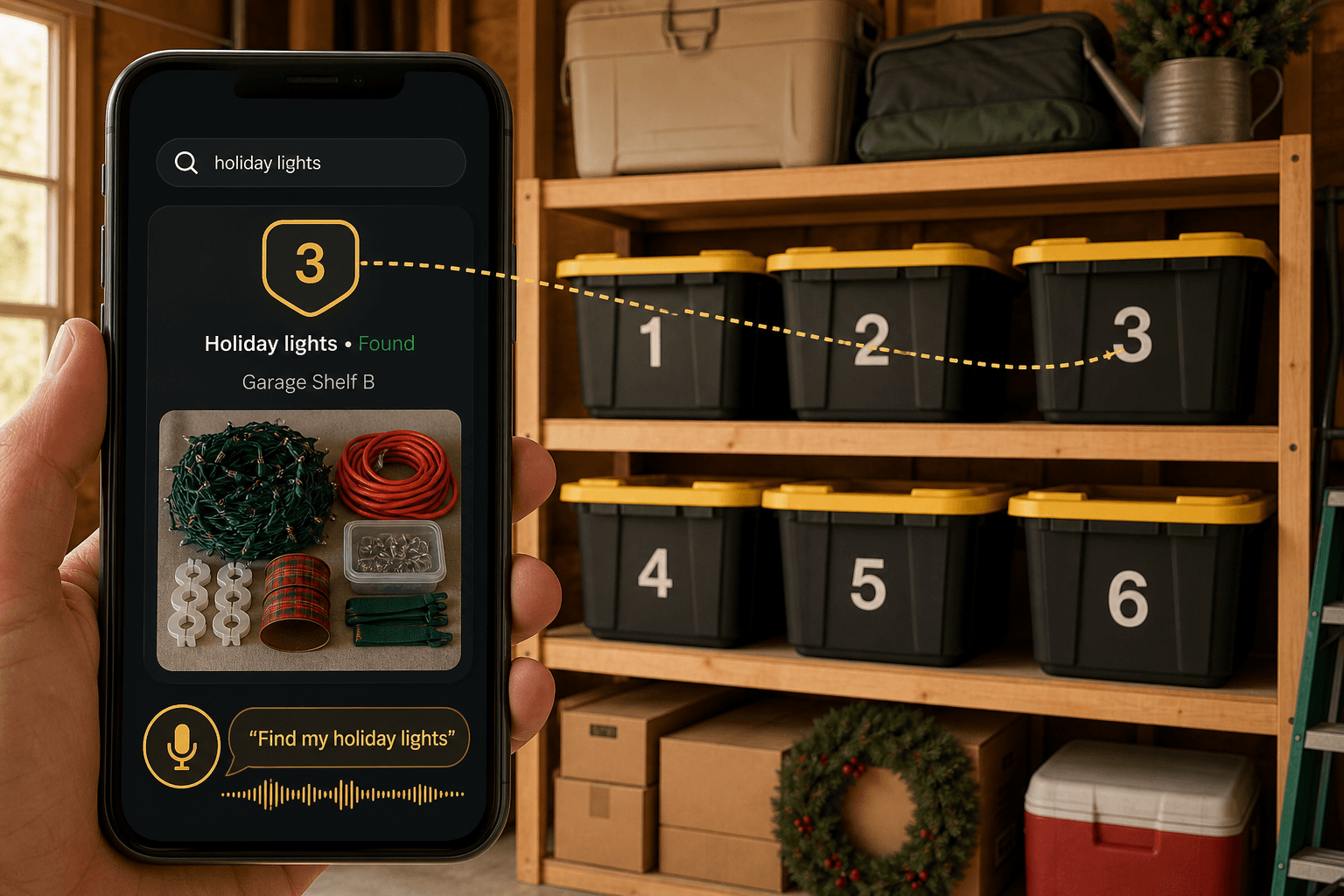
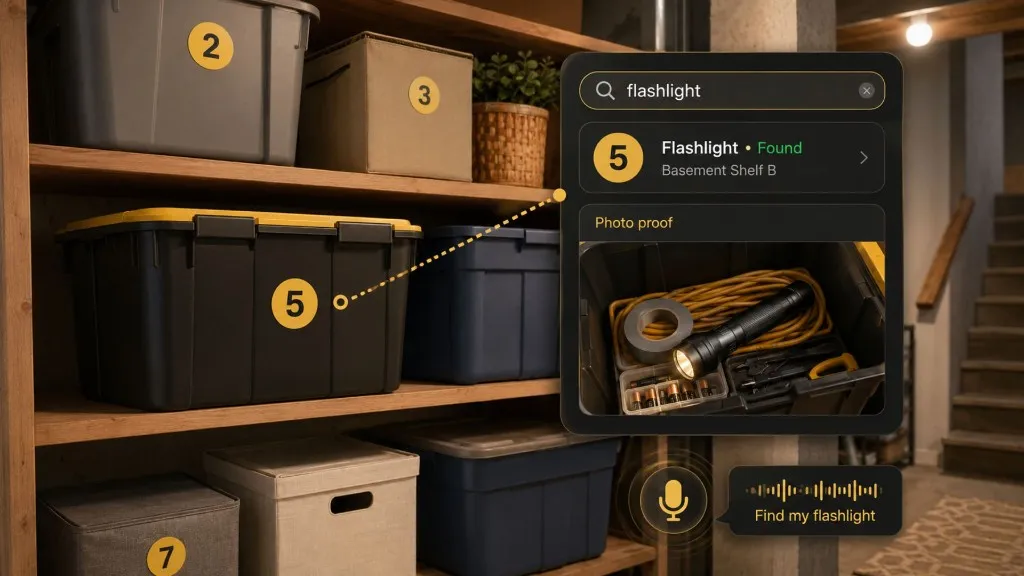
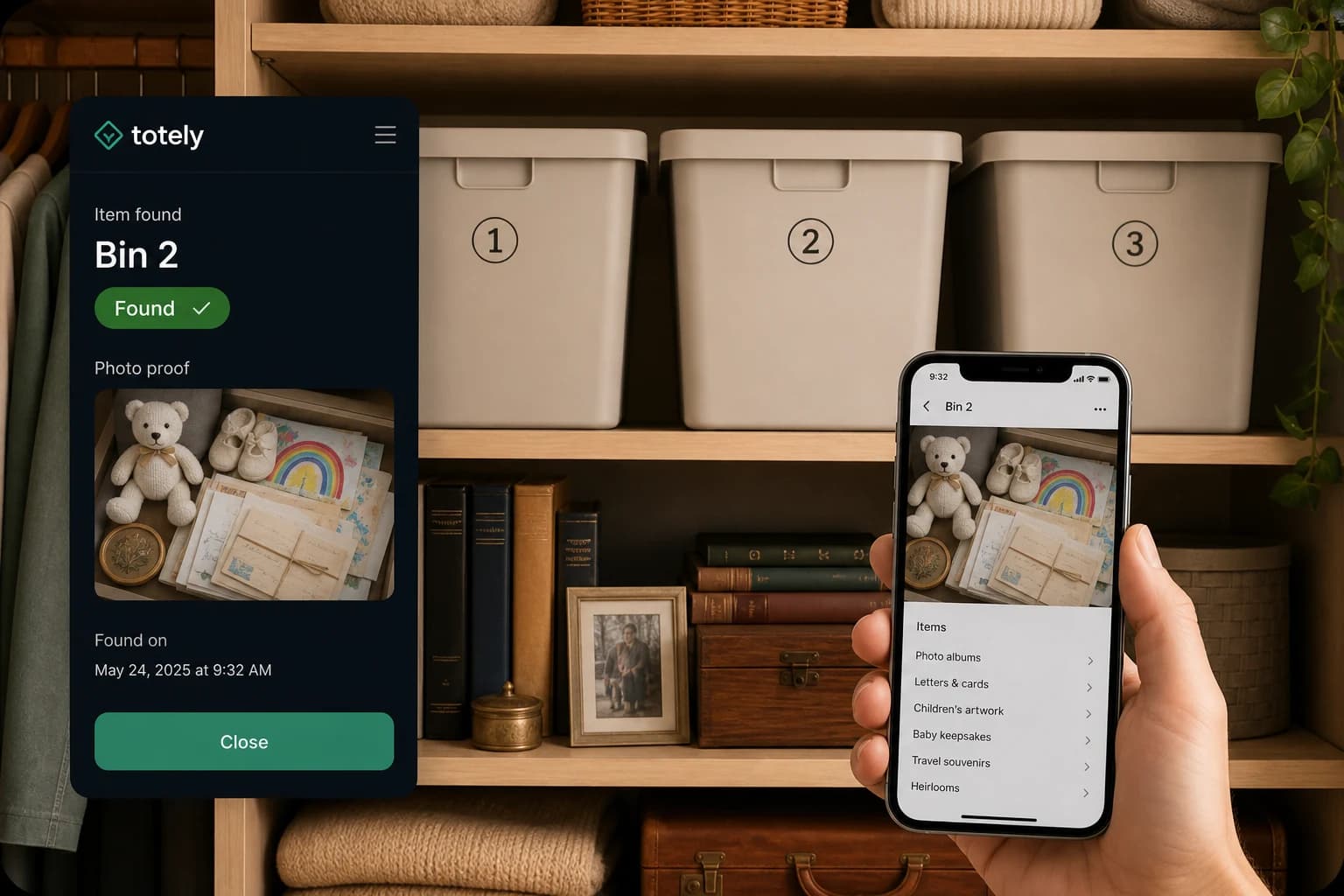
Totely gives stored toys a searchable record after you have chosen their physical homes. Number the bin, take a reference photo and let the app suggest an initial list of visible contents. Review that list, correct names and add items hidden inside a case or below other toys.
For the example train set, save Hall Closet, Middle Shelf, Bin 3 and use a recognizable description such as “red toy train, blue carriage, wooden track and bridge.” Add the human note: “Curved track count not yet confirmed.”
When someone asks for the red toy train, a natural search can point you to the saved bin location, with the contents photo helping you confirm the right container. The physical number connects that record to the bin on the shelf.
If the engine moves to the playroom, update the record yourself. A photo cannot establish that every hidden piece is present, and the app cannot know a toy changed locations unless the saved information is updated. The reviewed description and current location make the system useful.
Start with a bin-level photo and a few memorable item names. Add individual detail where it helps your household, especially for requested sets or important keepsakes. You do not need QR codes or barcodes to begin.
Toy Storage Bins FAQs
What size toy storage bins should I buy?
Start with the actual set, including its largest accessory. Check usable interior dimensions, the shelf footprint and the filled weight you can handle. Try one bin before buying matching containers for the whole collection.
Are open bins or lidded bins better for toys?
Open bins can suit appropriate everyday toys, while lidded bins can help keep adult-managed stored sets together. Consider the specific opening mechanism, age guidance and access needs. A lid does not make a container childproof.
How do I keep toy sets from losing pieces?
Give the set a clear home, keep related components in suitable inner housing and check important pieces when putting it away. Record what is missing or unconfirmed, and update the note when a part is borrowed or returned. These habits help you notice changes; they do not guarantee no piece will ever be lost.
How often should I rotate toys in storage?
There is no required schedule for this storage method. Bring a set back when it suits your household, available space and requests. Update its location when you exchange it with a stored set.
Can older children's small toys share a bin with toddler toys?
Consider access before combining them. CPSC advises keeping small balls and toys with small parts away from children under three. Follow the actual toys' age and safety guidance, including the needs of younger siblings.
Do I need to photograph every toy individually?
No. A clear bin-level photo, a few recognizable names and an exact location can be enough to start. Add notes for hidden items and important missing parts. Photograph individual items only when the extra detail is useful.
Make the Set Easy to Put Away and Find
The best toy storage bins for your household fit the actual toys and the way you handle them. Keep a useful set together, give its stored bin one clear number and record what is present without guessing about the rest.
Start with the red train, its tracks or whichever set is requested next. Give it a manageable home and keep that address current. Stored, not lost.