Small Business Inventory Storage: Organize Product Backstock at Home
Organize small business inventory at home with zones for products, backstock, shipping supplies, and packaging so Etsy and marketplace sellers can find stock before packing orders.
By Steve Watts · Co-Founder, Totely
July 24, 2026 · Updated July 24, 2026 · 15 min read
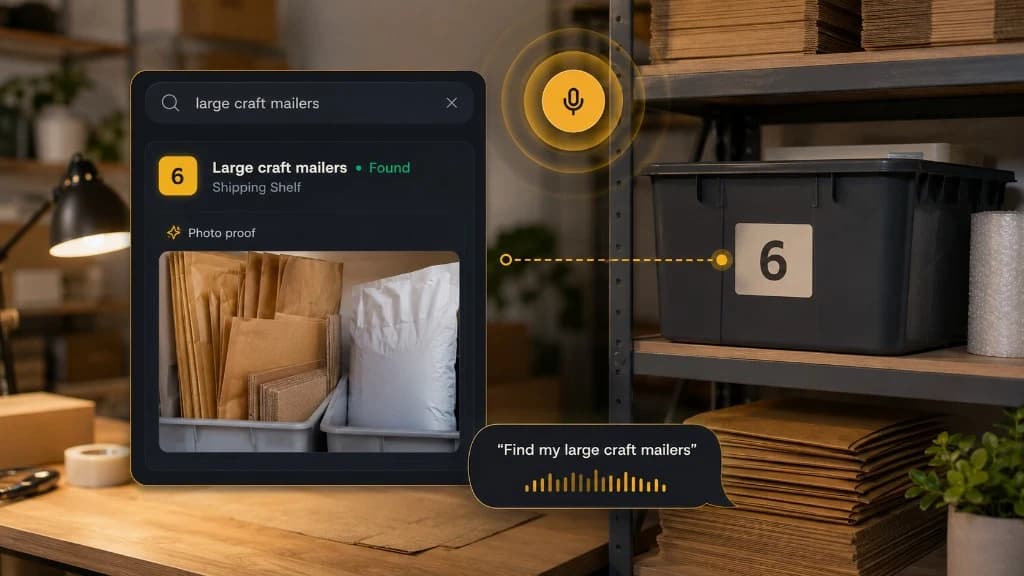
You know the item is somewhere in the house.
The size medium mailers. The backup label rolls. The restock of your best seller. The tissue paper you bought in bulk. The thank-you cards. The bubble wrap that is definitely not in the packing zone anymore.
That is the everyday problem with small business inventory storage at home.
It is not that you lack bins. It is that product backstock, shipping supplies, packaging, and event gear all look similar once they leave the packing table. A bin labeled "shop" does not help when you need one specific SKU, one mailer size, or one roll of labels before a deadline.
Good home-based inventory storage should help you pack orders, restock listings, and prep for markets without opening every container in the spare room, garage, closet, and hallway cabinet.
This guide is about how to organize small business inventory in bins and on shelves at home—not warehouse software, and not a product landing page. For a full workflow walkthrough, see the small business inventory use case. For a step-by-step setup guide, see the small business inventory guide.
Quick Links
- Why Home Inventory Gets Hard to Find
- Start With Inventory Zones, Not One Giant Shop Bin
- Zone 1: Active Product and Backstock
- Zone 2: Shipping Supplies
- Zone 3: Packaging and Branded Materials
- Zone 4: Event and Market Gear
- Use Numbered Bins and Photo Records
- Search Before You Restock or Pack Orders
- How Totely Helps Home Sellers Find Inventory Later
- A Small Business Inventory System You Can Copy
- Small Business Inventory Storage FAQs
Why Home Inventory Gets Hard to Find
A home-based shop has a strange storage job.
It has to be a stockroom, a shipping counter, a photo setup, a returns desk, a supply closet, and sometimes a craft room—all inside the same house.
The most common mistake is treating every shop item the same.
Finished products should not live with empty mailers. Label rolls should not end up in the same bin as product inserts and damaged returns. Event display props should not get mixed into daily backstock just because they fit in a tote.
The second mistake is hiding inventory too well.
A clean packing table feels good. But if everything gets swept into bins without a record, the clutter has only moved. You still cannot answer basic questions: Do I already own 6x9 mailers? Where is the restock of blue stickers? Which bin holds the backup label printer rolls?
A better system separates inventory into zones by workflow:
- active product and backstock
- shipping supplies
- packaging and branded materials
- event and market gear
- returns, repairs, and donation items
That way, each container has one job—and you can find it later without guessing.
If your shop shares space with a home office, see home office storage solutions for how desk overflow, records, and seller supplies often overlap.
Start With Inventory Zones, Not One Giant Shop Bin
Before buying another shelf or stack of bins, decide what your business actually stores at home.
Most home sellers need four core zones. You may not need all four on day one, but thinking in zones prevents the "miscellaneous shop stuff" bin that becomes impossible to search.
Core Small Business Inventory Zones
Active Product and Backstock
Finished goods, restock units, seasonal listings, bulk components, and raw materials you pull for orders.
Shipping Supplies
Mailers, boxes, tape, labels, scales, packing paper, bubble wrap, and daily packing tools.
Packaging and Branded Materials
Thank-you cards, tissue paper, stickers, inserts, branded tape, gift wrap, and presentation extras.
Event and Market Gear
Display risers, tablecloths, signage, price tags, cash box, extra bags, and booth-only inventory.
The point is not to create more bins than you need.
The point is to stop storing inventory in a way that forces you to unpack everything just to pack one order.
For label and supply naming habits that help search later, see craft storage labels and supplies.
Zone 1: Active Product and Backstock
This zone holds the inventory you sell—or the materials that become sellable product.
For an Etsy shop, that might mean finished candles, printed art, jewelry, soap bars, embroidered patches, or packaged gift sets. For a marketplace seller, it might mean SKU bins, size runs, color variants, or bulk components waiting to be assembled.
Backstock is the extra units you are not actively listing photos of every week, but still need on hand.
Finished Product Bin
Packaged items ready to ship, grouped by product line or size run.
Backstock Bin
Extra units of best sellers, seasonal restock, or bulk components not on the packing table.
Raw Material Bin
Fabric, blanks, beads, wax, leather, paper stock, or components used to make product.
Sample Bin
Product samples, tester units, photography props tied to listings, and items for quality checks.
Keep active product close to the packing zone.
Backstock can sit on a higher shelf, in a closet, or on garage shelving—as long as you can find it quickly when a listing sells out or a market weekend is coming.
Do not mix returns into backstock without inspecting them first. A damaged unit in a backstock bin creates listing problems and wasted packing time.
Use one clear job per bin:
Bin 1: size small finished goodsBin 2: size medium finished goodsBin 3: best-seller backstockBin 4: raw materials for restock production
Broad labels like "products" are not enough when you have twelve listings and three mailer sizes.
Zone 2: Shipping Supplies
Shipping supplies are where many home sellers lose the most time.
Mailers look alike. Label rolls stack easily. Tape disappears into drawers. Bubble wrap gets shoved wherever there is room after a bulk order arrives.
Create a shipping supplies zone separate from product backstock.
Daily Packing Shelf
Current mailers, tape, scissors, label printer, scale, pens, and the mailer size you use most.
Mailer Backstock Bin
Extra 6x9, 9x12, and box sizes you reorder in bulk.
Label and Printer Bin
Label rolls, backup ink, spare labels, return labels, and printer supplies.
Packing Material Bin
Bubble wrap, packing paper, air pillows, foam sheets, and void fill.
The daily packing shelf—or cart, or desk corner—should hold only what you touch every shipment.
Everything else belongs in numbered backstock bins on a shelf, in a closet, or in the garage.
This is also where duplicate purchases show up.
Three rolls of the same label type. Two stacks of identical mailers. Packing tape in the kitchen junk drawer and on the shipping shelf. Before reordering, search your system—or physically check the bin record—so you are not buying what is already in Bin 5 on the garage shelf.
Zone 3: Packaging and Branded Materials
Packaging is not the same as shipping supplies.
Shipping supplies get the order out the door. Packaging makes the order feel like your brand.
Keep these separate so thank-you cards do not end up under bubble wrap, and branded stickers do not mix with return labels.
Branded Insert Bin
Thank-you cards, care instructions, discount cards, and product inserts.
Presentation Bin
Tissue paper, sticker seals, ribbon, gift wrap, and branded tape.
Seasonal Packaging Bin
Holiday tissue, limited-run stickers, gift boxes, and special mailers for peak seasons.
Packaging materials often arrive in bulk and get used slowly.
That makes them easy to forget. A photo record helps you see whether you still have enough branded tissue before a busy weekend—not just whether you remember buying it.
If you run a craft-based shop, packaging and raw supplies overlap. Use separate numbered bins anyway so search terms stay clear: "thank-you cards" should not return the same bin as "bead mix."
Zone 4: Event and Market Gear
Not every home seller does markets, pop-ups, or craft fairs.
But if you do, event gear has a way of contaminating daily inventory.
Display risers, tablecloths, signage, price tags, extra bags, portable lights, and booth-only stock should not live in the same bins as Etsy backstock you ship from home.
Booth Setup Bin
Tablecloth, display risers, sign holders, price tags, and portable lighting.
Market Inventory Bin
Units reserved for in-person sales, not listed online at the same time.
Event Supply Bin
Extra bags, business cards, cash box supplies, and booth repair items like tape and clips.
After an event, use a short reset routine.
Inspect what sold, what came home, what needs restock, and what belongs back in product backstock versus event-only storage. Without that reset, market leftovers end up in shipping bins and daily packing gets confusing.
Use Numbered Bins and Photo Records
A bin labeled "Etsy" or "shop supplies" helps you get close.
It does not help you be specific.
Which bin has the 9x12 mailers? Which shelf holds the backup label rolls? Which tote has the restock of your best seller?
Numbered bins solve that.
Use simple visible numbers:
1 2 3 4 5
Then connect each number to a clear record of what is inside.
Bin 1 Category: Finished Product — Size Small Location: Spare room shelf, middle row Contents: packaged small items, grouped by listing
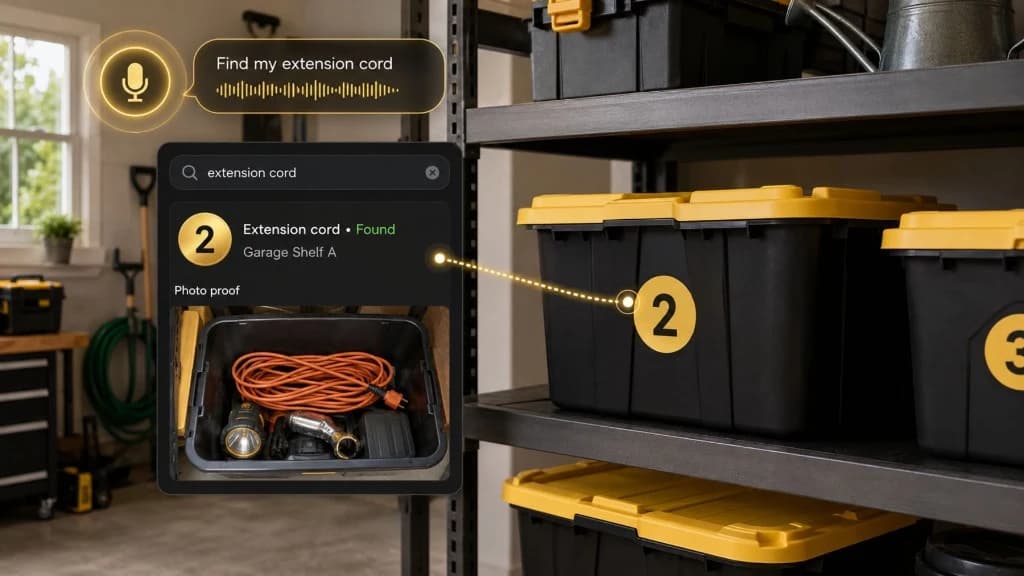
Bin 2 Category: Shipping — Mailer Backstock Location: Garage shelf A, bottom row Contents: 6x9 mailers, 9x12 mailers, small boxes
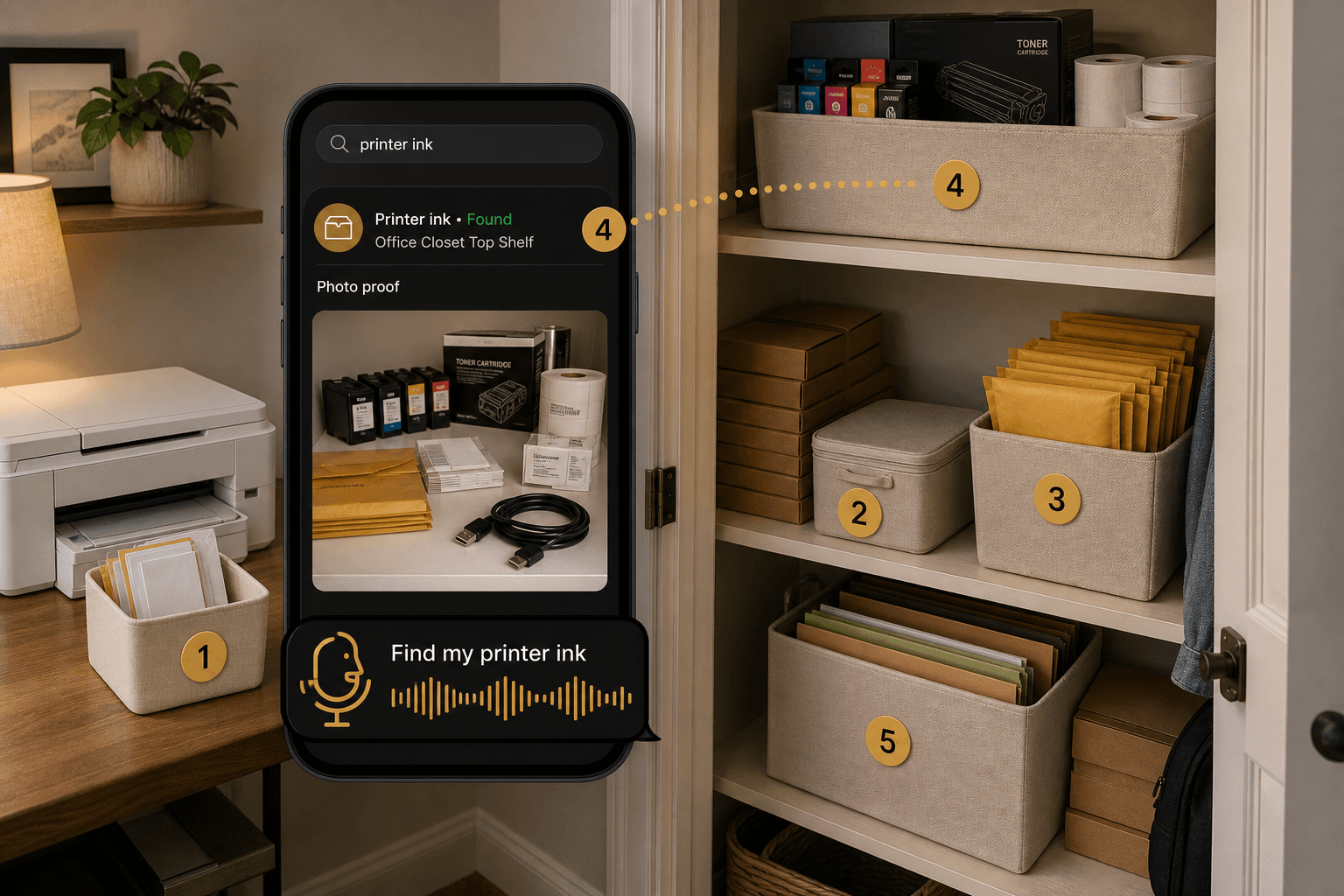
Bin 3 Category: Packaging — Branded Inserts Location: Office closet, top shelf Contents: thank-you cards, care cards, sticker sheets
Bin 4 Category: Label and Printer Supplies Location: Packing cart, lower shelf Contents: label rolls, backup ink, return labels
Bin 5 Category: Event Gear Location: Hall closet, floor Contents: tablecloth, display risers, price tags, booth sign
The outside stays simple. The details stay searchable.
See how to keep track of storage bins and how to label storage bins for numbered workflows that stay trustworthy between order waves.
What to Capture in Each Bin Record
- Photograph contents before closing the lid so mailers, labels, and product units are visible
- Save the exact shelf, closet, garage row, or cart location—not just "spare room"
- Use search terms you would actually type: "9x12 mailers," "thank-you cards," "blue sticker backstock"
- Note quantity range when helpful: "about 40 mailers," "2 unopened label rolls"
- Separate returns, damaged units, and sellable backstock into different numbered bins
Templates can speed up the first pass. See Totely templates for starting layouts you can adapt to your shop zones.
Search Before You Restock or Pack Orders
Home sellers lose money in small, repetitive ways.
Reordering mailers you already own. Opening six bins to find one label roll. Pulling the wrong size from backstock. Packing an order and discovering you are out of thank-you cards—except you are not, they are in the hall closet.
Build a simple habit: search before you restock, and search before you pack at scale.
Before placing a supply order, check whether the item already lives in a numbered bin. Before a busy shipping day, confirm which bin holds each mailer size, label type, and backstock SKU you expect to need.
This is not about tracking every paperclip.
It is about tracking the things that waste time, cause duplicate purchases, or block orders:
- mailers and box sizes
- label rolls and printer ink
- best-seller backstock
- branded inserts and packaging
- seasonal product units
- event-only inventory
Search Before You Act
Before reordering
Search for mailers, label rolls, tape, tissue paper, and packaging you think you are out of.
Before packing a batch
Search for each mailer size, insert type, and product variant you plan to ship.
Before a market
Search for booth gear, reserved stock, price tags, and display items.
After a restock shipment
Photograph updated bins so the record matches what actually arrived.
If you only fix one habit, fix duplicate supply orders.
That alone pays for the time spent numbering bins and taking photos.
How Totely Helps Home Sellers Find Inventory Later
Totely is useful because small business inventory storage depends on similar-looking supplies and closed containers.
A missing mailer size, hidden label roll, or forgotten backstock bin can slow down an entire order batch. After a few busy weeks, it is easy to forget which shelf holds what.
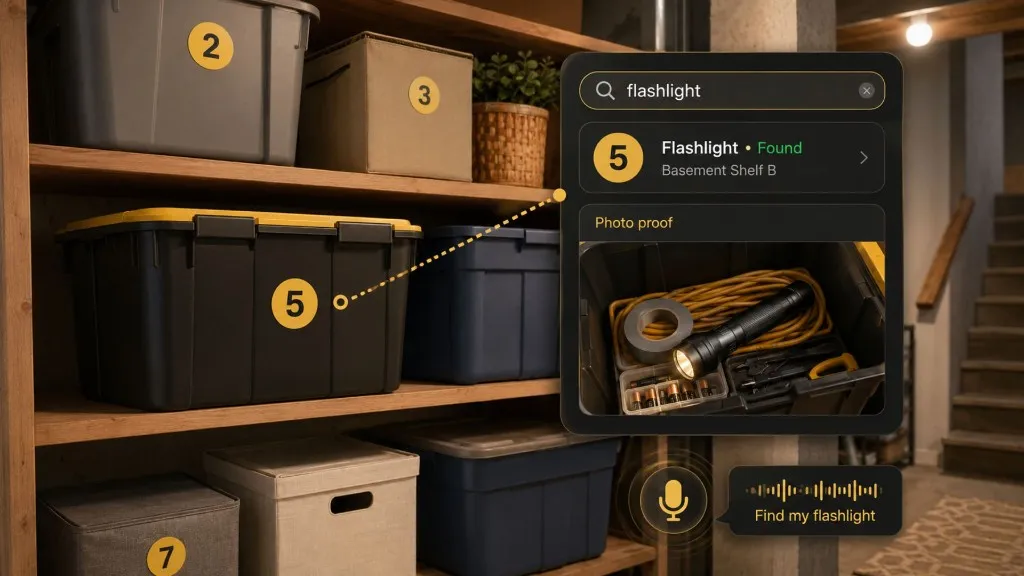
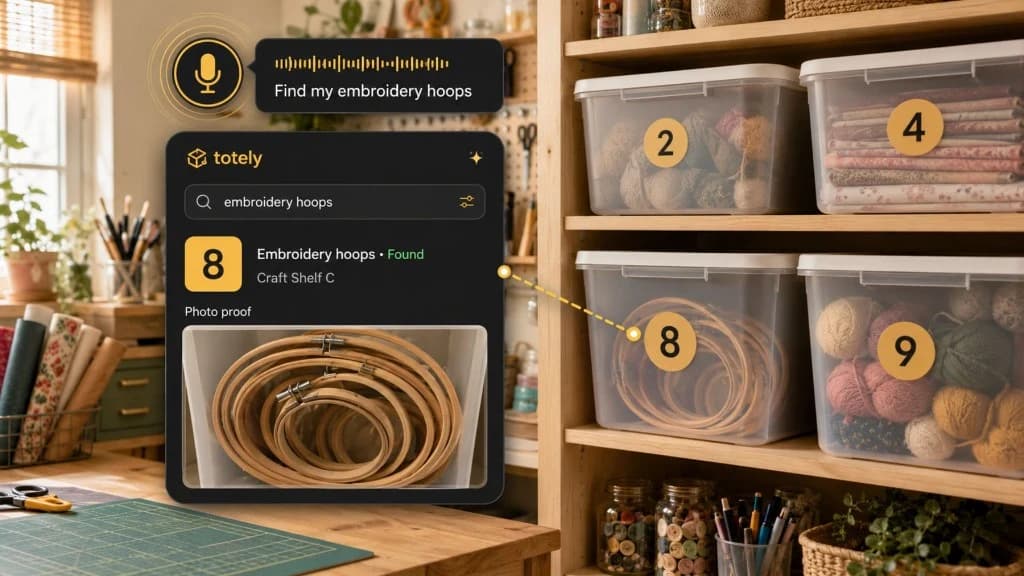
With Totely, you can make inventory bins searchable without manually typing every item into a long spreadsheet.
Here is the simple flow:
Number each bin, tote, shelf section, or storage zone
so it has a clear identity.
Snap a photo
of what is inside before you close the lid.
Let AI build the first item list
from what it can see.
Review or edit if needed
so the words match how you search for listings and supplies.
Save the exact location
such as "Garage Shelf A," "Spare Room Middle Shelf," or "Packing Cart Lower Shelf."
Search naturally later
for "9x12 mailers," "thank-you cards," "label rolls," "size medium backstock," or "market sign."
Use photo proof
to confirm what is inside before opening every bin or reordering supplies you already own.
Totely does not replace marketplace dashboards, accounting software, SKU systems, or formal inventory management tools.
It helps with the home-based reality: physical backstock, shipping supplies, and packaging that are easy to lose once they leave the packing table.
Think of it as the digital memory layer for the inventory that gets stored between order days.
See the small business inventory use case for a full walkthrough, the small business inventory guide for setup steps, or try the One-Tote Test on one shipping bin before you expand the system.
A Small Business Inventory System You Can Copy
Here is a simple bin setup that works well for many Etsy sellers and marketplace shops operating from home.
A Small Business Inventory System You Can Copy
Bin 1: Finished Product — Active
Current units ready to ship, grouped by size or product line.
Bin 2: Backstock — Best Sellers
Extra units of top listings, seasonal restock, and bulk components.
Bin 3: Mailer and Box Backstock
6x9 mailers, 9x12 mailers, small boxes, and backup packing materials.
Bin 4: Labels and Printer Supplies
Label rolls, backup ink, return labels, and printer accessories.
Bin 5: Branded Packaging
Thank-you cards, tissue paper, stickers, inserts, and presentation extras.
Bin 6: Returns and Inspect
Items to restock, photograph, repair, or discard—kept separate from sellable backstock.
Bin 7: Event and Market Gear
Booth setup, signage, price tags, and in-person-only stock.
Add one daily-access packing zone close to your label printer and scale.
Keep backstock and event gear on shelves farther away—but still searchable by number, photo, and location.
Small Business Inventory Storage FAQs
What is the best way to organize small business inventory at home?
The best way to organize small business inventory at home is to separate active product, backstock, shipping supplies, packaging, and event gear into distinct zones. Number each bin, photograph contents, save the exact shelf or closet location, and search before reordering supplies or packing a batch of orders.
How should Etsy sellers organize inventory in bins?
Group finished products by size or product line, keep shipping mailers and label rolls in a separate zone, and store branded packaging in its own numbered bins. Do not mix returns with sellable backstock. Use photo records so you can search for specific mailer sizes, label types, and listing backstock later.
Where should shipping supplies be stored for a home business?
Keep daily packing tools and current mailers close to your shipping station. Move bulk mailers, backup label rolls, bubble wrap, and box backstock to numbered bins on a nearby shelf, closet, or garage row. Search your records before reordering so you do not buy duplicate supplies.
How do I organize product backstock without a warehouse?
Use numbered bins or totes grouped by product line, size, or best-seller status. Keep active units near the packing zone and move extra backstock to shelves, closets, or garage storage with a photo record and exact location. Separate raw materials, finished goods, samples, and returns into different bins.
Should I track every item in my home shop?
No. Track the items you lose, reorder, forget, or need at inconvenient times: mailers, label rolls, backstock SKUs, branded inserts, seasonal packaging, and event gear. Daily desk tools can stay near the packing table without a full inventory record.
How can Totely help with small business inventory storage?
Totely helps you number bins, snap photos, let AI build the first item list, review or edit the record, save the exact location, and search naturally later. Photo proof helps you confirm which bin holds mailers, label rolls, backstock, or packaging before you open everything or place a duplicate order.
Make Packing Day Easier Before the Orders Pile Up
Good small business inventory storage is not about turning your home into a warehouse.
It is about knowing where backstock, shipping supplies, and packaging live when an order—or a restock shipment—needs your attention.
Start with one zone. Product backstock. Mailers. Label rolls. Branded inserts. Pick the area that wastes the most time right now.
Give each container a simple number. Take a photo. Save the location. Search before you reorder.
With Totely, the bins you close do not have to become mystery boxes.
The next order should start at the packing table—not with opening every tote in the spare room.