Self Storage Units Near Me Prices: What to Inventory Before You Pay
Compare self storage unit prices by making an inventory first so you choose the right size, features, access, and storage plan.
By Ben Stallsworth · Co-Founder, Totely
June 9, 2026 · Updated August 27, 2026 · 15 min read
Searching self storage units near me prices usually means you are close to making a decision.
Maybe you are moving. Maybe the garage is full. Maybe you need space during a renovation, downsizing project, college transition, estate cleanout, seasonal swap, or business inventory overflow. You search local storage facilities, compare unit sizes, look at climate control, check access hours, and try to decide which price actually makes sense.
The problem is that most people compare prices before they know what they are storing.
That is how storage gets expensive in quiet ways. You rent a larger unit than you need because the boxes feel overwhelming. You choose a cheaper unit that is hard to access. You pay for climate control without knowing which items truly need it. Or you pack everything into storage, close the door, and later realize you cannot find the holiday lights, guest sheets, camping tent, family recipes, toolbox, baby clothes, or small appliance you know is in there somewhere.
A better first step is simple: make a storage inventory before you pay.
Not a complicated spreadsheet. Just a clear, photo-based list of boxes, bins, furniture, seasonal items, valuables, fragile items, and anything you may want to retrieve later. That inventory helps you compare storage unit prices based on what you actually need, not on guesswork. A searchable home inventory app keeps the same record useful after move-in, not just during the rental decision.
A storage unit should solve a space problem without creating a new mystery-box problem.
Quick Links
- Why Self Storage Unit Prices Vary
- Start With an Inventory Before Comparing Prices
- How Unit Size Affects What You Pay
- When Climate Control Is Worth Comparing
- How Location, Access, and Rental Length Change the Price
- What to Inventory Before You Rent
- How Totely Makes a Storage Unit Inventory Searchable
- Self Storage Unit Prices FAQs
Why Self Storage Unit Prices Vary
Self storage pricing is not based on size alone.
A storage unit price can change because of the facility location, unit size, indoor versus drive-up access, climate control, security features, local demand, rental length, insurance requirements, fees, move-in promotions, and how easy the unit is to reach.
That is why two facilities near you can show very different rates for a similar-looking unit.
A lower price may come with a farther location, less convenient hours, no climate control, an upstairs interior unit, limited loading access, or a promotional rate that changes later. A higher price may include easier access, a closer location, climate control, drive-up loading, or better convenience for frequent visits.
Self storage is often rented on a short-term or month-to-month basis, which can be helpful when you are moving, remodeling, or sorting through a temporary life transition. But that flexibility can also stretch into a longer bill if "just a few months" quietly becomes a year.
So before asking, "Which unit is cheapest?" ask:
What am I storing, how often will I need it, and how long will I pay to keep it there?
That starts with an inventory.
Start With an Inventory Before Comparing Prices
A storage inventory gives your price search context.
Instead of comparing random unit sizes, you can look at what is actually going into storage and decide what features matter.
Start with a quick walkthrough of your home, garage, closets, basement, attic, or current storage space. Take photos and make a simple list by group:
Boxes and totes: moving boxes, storage bins, holiday totes, kids' clothes bins, craft bins, garage bins, household backstock, and business inventory boxes.
Furniture: sofa, mattress, bed frame, dresser, table, chairs, desk, shelving unit, lamps, and rugs.
Seasonal items: holiday decor, Christmas lights, winter coats, beach gear, camping gear, sports gear, patio cushions, and luggage.
Valuables or sensitive items: electronics, documents, sentimental keepsakes, family recipes, framed photos, artwork, instruments, collectibles, and heirlooms.
Items you may need soon: tools, business supplies, seasonal clothing, guest linens, school papers, small appliances, camping tent, extension cords, and sports equipment.
This does not need to be perfect. The goal is to know enough to compare prices more intelligently.
Your inventory is not just an organization task. It is a pricing tool.
A simple inventory helps you avoid three common mistakes:
- Renting more space than you need because the pile feels overwhelming.
- Renting too little space because you forgot bulky items, odd shapes, or access paths.
- Choosing the wrong features because you did not notice sensitive, fragile, or frequently accessed items.
The same numbered-photo-location loop that powers a storage organization system at home works just as well inside a rented unit.
How Unit Size Affects What You Pay
Unit size is usually one of the biggest pricing factors.
A larger unit generally costs more than a smaller unit at the same facility, but the right size is not only about fitting everything inside. It is about fitting everything in a way that still works for your life.
A smaller unit may be fine if you are storing compact boxes, seasonal items, or a few totes you do not need to access often. A larger unit may be more practical if you have furniture, bulky items, odd shapes, or need a walkway.
Use storage size guides as a starting point, not a promise. Your actual storage needs depend on:
- How many boxes and totes you have
- Whether boxes are full or half-full
- Whether furniture can be disassembled
- Whether items are stackable
- Whether anything is fragile
- Whether you need a walkway
- Whether you will visit the unit often
- Whether items need to be grouped by season or access priority
A tightly packed smaller unit may technically fit your items, but if you have to remove fifteen boxes to find one tote, it may not be the best value.
Sometimes the right price is not the lowest price. It is the price for a unit you can actually use. For a deeper walkthrough, see what storage unit size you need before you sign a lease. After you rent, set up a storage unit for retrieval so the monthly cost buys access, not a wall of mystery boxes.
When Climate Control Is Worth Comparing
Climate control can affect storage pricing, so it should be tied to what is in your inventory.
If you are storing sturdy plastic bins of outdoor gear for a short time, a standard unit may be enough depending on your local climate and facility conditions. But if your inventory includes electronics, photos, documents, fabrics, wood furniture, artwork, instruments, delicate keepsakes, or sentimental items, climate control may be worth comparing.
Consider climate control if your inventory includes:
- Electronics: computers, speakers, cameras, gaming systems, or small appliances.
- Paper and photos: family recipes, school papers, documents, photo albums, or framed pictures.
- Textiles: clothing, baby clothes, kids' clothes, linens, quilts, rugs, or fabric craft supplies.
- Wood or delicate items: furniture, instruments, frames, artwork, or antique pieces.
- Sentimental items: keepsakes, letters, heirlooms, handmade items, or memory boxes.
This does not mean every sensitive item belongs in storage. It means your inventory should help you decide what needs special care, what should stay with you, and what may not be worth storing at all.
Some items may be unsafe, damage-prone, or prohibited in storage units, including perishable food, hazardous or flammable materials, damp items, highly valuable or irreplaceable items, and other belongings that may be better kept elsewhere.
Totely can help you remember what is inside your storage unit, but it does not replace facility rules, product labels, manufacturer guidance, insurance documents, or safe storage requirements.
How Location, Access, and Rental Length Change the Price
When you search local storage prices, the facility location matters.
A unit closer to home may cost more, but it may be worth it if you will visit often. A cheaper facility across town may work for long-term furniture storage, but it may be frustrating if you need to grab tools, sports gear, business supplies, kids' clothes, or seasonal items every few weeks.
Think through the full use case before choosing.
Location
A closer storage facility may be worth comparing if you need frequent access to business inventory, seasonal decor, tools, guest linens, winter gear, camping equipment, or items for kids. A farther unit may make sense for furniture, archived boxes, or things you only plan to retrieve when you move everything out.
Ask yourself: will I visit monthly, seasonally, or only when I move everything out?
Access type
Drive-up access can make loading heavy items easier. Indoor access may come with climate control or added protection from weather, but it may also mean elevators, carts, hallways, or loading docks.
Access hours
Access hours matter if you work late, travel often, run a small business, or plan to use the unit during a move. A lower monthly rate may not feel like a deal if you cannot reach the unit when you need it.
Rental length
A storage unit that feels affordable for one month can feel very different over six months or a year. Before renting, multiply the ongoing monthly rate by your likely rental length. Then account for fees, insurance requirements, lock purchases, moving supplies, and any price changes after introductory promotions.
Promotions
Move-in deals can be useful, but always look at the regular monthly rate too. Ask how long the promotion lasts, whether rates can change, and what fees or add-ons are required.
The best local price is not just the lowest number. It is the best match for your inventory, timeline, and access needs. If you are moving into storage as part of a relocation, a moving inventory app can keep the same searchable record from pack-out through move-in.
What to Inventory Before You Rent
A practical storage inventory should help you choose the right size, compare features, and find stored items later.
Here is what to capture before you pay.
1. Boxes, bins, and totes
Count every container going into storage. Note whether each one is small, medium, large, fragile, stackable, heavy, or half-full.
Examples:
- Box 1: kitchen overflow — coffee maker, mugs, filters, small appliances.
- Tote 2: holiday lights — outdoor lights, extension cords, gift tags, ribbon.
- Bin 3: kids' winter gear — coats, snow pants, gloves, boots.
- Box 4: office records — papers, chargers, cables, desk supplies.
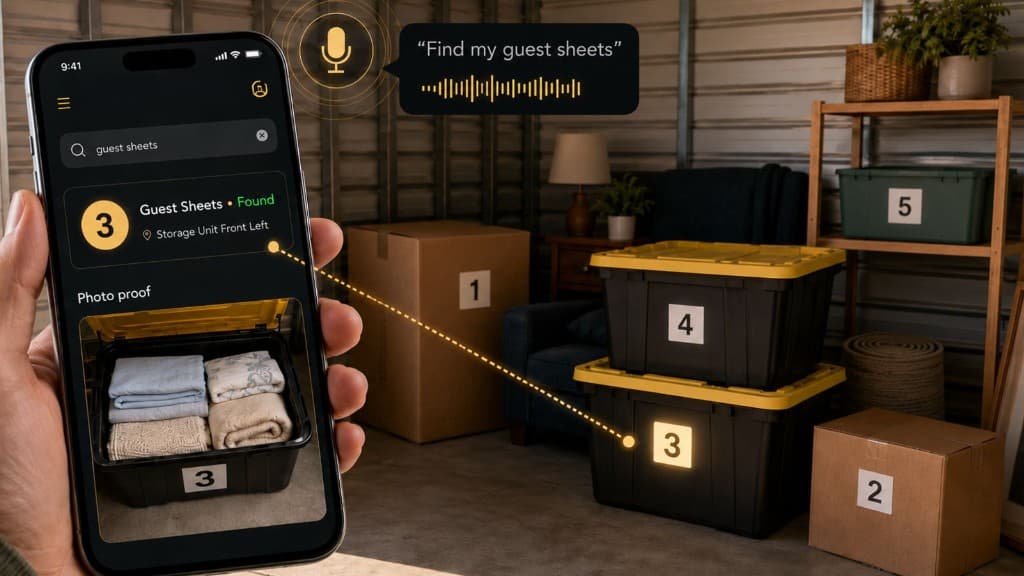
- Tote 5: guest linens — sheets, towels, blankets, pillowcases.
This helps you avoid mystery boxes and duplicate containers. If you have three boxes labeled "garage stuff," you may be storing duplicates without realizing it. Numbered storage tote labels keep each container identifiable without rewriting category names on every side.
2. Furniture and bulky items
List anything that changes the shape of the storage plan: sofa, mattress, dresser, dining table, chairs, desk, shelving unit, rug, stroller, bike, kayak, patio furniture, large lamps, or small appliances.
If furniture can be disassembled, note that too. A table with removable legs may fit very differently than one that stays assembled.
3. Seasonal items
Seasonal storage often includes holiday decor, Christmas lights, winter coats, beach towels, camping gear, sports gear, patio cushions, lawn games, luggage, gift wrap, and school-year items.
These are often the things people want to access later, so do not bury them without a plan.
4. Valuables, fragile items, and sensitive belongings
Flag anything that needs special handling: glassware, framed art, electronics, photographs, documents, sentimental keepsakes, family recipes, instruments, collectibles, fabric, quilts, or heirlooms.
Some items may need climate control. Some may need better packing. Some may not belong in a storage unit at all.
5. Items you may need to retrieve
Mark front-access items before moving day.
This might include tools, business inventory, winter gear, holiday decor, kids' clothes, guest linens, camping gear, tax records you are comfortable storing off-site, small appliances, sports gear, or household backstock.
If you may need it soon, it should not live behind the sofa, under six boxes, in the back corner. It helps to label moving boxes before a move so the inventory stays readable once everything lands in the unit.
How Totely Makes a Storage Unit Inventory Searchable
Totely helps with the part of self storage people usually discover too late: remembering what is inside after the door closes.
A storage unit inventory is useful before you rent because it helps you compare price, size, climate control, access, and rental length. It is useful after you rent because it helps you find what you stored without opening every box. Use the printable Storage Unit Inventory Checklist if you want a paper starting point before you photograph bins in Totely.
Here is how Totely fits naturally into the process:
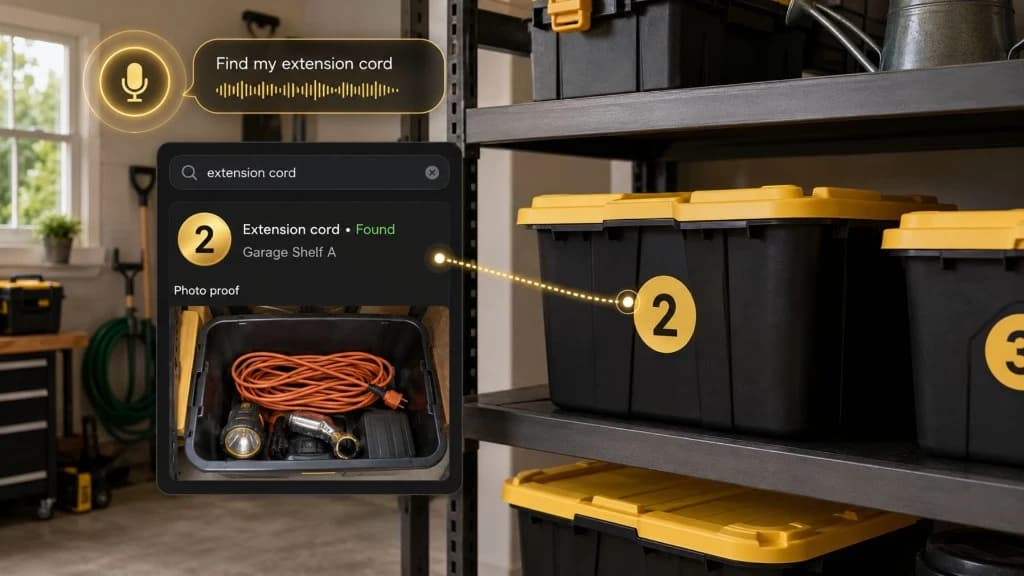
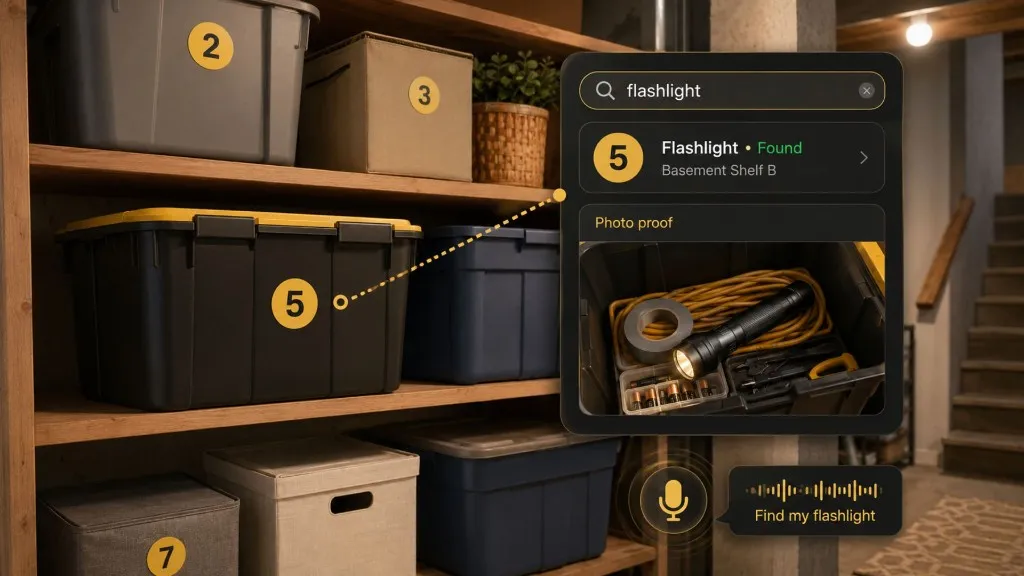
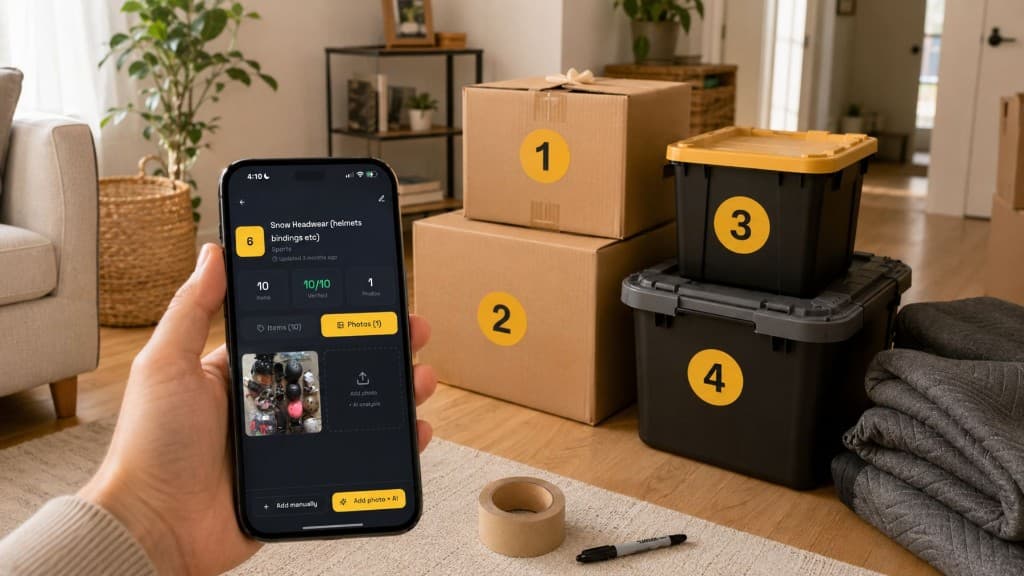
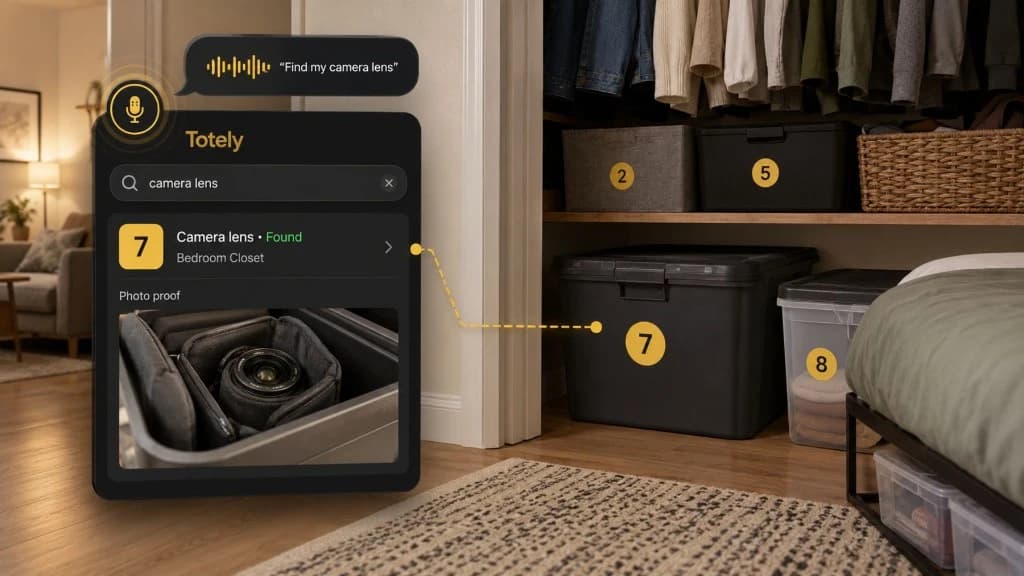
Number each container
Give every box, tote, bin, shelf, or storage zone a clear identity.
Snap a photo
Capture what is inside before the container goes into the unit.
Review the item list
Let AI build the first list from what it can see, then edit words to match how you search.
Save the location
Record storage unit front left, back wall shelf, aisle right side, or Box 12 under table.
Add useful notes
Flag fragile, sentimental, climate-sensitive, seasonal, restock, or priority items.
Search naturally later
Look for holiday lights, guest sheets, coffee maker, winter coats, extension cord, baby clothes, or camping tent.
Use photo proof
Confirm what is inside before opening every box.
Totely does not require QR codes, barcodes, or manually typing every item.
It gives your storage unit a digital memory layer: simple numbers on the outside, photo records inside the app, saved locations, and natural search when you need something later.
The outside stays simple. The details stay searchable. See keep track of storage bins for habits that keep the record accurate after the first load-in.
A Simple Storage Price Comparison Checklist
Use this before you choose a unit.
Inventory first
How many boxes, bins, totes, furniture pieces, bulky items, seasonal items, and valuables are going into storage?
Size estimate
Which unit size fits your actual inventory, not just your guess?
Access plan
Will you need a walkway, shelves, front-access items, drive-up loading, or frequent visits?
Climate needs
Are you storing electronics, photos, documents, textiles, wood furniture, artwork, instruments, or sentimental items?
Location tradeoff
Is a closer facility worth more because you will visit often?
Rental length
Will this be one month, three months, six months, or longer?
Promotional rate
How long does the advertised rate last, and what is the regular monthly price?
Required add-ons
Are there administrative fees, insurance requirements, lock purchases, or other costs?
Rules and restrictions
Does the facility prohibit certain items, require insurance, or limit access hours?
Searchability
Will you know what is inside each box after move-in?
That last question matters more than people think. A storage unit that is cheap but impossible to use can become expensive in time, duplicates, and frustration.
Self Storage Unit Prices FAQs
How much do self storage units near me cost?
Self storage unit prices vary by location, size, climate control, access type, security features, rental length, demand, promotions, fees, and insurance requirements. The best way to compare local prices is to make an inventory first, then compare facilities based on the unit size and features your items actually need.
What affects the price of a self storage unit?
The biggest pricing factors are usually unit size, location, climate control, indoor versus drive-up access, access hours, security features, lease terms, demand, move-in promotions, insurance requirements, and add-on fees. Your inventory helps you decide which features are worth paying for.
Is climate-controlled storage worth the extra cost?
Climate-controlled storage may be worth comparing if you are storing electronics, photographs, documents, textiles, wood furniture, artwork, instruments, sentimental items, or anything sensitive to heat, cold, or humidity. It may not be necessary for every storage situation, so let your inventory guide the decision.
How do I avoid paying for too much storage space?
Count your boxes, totes, furniture, bulky items, and seasonal items before renting. Consolidate duplicate boxes where it makes sense, identify items you may not need to store, and decide whether you need a walkway or front-access space. That gives you a more realistic unit-size estimate.
What should I inventory before renting a storage unit?
Inventory boxes, bins, totes, furniture, seasonal items, valuables, fragile items, sentimental items, electronics, documents, tools, business inventory, kids' clothing, holiday decor, and anything you may need to find later. Take photos and give each container a simple number so the inventory stays useful.
How can Totely help with storage unit inventory?
Totely helps you number boxes, totes, bins, shelves, and storage zones, snap photos, let AI build the first item list, save exact storage unit locations, add useful notes, and search naturally later. Photo proof helps you confirm what is inside before opening every box.
Compare Prices With a Clear Inventory
Searching local self storage prices is much easier when you know what you are actually storing.
Start with the inventory. Count the boxes. Photograph the totes. List the furniture. Flag seasonal, fragile, sensitive, and frequently accessed items. Decide whether you need climate control, drive-up access, a closer location, a walkway, shelves, or a shorter rental term.
Then compare units.
With Totely, your storage-unit inventory can stay searchable before and after move-in. Give each box or tote a number. Snap a photo. Save the location. Search later for the exact item you need.
Because the best storage unit is not just the one you can afford.
It is the one you can actually use.
Start with one tote — one box, one bin, or one storage zone. The right price gets much easier from there.