What to Put in a Home Inventory for Renters Insurance
What to put in a home inventory for renters insurance—photos, serial numbers, storage locations, and hidden belongings renters often miss.
By Ben Stallsworth · Co-Founder, Totely
June 4, 2026 · Updated July 24, 2026 · 15 min read
This guide focuses on renters insurance inventory—what to document for coverage conversations. Pair it with the home inventory checklist for a full capture list.
A home inventory for renters insurance sounds simple until you actually try to make one.
You look around your apartment and think, "Okay, laptop, TV, couch, clothes." Then you remember the camera in the closet, the bike in the building storage room, the gaming console under the TV stand, the winter coats in an under-bed bin, the craft supplies in storage totes, the tools in a moving box, and the important documents tucked into a folder you definitely meant to label.
That is the real renter inventory problem.
Your belongings are not always sitting out in plain sight. They are spread across closets, drawers, bins, under beds, storage furniture, shared basements, garages, bike rooms, and storage units. A useful inventory should help you document what you own, where it lives, and what proof you have without turning the project into a giant spreadsheet you never finish.
This article is practical organization guidance, not legal or insurance advice. Renters insurance policies, limits, exclusions, and documentation requirements vary. Check your own policy or ask your insurer what they recommend for receipts, photos, serial numbers, appraisals, storage units, roommates, and higher-value belongings. A home inventory is not just for worst-case scenarios; it can also help you understand what you own and whether your current coverage fits your belongings.
Quick links
- Think in four types of proof
- Electronics to include
- Furniture and everyday home items
- Clothing, coats, and seasonal storage
- Kitchen items and small appliances
- Hobby gear, tools, and personal equipment
- Documents, sentimental items, and valuables
- Do not forget stored or shared-space items
- How Totely supports a renter home inventory
- Renters inventory FAQs
Think in four types of proof
A renter home inventory is more useful when it captures more than a list of item names.
Consumer insurance guidance from sources like the NAIC, Ready.gov, and the Insurance Information Institute consistently recommends keeping a detailed inventory with photos, descriptions, receipts, model numbers, or serial numbers when available, because those records can help support coverage decisions and make claims easier to process.
Think of your inventory in four layers.
Proof of ownership shows that the item belongs to you. This might include photos, receipts, order confirmations, manuals, warranty documents, appraisals, product packaging, or serial numbers.
Proof of condition shows what the item looked like before anything happened. A clear photo of your laptop, TV, camera, bike, couch, musical instrument, or tools can be more useful than relying on memory later.
Proof of value helps show what the item may cost to repair or replace. That might include purchase prices, receipts, appraisals, model details, product pages, or replacement information when you have it.
Proof of location shows where the item actually lives. This is the layer most generic home inventory checklists miss, and it matters especially for renters.
If your winter coats are in Tote 3 under the bed, your craft supplies are in a closet bin, your camera gear is in a moving box on the top shelf, and your bike is in a shared storage room, your inventory should show that.
See the home inventory checklist for core fields to record, or create a home inventory without a spreadsheet if you want a simpler starting point.
Electronics to include
Electronics are one of the most important renter inventory categories because they are often valuable, portable, and easy to move between rooms.
Include items such as:
- Laptop
- TV
- Camera
- Gaming console
- Tablet
- Monitor
- Printer
- Headphones
- Speakers
- Router
- External hard drives
- Specialty chargers and cables
For each major electronic, try to capture the brand, model, serial number, purchase date if known, receipt if available, and where the item is usually kept.
A laptop might live on your desk most days, but its box, charger, adapter, and accessories might be in a closet bin. A camera might be stored in a padded bag inside a tote. A gaming console might be visible, while extra controllers and cables are tucked inside a drawer or moving box.
Do not only inventory the main device. Include the accessories that would be annoying or expensive to replace.
A useful record might look like this:
Item: Camera
Proof: photo, model number, purchase email if available
Location: padded camera bag in Box 4, hall closet top shelf
Related items: charger, lens cloth, memory card case, tripod plate
That kind of detail is much more helpful than "camera somewhere in closet."
Furniture and everyday home items
Furniture is easy to overlook because it feels obvious. You see the couch every day, so it may not feel like something you need to document.
But a renter inventory should include the major pieces that make your apartment livable.
Include:
- Sofa
- Bed frame
- Mattress
- Desk
- Dresser
- Dining table
- Chairs
- Bookshelves
- Rugs
- Lamps
- TV stand
- Storage furniture
- Entryway bench
Take wide photos of each room, then closer photos of larger or higher-value items. If you bought something secondhand, record what you know. If you assembled it yourself, note the brand or retailer if you remember.
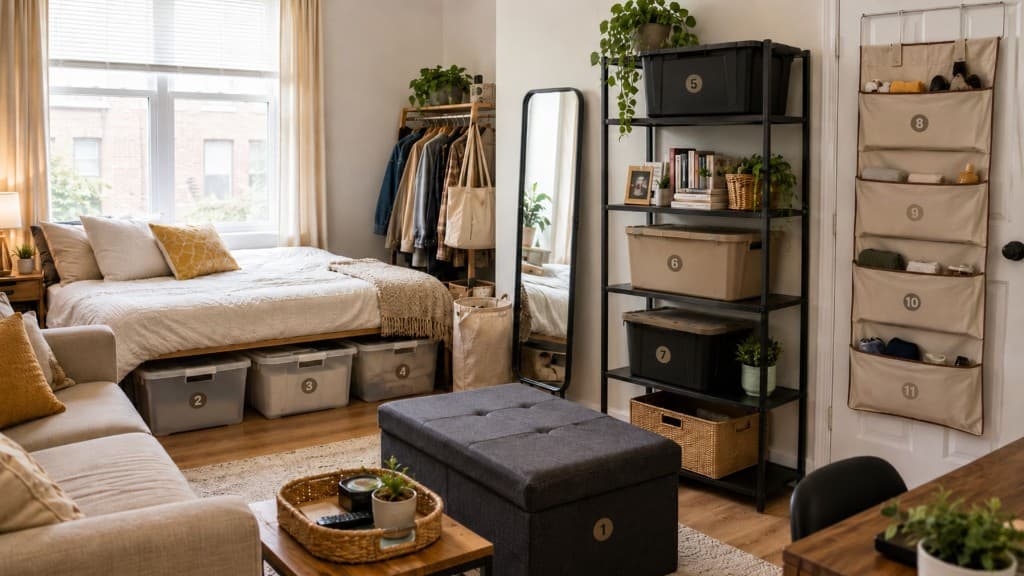
Storage furniture deserves extra attention. A storage ottoman, under-bed drawer, cabinet, or entryway bench may look tidy from the outside, but the inventory should still show what is inside.
For renters in small apartments, hidden storage is often part of daily life. A couch with storage, bed frame drawers, a closet organizer, or a bench full of winter gear can hold belongings that would be easy to miss in a fast room-by-room inventory.
Clothing, coats, and seasonal storage
You do not need to photograph every T-shirt one by one.
For everyday clothing, a grouped record is usually more realistic: a closet photo, drawer photo, or category note. But certain clothing categories deserve more detail because they can be expensive, seasonal, or harder to replace quickly.
Include:
- Winter coats
- Boots
- Workwear
- Uniforms
- Formalwear
- Specialty sports clothing
- Outerwear
- Higher-value shoes or bags
- Seasonal clothing stored in bins
For example, a renter inventory might say:
Tote 2
Location: Under bed, right side
Contents: winter coats, snow boots, scarves, gloves, formal coat
That is far more useful than simply writing "clothes."
Seasonal storage matters because renters often rotate clothes through under-bed bins, closet shelves, garment bags, and storage totes. If the inventory does not include those hidden areas, it misses a big part of what you actually own.
A good rule is to group everyday clothes and document specific high-value, seasonal, or hard-to-replace pieces separately.
Kitchen items and small appliances
Kitchen inventory is not just about dishes.
Small appliances and specialty tools can add up quickly, especially in apartments where extra kitchen items may be stored outside the kitchen.
Include:
- Coffee maker
- Air fryer
- Blender
- Mixer
- Toaster
- Microwave if owned by you
- Rice cooker
- Cookware
- Knife set
- Baking pans
- Dishes and glassware
- Specialty kitchen tools
- Extra small appliances in storage
For higher-value small appliances, record brand, model, and receipt if available. For everyday dishes, a cabinet photo and a simple note may be enough for your own organization.
Kitchen overflow is common in rental homes. Holiday dishes might be in a closet. Extra cookware might be in a storage tote. Small appliances might still be in moving boxes from the last apartment.
A useful inventory should follow the item, not the room you wish it lived in.
For example:
Box 6
Location: Hall closet, bottom shelf
Contents: extra coffee maker, blender attachments, holiday dishes, glassware, small baking pans
That record helps for insurance documentation, but it also helps in normal life when you are looking for the blender lid or spare coffee carafe.
Hobby gear, tools, and personal equipment
Hobby gear is one of the most under-inventoried categories for renters.
It often lives in bins, bags, closets, garages, storage units, and shared spaces. It may also be more valuable than it looks at first glance.
Include items such as:
- Bike
- Camera gear
- Musical instruments
- Craft supplies
- Sewing machine
- Yarn, vinyl, beads, paint pens, and cardstock
- Sports equipment
- Camping gear
- Fitness gear
- Board games or collectibles
- Art supplies
- Tools
- Drill, tool kit, batteries, hardware, and repair supplies
If you sell handmade items or run a small side business from home, you may also want to document supplies like shipping mailers, product inserts, tissue paper, label rolls, packaging materials, and inventory-related tools. Keep personal and business records clearly separated, and check with your insurer or advisor if you are unsure how business property should be handled.
Tools also deserve their own record. Even a small renter tool kit can include a drill, bits, screwdrivers, level, hammer, tape measure, wall anchors, batteries, and hardware organizers.
These items are easy to misplace and easy to rebuy by accident.
A renter inventory is not only about the obvious expensive things. It is also about the belongings that live in bags, bins, and corners until you suddenly need them.
Documents, sentimental items, and valuables
Some things matter even if they are not everyday objects.
Include:
- Important documents
- Passport or ID copies
- Lease-related paperwork
- Warranty documents
- Jewelry
- Watches
- Collectibles
- Family photos
- Letters
- Heirlooms
- Art
- Musical instruments
- Memory boxes
- Special gifts
For sensitive documents, you may not want detailed photos showing private information. Instead, record the storage location in a way that is helpful but safe, such as "important documents folder in fire-resistant box" or "warranty folder in office drawer."
For important papers, your inventory can record where the documents live without exposing private details in a photo.
The Insurance Information Institute notes that a home inventory can also help record information about important papers, such as insurance policy details and financial account information. For renters, that does not mean you need to put private information into every app or photo. It means you should know where those documents are and how to access them when needed.
For jewelry, art, collectibles, instruments, and other higher-value belongings, save whatever documentation you have: photos, receipts, appraisals, serial numbers, certificates, or identifying notes.
Do not assume these items are handled the same way as everyday belongings. Check your own policy or ask your insurer whether higher-value items need additional documentation or separate coverage.
Totely can help you remember where these items are stored, but it does not replace insurer requirements. See Privacy and Household Inventory for how Totely handles your data.
Do not forget stored or shared-space items
This is where renters can build a more useful inventory than a generic room-by-room checklist.
Look beyond the visible apartment.
Include belongings stored in:
- Closets
- Storage totes
- Moving boxes
- Under-bed bins
- Storage ottomans
- Garages
- Basements
- Shared building storage rooms
- Bike rooms
- Laundry room shelves
- College apartment storage
- Storage units
- Suitcases
- Seasonal bins
A lot of renter belongings live in "temporary" storage that quietly becomes long-term storage.
Moving boxes may still hold small appliances, books, hobby gear, electronics, or documents. Under-bed bins may hold winter coats, shoes, or seasonal clothes. Shared storage may hold bikes, tools, holiday decor, or extra furniture.
For each storage zone, record what is inside and where it is.
Example:
Box 4
Location: Hall closet, top shelf
Contents: camera gear, external hard drive, old phone, chargers, warranty folder
Tote 6
Location: Storage unit, front shelf
Contents: small appliances, extra cookware, holiday dishes, glassware
Bin 8
Location: Under bed, left side
Contents: winter coats, boots, scarves, gloves
This makes the inventory useful for insurance documentation and everyday life.
It also makes the inventory more realistic. Renters are often working with small spaces, shared buildings, and flexible storage. Your inventory should reflect how your home actually works, not how a perfect floor plan would look.
Related: Small Apartment Storage Ideas for Renters.
How Totely supports a renter home inventory
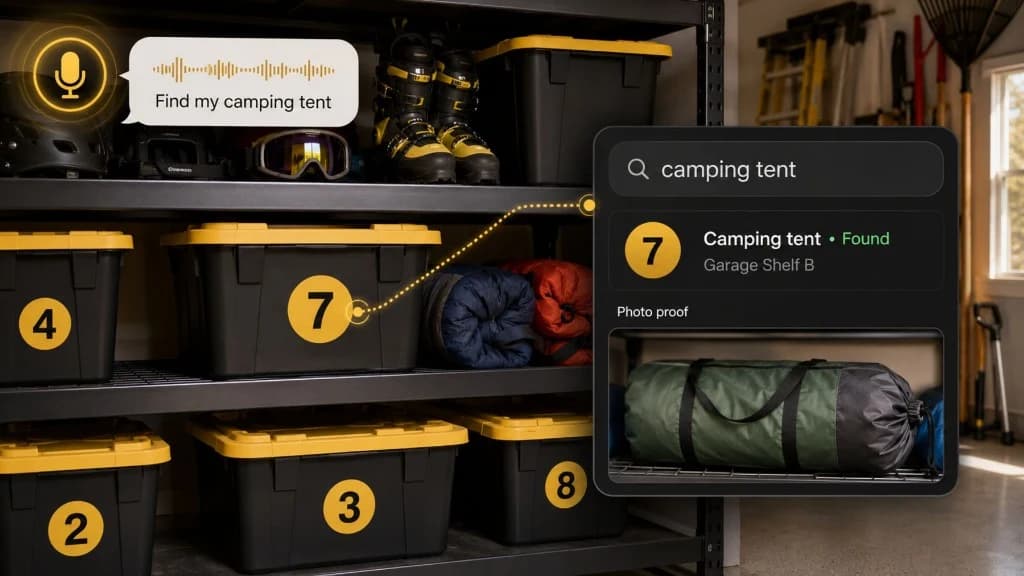
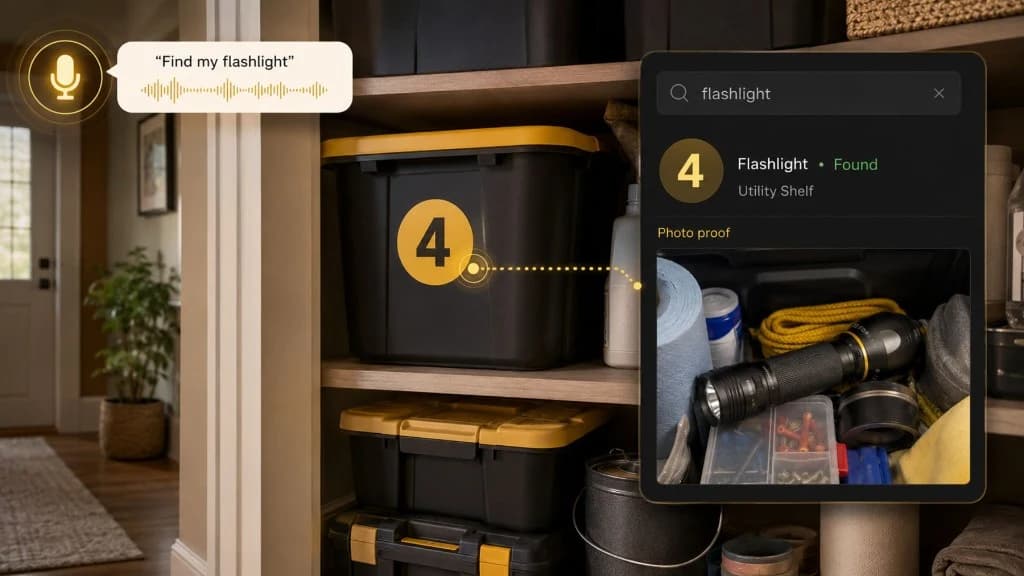
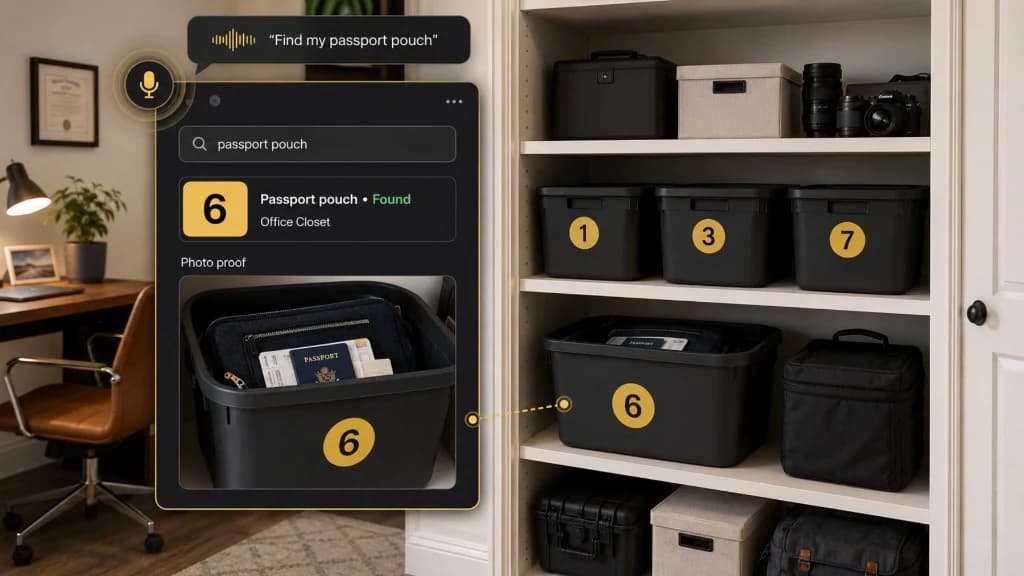
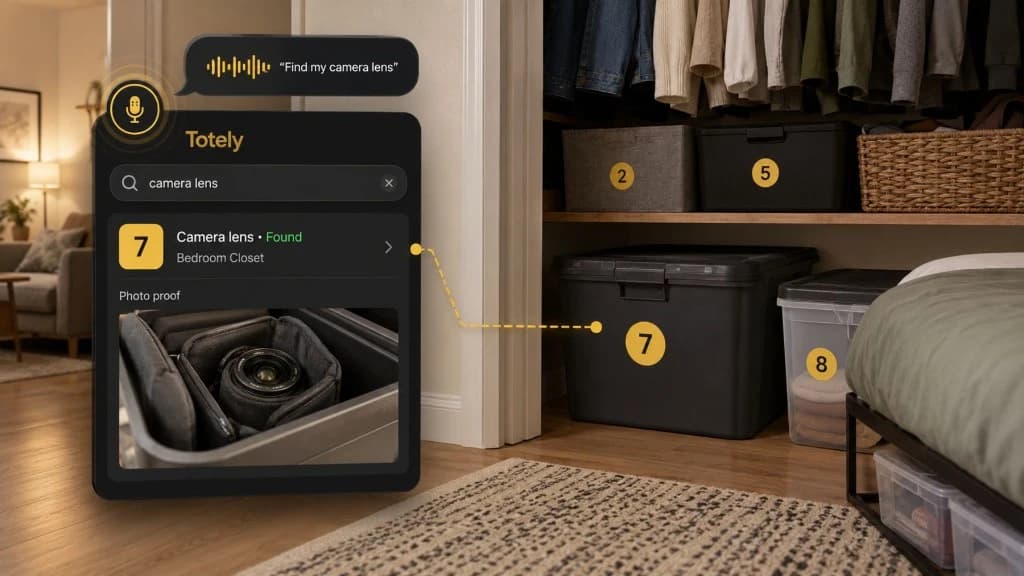
Totely helps renters document and find the belongings that usually disappear into hidden storage.
It is especially useful for storage totes, bins, moving boxes, under-bed containers, closets, garages, basements, and storage units.
Here is the simple flow:
Number the tote, bin, box, or storage zone
so it has a clear identity.
Snap a photo
of what is inside.
Let AI build the item list
from what it can see.
Review or edit if needed
so the wording matches how you would search later.
Save the location
so you know where the items live.
Search naturally later
for "laptop charger," "camera," "winter coats," "tools," "craft supplies," "small appliances," "jewelry," or "important documents."
Use photo proof
to confirm what is inside before opening the container.
Totely can support a renter's home inventory by helping track stored belongings, item photos, and storage locations. It should not be treated as a replacement for your renters insurance policy, insurer documentation requirements, receipts, appraisals, or official claim records.
Your policy tells you what documentation may be needed.
Totely helps you keep your belongings easier to document, organize, and find.
Learn more on the home inventory app page, or browse storage templates and checklists for a printable starting point.
A simple renter inventory system you can copy
Start with three passes.
A Simple Renter Inventory System You Can Copy
Pass 1
Visible Rooms — wide photos of living room, bedroom, kitchen, office, closets, and entryway; closer photos of furniture, electronics, bike, instruments, tools, and small appliances
Pass 2
High-Value Items — laptops, TV, camera, gaming console, jewelry, musical instruments, bike, tools, hobby gear, important documents, and higher-value clothing
Pass 3
Hidden Storage — number each tote, moving box, under-bed bin, closet zone, garage shelf, basement bin, or storage unit area; snap a photo, review the list, and save the location
A home inventory can become a living record instead of a one-time project. When you buy a new laptop, move a box to storage, add a bike, or pack seasonal clothes under the bed, update the record while the item is still fresh in your mind.
Renters inventory FAQs
What should renters put in a home inventory?
Renters should include electronics, furniture, clothing, kitchen items, hobby gear, tools, documents, sentimental items, valuables, and belongings stored in closets, bins, moving boxes, under-bed containers, garages, basements, or storage units. Start with the items that would be expensive, difficult, or stressful to replace.
Do renters need receipts for every item?
Not necessarily for your own organization, but your insurer may have specific requirements. Photos, receipts, serial numbers, purchase records, appraisals, and item details can all be useful. Check your own policy or ask your insurer what documentation they recommend.
Should I include items in a storage unit?
Yes, include stored belongings in your personal inventory if they belong to you. Record what is inside each tote, bin, or box and where it is located. Then check your policy or insurer requirements for how belongings away from your apartment are handled.
How detailed should a renters insurance inventory be?
Use more detail for higher-value, hard-to-replace, or important items. Record item name, photo, location, brand, model, serial number if available, receipt or proof of value if you have it, and notes about condition. Everyday items can often be grouped by category.
Can Totely replace renters insurance documentation?
No. Totely can help you photograph, organize, and find stored belongings, but it does not replace your policy, insurer requirements, receipts, appraisals, or official documentation. Use Totely as a practical inventory and storage memory tool.
What is the easiest way to start a renter home inventory?
Start with one contained area, such as a closet, small appliance cabinet, storage tote, or under-bed bin. Take photos, record important items, save the location, and keep going section by section.
Make your renter inventory easier to keep up with
A renter home inventory should not feel like paperwork for some imaginary future problem.
It should help you understand what you own right now.
Start with the obvious items: laptop, TV, camera, gaming console, bike, small appliances, winter coats, tools, craft supplies, musical instruments, jewelry, and important documents.
Then move into the hidden places: storage totes, moving boxes, closets, under-bed bins, shared storage rooms, garages, basements, and storage units.
With Totely, you can number each tote, bin, box, or storage zone, snap a photo, let AI build the item list, review or edit if needed, save the location, and search naturally later. Photo proof helps you see what is inside before you dig.
Start with one tote, one closet, or one room. Make it visible. Make it searchable. Then keep building from there.