Self Storage Solutions: How to Keep a Unit Organized and Searchable
Learn self storage solutions for keeping a unit organized, searchable, and easy to access with zones, numbered boxes, photos, and locations.
By Ben Stallsworth · Co-Founder, Totely
June 11, 2026 · Updated August 27, 2026 · 14 min read
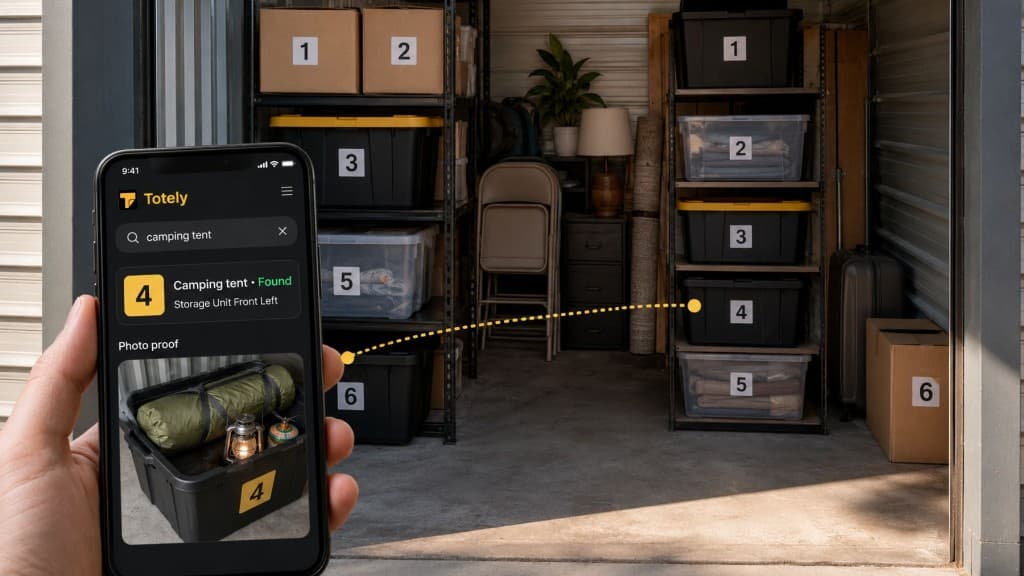
A storage unit can feel like the perfect answer when your home, garage, closet, basement, or moving space is overflowing.
You rent the unit. You pack the boxes. You stack the bins. You slide in the furniture. You close the door.
Then a few weeks later, you need one thing.
The guest sheets. The camping tent. The holiday lights. The baby clothes. The extension cord. The family recipe box. The small appliance you stored "somewhere near the front."
That is where many storage solutions self storage guides stop too early. They help you fit things into the unit, but not necessarily find them again.
A good self storage solution should do more than hold your stuff. It should help you keep the unit organized, accessible, and searchable over time. That means using zones, numbered boxes, shelf order, aisle access, photo records, and a simple inventory system before everything turns into a wall of mystery containers.
The goal is not a perfect warehouse setup.
The goal is a storage unit you can actually use.
Quick Links
- Why Storage Units Become Hard to Use
- Start With a Storage Unit Inventory List
- Create Zones Before You Stack Anything
- Use Numbered Boxes, Totes, and Shelf Locations
- Plan for Aisle Access and Front-Access Items
- Choose Containers That Match the Job
- Build a Storage Unit Map
- How Totely Makes a Storage Unit Searchable
- Self Storage Solutions FAQs
Why Storage Units Become Hard to Use
Storage units become hard to use for a simple reason: once items are out of sight, memory has to do too much work.
At home, you may remember that the wrapping paper is in the hall closet or the camping gear is in the garage. But once boxes from the kitchen, garage, bedroom, attic, holiday closet, office, and kids' rooms are all moved into one unit, the old mental map disappears.
That is how a storage unit turns into a stack of closed containers.
A tote labeled "holiday" might hold Christmas lights, wrapping supplies, gift tags, tree hooks, ribbon, batteries, or sentimental ornaments. A box labeled "kitchen" might hold mugs, small appliances, extra dishes, coffee filters, or pantry overflow. A bin labeled "garage" might hold tools, extension cords, garden gloves, sprinkler parts, sports gear, or hardware.
The problem is not that you packed badly.
The problem is that most storage systems are designed for putting things away, not finding them later.
Self storage is often rented on a short-term or month-to-month basis, which means your storage needs may change as moves, renovations, seasons, or household plans change. A system that works on move-in day also needs to work three months later.
Start With a Storage Unit Inventory List
Before you load the unit, make a simple storage unit inventory list.
This does not have to be complicated. You do not need to record every spoon, towel, or tiny item. You need a useful record of what is going in, what container it lives in, and where that container ends up.
Start with four groups.
Boxes and totes: moving boxes, storage boxes with lids, clear storage bins, holiday totes, kids' clothes bins, craft supply boxes, garage bins, household backstock, and business inventory boxes.
Furniture and bulky items: mattresses, bed frames, dressers, tables, chairs, desks, lamps, rugs, shelves, patio furniture, bikes, strollers, luggage, and small appliances.
Seasonal and occasional-use items: holiday lights, Christmas decorations, winter coats, camping gear, beach towels, sports gear, garden supplies, patio cushions, and wrapping supplies.
Fragile, sentimental, or sensitive items: family recipes, photo albums, documents, electronics, framed art, heirlooms, keepsakes, instruments, and delicate decor.
A good inventory list should capture:
- Container number
- General category or use case
- Key contents
- Photo
- Storage unit location
- Notes for fragile, seasonal, sensitive, or front-access items
That is enough to create a unit that is not just packed, but findable. A home inventory app keeps the same record searchable after move-in, not just during packing.
Create Zones Before You Stack Anything
The easiest way to keep a storage unit organized is to create zones before boxes start piling up.
Think of the unit like a small, temporary room with sections.
Front Access Zone
Use this area for items you may need soon: tools, guest linens, winter coats, kids' clothes, business inventory, school papers, camping gear, or important seasonal items.
This is the zone that protects you from having to unload half the unit for one box.
Seasonal Zone
Use this for holiday decor, Christmas lights, wrapping supplies, beach gear, patio cushions, Halloween decor, winter gear, and sports gear.
Keep the next season's items easiest to reach.
Furniture Zone
Use this for mattresses, bed frames, dressers, tables, chairs, lamps, rugs, shelves, and larger household items.
If furniture can be disassembled safely, note that in your inventory so you remember how it was packed.
Long-Term Storage Zone
Use this for books, archived boxes, rarely used decor, extra kitchenware, sentimental items, keepsakes, and items that are not needed soon.
These items can usually live farther back, as long as they are still numbered and recorded.
Fragile or Sensitive Zone
Use this for properly packed glassware, framed art, documents, electronics, photos, family recipes, heirlooms, or delicate pieces that need extra care.
Some items may need climate control, insurance review, or a different storage plan entirely. Always check facility rules before deciding what belongs in the unit.
The point is not to create a fussy system.
It is to avoid mixing everything together.
A unit organized by zones answers the first retrieval question: "Which part of the unit should I look in?"
A searchable inventory answers the second: "Which exact box has it?"
For a deeper layout walkthrough — zones, aisle access, maps, and placement — see storage unit organization. For unit-size planning before you rent, see what storage unit size you need and self storage unit prices with an inventory-first approach.
Use Numbered Boxes, Totes, and Shelf Locations
Written category labels help, but they are not enough on their own.
A box labeled "kitchen" can still be one of twelve kitchen boxes. A tote labeled "holiday" might not tell you whether it has lights, gift wrap, ornaments, or outdoor decor. A clear storage bin can help visually, but once bins are stacked, contents are often harder to see than expected.
Give every box, tote, bin, shelf, or storage zone a simple number.
Use large numbers:
- 1
- 2
- 3
- 4
Avoid long exterior labels that become outdated when contents change. The number should be the stable identity. The details should live in your inventory record. Numbered storage tote labels keep the outside simple while the record stays specific.
Example:
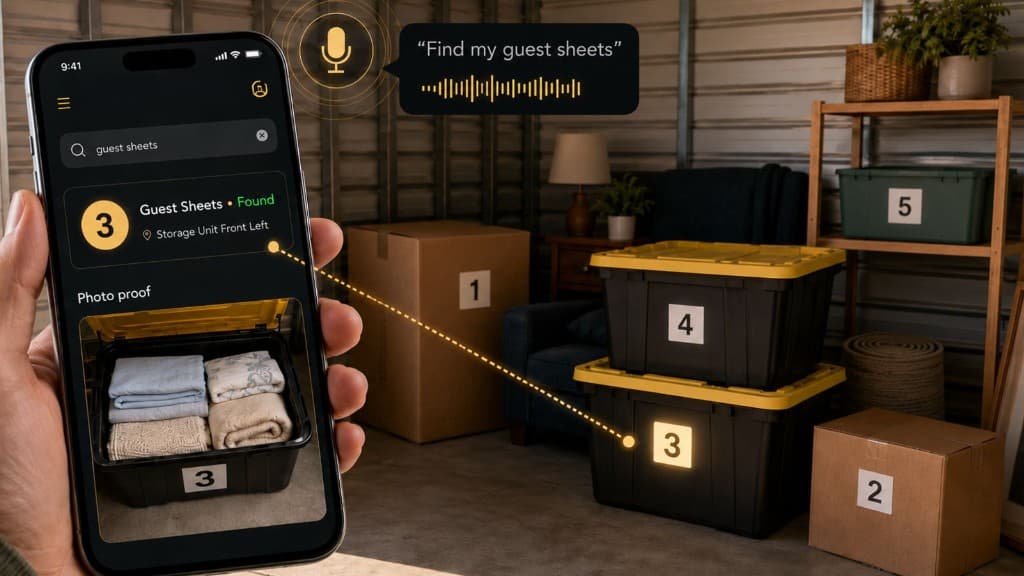
Box 1 Location: Storage unit front left Contents: guest sheets, towels, extra blankets, pillowcases Note: front access
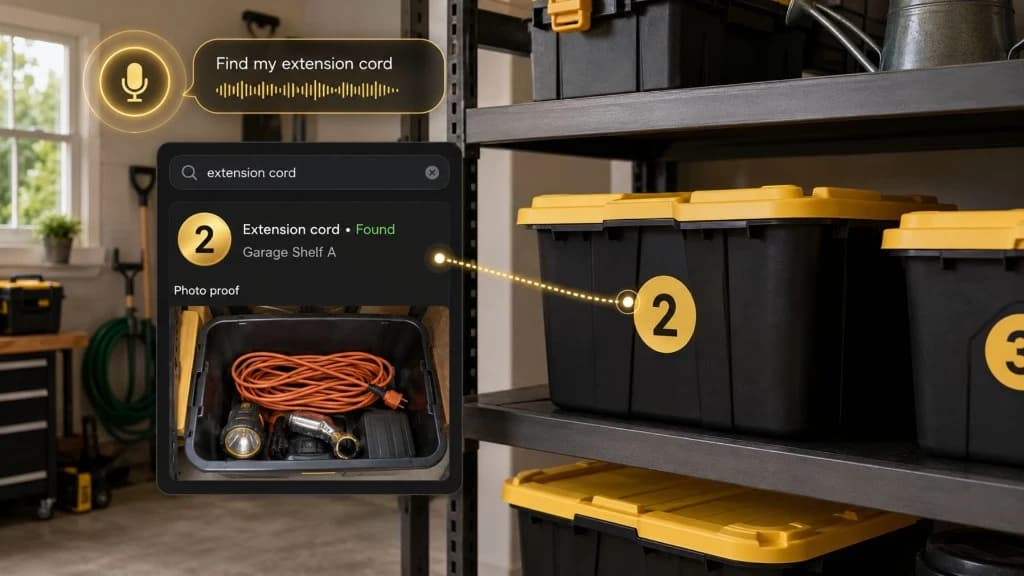
Tote 2 Location: right-side shelf, middle row Contents: holiday lights, extension cords, gift tags, ribbon, spare bulbs Note: seasonal
Bin 3 Location: back wall shelf, bottom row Contents: kids' winter coats, snow pants, gloves, boots Note: check sizes before winter
Box 4 Location: under folding table, back right Contents: small appliances, mugs, coffee maker, filters Note: kitchen overflow
Tote 5 Location: left-side shelf, top row Contents: photo albums, family recipes, keepsakes Note: sentimental; handle carefully
This system works because the outside stays simple and the inside becomes specific.
Plan for Aisle Access and Front-Access Items
Storage unit capacity is not just about how much you can fit inside.
It is about whether you can reach what you stored.
A small storage unit packed tightly from back to front might technically hold everything, but it may be difficult to use if you need anything before move-out day. If you plan to visit the unit more than once, build in access from the beginning.
Keep these items near the front:
Seasonal items you will need soon: holiday lights, winter coats, sports gear, beach towels, patio cushions, and camping gear.
Household essentials: guest linens, tools, small appliances, extension cords, and documents you are comfortable storing off-site.
Business or project items: shipping supplies, inventory, display items, event materials, and office records.
Kids' or family items: baby clothes, school papers, seasonal clothing, keepsakes, and sports uniforms.
A narrow aisle can make a huge difference. So can a small shelving unit, storage bin racks, or stackable storage boxes with lids.
If you are storing items only for a short move and do not need access until everything comes out, you may be able to pack more tightly. If you will visit monthly or seasonally, design the unit like a walk-in storage room, not a sealed block.
That aisle is not wasted space.
It is what makes the unit usable.
Choose Containers That Match the Job
The best container depends on what is inside and how often you need access.
Storage boxes with lids are useful for stackable household goods, seasonal items, linens, and contained categories. Choose sturdy containers that can handle the weight of stacking.
Clear storage bins can help when you want a quick visual cue, especially for soft goods, kids' clothes, craft supplies, decor, or lightweight household items. But clear bins still benefit from numbers because contents can be hard to see when they are stacked, high on shelves, or packed tightly.
Cardboard moving boxes can work well for short-term moves, books, kitchen overflow, office supplies, and general packing. They are easy to label and stack, but they may not be ideal for damp environments or long-term storage of sensitive items.
Storage bin racks or shelves can keep boxes off the floor, improve visibility, and make smaller containers easier to reach. They are especially useful if you are storing business inventory, seasonal items, tools, craft supplies, or household backstock.
Soft bags and duffels can work for clothing or bedding, but they can slump, hide contents, and stack poorly. Use them only when they make sense for the item and the storage conditions.
Some items should be handled more carefully or may not belong in a standard storage unit at all. Be cautious with perishable food, hazardous or flammable materials, damp items, highly valuable or irreplaceable belongings, electronics, documents, photos, textiles, wood furniture, instruments, and delicate keepsakes.
For sensitive items, consider whether climate control, better packing, additional insurance, or a different storage plan is appropriate.
Totely can help you remember what is stored where, but it does not replace facility rules, product labels, manufacturer guidance, insurance documents, or safe storage requirements.
A Simple Storage Unit Layout You Can Copy
Here is a practical layout for a small or medium storage unit.
Front Left: Access Zone
Put items here that you may need soon.
Examples:
- Guest sheets
- Winter coats
- Tools
- Camping tent
- Business inventory
- Kids' seasonal clothes
- Holiday lights
- Extension cords
Use numbered containers and keep the labels facing outward.
Front Right: Seasonal Zone
Use this for items that rotate in and out during the year.
Examples:
- Christmas decorations
- Wrapping supplies
- Beach towels
- Sports gear
- Patio cushions
- Halloween decor
- Winter gear
Keep the next season's items closest to the front.
Back Wall: Long-Term Zone
Put rarely accessed items farther back.
Examples:
- Furniture
- Archived boxes
- Books
- Extra decor
- Kitchen overflow
- Long-term keepsakes
Still number everything, even if you do not expect to open it soon.
Side Wall: Shelf Zone
Use shelves or storage bin racks if the facility allows them and they fit safely.
Examples:
- Small bins
- Tools
- Craft supplies
- Household backstock
- Office records
- Business supplies
Record shelf location clearly. "Left shelf, middle row" is much better than "storage unit."
Center: Aisle
Leave a walkway if you will need access. It does not have to be wide, but it should be enough to reach the back without pulling everything out.
Again, this is not wasted space. It is the difference between a unit you can use and a unit you dread opening.
Build a Storage Unit Map
A storage unit map can be simple.
You do not need design software. You can sketch the unit on paper, take a phone note, or create a quick digital list.
Use zones like:
- Front Left: frequently needed boxes
- Front Right: seasonal bins
- Left Shelf: small containers and tools
- Back Wall: furniture and long-term boxes
- Right Side: stacked totes and overflow
- Under Table: kitchen boxes and small appliances
Then connect each numbered box to the map.
Example:
- Tote 2: right-side shelf, middle row — holiday lights and extension cords
- Box 4: under folding table, back right — coffee maker and small appliances
- Bin 7: front left stack, bottom — guest sheets and towels
- Tote 9: left shelf, top row — family recipes and photo albums
- Box 12: back wall, behind dresser — books and archived papers
A map plus numbered boxes gives you physical order.
Photos plus search give you digital memory.
Together, they keep the unit from becoming a guessing game. See keep track of storage bins for habits that keep the record accurate after the first load-in.
How Totely Makes a Storage Unit Searchable
Totely is the digital memory layer for your storage unit.
The physical system gives every box, tote, bin, shelf, and zone a place. Totely helps you remember what is inside each one and where it lives.
Here is the simple flow:
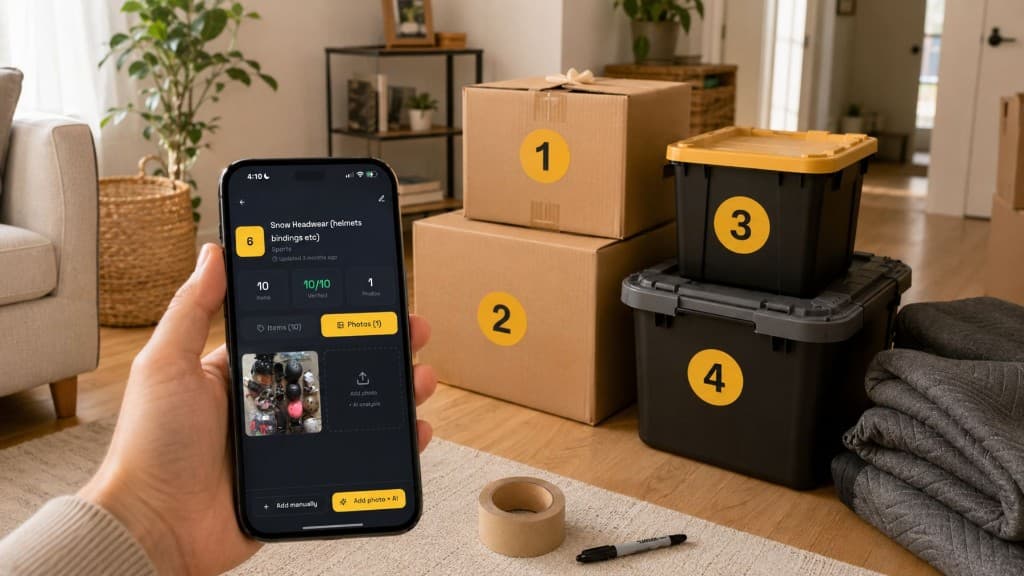
Number each container
Give every box, tote, bin, shelf, or storage zone a clear identity.
Snap a photo
Capture what is inside before the container goes into the storage unit.
Review the item list
Let AI build the first list from what it can see, then edit words to match how you search.
Save the location
Record front left stack, left shelf middle row, back wall, or under table.
Add useful notes
Flag fragile, sentimental, seasonal, climate-sensitive, or front-access items.
Search naturally later
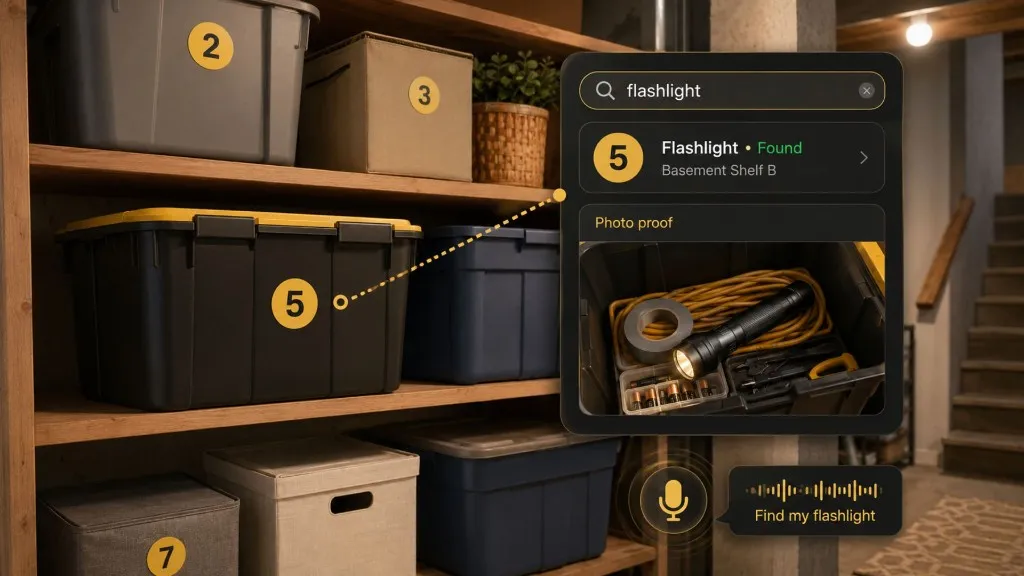
Look for guest sheets, holiday lights, camping tent, coffee maker, winter coats, extension cord, or family recipes.
Use photo proof
Confirm what is inside before opening every box.
Totely does not require QR codes, barcodes, or manually typing every item.
It simply makes the unit searchable: number the container, capture the contents, save the location, and search later.
That is the missing layer in most self storage solutions. Shelves and bins help you store things. Totely helps you find them again. Learn more in the storage unit inventory use case, the printable Storage Unit Inventory Checklist, and the broader storage organization system.
Self Storage Solutions FAQs
What is the best way to organize a self storage unit?
The best way to organize a self storage unit is to create zones, number every box or tote, keep frequently used items near the front, leave aisle access if you need retrieval, and maintain a photo-based inventory. This helps the unit stay usable after move-in day.
How do I make a storage unit searchable?
Give every box, tote, shelf, or storage zone a simple number. Take photos of contents before loading the unit. Save the exact location of each container, such as "front left," "back wall," or "left shelf middle row." Then use a searchable inventory tool like Totely to find items later.
Should I use clear storage bins in a storage unit?
Clear storage bins can be helpful because they provide a quick visual cue, especially for soft goods, seasonal items, and craft supplies. But they still need numbers and a contents record because bins become harder to see when stacked, stored high, or packed tightly.
What should go near the front of a storage unit?
Put items you may need soon near the front. Good front-access items include seasonal decor, holiday lights, winter coats, tools, business inventory, camping gear, guest linens, kids' clothes, sports gear, and small appliances.
Do I need shelves or storage bin racks in a storage unit?
Shelves or storage bin racks can make a unit easier to use, especially if you need regular access to smaller boxes, business inventory, tools, seasonal items, or household backstock. Check your facility rules and make sure shelves are stable, safe, and appropriate for the unit.
How can Totely help with storage unit organization?
Totely helps you number boxes, totes, bins, shelves, and zones, snap photos, let AI build the first item list, save exact storage unit locations, add notes, and search naturally later. Photo proof helps you confirm what is inside before opening every box.
Make the Unit Organized Before It Becomes Full
The best time to organize a storage unit is before everything is stacked inside.
Start with zones. Number the boxes. Keep the labels visible. Leave access if you need it. Photograph what is inside. Save the exact location. Make a simple inventory list that your future self can actually use.
With Totely, your storage unit can become more than a place where boxes disappear. It can become searchable storage: a physical space with a memory system behind it.
Start with one box.
Give it a number. Take a photo. Save the location.
Then keep going.
Start with one tote — one box, one bin, or one storage zone. The organized unit gets much easier from there.