Photo Storage Box: Protect the Memories and Remember Where They Are
Choose a photo storage box that protects your prints and makes family pictures easy to find later, with an easy box-and-divider indexing system.
By Steve Watts · Co-Founder, Totely
October 8, 2026 · Updated October 8, 2026 · 9 min read
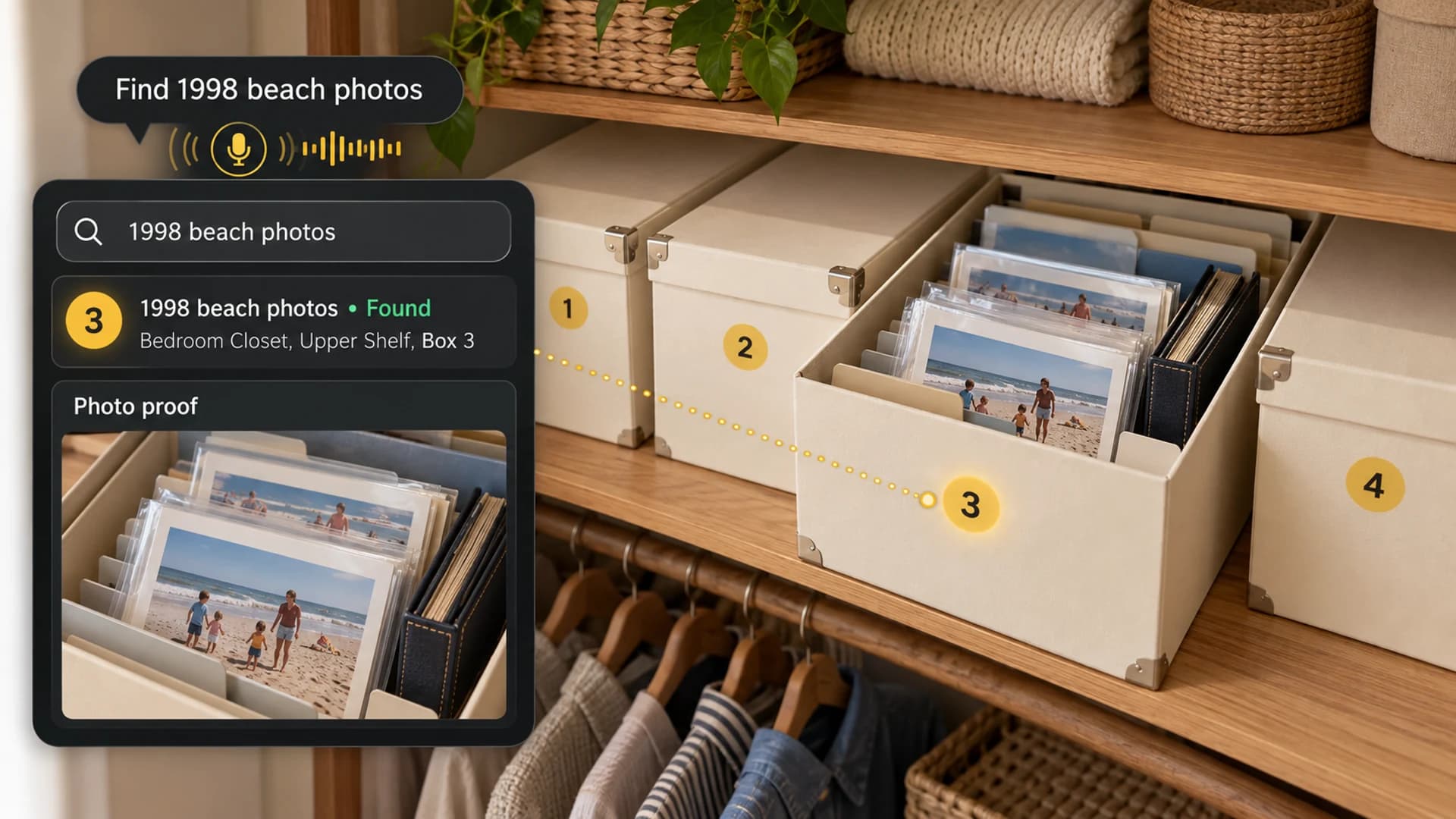
You are looking for one photograph: your grandmother at a wedding, or the beach trip when everyone was little. You know someone saved it. There is a photo storage box in the hall closet, another on the bedroom shelf, and an old album tucked away somewhere.
The pictures may be stored carefully, but nobody remembers which box holds that one moment.
A good system has two jobs: protect the physical prints and help your family find them again. Choosing the right box is the first half. Creating a small, useful index is the second.
Quick Links
What Makes a Good Photo Storage Box?
A photo storage box needs to fit the photographs, protect them from unnecessary handling, and let you retrieve a specific group without emptying the entire collection.
Look at these criteria before buying:
- Print size. Are the photos mostly 4×6, 5×7, 8×10, or an assortment of older formats?
- Materials. Is the container actually suitable for photographs, or simply marketed as a generic organizer?
- Dividers. Can you separate groups by person, event, place, or time period?
- Access. Can you remove one section without bending the next?
- Location. Will the box live on a dry, stable interior shelf?
- Findability. Can someone else work out where a named family memory is stored?
"Acid-free" is not the whole preservation test
For older, valuable, or irreplaceable originals, material choice deserves extra care. The National Archives recommends photo enclosures that have passed the Photographic Activity Test (PAT). The Library of Congress cautions that packaging advertised as "archival" or "acid-free" may still contain harmful additives.
You do not need a museum setup to sort ordinary family snapshots. But a household plastic tote and a preservation-quality photo box are not interchangeable.
Choose the Right Box for Your Prints
There is no single best box for every family collection.
| Type | A useful fit | What to check |
|---|---|---|
| Archival paperboard photo box | Older prints and keepsakes that need careful housing | Photo-safe materials, PAT information, correct dimensions |
| Divided photo carrier | Ordinary modern prints grouped by trip, year, or person | Case size, secure closure, accessibility, actual photo suitability |
| Photo-safe album or sleeved binder | Photographs viewed and shared often | Suitable sleeves, no adhesive contact with originals |
| Oversized flat print box | Large prints or fragile mounted photographs | Flat support, protective folders, no forced bending |
A box advertised as holding a thousand photographs might be convenient, but capacity is not the same as preservation or easy access. Measure the inside before buying. Leave enough room to remove a group without scraping or pulling at other prints.
A divider system is especially useful: one section for a wedding, another for an annual family trip, another for school years. Use the divider to carry the label, not the photo itself.
Do not overpack the photos
The National Archives recommends boxes that fit the originals without folding or bending, warns against overstuffing, and advises using a spacer board when an upright box is not full. Choose appropriately sized housing, and support fragile or oversized originals as preservation guidance recommends.
Where Should You Store Family Photos?
A good photo storage box cannot compensate for a poor storage environment.
Prefer an interior closet or shelf with fairly stable temperature and moisture conditions. Keep boxes off the floor and away from windows, pipes, leaks, direct sunlight, and heat sources. Both the National Archives and Library of Congress caution against damp basements, hot attics, and fluctuating conditions.
When handling photographs:
- Use a clean, dry work surface without food or drinks.
- Hold prints by the edges and support fragile ones underneath.
- Label sleeves, dividers, or folders instead of sticking labels on the original.
- Avoid tape, paper clips, rubber bands, and self-adhesive notes on prints.
- Seek conservation advice for photographs that are flaking, stuck together, torn, or otherwise unstable.
Totely can tell you where the box lives. It cannot make unsuitable housing or an unsafe storage environment archival.
Sort by the Way People Remember
If your photographs have precise dates, a chronological system can work nicely. But a shoebox of family pictures rarely comes with a complete timeline.
You can also sort by:
Person: Grandma Helen, Dad's childhood, each child, or one branch of the family.
Event: Weddings, graduations, family reunions, birthdays, holidays.
Place: The lake house, beach trips, old hometown, visits to relatives.
Time period: 1970s family, school years 2008–2015, summers in the 1990s.
Choose one primary approach and stay broad at first. A divider titled "Family Vacation, around 1998" is more useful than guessing a specific date.
Keep an Unknown people or dates section. A relative may recognize a face years later. Do not turn uncertainty into an invented family-history fact.
You can also record a sentence of context: "Helen and her sister outside the old lake house." That story may become more valuable than a perfectly sorted stack.
For broader keepsakes beyond photographs, see how to store sentimental items without forgetting what you kept.
Build a Photo Box Index
Give each box a plain number and save its exact location. Then write down the groups inside. You do not have to catalog every individual photograph.
| Box | Exact shelf location | Inside sections | Search words |
|---|---|---|---|
| 1 | Hall Closet, Upper Shelf | Helen / 1960s–1980s | Grandma Helen, lake house, cousins |
| 2 | Bedroom Closet, Middle Shelf | School years / 2008–2015 | first day, soccer, graduation |
| 3 | Bedroom Closet, Upper Shelf | Family trips / 1997–2001 | beach trip 1998, camping, vacations |
| 4 | Living Room Bookcase | Wedding and anniversary | wedding portraits, ceremony, parents |
Now the question "Where are the 1998 beach pictures?" has a practical answer:
Bedroom Closet, Upper Shelf — Box 3 — Family Trips, 1997–2001.
That is better than opening every box labeled "old photos."
Keep a visual reference without disturbing originals
Photograph the numbered outside of the box, its divider layout, or a safe overview of the folders. For fragile prints, do not repeatedly unpack them just to make a digital index.
The Library of Congress notes that cataloging and access aids can reduce unnecessary handling of originals. Your index can serve the same modest purpose at home: it points to the right box before you touch the contents.
If the box moves, update the location. If you add a batch of pictures, update the group notes.
The 20-Minute One-Box Test
You do not need to organize thirty years of family photographs in one afternoon.
- Choose one manageable box and clear a clean table.
- Check whether delicate photos need safer enclosures first.
- Make three to five broad groups by person, event, or period.
- Place appropriate divider labels on the housing, not on photos.
- Put a simple visible number on the outer box.
- Record the groups and their actual shelf location.
- Try searching mentally for one picture: "Where are Dad's graduation photos?"
- Stop when one box is easier to find things in than it was before.
This is a beginning, not a demand to finish the family archive.
How Totely Helps
A photo storage box still does the physical protecting. Totely supplies the digital memory layer that helps you locate it later.
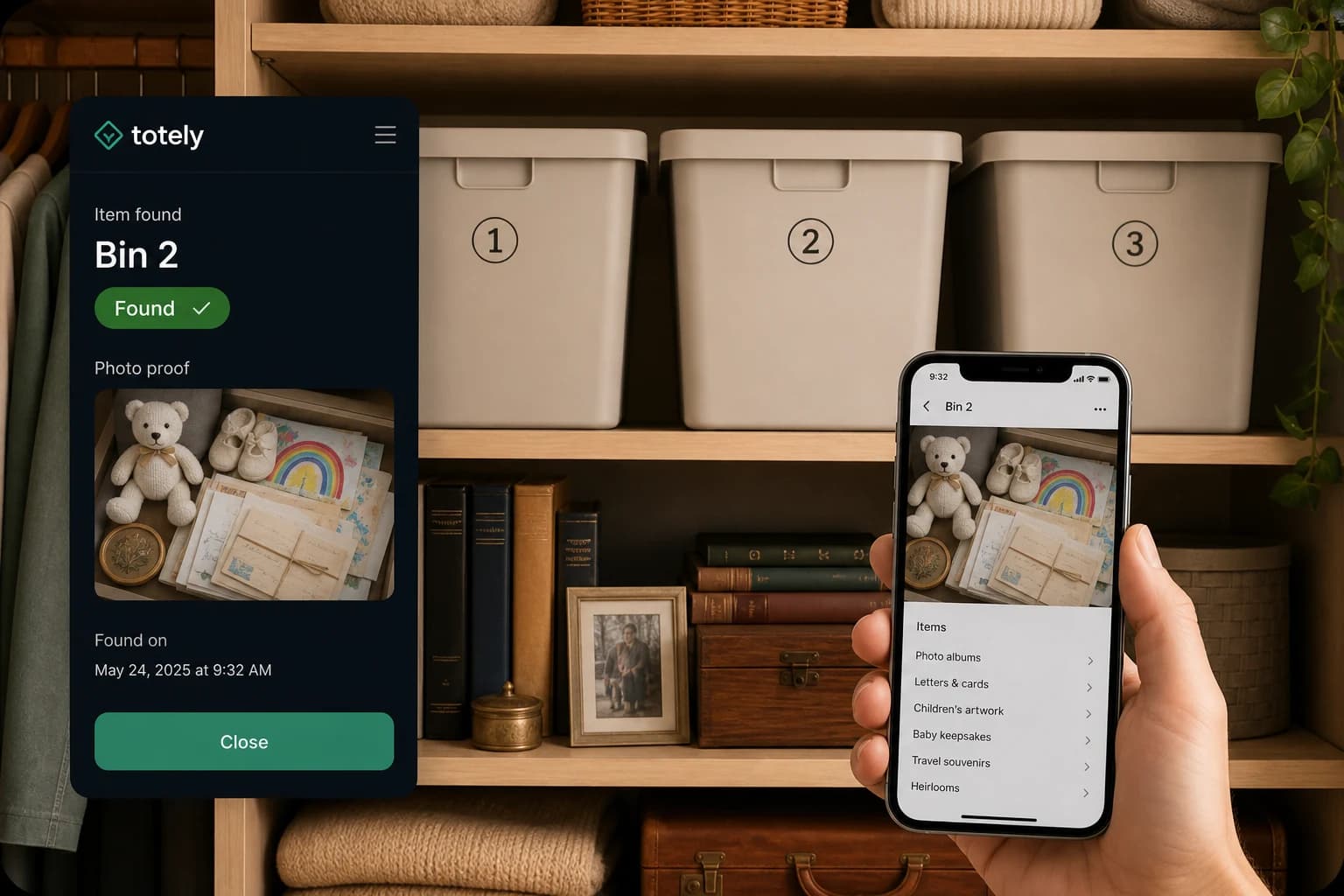
Number the outside of the box. Take a safe reference photo of the box or dividers. Let Totely suggest a first group list from what the image shows, then correct it and add names, events, approximate dates, and details you know. Save the exact closet or shelf.
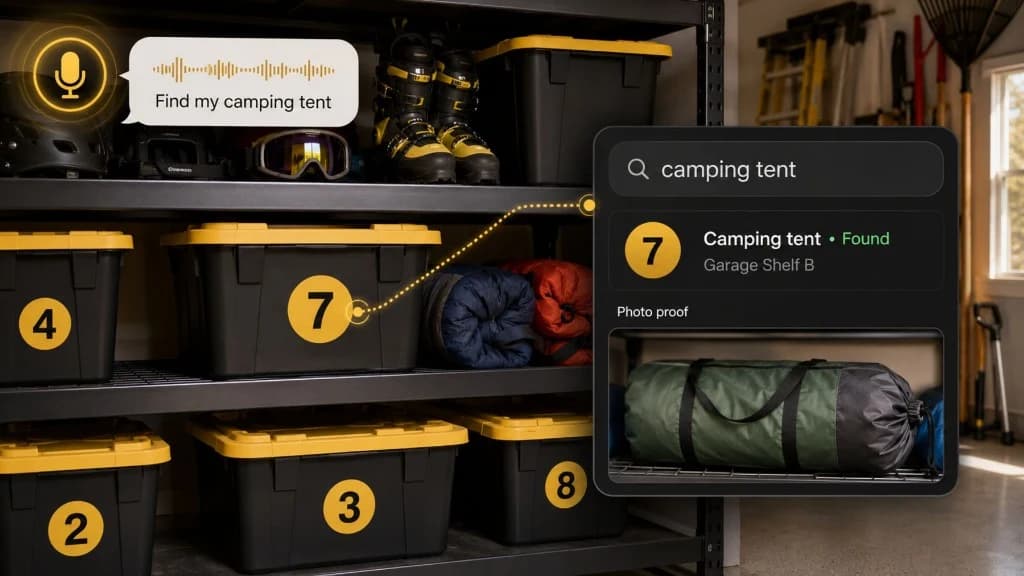
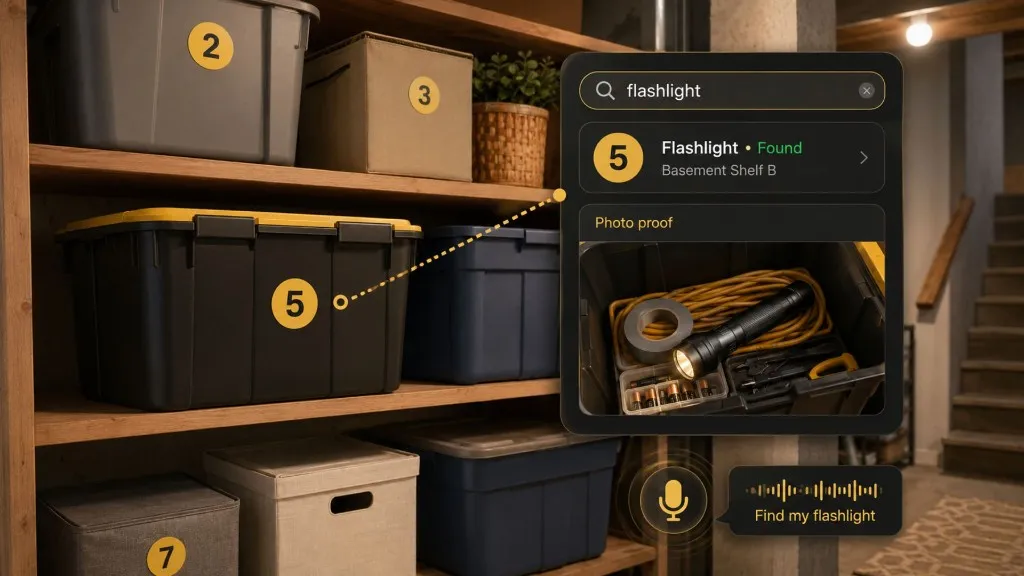
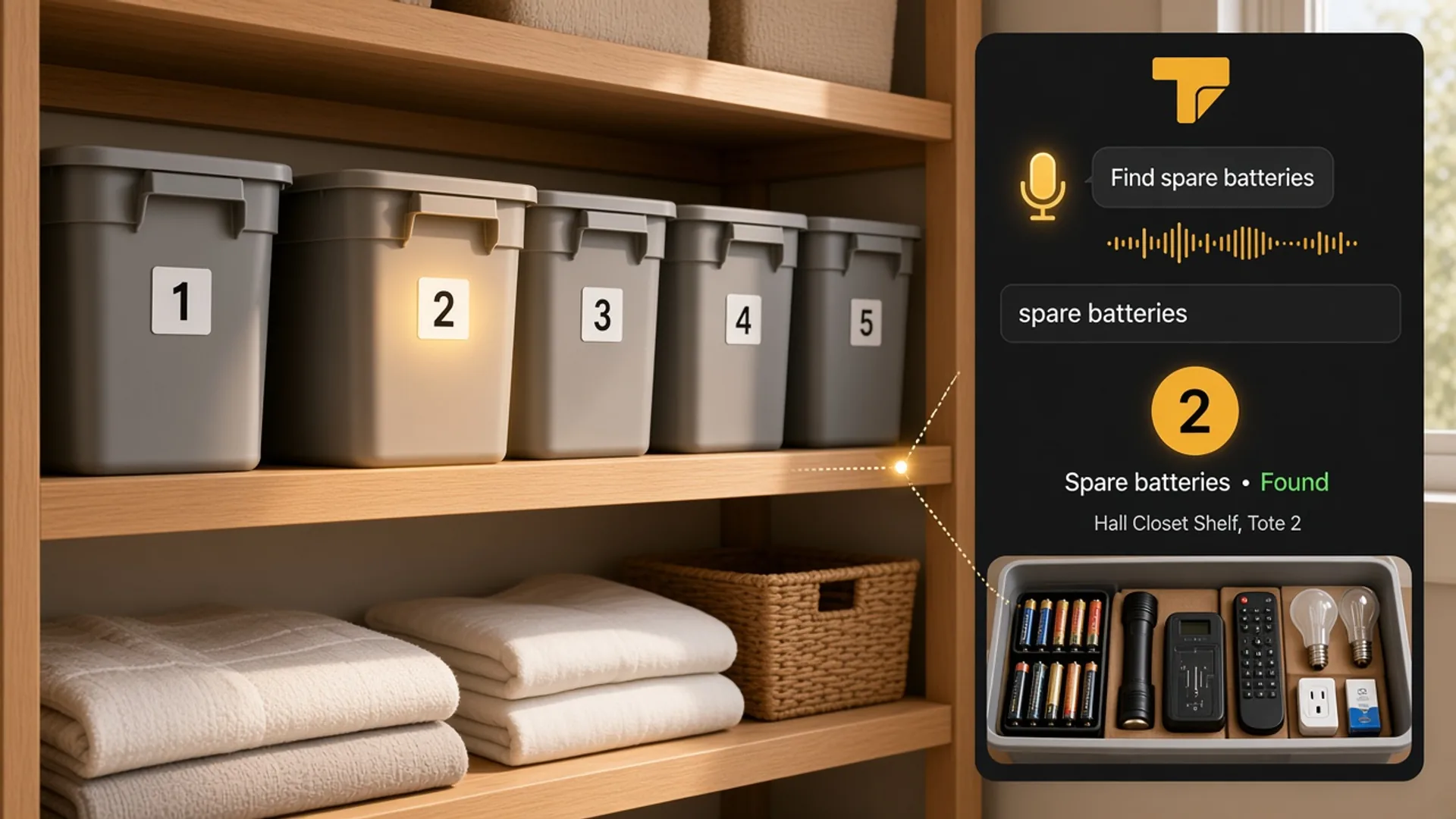
Later, you can search naturally for "1998 beach pictures" or "Grandma's wedding photos" and find the right box or section before taking out the originals.
The system is intentionally modest: simple outside, specific inside. Totely is not a facial-recognition archive, photo-restoration service, substitute for scanning and backups, or replacement for conservation advice. You should not have to digitize every print just to remember where a group is stored.
Photo Storage Box FAQs
Is an acid-free photo storage box enough for old photos?
Not necessarily. For valuable prints, confirm whether the product is suitable for photographic materials and whether its enclosure materials have passed the Photographic Activity Test where appropriate. Storage location and handling matter too.
Are clear plastic photo boxes safe?
Some products are intended for photographic storage; others are general craft organizers. Check the actual materials and manufacturer guidance. Do not assume any clear plastic box is archival.
Should I organize prints by year or person?
Choose the approach people will actually use to find them. Years work when dates are known; people, places, and events can be better when they are not.
Can I write on the back of old photos?
The Library of Congress recommends avoiding marks whenever possible and labeling the photograph's housing instead. Do not put tape, sticky notes, or adhesive labels on originals.
Where should I keep the box?
In a relatively stable, dry indoor place, off the floor and away from heat, sunlight, or leak risks. An attic or garage is not a safe default for heirloom prints.
Do I need to scan every photo to make an inventory?
No. A box-and-divider index can make a physical group findable without digitizing each print. Scanning and backing up important photos is a separate project; an index does not replace it.
Keep the Memories—and the Way Back to Them
The best photo storage box is not just the one that holds the most pictures. It is one that suits the originals and fits into a system your family can maintain.
Choose appropriate housing, store it safely, organize pictures in meaningful groups, and record the box number and location.
That way, the next person looking for a family memory knows where to begin. Stored, not lost.
For more simple numbered-storage ideas, read home storage totes and how to keep track of storage bins.