How to Store Sleeping Bags: Loose, Dry and Easy to Find
Learn how to store sleeping bags between trips: dry them properly, choose roomy breathable storage, and keep each bag matched with its travel sack.
By Steve Watts · Co-Founder, Totely
October 17, 2026 · Updated October 17, 2026 · 12 min read
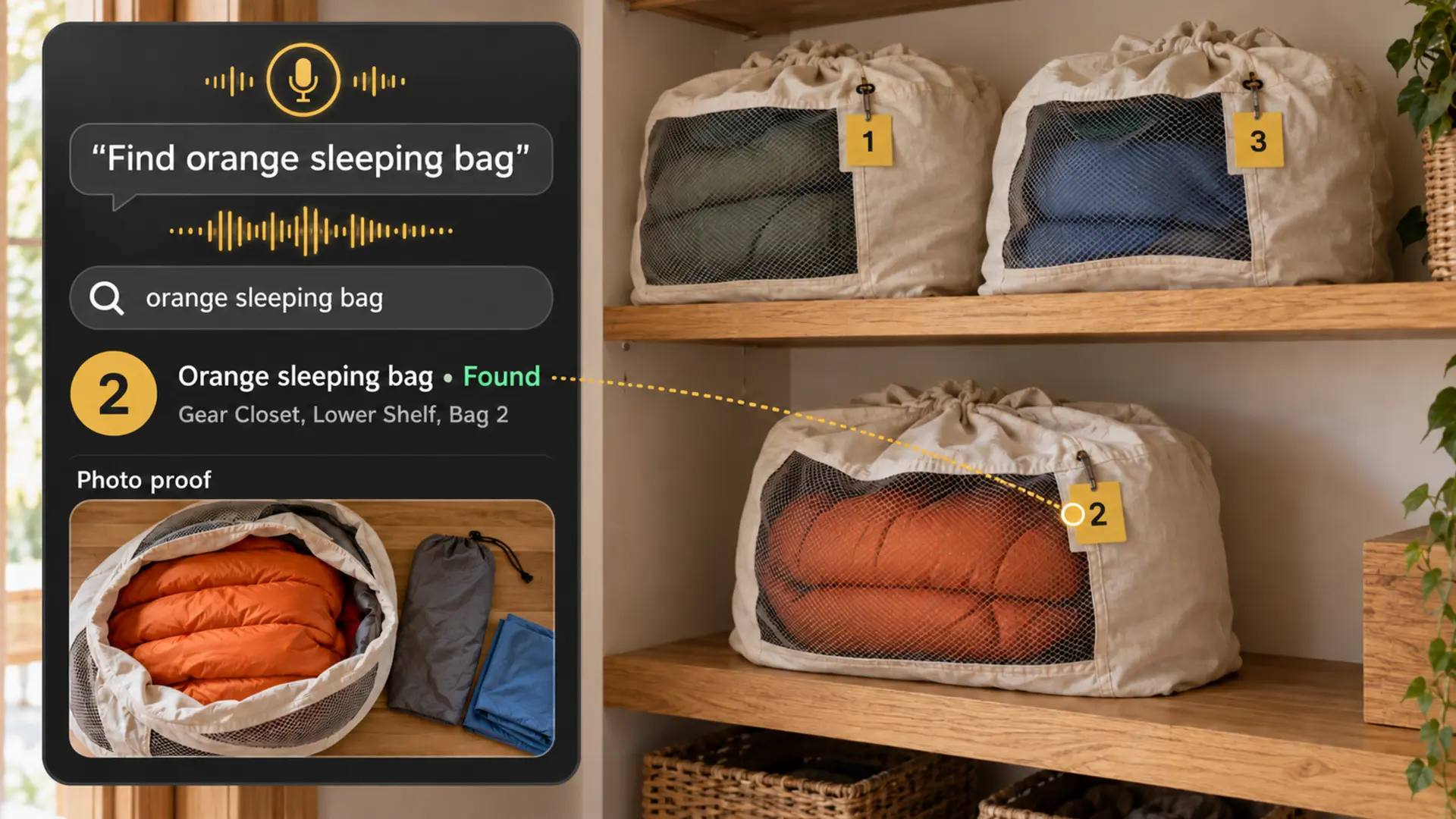
The orange sleeping bag is somewhere in the closet. Its little gray stuff sack is somewhere else. You put the bag away properly after the last trip, but now three large storage sacks look alike and packing has turned into a search.
Knowing how to store sleeping bags means solving two different problems: giving the insulation suitable conditions between trips, and keeping the right bag and its accessories identifiable. A compact bundle is convenient in a backpack. It is not the goal for months on a shelf.
For long-term home storage, let the bag dry completely, follow its care instructions, and keep it loosely supported in a roomy breathable storage sack or another arrangement its maker recommends. Choose an appropriate indoor location, then record which bag lives there and where its matching travel sack went.
Quick Links
How to Store Sleeping Bags at Home
Start by separating the small sack used for a trip from the larger home-storage container. They have different jobs.
REI's storage guidance explains that both down and synthetic insulation need loft—the expanded, puffy structure that traps air. Prolonged compression can reduce that loft. Synthetic fill is not a reason to leave a sleeping bag tightly packed all season.
| Arrangement | Its job | What to do at home |
|---|---|---|
| Small stuff sack or compression sack | Make the bag manageable during transport | Remove the sleeping bag after the trip rather than treating the packed bundle as its permanent home |
| Roomy breathable home-storage sack | Contain the bag without squeezing the insulation | Check that the bag sits loosely and the surrounding shelf does not flatten it |
| Supported hanging or lightly folded storage | Use suitable available space without a small sack | Follow the bag maker's guidance and leave it supported, not wedged among other belongings |
The supplied packaging can help you identify the intended setup, but do not assume every model comes with the same two sacks. NEMO's packaging guidance describes mesh storage bags and compression sacks, while naming Jazz and Jazz Double as exceptions with a different duffel arrangement.
If you bought the bag secondhand or lost a sack, find the model's instructions before shopping. The word “storage” on an accessory listing does not tell you whether it is meant for a backpack or a closet.
Check the actual fit, not just the capacity
A large number of liters on a storage sack is not a universal fit guarantee. Try your sleeping bag in it without pulling compression straps, forcing the closure or pressing down to make it fit. Then put the filled sack in its intended home.
The shelf opening matters too. A roomy sack can become a tightly squeezed one when it is pushed under a low shelf or has another container placed on top. Leave enough space to take it out normally.
Dry and Check the Bag Before Storing It
Unpack after the trip and look through the bag and its pockets. Remove the socks, liner or other belongings that came home inside it. Inspect the shell and closure, and note any damage that needs attention before another outing.
Separate the tasks: the bag may need airing, spot cleaning, a full wash or repair advice. Do not automatically put it through a wash just because the trip ended. Therm-a-Rest's care guidance distinguishes occasional spot cleaning from a full cleaning after substantial use or soiling. Use your own model's label and instructions to decide what is appropriate.
Drying instructions are not interchangeable
A general sleeping-bag article may tell you to use a dryer on low heat. That is not permission to do it with every bag. Snugpak's current care instructions recommend line drying and advise against tumble drying, including a warning about heat damage at low settings.
Follow the bag maker on the drying method, equipment, heat and any drying aids. Do not borrow a cleaner, dryer-ball routine or timed cycle from a different model. If the care label is missing, ask the maker or a suitable outdoor-gear cleaning service before experimenting.
Give the bag the time and space its instructions require. A breathable storage sack is not a substitute for finishing the drying process. If you are unsure whether the bag is fully dry, keep it in the appropriate drying setup rather than closing it away.
A persistent musty smell, damaged baffle or unreliable zip calls for further attention, not a “ready for camping” label. A photo record can preserve the concern. It cannot assess the insulation's performance or tell you which conditions the bag is safe to use in.
Choose a Home That Leaves the Bag Loose
Look for suitable space before buying another organizer. The useful question is not “Where can I squeeze this in?” It is “Where can this bag stay loose, dry and reasonably easy to retrieve?”
Sea to Summit's gear-care guide recommends a shaded, ventilated indoor home with more constant temperature and humidity for sleeping bags. The garage where you keep tent stakes or camp cookware may not provide the same conditions.
| Available arrangement | A practical fit check | Change the setup if |
|---|---|---|
| Large storage sack on a closet shelf | Place the filled sack on the shelf and remove it again | The shelf above presses down, the sack catches on hardware or retrieval needs an awkward lift |
| Maker-approved hanging space | Check the recommended support and the whole hanging path | Coats squeeze the bag, it drags on the floor or you would have to improvise a load-bearing attachment |
| Lightly folded or unpacked supported space | Allow the bag to rest without a tight bundle | Other stored items flatten it or the space cannot stay suitable for the material |
Rab's sleeping-bag guide describes breathable storage sacks and hanging as home options, and advises against plastic bags or dry bags for this role. A waterproof transport sack and an airy home-storage sack are not interchangeable.
If hanging is your only workable option, check the specific bag's instructions. Do not assume a small loop, drawcord, zip pull or decorative hook is meant to support the bag indefinitely. You do not need to add ceiling hardware or build a rack to improve one bag's storage.
When space is tight
Try a different shelf position, a suitable hanging arrangement or another appropriate indoor storage area before reaching for a vacuum bag. Shrinking the bag harder works against the loose-storage goal.
The apartment storage guide can help with the room-wide tradeoffs. Keep this item's care needs in view: an otherwise useful hidden-storage space is not automatically right for a bulky insulated bag.
If several bags share a shelf, give each a place you can describe. “Gear Closet, Lower Shelf” is clearer than “with camping.” Check the actual conditions rather than assuming a room name guarantees them.
Keep the Travel Sack and Liner Findable
The small stuff sack is easy to misplace precisely because you are no longer storing the sleeping bag inside it.
This is a real enough problem that NEMO has a support page for missing compression sacks. For its newly unpacked bags, it suggests checking inside the bag, its pillow pocket and the larger storage sack. That is a brand-specific starting point, not a promise about where every maker packs accessories.
Once you have the right travel sack, photograph it beside the sleeping bag and give it a consistent home. You could keep it empty in a small accessory pouch alongside the larger sack. If it lives somewhere else, write that exact location in the bag's record.
Avoid hiding the travel sack deep inside the sleeping bag simply to keep the pair together. The relationship can live in a note; the items do not have to occupy the same enclosed space.
Treat the liner as its own care item. Read its label, clean and dry it as instructed, then keep it recognizable rather than mixed into an anonymous pile of camping textiles. Do the same for a separate pillowcase or other soft accessory you normally use with that bag.
For the rest of the equipment, the camping-tote organization guide covers trip-based groups. A shared packing plan can point to sleeping bags stored elsewhere; it does not require every piece of the sleep setup to be forced into one tote.
Give Similar Bags Distinct Records
Three large cotton sacks can look nearly identical. Identify the outer home-storage sack with a simple number on a suitable removable tag. Keep adhesive and marking pens off the sleeping bag's shell.
Record the details you can verify: color, shape, owner if useful, model from its label and where the care instructions are kept. If a temperature rating matters, copy the exact label and its context rather than guessing from color, thickness or a photograph. This article does not assess whether a particular bag is suitable for a trip.
Here is an illustrative record for the orange bag shown in the hero:
| Part of the setup | Saved location | Useful detail |
|---|---|---|
| Orange sleeping bag in home-storage Bag 2 | Gear Closet, Lower Shelf, Bag 2 | Roomy breathable sack; model and care details checked from the actual label |
| Matching gray trip stuff sack | Gear Closet, Lower Shelf, beside Bag 2 | Empty; paired with the orange bag, not the blue one |
| Blue sleeping liner | Gear Closet, Lower Shelf, beside Bag 2 | Folded separately; follow its own care label |
Take a reference photo while the bag and accessories are visible. A second photo of the actual care label may be useful. You do not need to pull the whole bag out every time someone searches for it.
If you move the large sack or borrow the liner for another trip, update the corresponding note. The number can stay the same while the saved location changes. Our storage-record maintenance guide explains how to keep that information useful over time.
How Totely Helps
Totely keeps the storage record searchable after the physical arrangement is sorted.
Give the outer storage sack a visible 2, take a clear reference photo, and let Totely suggest the first list from what it can see. Review and correct it. Add “orange sleeping bag,” the matching gray stuff sack and the liner's location where needed, then save “Gear Closet, Lower Shelf, Bag 2.”
Later, say or type “orange sleeping bag.” The saved number, location and photo proof help you identify the right record before opening similar sacks. Your note also explains where its travel sack lives.
AI cannot see through the closed sack, verify a temperature rating or certify that insulation has recovered. It does not automatically match accessories or notice an unrecorded move. You still check the list and update changes. No QR codes, barcodes or manual entry of every small item are required to start.
The One-Bag Reset
Choose the sleeping bag you expect to use next. Leave the rest of the closet alone for now.
- Find its model and care instructions.
- Unpack it and address cleaning, drying or repair needs appropriately.
- Check the intended home-storage arrangement without squeezing the bag.
- Put it in a suitable place you can reach and describe.
- Identify its outer storage sack with a simple number.
- Find the matching travel sack and liner, and give them a consistent home.
- Photograph the visible setup and save the exact locations.
- Use the record to find the orange bag and its accessories, then update it when anything moves.
If you want to try the same method with another container, start with the One-Tote Test. The point is one useful record, not an inventory of every item you own.
Sleeping Bag Storage FAQs
Can a synthetic sleeping bag stay tightly packed between trips?
Do not treat synthetic fill as an exception to loose long-term storage. Follow the maker's instructions and give the insulation room rather than leaving it in a small transport sack for the season.
Is a cotton pillowcase big enough for home storage?
It may be, but check the actual bag and opening. If fitting it requires pushing hard or compressing the insulation, choose a larger suitable storage sack or another maker-approved arrangement. One household textile size is not a universal fit rule.
Can I put a sleeping bag in a sealed plastic tote?
A roomy breathable storage sack is the better starting point here. A sealed tote is not a way to finish drying the bag or make an unsuitable location acceptable. Keep other camping items in totes if appropriate without assuming the sleeping bag belongs there too.
Should I hang the bag or keep it on a shelf?
Either may work when the bag maker allows it and the support and space are suitable. A shelf needs room above the storage sack; a hanging setup needs appropriate support without squeezing the bag among coats. Follow model-specific guidance.
What if the bag has been compressed for months?
Remove it, follow the manufacturer's care guidance and assess any concerns before relying on it again. Do not assume shaking, washing or a dryer cycle will restore its original performance. Ask the maker about persistent loss of loft or damage.
How do I keep the small travel sack from disappearing?
Give it a consistent place, photograph it beside the matching sleeping bag and note the relationship. If it is stored elsewhere, save that exact location. Update the record when the bag or an accessory leaves for a trip.
Store It for the Trip, Not Just the Shelf
A sleeping bag does not need to be packed as small as possible to be put away well. It needs suitable care, room between trips and a home you can find again.
Start with the orange bag. Let it stay loose, keep its little gray sack identifiable, and leave the next person a useful answer about where both belong. Stored, not lost.