How to Organize Camping Gear in Storage Totes
Organize camping gear in totes by setup order, trip type, and small parts so tents, headlamps, cooking gear, and rain gear are easy to find.
By Steve Watts · Co-Founder, Totely
June 6, 2026 · Updated June 6, 2026 · 14 min read
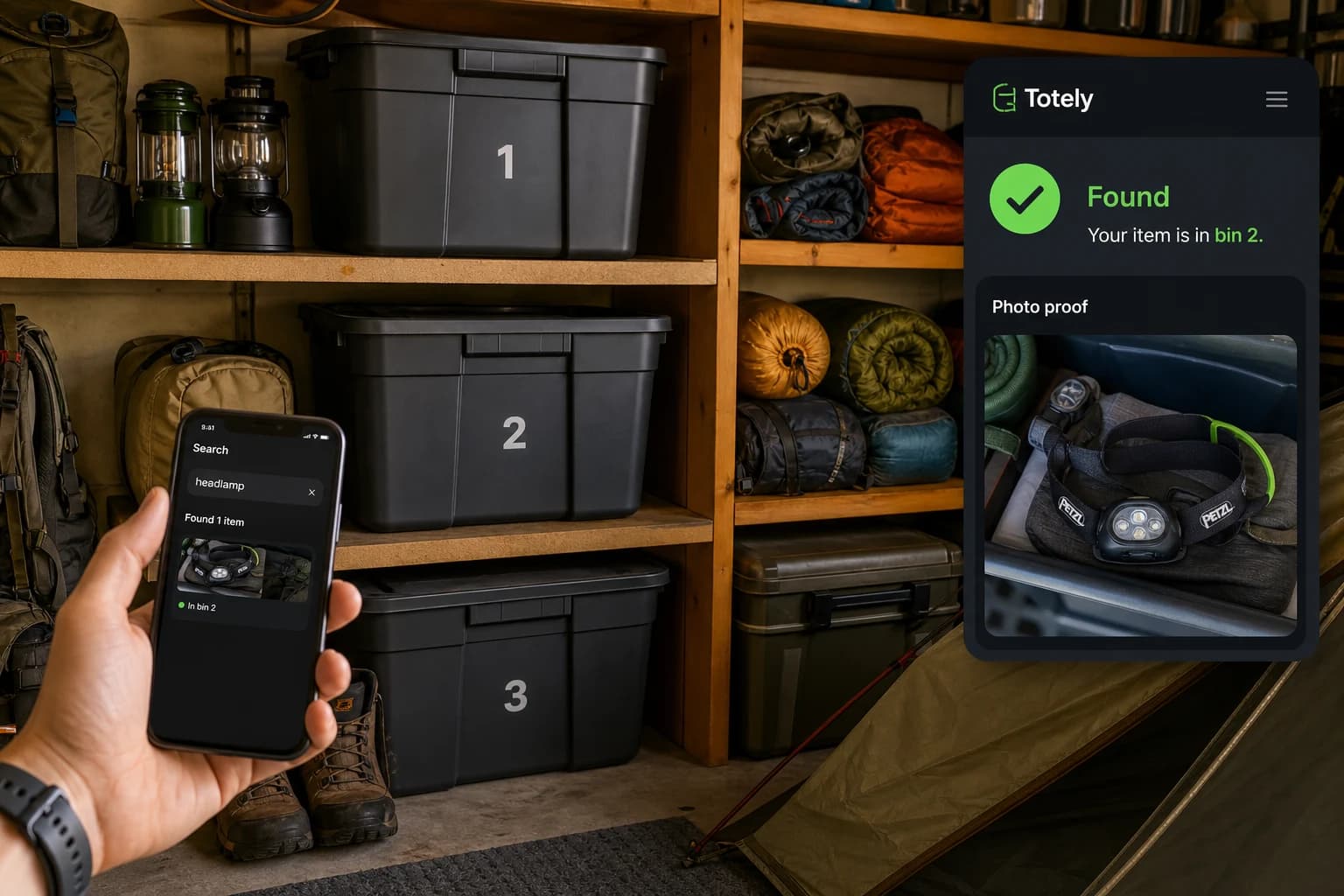
Camping gear is easy to pack away after a trip and strangely hard to find before the next one.
The tent went somewhere. The tent stakes are probably with the ground tarp. The headlamps might still have batteries. The camp mugs are in one tote, unless they were washed and put in the kitchen. The air pump, rain ponchos, bug spray, lighters, camp utensils, repair kit, and bungee cords all feel like things you own — just not things you can find quickly.
That is the real problem with camping gear storage.
It is not just about having enough totes. It is about knowing which tote holds the small pieces that make the trip work.
A good camping storage system should help you pack by real trip moments: what you need first when you arrive, what you need for tent setup, what belongs in the camp kitchen, what should stay with sleep gear, what needs cleaning, what needs repair, and what needs restocking before the next trip.
The goal is simple: when the next camping weekend comes around, you should not have to open every tote to find the headlamps.
Quick Links
- Start With the Gear You Need First at Camp
- Create Totes by Trip Type or Setup Order
- Keep Small Camping Parts From Disappearing
- Separate Camp Kitchen, Sleep Gear, and Weather Gear
- Add a Restock and Repair Zone
- Use Numbered Camping Totes Instead of Broad Labels
- How Totely Helps You Find Camping Gear Later
- Camping Gear Storage FAQs
Start With the Gear You Need First at Camp
The best camping tote is not always organized by category.
It is organized by the moment you need it.
When you arrive at camp, you usually need a few things before everything else: tent, ground tarp, tent stakes, guylines, mallet, headlamps, lanterns, flashlights, batteries, first-aid kit, rain ponchos, and maybe a small repair kit if something breaks during setup.
That is why a first-open camping tote is so useful.
This tote should hold the gear you need before the rest of camp is unpacked. It should be easy to reach in the car and easy to identify at home. Do not bury it under sleeping bags, camp chairs, or kitchen gear.
First-Open Tote
Tent stakes, ground tarp, guylines, rope, mallet, headlamps, lantern, flashlights, batteries, first-aid kit, rain ponchos, duct tape, bungee cords.
This does not need to hold every camping item. It holds the items that make arrival smoother.
If you camp with kids or pets, add the first things they need too: a leash, water bowl, small towel, warm layer, kids' headlamps, or comfort item.
A first-open tote prevents the classic arrival-at-dusk scramble, where the sun is dropping and everyone is asking where the tent stakes went.
Create Totes by Trip Type or Setup Order
Camping gear changes depending on the trip.
A one-night car camping trip does not need the same setup as a family camping weekend, a rainy shoulder-season trip, a beach camping trip, or a multi-day outdoor adventure.
Instead of storing everything in one giant "camping" bin, create totes by trip type or setup order.
Trip-type storage works well if your camping changes often.
Family Camping Tote
Kids' camping extras, camp towels, games, extra socks, pet camping supplies, backup lights.
Rainy Weather Tote
Rain ponchos, dry bags, extra tarps, rope, waterproof bags, camp towels.
Camp Kitchen Tote
Camp mugs, camp utensils, cookware, cutting board, dish soap, sponge, trash bags, lighter, fire starters where appropriate.
Tent Setup Tote
Tent stakes, guylines, ground tarp, mallet, repair kit, duct tape, rope.
Setup-order storage works well if you usually camp the same way.
Setup-Order Camping Storage
Open First
Tent setup, lights, rain gear, first-aid kit.
Set Up Camp
Sleeping bags, sleeping pads, air pump, lanterns, chairs.
Cook and Clean
Camp kitchen, cookware, utensils, dish soap, cutting board.
Restock Later
Batteries, bug spray, sunscreen, fuel-related items, first-aid refills.
The point is not to create more bins than you need.
The point is to stop storing gear in a way that forces you to unpack everything just to find one small part.
For garage shelf ideas that work well with seasonal camping gear, see garage storage ideas for totes and bins.
Keep Small Camping Parts From Disappearing
Small camping items are the reason big totes become frustrating.
Tent stakes, guylines, batteries, headlamps, lighters, fire starters, rope, repair patches, pump adapters, camp utensils, bungee cords, and first-aid refills can disappear into the bottom of a tote fast.
Use smaller containers inside your larger camping totes.
A small pouch, zipper bag, clear box, fabric bag, or divided organizer can keep tiny gear from mixing with bulky items.
Tent Parts Pouch
Tent stakes, guylines, pole repair sleeve, patch kit, small rope, extra clips.
Lighting Pouch
Headlamps, flashlights, lantern batteries, spare bulbs if needed, charging cables.
Repair Pouch
Duct tape, gear patches, zip ties, bungee cords, small multi-tool, cordage.
Camp Kitchen Small Parts
Lighters, utensils, sponge, dish soap, cutting board scraper, camp towel.
This is especially useful if multiple people help pack. A large tote gives you space, but small inner containers give you memory.
Before putting small items away, check whether anything needs replacing. If the headlamp batteries are dead, the lighter is empty, or the tent stakes are bent, do not let those problems hide until the next trip.
Separate Camp Kitchen, Sleep Gear, and Weather Gear
Camping gear works better when the major systems stay separate.
A camp kitchen tote should not be the same tote as sleeping pads. Rain gear should not be mixed with cookware. Tent stakes should not float loose with food containers.
Think of your gear in systems.
Camping Gear Systems
Camp Kitchen
Camp mugs, camp utensils, cookware, cutting board, dish soap, sponge, towels, trash bags, lighter, camp stove accessories.
Sleep Gear
Sleeping bags, sleeping pads, air pump, pillows, extra blankets, sleep clothes, earplugs.
Weather Gear
Rain ponchos, dry bags, tarps, rope, extra socks, warm layers, sun hats, sunscreen.
Lighting
Lanterns, headlamps, flashlights, batteries, charging cables, backup light.
Tent Setup
Tent, ground tarp, tent stakes, guylines, mallet, repair kit.
This system helps you find what you need at home and at camp.
It also helps you put things away after a trip. If the cookware needs washing, it goes into the camp kitchen zone. If rain ponchos are wet, they go into the "dry before storing" zone. If sleeping bags need airing out, they do not get sealed into a tote too soon.
Outdoor fabric and gear should be clean and dry before storage. Better Homes & Gardens notes that tents should be fully dry before storage to help prevent mold and mildew, and that tents are often better stored in a cool, dry place with room to breathe rather than tightly compressed in a stuff sack.
That same thinking applies across camping gear: clean, dry, and easy to inspect beats packed fast and forgotten.
Add a Restock and Repair Zone
A good camping storage system includes a place for things that are not trip-ready yet.
This is the detail that saves future trips.
After a camping weekend, some gear can go straight back into storage. Some gear cannot.
Create a Restock and Repair Zone for items that need attention before the next trip.
Needs Restock
Batteries, bug spray, sunscreen, first-aid supplies, dish soap, trash bags, fire starters, paper towels, and fuel-related items if you use them and can store them safely.
Needs Cleaning
Cookware, camp mugs, utensils, cutting board, cooler, camp towels, muddy gear, tarps.
Needs Repair
Tent poles, torn stuff sacks, broken zipper pulls, leaking sleeping pad, bent stakes, damaged lantern, ripped poncho.
Needs Charging
Lanterns, headlamps, power banks, rechargeable flashlights, GPS or emergency devices.
This zone can be a small shelf, bin, or tote near the camping storage area. It should not be the final storage spot. It is a holding place for unfinished tasks.
A camping tote should only go back into deeper storage when it is truly ready for the next trip.
For sleeping bags, make sure they are completely dry before storing. Better Homes & Gardens recommends storing sleeping bags dry and loosely in a breathable cotton or mesh bag instead of keeping them compressed in a stuff sack for long-term storage.
That matters because trip-ready storage is not just tidy. It protects your gear.
Store Camping Gear Where You Can Actually Retrieve It
Camping gear often lives in the garage, basement, closet, mudroom, storage unit, or under a bed.
The right location depends on your space, your gear, and how often you camp.
If you camp often, keep core totes easy to reach. The first-open tote, tent setup tote, lighting pouch, and camp kitchen tote should not be buried behind holiday decor or winter gear.
If you camp seasonally, create a rotation zone. Keep camping gear accessible during camping season, then move it higher or farther back when the season ends. Seasonal storage ideas for small homes can help if space is tight.
If you use a storage unit, place camping totes near the front during the months you are most likely to use them. A perfectly organized tote is still frustrating if you have to unload half the unit to reach it.
Also be cautious with what gets stored in garages, hot sheds, damp basements, or extreme temperatures. Food, fuel, propane, batteries, fire-starting supplies, and anything with manufacturer storage instructions should be handled carefully and stored according to its own guidance.
For camp food and scented items, storage rules depend heavily on where you camp. The National Park Service explains that in Yosemite, "food" includes scented items like soaps, cosmetics, toiletries, trash, and unwashed cooking items, and those items must be stored properly at camp.
That does not mean your home camping tote needs to store food year-round. In most homes, it is better to keep nonperishable camp food, fuel, and scented supplies separate from your long-term gear totes and review them before each trip.
A camping tote should make packing easier, not hide items that need safety checks.
Use Numbered Camping Totes Instead of Broad Labels
A tote labeled "Camping" is better than no label.
But it still creates a problem.
Which camping tote has the tent stakes? Which one has the camp mugs? Which one has the rain ponchos? Which one has the headlamps? Which one has the air pump?
Broad labels help you get close. Numbered totes help you be specific.
Use simple numbers:
1 2 3 4
Then connect each number to a clear record of what is inside.
Tote 1 Category: First Open Location: Garage shelf, middle row Contents: tent stakes, guylines, ground tarp, headlamps, lantern, batteries, first-aid kit, rain ponchos
Tote 2 Category: Camp Kitchen Location: Garage shelf, bottom row Contents: camp mugs, camp utensils, cookware, cutting board, dish soap, camp towels, lighter
Tote 3 Category: Sleep Gear Location: Hall closet, top shelf Contents: sleeping bags, sleeping pads, air pump, pillows, extra blankets
Tote 4 Category: Weather and Repair Location: Garage shelf, top row Contents: dry bags, rain gear, duct tape, repair kit, bungee cords, rope, extra tarp
The outside stays simple. The details stay searchable.
This makes the system easier for the whole household. Someone does not need to understand your entire camping setup. They only need to know which tote number to grab.
See how to keep track of storage bins and garage organization with bins for numbered workflows that stay trustworthy between trips.
How Totely Helps You Find Camping Gear Later
Totely is useful because camping gear storage depends on small parts.
A missing tent stake, dead headlamp, lost air pump adapter, or hidden camp utensil set can slow down the whole trip. And after a few months away from camping, it is easy to forget which tote holds what.
With Totely, you can make camping totes searchable without manually typing every item into a long list.
Here is the simple flow:
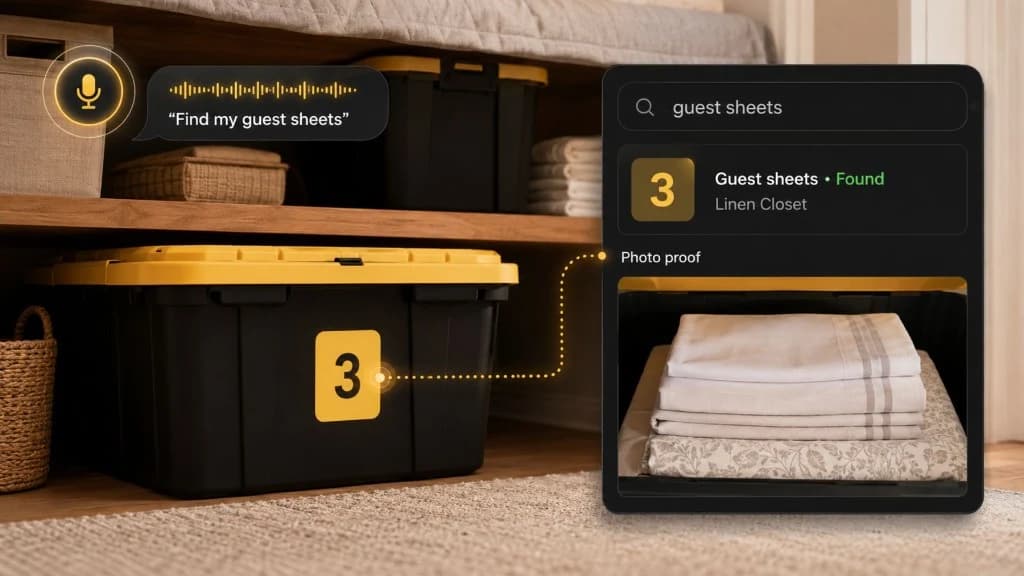
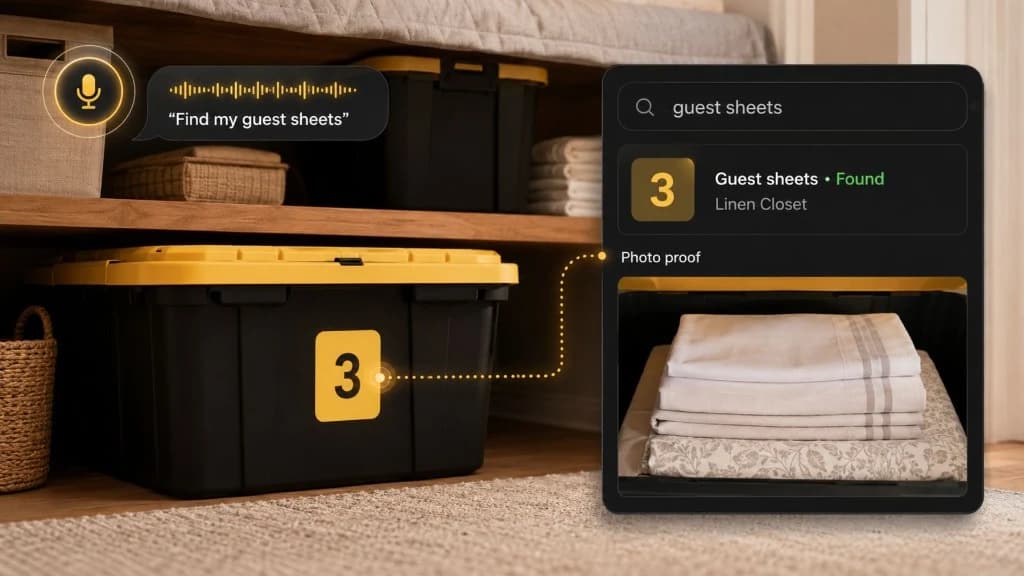
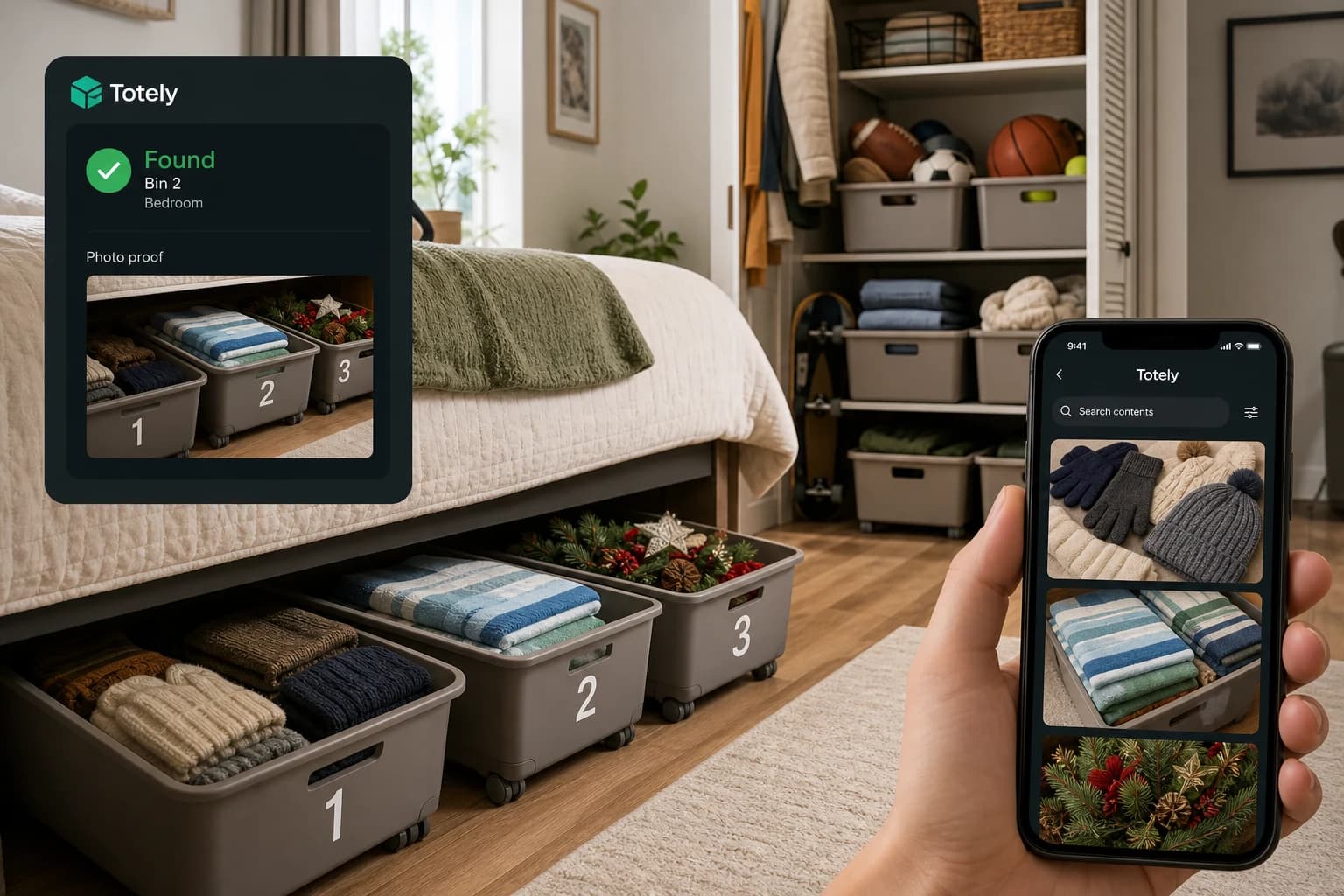
Number the camping tote, bin, shelf, or storage zone
so it has a clear identity.
Snap a photo
of what is inside.
Let AI build the first item list
from what it can see.
Review or edit if needed
so the words match how your household searches.
Save the garage, basement, closet, or storage-unit location
so you know where the gear lives.
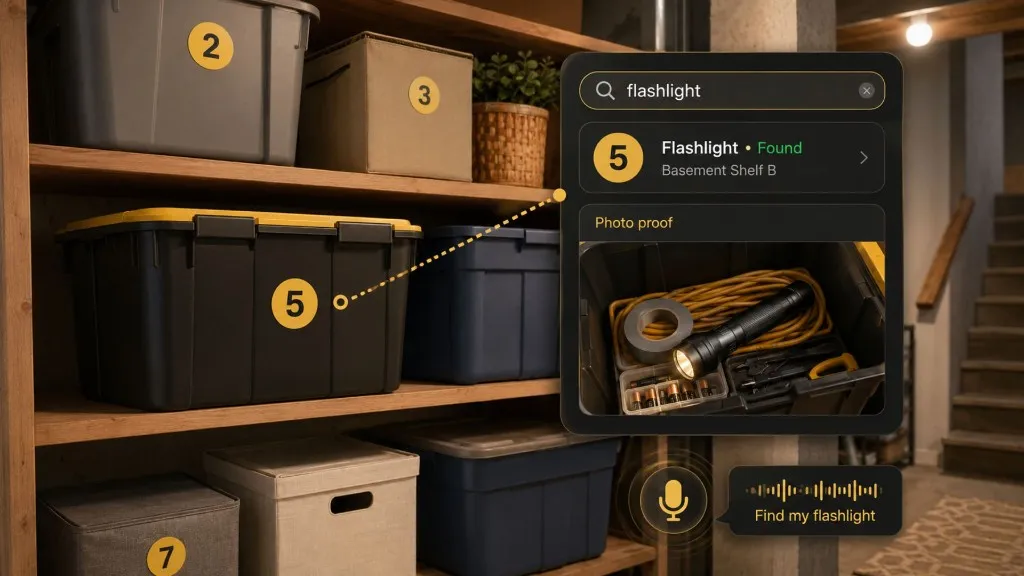
Search naturally later
for "tent stakes," "headlamps," "air pump," "camp mugs," "rain ponchos," "first-aid kit," or "dry bags."
Use photo proof
to confirm what is inside before opening the tote.
Totely does not replace outdoor safety checks, gear maintenance, manufacturer guidance, or proper storage requirements for fuel, propane, food, batteries, or fire-starting supplies.
It simply helps you remember what you stored and where it lives.
Think of it as the digital memory layer for the gear that gets packed away between trips.
See the camping gear storage use case for a full walkthrough, or try the One-Tote Test on one camping tote before you expand the system.
A Camping Gear Storage System You Can Copy
Here is a simple tote setup that works well for many car-camping households.
A Camping Gear Storage System You Can Copy
Tote 1: First-Open Setup Tote
Tent stakes, guylines, ground tarp, mallet, rope, headlamps, lantern, flashlights, batteries, first-aid kit, rain ponchos.
Tote 2: Camp Kitchen Tote
Camp mugs, camp utensils, cookware, cutting board, dish soap, sponge, towels, trash bags, lighters, stove accessories stored according to manufacturer guidance.
Tote 3: Sleep Gear Tote
Sleeping bags, sleeping pads, air pump, pillows, sleep layers, extra blanket, camp towels.
Tote 4: Weather and Dry Gear Tote
Rain ponchos, dry bags, extra tarp, rope, sunscreen, bug spray, warm layers, extra socks.
Tote 5: Repair and Small Parts Tote
Repair kit, duct tape, bungee cords, zip ties, extra guylines, spare stakes, pump adapters, small tools.
Tote 6: Family or Pet Extras
Kids' camping extras, games, pet camping supplies, collapsible bowls, extra towels, backup lights, comfort items.
Add one temporary bin nearby for anything that needs cleaning, repair, charging, or restocking before it goes back into the main camping system.
That one habit can make the next trip feel calmer before you even start packing the car.
Camping Gear Storage FAQs
What is the best way to organize camping gear?
The best way to organize camping gear is to group items by how you use them at camp: first-open setup gear, tent parts, camp kitchen, sleep gear, weather gear, repair items, and family extras. Number each tote, take a photo of what is inside, and save the location so you can find small parts later.
How should I store camping gear in totes?
Use sturdy totes for gear that can handle being stored together, and use smaller pouches inside the totes for small parts like tent stakes, batteries, guylines, headlamps, repair patches, camp utensils, and lighters. Keep anything wet, dirty, damaged, or needing restock out of long-term storage until it is ready.
What should go in a first-open camping tote?
A first-open camping tote should hold the gear you need as soon as you arrive: ground tarp, tent stakes, guylines, rope, mallet, headlamps, lanterns, flashlights, batteries, first-aid kit, rain ponchos, duct tape, and bungee cords. This tote should be easy to reach at home and in the car.
How do I keep small camping items from getting lost?
Put small camping items into smaller pouches, zipper bags, or divided organizers inside the larger tote. Group tent parts, lighting, repair supplies, camp kitchen small parts, and first-aid refills separately so they do not disappear under bulky gear.
Where should camping gear be stored at home?
Store frequently used camping gear somewhere easy to retrieve, such as a garage shelf, closet, basement shelf, mudroom, or storage unit front area. Keep fabric gear clean and dry, avoid long-term compression for sleeping bags, and follow manufacturer or safety guidance for fuel, propane, batteries, food, and fire-starting supplies.
How can Totely help with camping gear storage?
Totely helps you number camping totes, snap photos, let AI build the first item list, review or edit the record, save the location, and search naturally later. Photo proof helps you confirm which tote holds tent stakes, headlamps, camp mugs, rain gear, or repair supplies before you open everything.
Make the Next Trip Easier Before You Pack the Car
Good camping gear storage is not about building a perfect outdoor gear wall.
It is about making the next trip easier.
Start with one tote. Give it a number. Decide whether it is for first-open setup, camp kitchen, sleep gear, weather gear, repair items, or family extras. Add smaller pouches for the tiny parts. Take a photo. Save the location.
With Totely, your camping totes can become searchable, so you can find the tent stakes, lanterns, headlamps, camp kitchen items, sleeping gear, rain ponchos, repair kit, camp towels, dry bags, and kids' extras before the car is packed.
The adventure should start outside.
Not in the garage, opening every tote.