Climate Control Storage Unit Near Me: What Belongs There?
Decide what belongs in climate-controlled storage by making a simple inventory of boxes, furniture, photos, documents, and sensitive items.
By Ben Stallsworth · Co-Founder, Totely
July 8, 2026 · Updated August 27, 2026 · 15 min read
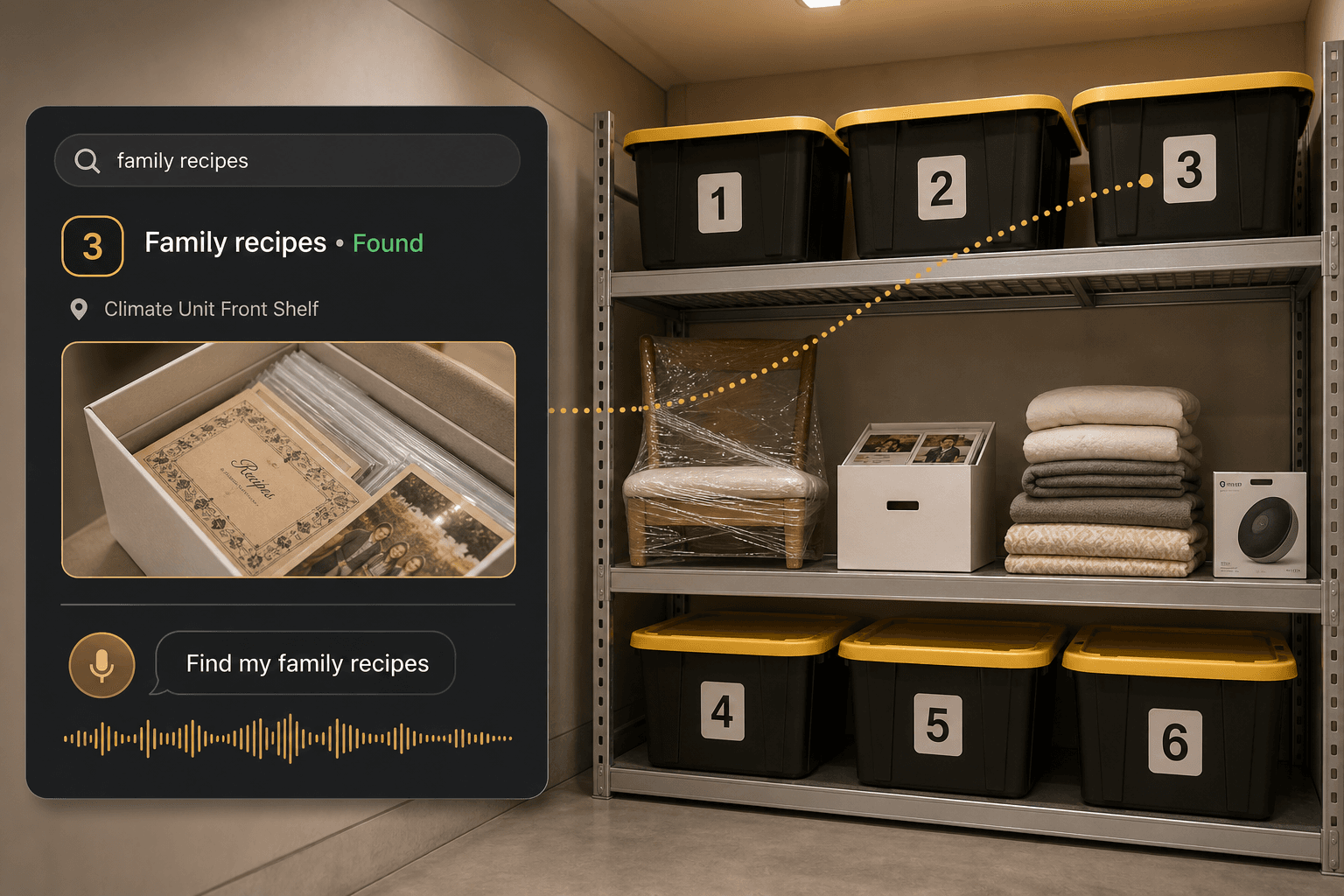
Searching climate control storage unit near me usually means you are trying to make a practical decision before paying for storage.
Maybe you already know you need extra space. The harder question is whether you need a regular storage unit or a climate-controlled one.
That choice matters because climate-controlled storage can cost more, and not every item needs it. But some items are more vulnerable to temperature swings, humidity, moisture, pests, warping, mold, mildew, corrosion, fading, cracking, or long-term deterioration.
The best first step is not to rent the fanciest unit.
It is to make a simple inventory.
Before you pay for climate control, list what you are actually storing: boxes, bins, furniture, photos, documents, electronics, textiles, seasonal items, keepsakes, business inventory, and valuables. Once you know what is inside each box, you can make a smarter decision about what deserves climate-controlled space, what can usually stay in regular storage, and what should not go into a storage unit at all.
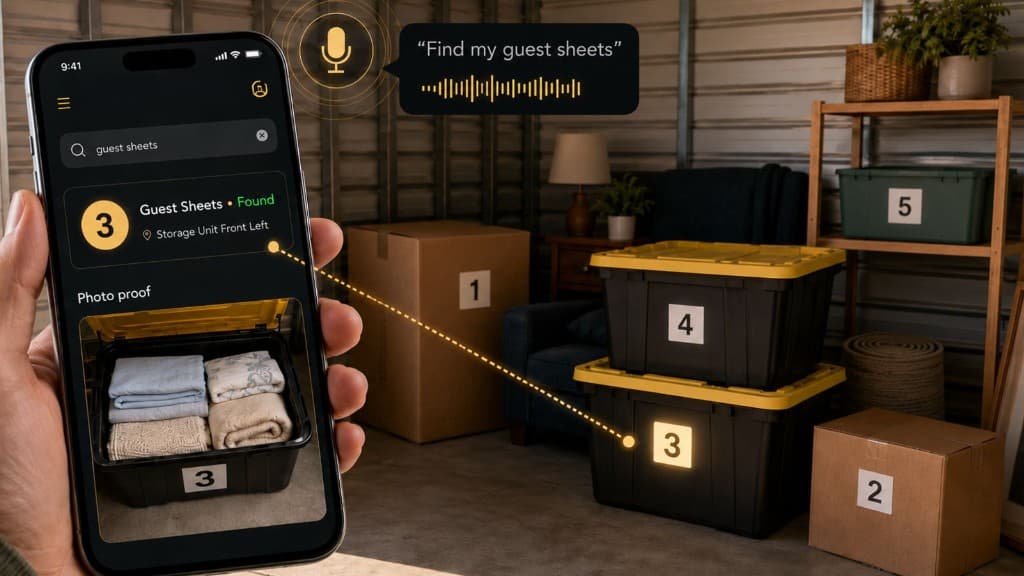
A storage unit should give you more room without turning your belongings into mystery boxes. A searchable home inventory app helps you keep that inventory useful after move-in, not just while you are comparing units.
Quick Links
- What Climate-Controlled Storage Actually Helps With
- Start With an Inventory Before Paying for Climate Control
- Items That May Belong in Climate-Controlled Storage
- Items That May Be Fine in Regular Storage
- Items That Usually Should Not Go in Any Storage Unit
- How to Organize a Climate-Controlled Unit
- How Totely Makes Climate-Controlled Storage Searchable
- Climate Control Storage FAQs
What Climate-Controlled Storage Actually Helps With
Climate-controlled storage is meant to provide a more stable storage environment than a standard unit.
That can matter for items that react badly to heat, cold, humidity, or big swings between conditions. The exact features vary by facility, so it is worth asking whether the unit controls temperature, humidity, or both. Architectural Digest notes that humidity and temperature control may not always both be offered, so renters should ask what is actually available before assuming every climate-controlled unit works the same way.
A climate-controlled unit may help reduce risk for items like:
Electronics Computers, speakers, TVs, gaming systems, cameras, small appliances, and other devices that can be affected by moisture or extreme temperatures.
Photos and paper Printed photos, albums, family recipes, books, documents, records, artwork on paper, and school papers.
Textiles and soft goods Clothing, linens, baby clothes, kids' clothes, blankets, quilts, rugs, fabric, upholstery, and delicate keepsakes.
Wood, leather, and delicate furniture Wood furniture, leather items, antiques, heirloom pieces, instruments, framed art, or anything that may warp, crack, swell, dry out, or mildew.
Sentimental or hard-to-replace items Keepsakes, family history boxes, inherited items, handmade items, memory boxes, and personal archives.
Climate control does not make storage risk-free. It does not replace proper packing, insurance, facility rules, preservation materials, or common sense. But for the right items, it may be worth comparing before you rent.
Start With an Inventory Before Paying for Climate Control
The biggest mistake is deciding on climate control before you know what is going into storage.
A vague pile of "stuff" is hard to price. A clear inventory is much easier.
Start with a quick list:
- Box 1: family photos, albums, school papers, recipes.
- Box 2: guest sheets, extra blankets, pillowcases.
- Box 3: small electronics, cables, camera, speakers.
- Bin 4: holiday decorations, plastic ornaments, outdoor lights.
- Furniture 5: wood dresser, wrapped mirror, small table.
- Tote 6: kids' winter clothes, coats, gloves, boots.
Now you can ask better questions:
- Which items are sensitive to temperature or humidity?
- Which items are replaceable?
- Which items are sentimental or hard to replace?
- Which items are just bulky, durable, and seasonal?
- Which boxes need climate control?
- Which boxes can go in regular storage?
- Which items should stay home instead?
The Library of Congress recommends a cool, relatively dry, stable environment for photographs, with 30–50% relative humidity and temperatures at or below 70°F; it also warns against locations like attics, basements, exterior walls, and areas with condensation or major environmental swings.
That kind of guidance makes inventory useful. If your storage boxes include printed photos, family albums, negatives, or sentimental paper items, they should not be treated the same as plastic patio decor.
Items That May Belong in Climate-Controlled Storage
Not every item needs climate control, but some categories deserve extra thought.
Photos, albums, and family paper
Printed photos, albums, family recipes, letters, school papers, certificates, books, and old documents can be vulnerable to moisture, heat, light, pests, and fluctuating conditions.
If you store them, use photo-safe or archival-quality materials when appropriate, keep them dry, and avoid overstuffed boxes. The National Archives says storage choices have a major effect on long-term preservation and that housing enclosures can provide both physical support and a buffer against adverse or fluctuating environmental conditions.
Climate-controlled storage may be worth considering if these items must go off-site.
Electronics and small appliances
Electronics are often better candidates for climate-controlled storage than standard storage.
Kiplinger notes that electronics can be damaged by extreme temperatures and humidity, with heat potentially warping components and moisture causing condensation, corrosion, or permanent damage.
This can include:
- Computers
- Monitors
- TVs
- Speakers
- Cameras
- Gaming systems
- Printers
- Small appliances
- Cables and power supplies
If possible, pack electronics with cushioning, keep cords together, and record what is inside each box before storing it.
Clothing, linens, rugs, and textiles
Textiles can absorb moisture, hold odors, attract pests, and develop mold or mildew if packed damp or stored in poor conditions.
Kiplinger warns that clothing, linens, and upholstered items can be vulnerable to mold, mildew, pests, musty odors, and brittle natural fibers if stored improperly.
Climate control may be helpful for:
- Baby clothes
- Kids' clothes by size
- Seasonal clothing
- Guest linens
- Quilts
- Rugs
- Upholstered cushions
- Special garments
- Sentimental textiles
Make sure everything is clean and fully dry before packing. Do not seal damp fabrics into boxes or bins.
Wood furniture, leather, antiques, and instruments
Wood, leather, and antique materials can react to moisture and temperature changes.
Better Homes & Gardens explains that antiques made from wood, fabric, porcelain, or paper can deteriorate when improperly stored, and that temperature and humidity fluctuations can cause materials to expand, contract, become brittle, grow mold, rust, crack, or warp. It also describes climate-controlled storage as important for many precious antiques and vintage items.
Consider climate-controlled storage for:
- Wood dressers
- Tables and chairs
- Leather items
- Framed art
- Mirrors
- Instruments
- Antiques
- Vintage furniture
- Heirloom decor
Even with climate control, furniture still needs careful wrapping, airflow, and smart placement. Avoid stacking heavy items on delicate pieces.
Sentimental and hard-to-replace items
Some items are not expensive, but they matter.
Family recipes, handwritten letters, photo albums, memory boxes, keepsakes, school projects, inherited objects, and special children's items may deserve more careful storage simply because replacing them is impossible.
That does not automatically mean they belong in a storage unit. Some may be better kept at home. But if they do go into storage, inventory them carefully, photograph the contents, and consider whether climate control, insurance, or better protective materials are worth it.
Items That May Be Fine in Regular Storage
Some household items may not need climate-controlled storage, depending on your local climate, the facility, how long they will be stored, and how replaceable they are.
Regular storage may work for sturdy, dry, non-sensitive items like:
Plastic holiday decor Plastic ornaments, wreath frames, artificial garland, non-delicate seasonal items.
Outdoor gear Camping chairs, hard-sided coolers, plastic bins, some sports gear, some patio items.
Metal tools and hardware Basic hand tools, hardware, brackets, extension cords, plastic toolboxes, non-sensitive garage items.
Durable household overflow Empty bins, extra plastic containers, sturdy decor, non-fragile kitchen overflow.
Short-term moving boxes Items that will only be stored briefly and are not vulnerable to heat, humidity, or pests.
The key word is "may." A storage unit in a dry, mild area is different from one in a humid, flood-prone, or extremely hot region. A month is different from two years. A plastic bin of beach toys is different from a box of photos.
When in doubt, ask the facility what "climate controlled" means, whether humidity is managed, what units are available, and what items are prohibited.
Items That Usually Should Not Go in Any Storage Unit
Climate control does not make everything safe or allowed.
Some items should usually stay out of storage units entirely, either because they are unsafe, prohibited, damage-prone, pest-attracting, or too valuable to risk.
Avoid storing:
- Food and pantry items — Food can attract pests and may be prohibited.
- Hazardous or flammable materials — Gasoline, propane, fireworks, many chemicals, some paints, and corrosive materials can create safety risks and may violate storage rules.
- Wet or damp items — Damp rugs, recently used outdoor gear, wet boxes, or appliances with trapped moisture can encourage mold.
- Live plants or animals — Storage units are not living spaces.
- Highly valuable or irreplaceable items — Documents, passports, Social Security cards, heirlooms, jewelry, rare collectibles, or one-of-a-kind keepsakes may be better kept somewhere you can monitor more closely.
Kiplinger specifically warns that storage units may be unsuitable for perishable food, hazardous or flammable materials, important documents, sentimental items, unprotected electronics, fabrics, wet items, and highly valuable or irreplaceable belongings.
Totely can help you remember where things are stored, but it does not replace facility rules, safety guidance, insurance requirements, preservation advice, appraisals, receipts, or professional recommendations.
How to Organize a Climate-Controlled Unit
Once you decide what belongs in climate-controlled storage, organize the unit so it stays usable.
Put sensitive items in the easiest-to-check area
Do not bury photos, documents, textiles, electronics, or fragile items behind furniture. If those items are the reason you paid for climate control, keep them somewhere you can inspect.
Good front-access items include:
- Photo boxes
- Family recipes
- Documents
- Electronics
- Baby clothes
- Linens
- Delicate keepsakes
- Framed pieces
- Antiques
- Instruments
Use zones inside the unit
Create simple zones:
- Sensitive Items Zone — Photos, documents, books, textiles, electronics, keepsakes.
- Furniture Zone — Wood furniture, tables, chairs, wrapped mirrors, rugs, lamps.
- Seasonal Zone — Holiday decor, winter gear, guest linens, camping gear, rotating household items.
- Long-Term Zone — Items you do not expect to access often.
- Front-Access Zone — Anything you may need within the next few months.
Zones help you avoid mixing everything together.
Number every box, bin, and furniture group
Use simple numbers:
1, 2, 3, 4
Keep the number visible from the aisle. Do not rely only on written labels like "photos," "storage," "holiday," or "misc." Those labels get vague fast.
Use a record like this:
Box 1 Location: climate unit, front left shelf Contents: photo albums, family recipes, school papers Notes: sentimental; keep dry; inspect quarterly
Bin 2 Location: climate unit, right shelf middle row Contents: guest sheets, blankets, pillowcases Notes: wash before storage; front access
Box 3 Location: climate unit, back wall lower row Contents: speakers, cables, camera gear Notes: electronics; padded box
Furniture 4 Location: back wall Contents: wood dresser, mirror, small table Notes: wrapped; leave airflow
Photograph each box before closing it
A photo helps you remember what is inside without unpacking.
This is especially useful for boxes with mixed contents:
- Family photos and recipes
- Electronics and cords
- Baby clothes by size
- Linens and blankets
- Holiday decor
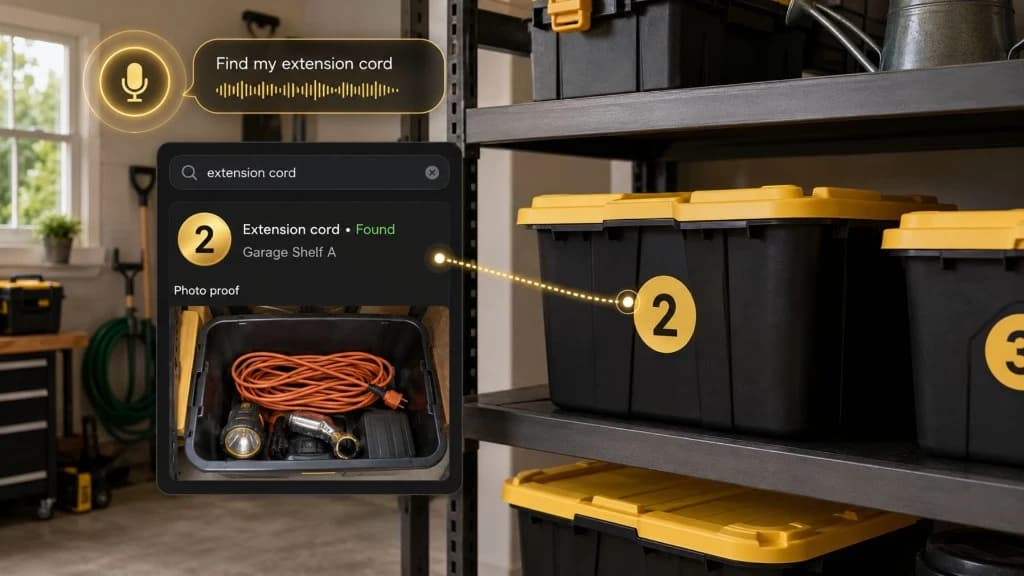
- Tools and extension cords
- Sentimental keepsakes
The outside number gets you to the right box. The photo confirms what is inside.
Leave an aisle if you will visit the unit
If you plan to retrieve items, leave a walkway.
Architectural Digest's storage-rental guide recommends maintaining pathways, labeling boxes, and using shelving units to help keep similar items together and avoid crushing boxes.
A slightly less packed unit can be more useful than one filled to the door.
How Totely Makes Climate-Controlled Storage Searchable
Totely helps with the part people forget until later: knowing what is actually inside the unit.
A climate-controlled unit may protect certain items better than standard storage, but it does not automatically make the unit organized or searchable. You still need a simple memory system.
Here is the Totely flow:
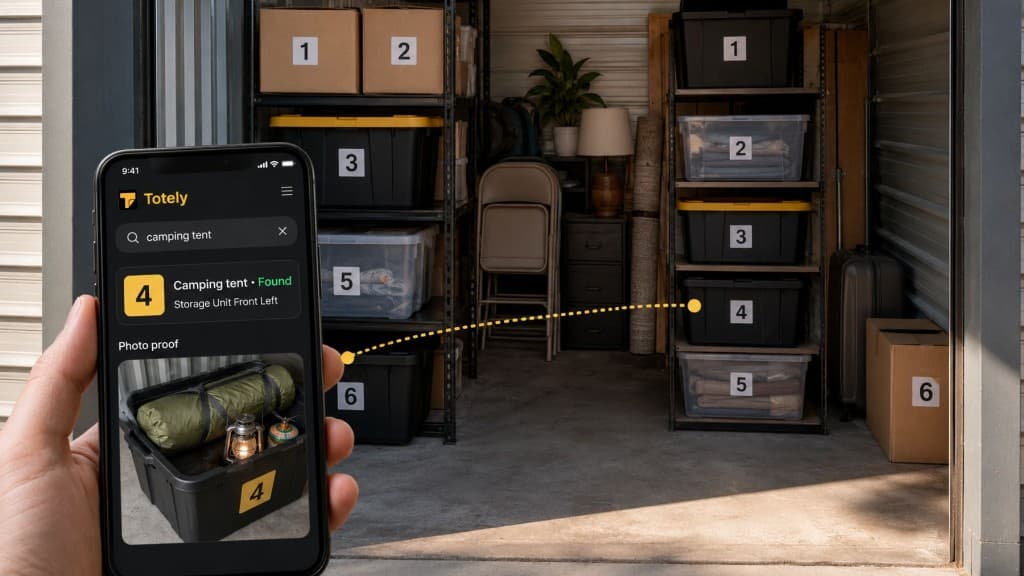
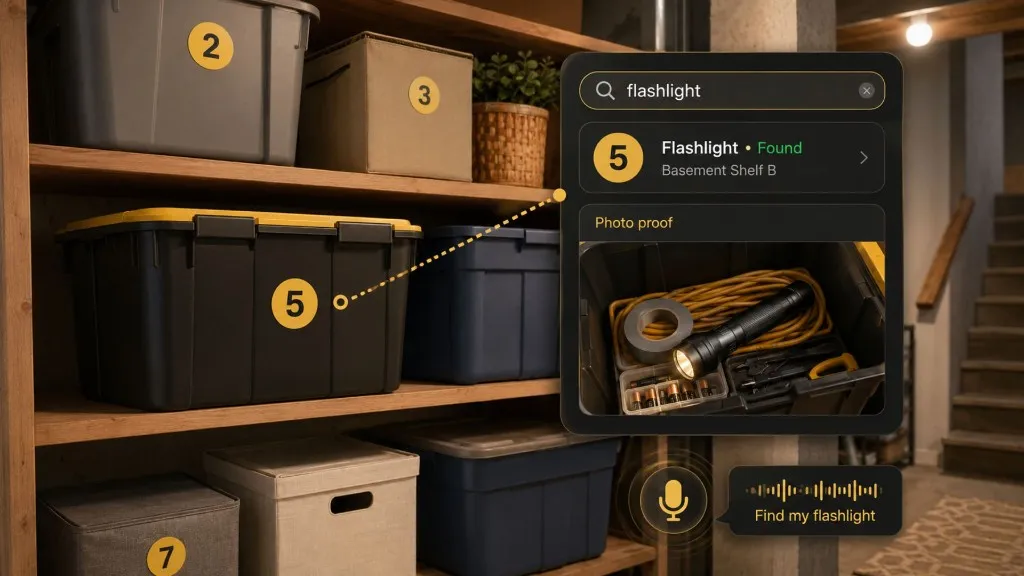
- Number each box, tote, bin, shelf, or storage zone so every container has a clear identity.
- Snap a photo before the box goes into storage.
- Let AI build the first item list from what it can see.
- Review or edit if needed so the record matches how you would search later.
- Save the exact location, such as "climate unit front left shelf," "right shelf middle row," or "back wall under table."
- Add notes for fragile, sentimental, climate-sensitive, seasonal, valuable, or front-access items.
- Search naturally later for "family recipes," "photo albums," "guest sheets," "baby clothes," "camera gear," "winter coats," or "holiday lights."
- Use photo proof before opening every box.
Totely does not require QR codes, barcodes, or manual entry of every item.
It gives your climate-controlled unit a digital memory layer: simple visible numbers, photo records, saved locations, natural search, and photo proof.
That way, the items you paid to protect are also easier to find.
A Simple Climate-Control Storage Checklist
Before renting a climate-controlled unit, walk through this list.
- Inventory what you are storing — List boxes, bins, furniture, photos, documents, electronics, textiles, seasonal items, and sentimental items.
- Separate sensitive from sturdy — Do not pay for climate control for every item if only some items need it.
- Ask what the facility actually controls — Temperature? Humidity? Indoor access? Unit location? Access hours?
- Check facility rules — Food, hazardous materials, plants, animals, liquids, chemicals, and other items may be prohibited.
- Keep irreplaceable items close — Some documents, valuables, and keepsakes may be better stored at home, in a safe, or in another secure option.
- Number every box — Use simple visible numbers instead of long exterior labels.
- Take photos before closing boxes — Make the contents easy to verify later.
- Save exact locations — "Climate unit" is not enough. Use "front left shelf," "right side stack," or "back wall lower row."
- Plan front access — Keep the items you may need soon near the aisle.
- Review long-term storage regularly — If the unit becomes permanent, check whether the items still need to be stored off-site.
Climate Control Storage FAQs
What should go in a climate-controlled storage unit?
Items that may benefit from climate-controlled storage include electronics, photos, documents, books, textiles, clothing, linens, wood furniture, leather items, antiques, instruments, framed art, and sentimental keepsakes. The right choice depends on the item, storage length, local climate, and what the facility actually controls.
Is climate-controlled storage always worth it?
Not always. Climate control may be worth paying for if your inventory includes temperature- or humidity-sensitive items. If you are storing mostly sturdy plastic bins, outdoor gear, or short-term household overflow, regular storage may be enough depending on your location and facility conditions.
What should not be stored in a climate-controlled storage unit?
Climate control does not make unsafe or prohibited items okay to store. Food, hazardous materials, flammable chemicals, wet items, live plants, animals, and some irreplaceable valuables should usually stay out of storage units. Always check the facility's rules before packing.
Do photos need climate-controlled storage?
Printed photos and albums can be sensitive to humidity, heat, light, and environmental swings. If photos must be stored off-site, climate control and photo-safe storage materials may be worth considering. For especially important photos, consider keeping them at home, digitizing them, or using archival materials.
Do clothes need climate-controlled storage?
Clothing, linens, baby clothes, quilts, and fabrics may benefit from climate-controlled storage if they will be stored for a long time or in a humid or extreme climate. Make sure textiles are clean and fully dry before packing.
How can Totely help with climate-controlled storage?
Totely helps you number boxes, photograph contents, save exact unit locations, add notes, and search naturally later. That makes it easier to find climate-sensitive items like photo albums, guest sheets, electronics, baby clothes, documents, and keepsakes without opening every box.
Choose Climate Control With an Inventory, Not a Guess
A climate-controlled storage unit can be a smart choice for the right items.
But the decision gets much easier when you know what you are storing first.
Start with an inventory. Separate sensitive items from sturdy ones. Ask the facility what climate control includes. Keep irreplaceable items close when needed. Number every box. Photograph the contents. Save the exact location.
With Totely, your climate-controlled storage unit can stay searchable from the start.
Because paying to protect your things is only half the job.
You still need to find them later.
Related reading
- Storage unit inventory use case
- Storage Unit Inventory Checklist
- Self storage unit prices: what to inventory before you pay
- Self storage solutions: how to keep a unit organized and searchable
- Storage unit organization: set up a unit you can search
- What storage unit size do I need?
- Home inventory app
- Storage organization system
- Storage tote labels
- How to keep track of storage bins
- Start with one tote