Storage for Christmas Ornaments: Stop Opening Every Holiday Box
Choose safer storage for Christmas ornaments, protect fragile keepsakes, and use a numbered box map to find specific ornaments next season.
By Steve Watts · Co-Founder, Totely
October 10, 2026 · Updated October 10, 2026 · 11 min read
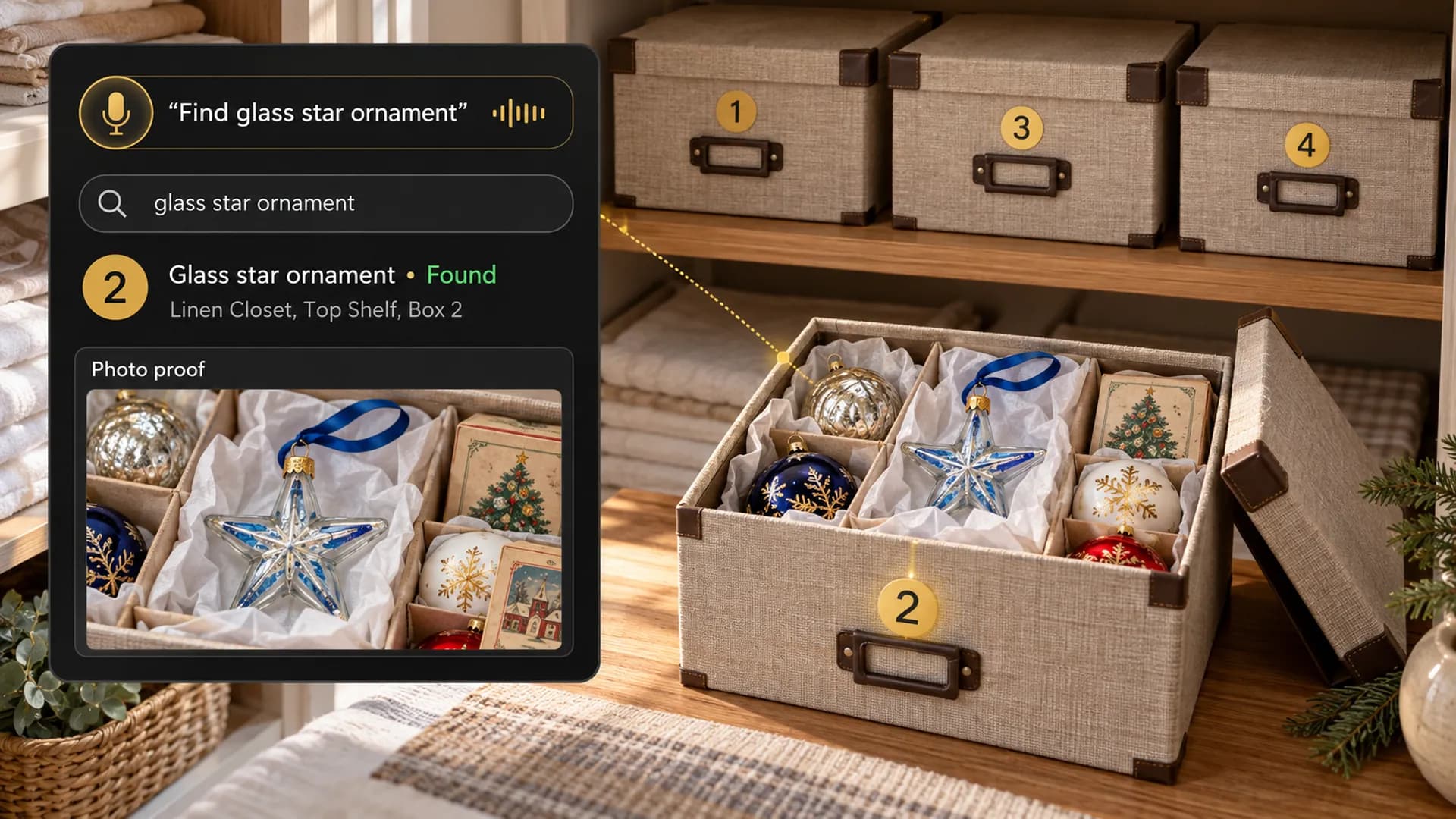
The little glass star has a blue ribbon. Every December, someone in your family hangs it near the top of the tree. This year, you know it was packed carefully, but there are three ornament boxes and no one remembers which one holds the star.
Good storage for Christmas ornaments has two jobs: protect delicate decorations for the other eleven months, and make a specific ornament easy to find when the season returns. The right physical container comes first. A simple box-and-compartment map makes the system useful next year.
You do not need a perfectly cataloged collection. Start with one box and a few meaningful items.
Quick Links
Choose Storage for Christmas Ornaments by Type
Before shopping, look at the actual ornaments. A box of similar-size plastic decorations needs different support from glass figurines, handmade clay ornaments, or a collectible with a delicate attachment.
| Ornament type | Practical storage choice | What to check |
|---|---|---|
| Ordinary, similarly sized decorations | Sturdy divided ornament carrier | Slots fit without pressing on the ornament; inserts stay in place |
| Tall, fragile, or irregular pieces | Adjustable compartments or individual supportive cartons | Points and attachments have clearance; pieces cannot collide |
| Collectible ornaments with fitted inserts | Original packaging, protected within a suitable outer box | Insert still fits; small accessories remain with the item |
| Older painted or heirloom pieces | Carefully cushioned, separate housing in a stable interior spot | Contact materials suit the surface; no forced packing |
| Hooks, clips, stands, and adapters | Small closed pouch or separate compartment | Hardware cannot scratch glass or painted finishes |
Capacity is not the same as fit. An organizer advertised for 100 ornaments may only accommodate small round pieces. Measure the interior compartments and the largest ornament, including any stem, ribbon, hook, or decorative projection.
If you can only lift a small box comfortably, choose several smaller boxes over a single overloaded chest. Be sure the filled containers will fit on the shelf where you plan to keep them.
Should you keep the original packaging?
Often, yes. For some collectible ornaments, the original molded insert supports the ornament and keeps special components together. Hallmark’s storage advice includes recommendations from a Keepsake Ornament engineer to reuse original cartons and inserts, particularly when a piece has support rods, instruction sheets, or adapters.
You can keep the original carton inside a larger, numbered storage box. That way the protective insert stays with the ornament, and the outer box provides one stable address.
Can you make your own dividers?
Yes, for suitable everyday ornaments, a sturdy container with appropriately sized dividers and cushioning can work well. Ready-made trays are convenient for uniform collections, while adjustable dividers help with mixed sizes. Do not push a fragile or valuable piece into a slot that is too small.
For older or irreplaceable ornaments, avoid making unverified claims that any recycled cardboard, foam, tissue, or plastic is archival. If a surface is flaking or delicate, seek advice appropriate to the item’s materials.
How to Pack Fragile Ornaments
You want the contents to stay still when someone carries the box, without being squeezed or crushed.
Separate everyday, fragile, and sentimental pieces
Make three loose groups on a clean, dry table. Everyday ornaments can often share a well-divided carrier. Fragile shapes need separate support. Family keepsakes deserve extra care and a note about what makes them special.
Inspect for loose caps, cracks, detached hooks, moisture, or missing parts. This is a chance to record a problem, not an invitation to attempt a risky repair.
Clean carefully, or not at all
Do not automatically wash old glass ornaments. Conservation specialists at the University of Delaware caution that even gentle cleaning can harm hand-painted glass. For delicate finishes, unstable glitter, or cracked pieces, avoid experimenting with water, sprays, or adhesives.
Only pack items that are dry. If an ornament has serious damage or a valuable historic finish, professional conservation advice is safer than a general household cleaning tip.
Cushion without pressure
Use suitable soft cushioning and fitted compartments so glass pieces cannot strike each other or sharp hardware. University of Delaware conservators describe lightly crumpled tissue and nested boxes as one way to protect fragile glass. Support the object without forcing it into a narrow cavity.
Keep heavier decorations away from fragile glass and avoid placing heavy holiday totes on top of ornament boxes. Use the manufacturer’s storage guidance where available.
Keep the small parts together
Hooks, ornament hangers, batteries, collectible stands, and power adapters should not rattle against delicate ornament finishes. Use a closed pouch or a dedicated section. Record a missing cap or part before storing the box so the problem is not rediscovered during tree setup.
Where Ornament Boxes Belong
For fragile and sentimental ornaments, choose a dry, relatively stable interior location rather than assuming the garage, shed, or attic is suitable. The University of Delaware’s art-conservation guidance recommends cool, dry conditions away from strong sunlight and heat, and warns that attics and basements can experience damaging temperature or humidity changes.
An interior linen closet or an accessible, sturdy bedroom shelf can be more appropriate for heirlooms than an unconditioned seasonal-storage area. A tough plastic decoration may have different needs from a thin, hand-painted glass piece.
Before choosing a location, check whether the box stays dry, whether you can lift it without moving an unstable stack, and whether someone else could find it from an exact description. “Linen Closet, Top Shelf, Box 2” is a useful location. “Somewhere with Christmas” is not.
Store boxes off the floor where practical, away from leaks and heat sources. Follow care information for particular collectible materials.
Build a Box and Compartment Map
A label that says “ornaments” identifies a category. It does not tell you where the blue-ribbon star lives.
Give the outer box a simple visible number and record the groups inside. The detailed descriptions can live in a paper index or searchable record; you do not need to write them on the box exterior.
| Box | Exact location | Main contents | Search words |
|---|---|---|---|
| 1 | Hall Closet, Upper Shelf | Everyday glass balls | red glass balls, gold set, plain ornaments |
| 2 | Linen Closet, Top Shelf | Family keepsakes and glass stars | blue-ribbon star, first Christmas, heirloom glass |
| 3 | Guest Closet, Upper Shelf | Handmade and school ornaments | paper snowflake, school keepsakes, child’s name |
| 4 | Living Room Cabinet | Hooks and special display stands | ornament hangers, spare hooks, display stands |
Now the search “Where is our blue-ribbon glass star?” has an answer: Linen Closet, Top Shelf - Box 2.
If the box has removable trays or a divider grid, add a simple internal map:
| Box 2 section | Items | Helpful note |
|---|---|---|
| A1-A3 | Small glass stars | Painted surfaces; lift gently |
| B1-B2 | First Christmas ornaments | Original inserts retained |
| B3 | Hand-painted blue-ribbon star | Family keepsake; handle with care |
| C1-C3 | Ceramic and wooden pieces | Separate from thin glass |
The letter-and-number references belong on the internal divider or paper index, not on the ornament. The outside of Box 2 still needs only a large, legible 2.
Remember the story too
An ornament can be meaningful for reasons no photograph reveals. Record one useful sentence: “Blue-ribbon glass star, bought on our first family trip to the coast.” If the year is uncertain, say so. Do not invent a precise origin.
You may want to record who gave the ornament, which tree it usually goes on, or where a replacement hook is kept. That is enough to make an ordinary storage note more helpful to the whole household.
Photograph the safe view, not every delicate surface
While the box is already open, take a reference photo of the divider layout and visible contents. If an irreplaceable piece is protected in a fitted carton, do not repeatedly unpack it just to improve your inventory photo. Photograph the carton or use an existing picture, then add a descriptive note.
Update the record when a box moves, an ornament is removed, or a collection is reorganized. Accuracy matters more than elaborate labels.
The One-Box Starter Method
Try this with a single box rather than tackling your entire collection.
- Clear a clean, dry table and pick one manageable ornament box.
- Identify fragile pieces before shifting the contents.
- Check that packaging and dividers are not squeezing or rubbing ornaments.
- Group contents by family keepsake, tree set, room, or ornament type.
- Place a clear number on the outside of the box.
- Take one safe overview photo while the contents are visible.
- Record the exact shelf, two or three memorable items, and any fragile-item notes.
- Close the box and test whether another person could find one ornament from your notes.
If they can, the system is already better. You can add the next box when you have time.
How Totely Helps
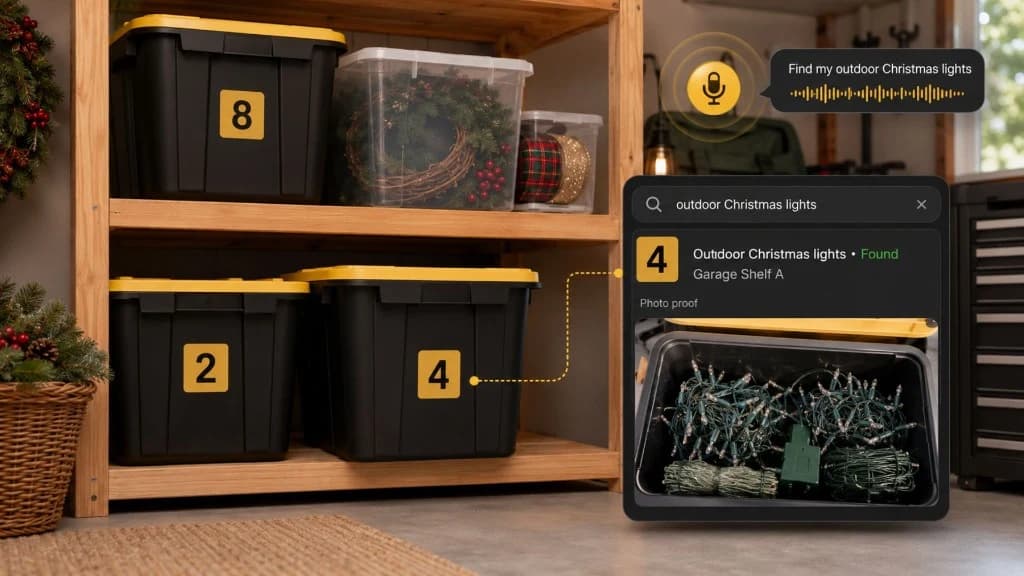
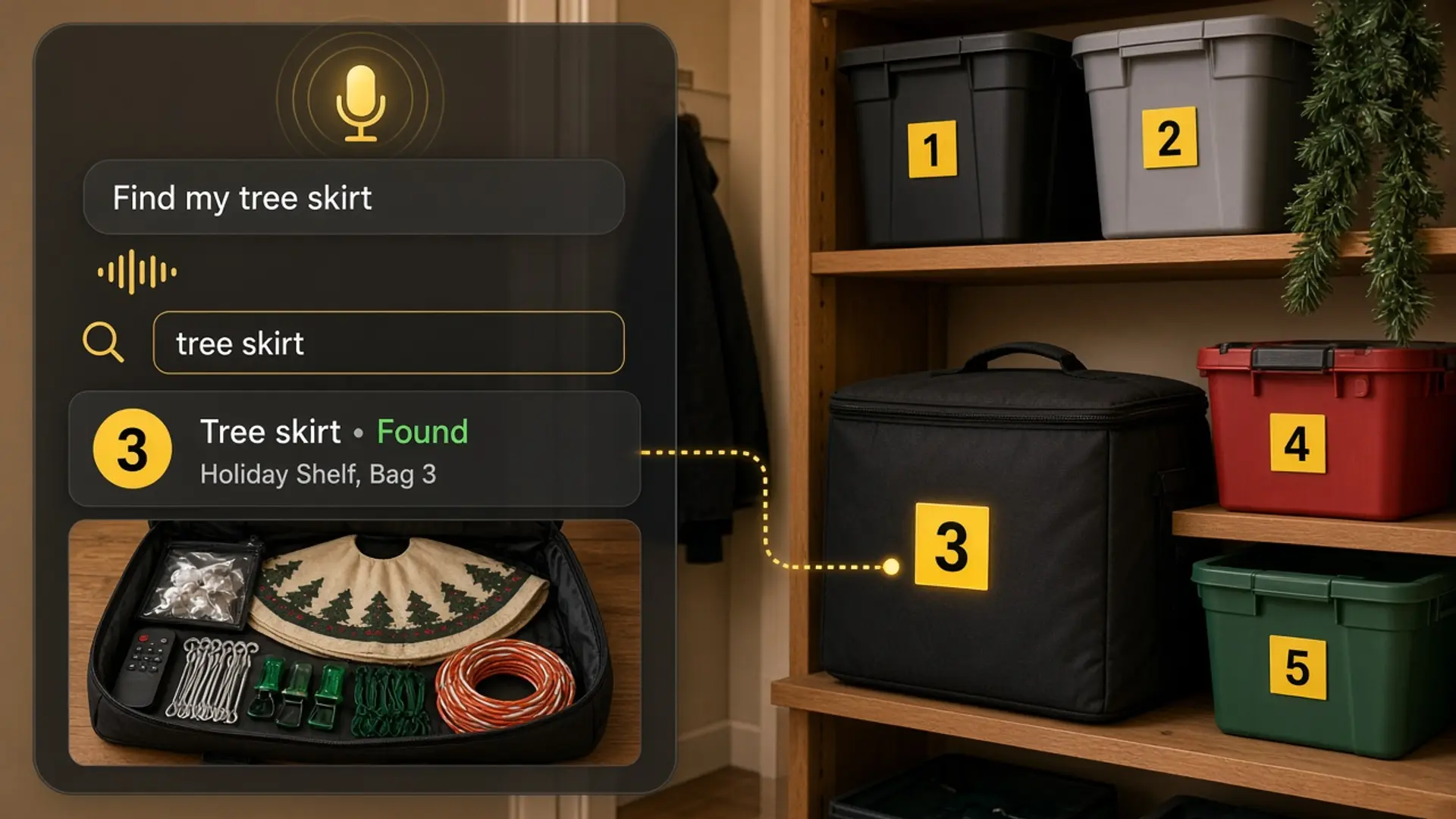
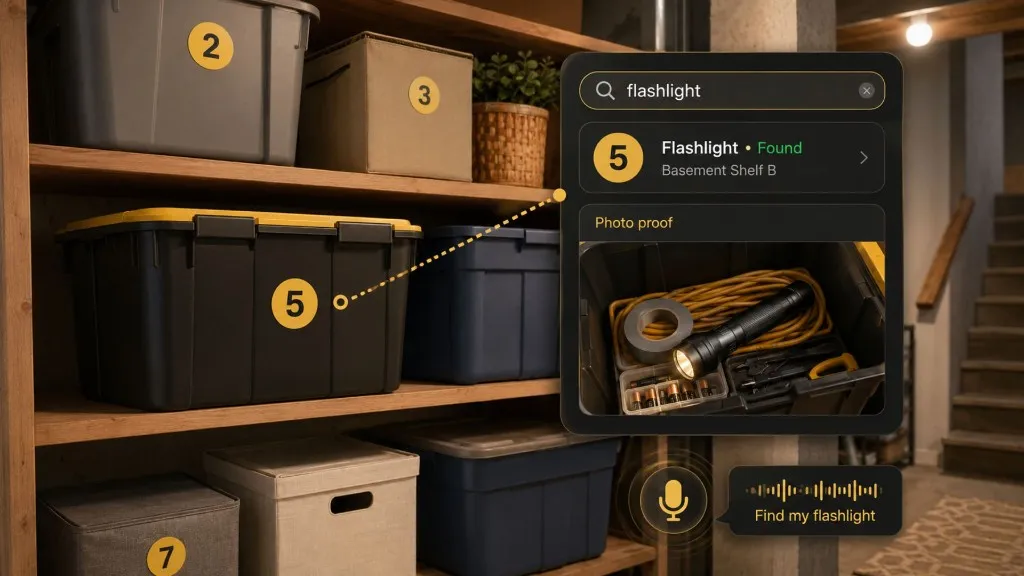
A protective box does the physical work. Totely provides the digital memory layer that helps you retrieve a specific ornament without opening every container.
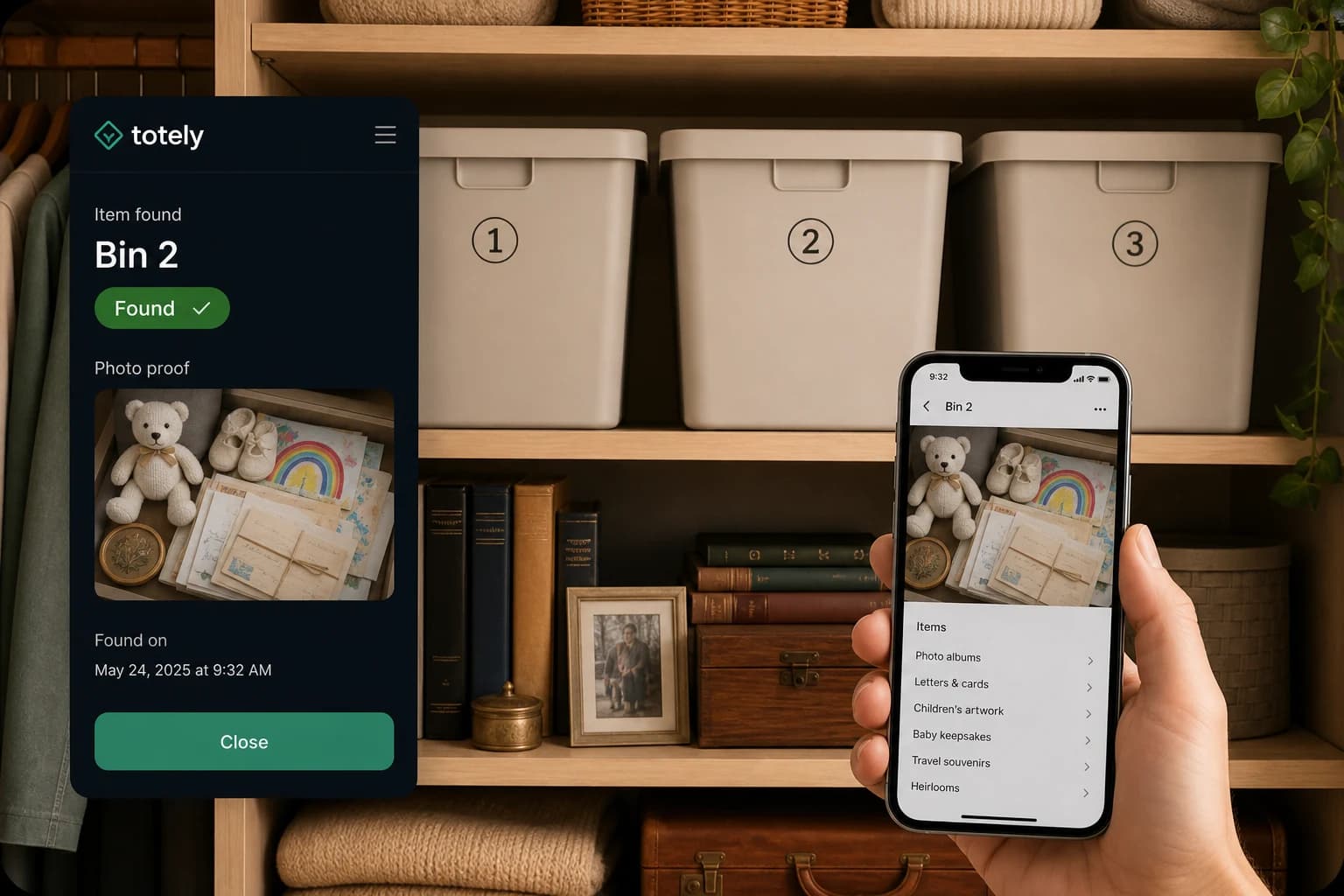
Use the same simple process: number Box 2, take a safe reference photo, let the app suggest an initial list of visible contents, then review and correct it. Add the family story or a description of an ornament hidden inside its carton. Save “Linen Closet, Top Shelf, Box 2” as the location and include any internal compartment note such as B3.
Next December, search naturally for “blue-ribbon glass star.” The saved description can direct you to Box 2, section B3, and the photo can help you confirm you have the correct box.
A photo cannot reveal something fully wrapped and out of view, and AI cannot know your family memories until you add them. That is why a quick human review matters. You do not need QR codes, barcodes, or manual entry of every decoration to get started.
For the rest of the seasonal system, see how to organize Christmas decorations in bins and the Christmas tree storage bag guide. Those cover tree sections, lights, remotes, and other equipment that should not be packed among fragile ornaments.
Christmas Ornament Storage FAQs
Is a divided ornament box better than a regular tote?
It can be easier to keep fragile pieces separated in a divided box. A sturdy tote can also hold appropriately cushioned inner cartons. Choose based on the actual items, compartment fit, handling, and storage location.
Should I keep an ornament’s original box?
Often, especially when the original packaging includes fitted inserts or small accessories. Check that the old packaging is still sound and appropriate for the ornament.
Can I store valuable glass ornaments in the garage?
A garage may experience temperature and humidity swings. A stable interior shelf is generally a safer first choice for delicate hand-painted or irreplaceable pieces; follow guidance for the specific materials.
Can I use tissue paper for fragile ornaments?
Suitable clean tissue can provide cushioning, and conservators discuss tissue and nested boxes for fragile glass. Materials touching old paint or unstable finishes may need more specific advice.
How do I find a particular ornament next year?
Number the outer box, save its exact shelf location, and make a short section map or item note. A searchable description such as “blue-ribbon glass star” is more useful than a broad “Christmas” label.
Do I need to scan every ornament?
No. A box-level photo, a few item names, and a location can be enough. Add individual details only for ornaments that are valuable, frequently requested, or important to your family.
Protect the Keepsake, Then Remember Where It Lives
The best storage for Christmas ornaments is not just the container with the most slots. It is a protective setup you can use again next year without searching through every holiday box.
Choose the right support, store fragile pieces in a stable place, then add one simple number, an accurate location, and a few human details. Stored, not lost.
For more help with the meaningful objects you keep, see sentimental-item storage and the holiday decoration storage guide.