Motorcycle Storage Unit: What to Track Before You Park It
Use a motorcycle storage unit without losing track of gear, helmets, chargers, covers, tools, keys, documents, and storage notes.
By Ben Stallsworth · Co-Founder, Totely
July 23, 2026 · Updated July 23, 2026 · 14 min read
A motorcycle storage unit is not just a place to park the bike.
It becomes the place where your helmet goes. And your cover. And your gloves. And your battery maintainer. And the spare key. And the tool roll. And the charger cable. And the box of parts you definitely meant to keep together.
That is where motorcycle storage gets messy.
The bike itself is the obvious thing. The supporting gear is what disappears.
You may remember where you parked the motorcycle, but later you still need to find the helmet liner, disc lock, battery maintainer, riding gloves, maintenance notes, registration folder, spare visor, cover bag, or trickle charger lead.
A good storage units motorcycle plan should answer two questions:
- Is this storage space actually allowed and appropriate for the motorcycle?
- Can you find every piece of gear, documentation, and storage prep note later?
This guide is not mechanical advice, legal advice, or a replacement for your owner’s manual. Motorcycle prep depends on your bike, battery type, fuel system, storage length, local climate, and the storage facility’s rules.
This is the organization layer: what to track before you park it, where to put the gear, and how to make the whole setup searchable.
Quick Links
Start With the Facility Rules
Before you think about bins, gear, or shelves, confirm the storage unit actually allows motorcycle storage.
Some facilities allow motorcycles only in vehicle-designated spaces. Some require drive-up access. Some require the motorcycle to be registered, insured, operable, and rolled or driven into the unit. Some do not allow repairs, draining fluids, fuel cans, chemicals, loose batteries, oily rags, or other hazardous materials.
So the first storage checklist is not about gear.
It is about permission.
Ask the facility:
- Are motorcycles allowed in this unit type?
- Does the motorcycle need current registration?
- Do I need proof of insurance?
- Does it need to be operable?
- Can it be stored on a stand or chock?
- Are fuel-level rules different from the owner’s manual?
- Are battery maintainers allowed?
- Is there power in the unit?
- Are helmets, covers, tools, and gear allowed?
- Are spare batteries, fluids, fuel cans, or cleaners prohibited?
- Is working on the motorcycle inside the unit allowed or prohibited?
- Are there climate-control options for gear, leather, textiles, or batteries?
This matters because storage-facility rules can differ from motorcycle-prep advice.
For example, an owner’s manual may recommend one fuel-storage approach, while a facility may require minimal fuel or prohibit certain fluids. The safe answer is to follow your motorcycle owner’s manual, your battery/charger instructions, and the storage facility’s rules.
When those conflict, ask the facility and a qualified motorcycle service professional before storing the bike.
Measure the Bike and the Gear
A small storage unit may fit a motorcycle, but the motorcycle is not the only thing going in.
Measure the bike with the handlebars, mirrors, saddlebags, windshield, top case, crash bars, or luggage installed. Then think about the space you need around it.
You may also need room for:
- helmet
- riding jacket
- pants
- boots
- gloves
- spare visor
- bike cover
- lock
- wheel chock
- battery maintainer
- charger lead
- tool roll
- owner’s manual
- registration folder
- maintenance log
- spare parts
- luggage
- saddlebags
- cleaning cloths
- tire gauge
- motorcycle stand, if allowed
If you pack the unit so tightly that you cannot reach the bike, plug in a maintainer, inspect a leak, remove the cover, or grab a helmet, the storage unit becomes harder to use.
Leave practical access.
You want to be able to step into the unit, see the motorcycle, reach the gear, and confirm where important items are stored.
What to Track Before the Motorcycle Goes Into Storage
A motorcycle storage system should track more than “bike in unit.”
Use a simple inventory before you park it.
Bike details
Record the basics:
| Item | What to record |
|---|---|
| Motorcycle | make, model, year, color |
| VIN | where the VIN is documented |
| License plate | plate number and expiration |
| Registration | stored at home, on bike, or in storage folder |
| Insurance | provider and policy location |
| Keys | main key, spare key, fob, lock key |
| Storage unit | facility name, unit number, access notes |
| Storage date | date parked |
| Planned check date | monthly, seasonal, or before riding season |
Do not put sensitive documents in a storage unit unless you are comfortable with the risk and the facility rules allow it. Many riders will be better off storing registration copies, insurance details, and key documents at home while saving a note that says where those documents live.
Storage prep notes
Track what was done before storage.
This is where people forget details.
Examples:
- fuel stabilizer added
- fuel level noted
- battery removed or connected to maintainer
- charger type recorded
- tire pressure checked
- cover installed
- bike washed/dried
- lock installed
- stand or chock used
- fluids checked by owner or shop
- service appointment completed
- maintenance due after storage
- gear stored separately
- unit checked for leaks or dampness
You are not trying to replace the owner’s manual.
You are making sure you remember which steps were completed.
Gear and accessories
Track the supporting gear:
- helmet
- helmet liner
- spare visor
- gloves
- jacket
- riding pants
- boots
- rain gear
- heated gear
- neck gaiter
- base layers
- saddlebags
- luggage straps
- cover
- lock
- disc lock reminder cable
- chain lock
- battery maintainer
- charger cable
- tire gauge
- tool roll
- spare bulbs
- small parts
- phone mount
- action camera mount
- documents folder
The gear is usually easier to lose than the motorcycle.
That is where a searchable inventory helps.
Create Gear Zones Around the Motorcycle
If the unit has room, create simple zones.
The goal is to keep riding gear, maintenance items, and documents from becoming one pile in the corner.
Zone 1: Bike area
This is the motorcycle itself.
Keep enough clearance to move around the bike, remove the cover, reach the battery lead if used, and inspect the floor for anything unusual.
If the facility allows a wheel chock or stand, use the setup recommended for your motorcycle and storage space. Avoid unstable parking arrangements.
Zone 2: Riding gear
Keep wearable gear together.
Use a shelf, lidded bin, garment bag, or breathable storage option depending on the item.
Track:
- helmet
- spare visor
- gloves
- jacket
- pants
- boots
- rain shell
- heated vest
- base layers
Do not crush the helmet under heavy items. Do not toss gloves, liners, or small pieces loose into the unit.
A good setup might be:
Bin 1: gloves, neck gaiter, rain shell, base layersShelf 2: helmet and spare visorBag 3: riding pants and jacketBoot Tray 4: boots and waterproof covers
Simple numbers make the gear easier to find later.
Zone 3: Battery and charging notes
Battery storage can vary a lot.
The right setup depends on the motorcycle, battery chemistry, charger type, outlet access, facility rules, and whether the battery stays installed or gets removed.
Track the details instead of relying on memory:
- battery left installed or removed
- battery type, if known
- charger or maintainer used
- charger location
- date connected
- last checked date
- voltage note, if you track it
- owner’s manual instructions followed
- charger manual instructions followed
If the battery is stored somewhere else, record that too.
Example: Battery removed — stored at home utility shelf — charger connected — checked monthly.
Totely should not tell you how to charge a battery. It should help you remember where the battery, charger, cable, and notes are.
Zone 4: Tools, parts, and small accessories
Small motorcycle items disappear fast.
Use a numbered bin or pouch for:
- tool roll
- tire gauge
- spare fuses
- spare bulbs
- small hardware
- luggage straps
- phone mount pieces
- action camera mounts
- extra screws
- microfiber cloths
- small lock keys
- charger adapters
A useful record might be:
Bin 5 — storage unit right shelf — tire gauge, tool roll, spare fuses, luggage straps, charger adapter.
That is much better than “parts somewhere in the unit.”
Zone 5: Documents and maintenance notes
Be careful with original documents.
In many cases, important paperwork is better kept at home. But you can still track where it lives.
Use a record like:
- registration: home file cabinet
- insurance card: digital copy and home folder
- owner’s manual: motorcycle saddlebag or home shelf
- service receipts: home folder
- storage facility agreement: email folder
- spare key: home key drawer
- lock key: garage key hook
If copies are stored with the motorcycle, note that clearly. If originals stay home, note that too.
What Not to Store With the Motorcycle
A motorcycle unit can become a catchall for “garage stuff.”
That is risky.
Before adding anything to the unit, check the facility rules. Many storage facilities prohibit hazardous, flammable, leaking, damp, or unsafe items.
Avoid storing:
- gasoline cans
- propane
- paint
- solvents
- aerosol cans
- cleaning chemicals
- oily rags
- leaking parts
- unapproved batteries
- food
- wet riding gear
- damp covers
- live plants or animals
- valuables you cannot replace
- original documents you cannot risk
- anything the facility prohibits
Also avoid using the storage unit as a repair shop unless the facility explicitly allows it.
A storage unit is for storage. Repairs, fluid changes, battery work, fuel handling, and mechanical service may be restricted or unsafe in that setting.
When in doubt, ask the facility and follow professional guidance.
Make a Storage Notes Checklist
A checklist is one of the most underrated parts of motorcycle storage.
It does not need to be complicated. It just needs to capture what future-you will want to know.
Use this simple format:
| Track this | Example |
|---|---|
| Storage date | October 15 |
| Facility/unit | Coastal Storage, Unit B14 |
| Bike status | parked, covered, locked |
| Fuel note | followed owner’s manual/facility guidance |
| Battery note | battery removed; charger at home shelf |
| Tire note | checked before storage |
| Gear note | helmet on Shelf 2; gloves in Bin 1 |
| Cover note | black cover installed; cover bag in Bin 5 |
| Tool note | tool roll in Bin 5 |
| Documents note | originals stored at home |
| Next check | first week of next month |
| Spring reminder | owner’s manual pre-ride inspection before riding |
This is not meant to make storage fussy.
It is meant to prevent guessing later.
How Totely Helps With Motorcycle Storage
Totely fits motorcycle storage best as the searchable record for everything around the bike.
The motorcycle itself is obvious. The gear, parts, documents, battery notes, and storage prep are what need a memory layer.
Here is the workflow:
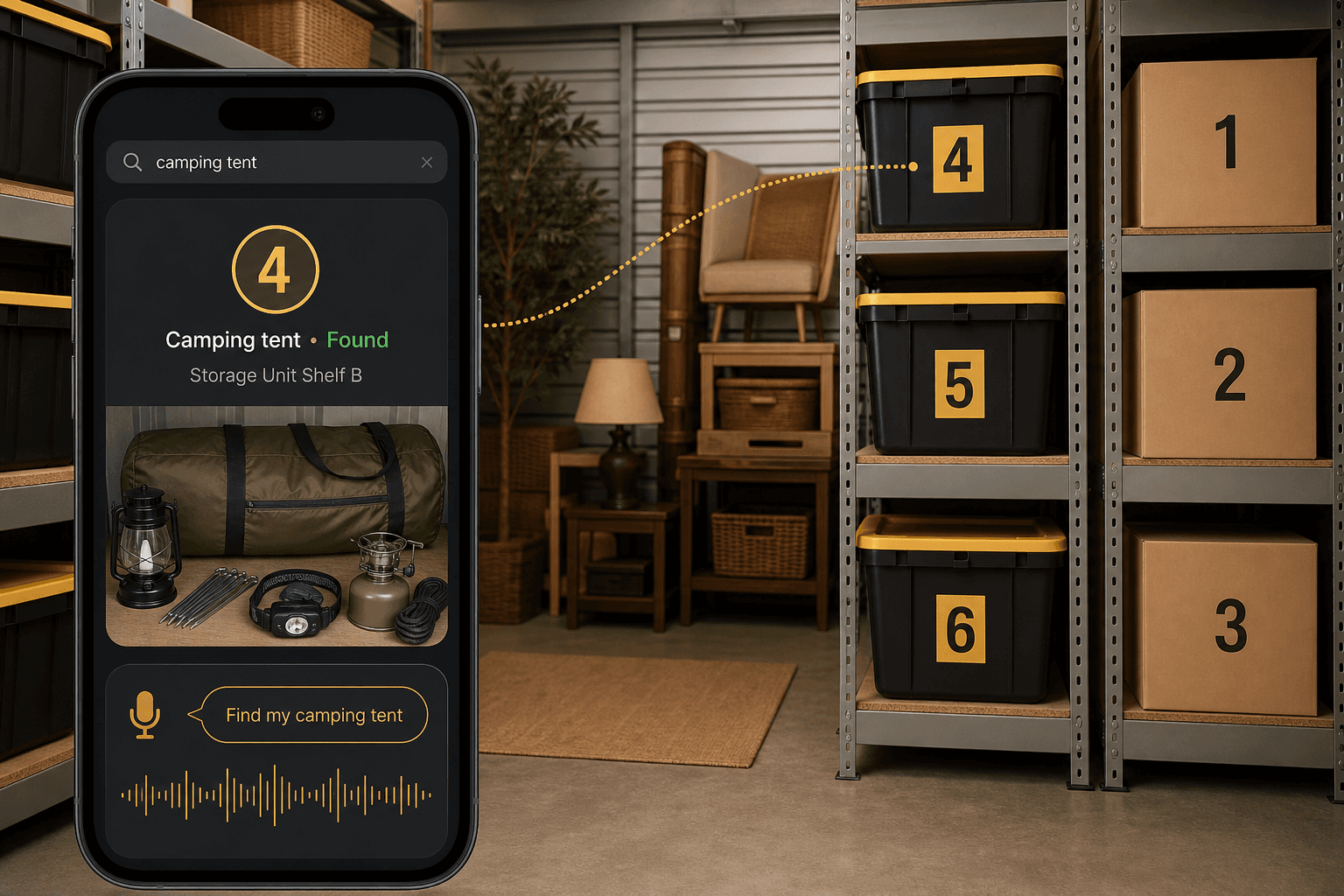
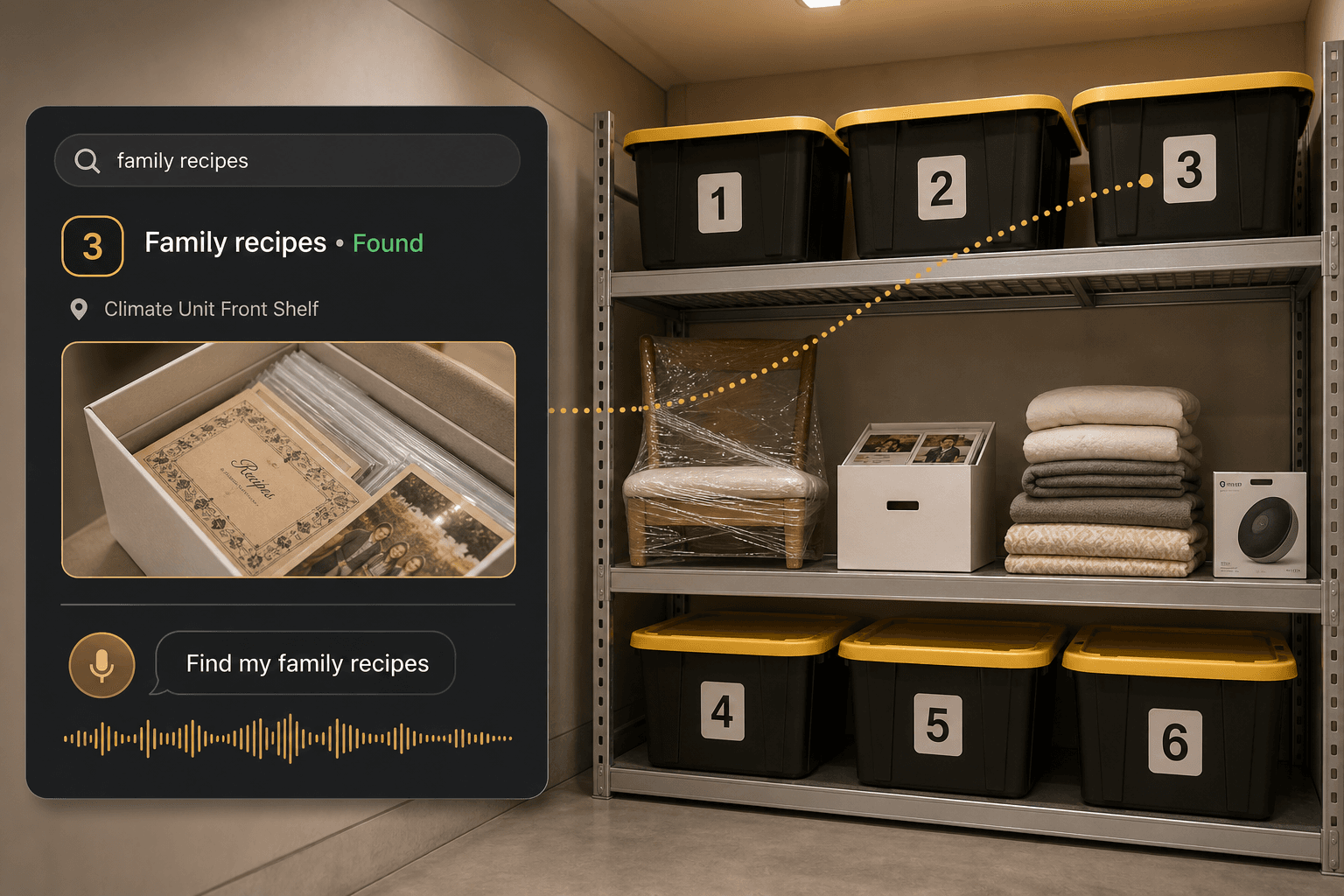
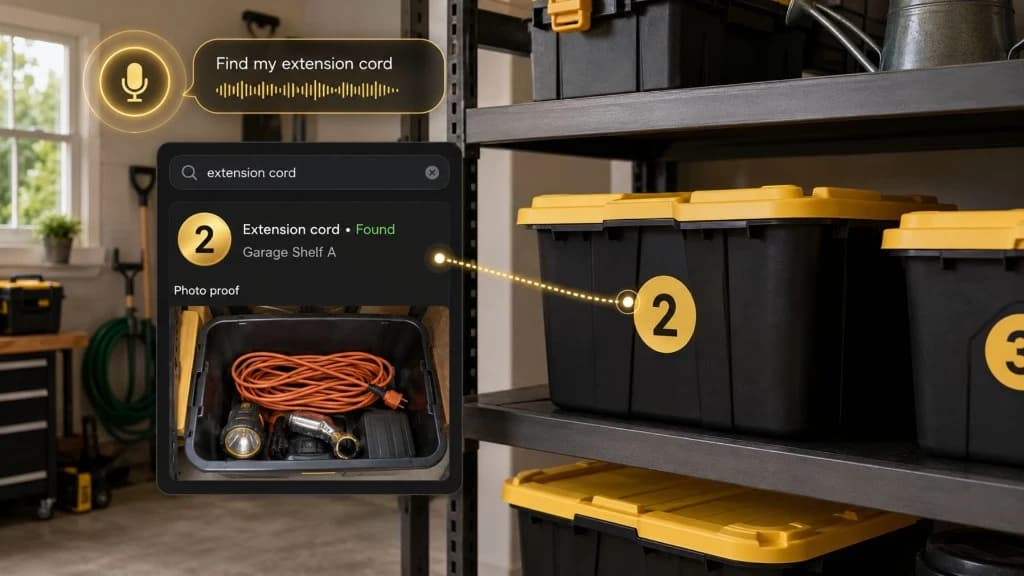
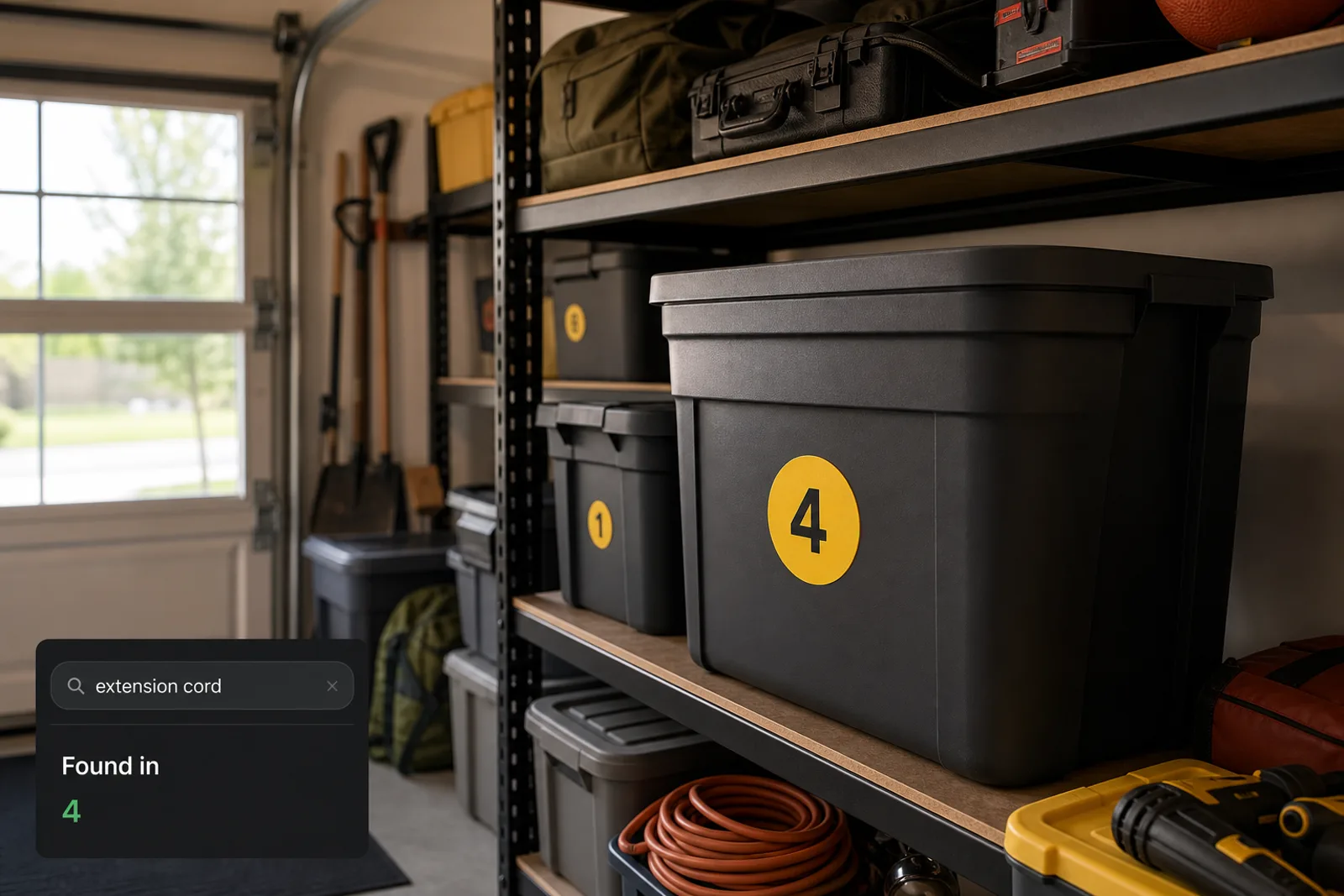
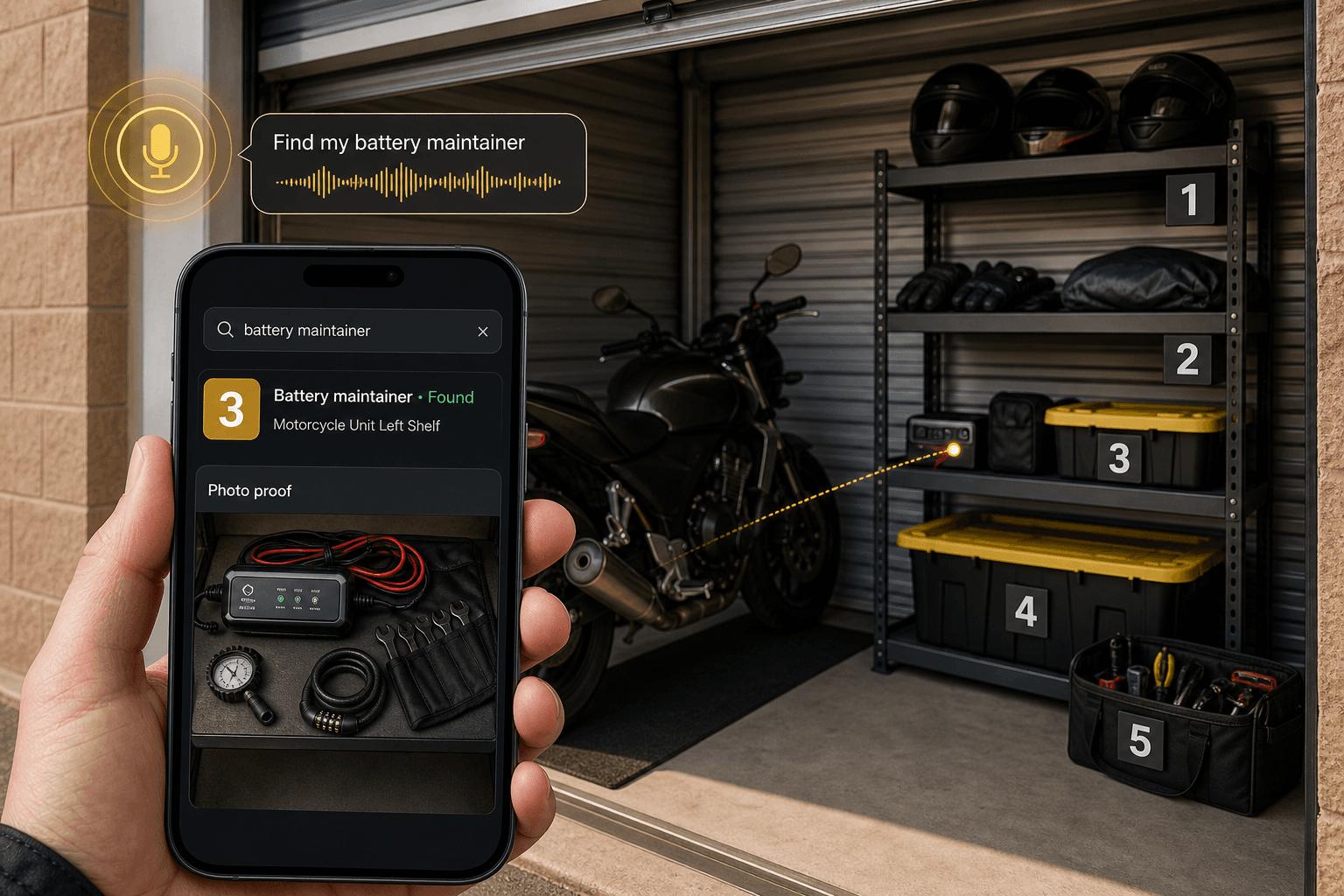
- Number the bins, shelves, bags, pouches, and storage zones with simple visible numbers like
1, 2, 3, 4, 5. - Snap photos of gear, tools, battery accessories, cover bags, and small parts before storing them.
- Let AI build the first item list from what it can see.
- Review or edit the record so it uses the terms you would search later.
- Save the location, such as “Motorcycle Unit Left Shelf” or “Garage Shelf B.”
- Add notes for owner’s-manual steps, battery storage, charger location, lock keys, documents, or next check date.
- Search naturally later for “helmet liner,” “battery maintainer,” “disc lock,” “spare visor,” “tool roll,” “cover bag,” or “registration folder.”
- Use photo proof before opening every bin or digging through the unit.
Totely does not replace your owner’s manual, mechanic, facility rules, insurance documents, safety guidance, or battery/charger instructions.
It does help you answer a very practical question:
Where did I put the thing I need before I ride again?
Motorcycle Storage Unit Examples
Example 1: Weekend rider with one small unit
- Bike parked in approved unit
- Helmet and gloves on shelf
- Cover installed
- Battery maintainer stored at home
- Tool roll in numbered bin
- Registration and insurance originals kept at home
Totely records:
Shelf 1: helmet, spare visor, glovesBin 2: tool roll, tire gauge, lock cableBag 3: cover bag, microfiber clothsHome Shelf 4: battery maintainer and charger cable
Example 2: Seasonal storage
- Bike stored for several months
- Owner’s manual storage checklist followed
- Battery removed or maintained according to battery type and instructions
- Riding gear stored separately
- Next check date saved
Totely records:
- storage date
- prep notes
- gear locations
- battery location
- charger location
- documents location
- next reminder note
Example 3: Multiple bikes or shared garage storage
- One unit or garage zone holds more than one bike
- Gear belongs to different riders
- Gloves, helmets, chargers, and small parts can get mixed up
Totely records:
Bike 1 ZoneBike 2 ZoneHelmet Shelf 1Tool Bin 2Battery Gear Bin 3Spare Parts Bin 4
The outside system stays simple. The inside record stays specific.
Motorcycle Storage Unit FAQs
Can you store a motorcycle in a storage unit?
Many storage facilities allow motorcycles in approved vehicle-storage units, often drive-up units. Requirements vary by facility, so confirm registration, insurance, operability, fuel level, access, and prohibited-item rules before renting.
What size storage unit do I need for a motorcycle?
A motorcycle may fit in a small drive-up unit, but the right size depends on the bike’s length, width, handlebars, mirrors, saddlebags, and how much gear you plan to store with it. Measure the motorcycle and leave enough clearance to access the bike safely.
What motorcycle gear should I track before storage?
Track helmets, gloves, jackets, pants, boots, spare visors, covers, locks, battery maintainers, charger cables, tools, keys, documents, luggage, saddlebags, and small parts. These items are easy to misplace once the bike is parked.
Should I store motorcycle documents in the unit?
Original documents may be better kept at home or in a safer location. You can still use a storage record to note where registration, insurance, service receipts, manuals, spare keys, and storage agreements are kept.
Can I work on my motorcycle inside a storage unit?
Do not assume repairs are allowed. Many storage facilities prohibit using units as workshops or repair spaces. Ask the facility before doing any maintenance, battery work, fluid work, or mechanical service inside the unit.
How can Totely help with motorcycle storage?
Totely helps you number gear bins, photograph contents, save storage locations, add notes, and search later for real items like “helmet liner,” “battery maintainer,” “tool roll,” “disc lock,” or “spare visor.” It makes the gear and storage notes around the motorcycle easier to find.
Park the Bike, But Track the System
A motorcycle storage unit should not become a guessing game.
Before you park the bike, confirm the facility rules. Measure the motorcycle. Think about gear, not just floor space. Keep important documents safe. Follow your owner’s manual and battery/charger instructions. Avoid prohibited materials. Create a simple storage checklist.
Then make the gear searchable.
With Totely, each bin, shelf, pouch, bag, or storage zone can have a simple number, a photo record, a saved location, and notes for what matters later.
Because the motorcycle is easy to see.
It is the helmet liner, battery maintainer, spare visor, lock key, and tool roll that disappear.