7 Garage Storage Solutions for Tools, Totes, and Seasonal Gear
Seven practical garage storage solutions for tools, totes, and seasonal gear—clear floor space, cut digging, and make common retrievals faster.
By Steve Watts · Co-Founder, Totely
February 3, 2026 · Updated August 27, 2026 · 13 min read
7 Garage Storage Solutions for Tools, Totes, and Seasonal Gear
This is a solutions list—not a full garage zone plan and not a bin-by-bin how-to. If you need a layout system, start with garage storage zones. If you need the step-by-step bin method, use garage organization with bins.
Garage storage has a way of getting away from you.
One shelf starts with tools. Another holds holiday decor. A corner becomes sports gear. The camping supplies go wherever they fit. Then the extra batteries, extension cords, light bulbs, cleaning refills, bike pump, garden gloves, and mystery hardware all slowly blend together.
Before long, the garage is technically full of useful things — but none of them are easy to find.
That is why good garage storage solutions need to do more than clear the floor. They need to help you know what is stored, where it lives, and how to find it again.
The best garage system combines smart zones, sturdy shelving, vertical storage, labeled totes, safe tool storage, and a searchable inventory for the items hidden inside bins and boxes.
Because the real goal is not just a cleaner garage.
The goal is a garage that works when you need one specific thing.
Quick Links
- Why Garage Storage Gets Out of Control
- 1. Start With Garage Zones
- 2. Get Items Off the Floor
- 3. Use Shelves for Totes and Bins
- 4. Store Tools Where You Use Them
- 5. Put Seasonal Gear in Harder-to-Reach Spaces
- 6. Label Totes With Numbers, Not Just Categories
- 7. Make Garage Storage Searchable
- Garage Storage FAQs
Why Garage Storage Gets Out of Control
Garages collect the things that do not have an easy home inside the house.
That includes tools, paint supplies, sports gear, holiday decorations, camping equipment, gardening items, car supplies, extra household goods, sentimental boxes, and things you are not ready to donate yet.
The problem is not that these items are useless. Many of them are useful. The problem is that they are stored in a space where categories overlap.
A garage bin might hold extension cords, batteries, work gloves, tape, bungee cords, flashlights, and small hardware. Another tote might hold holiday lights, outdoor timers, spare bulbs, and ornament hooks. A third bin might hold camping gear, rain ponchos, sunscreen, and a lantern.
The bins are organized enough to be put away, but not organized enough to be searched.
Recent garage organization advice often points to the same pattern: the biggest mistakes are relying too much on floor space, using mismatched or hard-to-access bins, and letting seasonal items take up everyday space year-round. Car and Driver
That is exactly where a better garage system starts.
1. Start With Garage Zones
Before buying shelves, hooks, cabinets, or more bins, divide the garage into zones.
A garage zone is simply a storage area with a clear purpose.
You might create zones for:
- Tools and hardware
- Seasonal decor
- Sports equipment
- Lawn and garden supplies
- Camping and outdoor gear
- Car care
- Household backstock
- Donation or outgoing items
This step matters because random storage creates random searching. If everything can go anywhere, nothing is truly easy to find.
A zone gives every category a home. It also helps you decide which items deserve prime space and which can live higher, farther back, or in long-term storage.
Keep frequently used items at eye level or within easy reach. Store occasional items higher, lower, or deeper in the garage.
That one decision makes the whole space easier to maintain.
2. Get Items Off the Floor
The garage floor is valuable.
Once the floor fills with loose boxes, tools, sports gear, and half-open bins, the whole garage becomes harder to use. You cannot sweep easily. You cannot reach shelves. You cannot park, walk, or move seasonal items without shifting piles.
One of the most reliable garage storage solutions is to move items upward.
Use wall hooks, pegboards, shelving, freestanding racks, ceiling racks, and storage rails to reclaim the floor. Better Homes & Gardens recommends garage shelving, hooks, pegboards, and vertical storage systems to keep tools, sports equipment, and seasonal gear organized while making better use of wall space. Better Homes & Gardens
Good candidates for vertical storage include:
- Bikes
- Ladders
- Rakes
- Shovels
- Folding chairs
- Sports gear
- Extension cords
- Garden tools
- Seasonal wreaths
- Lightweight camping gear
The goal is not to hang everything. The goal is to keep the floor clear enough that the garage stays usable.
If an item is heavy, awkward, or dangerous to lift, store it low.
3. Use Shelves for Totes and Bins
Totes and bins work well in garages because they protect items from dust and keep categories contained.
But bins only help if you can reach them, identify them, and know what is inside. Start with a simple 27 gallon bin system so each shelf tote has one job before you fill every slot. Then plan rack access so the shelves stay usable after they are loaded.
Heavy-duty freestanding shelves are often one of the most flexible garage storage solutions because they do not require a full built-in system. They can hold bins, tools, bulk supplies, seasonal decor, and household overflow. Adjustable shelves are especially helpful because garages tend to hold items in many shapes and sizes.
Use shelves for:
- Holiday bins
- Camping totes
- Sports gear boxes
- Car care supplies
- Household backstock
- Garden supplies
- Seasonal clothing
- Keepsake containers
Clear bins can make some contents easier to see, and some experts recommend clear containers for quick identification. New York Post But clear bins are not a full tracking system. Once they are stacked, packed tightly, or stored above eye level, they still become hard to search.
That is why the best bin setup includes both physical order and a contents record.
Your shelves should tell you where the bin lives.
Your inventory should tell you what is inside.
4. Store Tools Where You Use Them
Tool storage should match the way you actually work.
If you do small repairs in the garage, keep everyday tools easy to grab. If you do larger projects, a rolling tool chest, workbench, pegboard, or wall-mounted tool system may make more sense.
For small tools and accessories, use drawers, trays, divided organizers, or clearly numbered bins. For larger tools, wall hooks and pegboards can keep items visible and off the floor.
Common garage tool categories include:
- Hand tools
- Power tools
- Batteries and chargers
- Screws and hardware
- Tape, glue, and adhesives
- Painting supplies
- Extension cords
- Work gloves
- Safety gear
The biggest mistake is mixing tools with unrelated household storage. A bin with flashlights, drill bits, gift wrap, and holiday clips may feel harmless when you pack it, but it becomes frustrating later.
Tools are high-use, high-search items. Give them a dedicated zone.
If you use a tote or bin for tools, number it and record what is inside so the small accessories do not disappear.
5. Put Seasonal Gear in Harder-to-Reach Spaces
Not everything deserves the easiest shelf.
One of the smartest garage storage moves is to reserve hard-to-reach spots for items you only need occasionally.
Professional organizers often recommend using upper shelves, high cabinets, and harder-to-reach storage for infrequently used items like holiday decor, seasonal sports gear, suitcases, keepsakes, and occasional hobby supplies. Livingetc
That makes sense in a garage.
Everyday items should be easier to reach. Seasonal gear can go higher or farther back.
Good high-storage candidates include:
- Holiday decorations
- Camping gear
- Beach gear
- Winter sports equipment
- Off-season patio items
- Seasonal wreaths
- Rarely used party supplies
- Sentimental keepsakes
Be careful with weight. Heavy items should stay low, especially if you are using overhead storage or high shelving. Ceiling and overhead racks can free up floor space, but they should be installed securely and used for items that are safe to lift and store above head height. Car and Driver
A simple rule: store light and occasional items high; store heavy and frequent items low.
6. Label Totes With Numbers, Not Just Categories
Garage labels often start strong and then slowly become wrong.
A tote labeled "Holiday" may eventually hold outdoor timers, batteries, extension cords, gift wrap, and extra tape. A bin labeled "Tools" may contain gloves, screws, hooks, flashlights, and one random bike part. A box labeled "Sports" may contain soccer gear, pool goggles, sunscreen, and dog toys.
Category labels are helpful, but they are rarely enough.
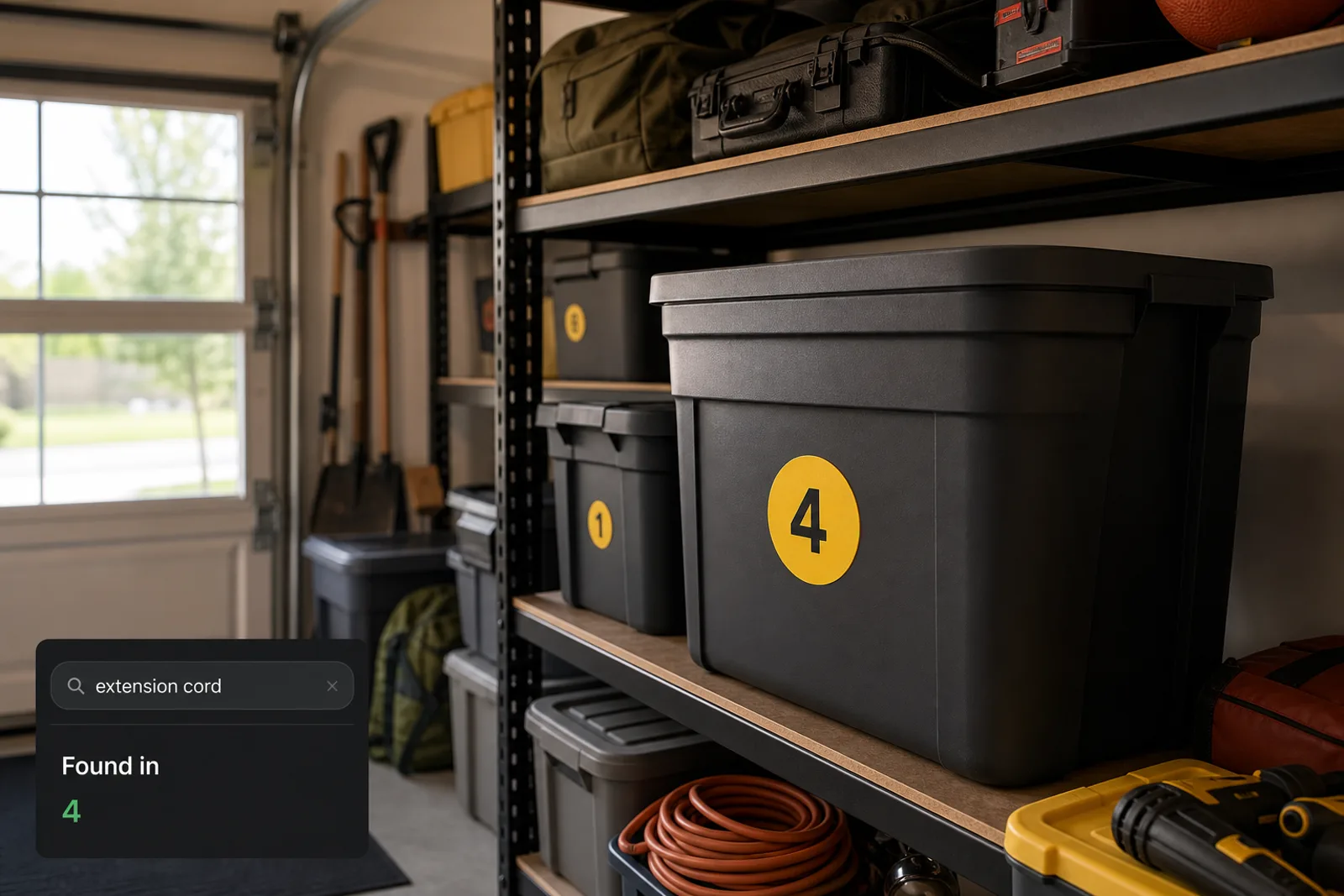
A better system is to give every garage tote a simple number.
For example:
Tote 1 — Holiday Lights
Tote 2 — Camping Gear
Tote 3 — Garden Supplies
Tote 4 — Car Care
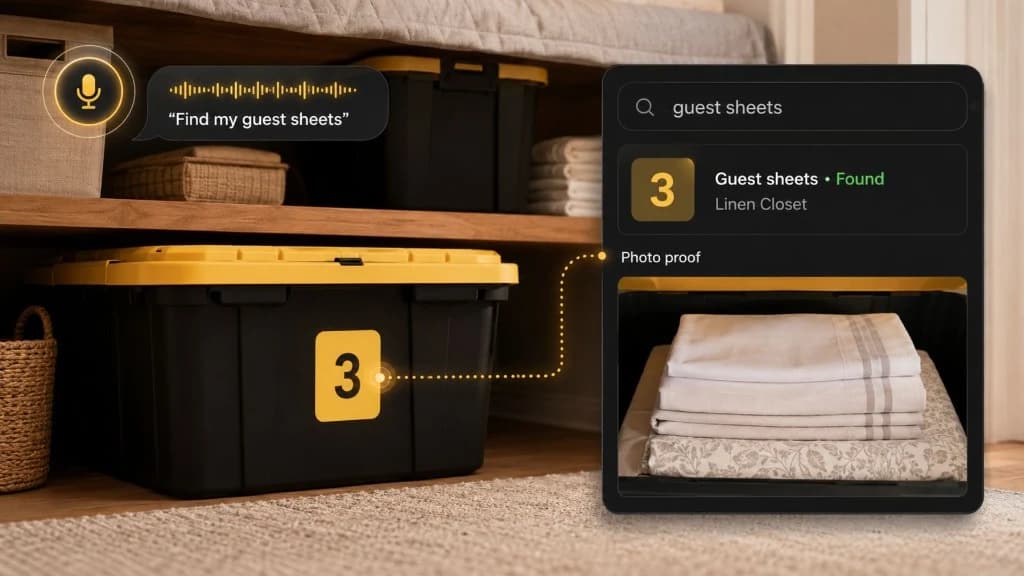
The number gives the container a permanent identity. The category gives a quick clue. The detailed contents can live in a searchable record.
That way, when the contents change, you do not have to relabel the whole bin. You just update the record connected to the number.
This is especially useful in garages because bins often look alike, shelves are deep, and lighting is not always great.
A large number is easier to see from across the garage than a small handwritten label.
7. Make Garage Storage Searchable
This is the step that most garage storage solutions miss.
A shelf system can make the garage look better. Bins can contain the clutter. Hooks can clear the floor. Labels can identify categories.
But if you still have to open six totes to find one air pump, the system is not finished.
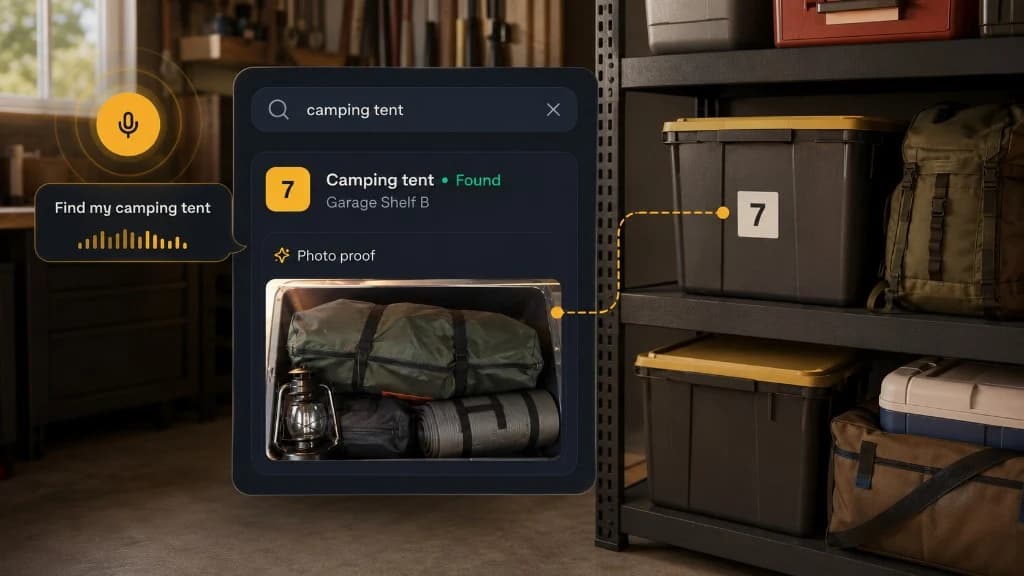
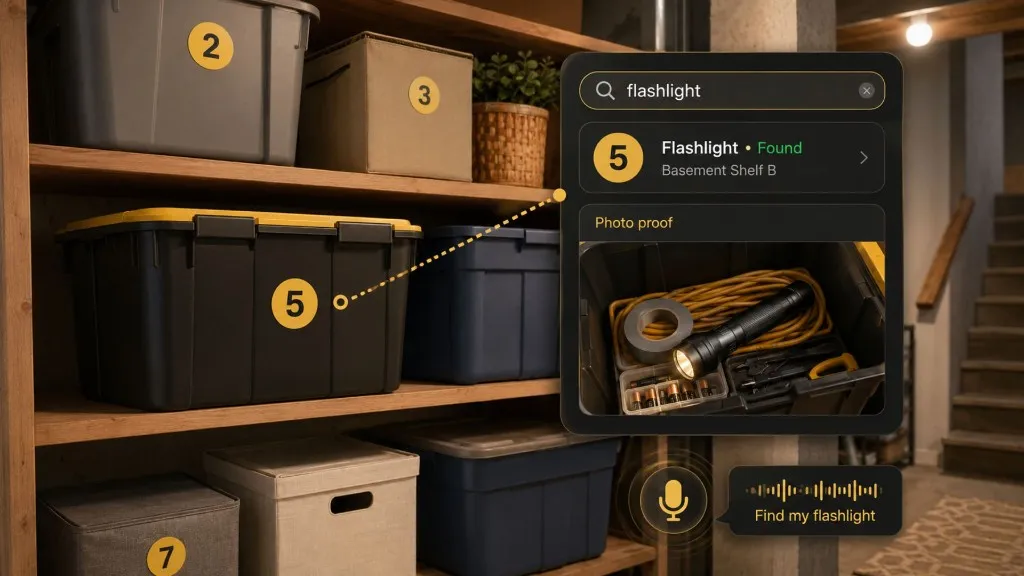
Searchable storage means you can look up an item and know which bin, tote, box, shelf, or cabinet holds it.
For each garage container, track:
- Container number
- Broad category
- Photo of contents
- Key searchable items
- Exact garage location
- Notes if needed
For example:
Tote 2
Category: Camping Gear
Location: Garage shelf, second row, right side
Contents: lantern, tent stakes, air mattress pump, headlamps, camp mugs, rain ponchos
Bin 5
Category: Tools and Hardware
Location: Workbench cabinet, lower shelf
Contents: batteries, wall anchors, hooks, zip ties, tape measure, work gloves
Box 8
Category: Holiday Setup
Location: Overhead rack, left side
Contents: outdoor timer, extension cords, light clips, replacement bulbs, wreath hanger
This kind of system prevents the garage from becoming a storage black hole.
It also helps you avoid buying duplicates because you can check what you already own before heading to the store.
What Not to Store in the Garage
A good garage system is not just about what goes in. It is also about what should stay out.
Garages often have temperature swings, humidity, pests, dust, and fumes. That means some items are better stored indoors or in a climate-controlled space.
Good Housekeeping warns that items such as paint, electronics, pet food, important papers, books, photos, artwork, clothing, linens, and certain flammable materials can be damaged or create hazards when stored in garages. Good Housekeeping
Think twice before storing:
- Important documents
- Family photos
- Artwork
- Electronics
- Delicate clothing
- Bedding and linens
- Pet food
- Excess paint
- Firewood
- Oily rags
- Temperature-sensitive items
If an item could be damaged by heat, cold, moisture, pests, or fumes, it may not belong in the garage.
The best garage organization system protects both your space and your belongings.
How Totely Helps With Garage Storage
Totely is built for the problem garage storage creates: you put useful things away, then forget exactly where they are.
Instead of relying only on shelf labels, handwritten notes, or memory, Totely helps you make garage bins, totes, boxes, shelves, and hidden storage spots searchable.
With Totely, you can:
- Label each tote with a clear number or numbered tag.
- Snap a photo of what is inside.
- Record key items like tools, cords, batteries, lights, gear, and supplies.
- Add the location so you know where the tote lives.
- Search later before opening every container.
That means your garage can hold tools, seasonal gear, camping equipment, holiday decor, sports supplies, and household extras without turning into a guessing game.
Totely acts like a digital memory layer for garage storage.
Your shelves hold the bins. Totely helps you remember what is inside them.
A Simple Garage Storage System You Can Copy
Use this format for each garage container:
Container Number: Tote 6
Category: Sports Gear
Location: Garage shelf, bottom row
Contents: soccer cleats, shin guards, baseball gloves, tennis balls, pump needle
Photo: Taken before closing
Notes: Check pump before spring season
For the outside label, keep it simple:
Tote 6
Sports Gear
The outside stays readable. The inside record holds the details.
This is what makes garage storage easier to maintain long-term.
Garage Storage FAQs
What are the best garage storage solutions?
The best garage storage solutions use zones, shelves, wall hooks, pegboards, overhead storage for light seasonal items, numbered totes, and a searchable inventory. The goal is to clear floor space while making tools, bins, and seasonal gear easy to find.
How do I organize garage storage bins?
Group bins by category, give each bin a clear number, add a broad label, take a photo of the contents, and record the key items inside. Store frequently used bins within easy reach and seasonal bins higher or farther back.
Should garage storage bins be clear or opaque?
Clear bins can help you see some contents, but they are not enough on their own. Opaque bins can work well if they are numbered and connected to a searchable record. The most important thing is knowing what is inside without opening every bin.
How should I store tools in the garage?
Store frequently used tools near the work area. Use pegboards, wall hooks, rolling tool chests, drawer organizers, or numbered bins for smaller items. Keep batteries, chargers, hardware, and safety gear grouped in a way that matches how you use them.
What should go on high garage shelves?
High shelves are best for light, occasional items such as holiday decor, camping gear, off-season sports gear, seasonal wreaths, suitcases, and keepsakes. Avoid storing very heavy or frequently used items up high.
How can Totely help with garage storage?
Totely helps you label garage totes, photograph contents, record key items, add locations, and search later. It makes tools, totes, boxes, seasonal gear, and hidden garage storage searchable so you can find what you need without digging.
Make Your Garage Easier to Search
A better garage does not have to be perfect.
It just needs to work.
Start with zones. Clear the floor. Use shelves and hooks wisely. Store seasonal gear where it makes sense. Give every tote a number. Take photos. Record the items you actually search for. Or start on one garage tote before zoning the whole garage.
With Totely, your garage storage can become searchable, so you can stop opening every bin and start finding tools, totes, and seasonal gear faster.