How to Store a Garden Hose Without Kinks or Winter Damage
Learn how to drain, coil, support, and store a garden hose for everyday use or winter—and keep its nozzle and fittings easy to find.
By Steve Watts · Co-Founder, Totely
November 21, 2026 · Updated November 21, 2026 · 16 min read
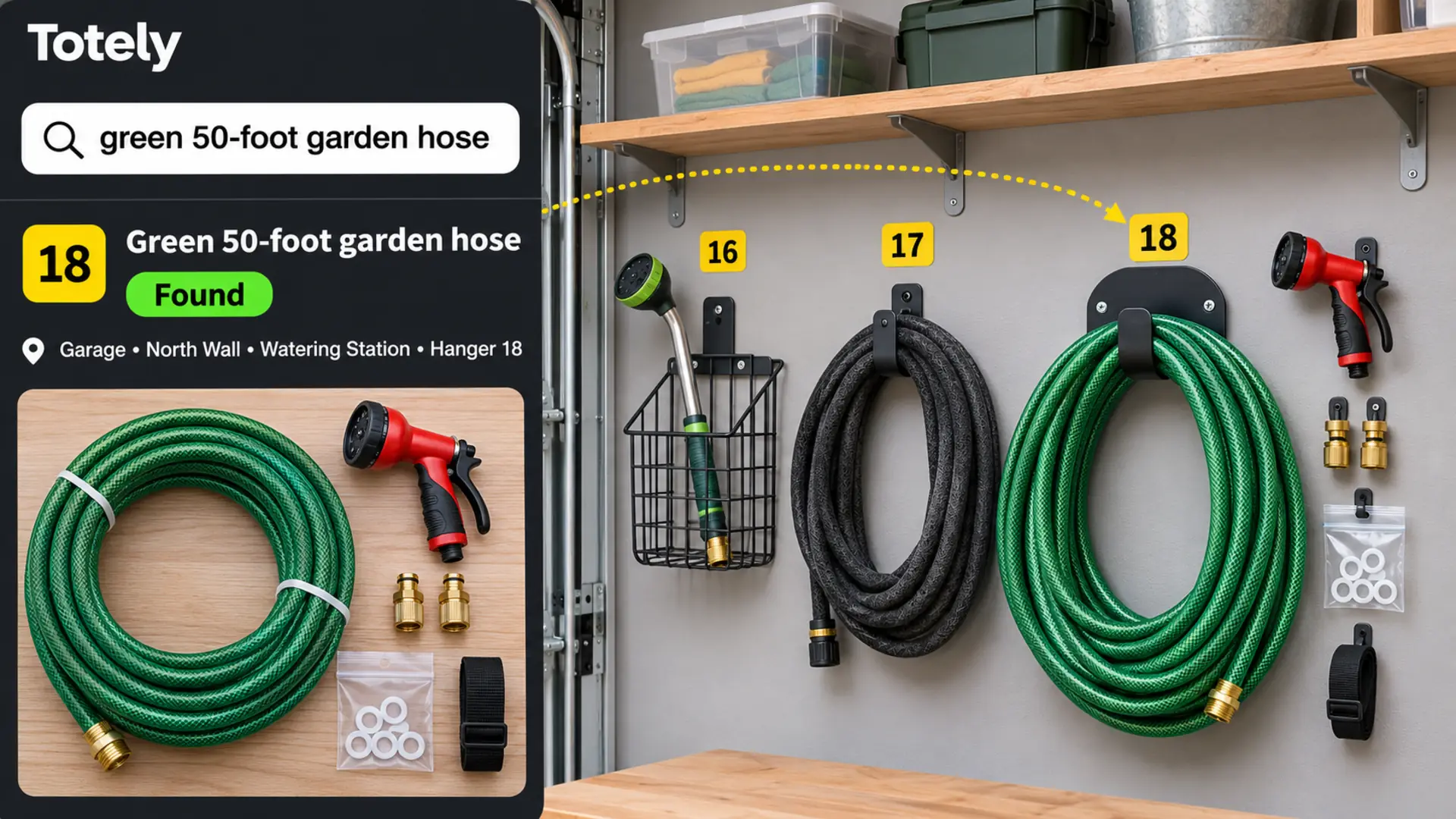
A garden hose is easy to put down and strangely hard to put away. Leave it stretched across the yard and it becomes an obstacle. Heap it beside the faucet and it tangles. Wind it into a tight, twisted bundle and the storage method creates the next problem.
Learning how to store a garden hose starts with the physical routine: turn off the water, release pressure, drain when the hose is going away for more than a quick break, and support it in broad, relaxed curves. The best holder is the one that fits the hose, the mounting surface, your climate, and how often you actually water.
Build that station first. Then keep the nozzle, quick connects, washers, and repair parts with the correct hose, and record the exact location. A tidy coil helps today. A searchable hose station helps again in spring.
Quick Links
The Quick Answer: What Is the Best Way to Store a Garden Hose?
For everyday storage, turn off the faucet, release remaining pressure, straighten the hose enough to remove twists, and wind it evenly on a compatible reel or place it in broad loops on a rounded hose hanger. Keep it off walkways and sharp edges, and protect it from unnecessary sun and weather exposure according to its instructions.
Before long-term storage or freezing weather, remove the nozzle and other attachments, disconnect the hose from the faucet, drain the hose end to end, inspect it, and store it as its manufacturer directs. A reel, broad hanger, ventilated hose pot, cart, or supported shelf can all work. A nail, tight knot, sealed wet container, or pile on the floor is not a storage system.
Do not choose the holder before answering two questions:
- Will you use the hose again tomorrow, or is it going away for the season?
- Where can the full hose be supported without blocking a path, baking in direct sun, or sitting where trapped water can freeze?
Start With the Way You Use the Hose
Daily storage and seasonal storage have different jobs.
An everyday station should be close enough to the faucet that putting the hose away is easier than leaving it on the lawn. A seasonal station can be farther away, but it should protect the drained hose and keep every small attachment together until the next use.
For frequent watering
Favor a reel, reel cart, or broad wall hanger near the faucet. The hose should feed toward the yard without scraping around a sharp corner. Leave enough clear space to wind it evenly and to inspect both couplings.
If the hose lives in a pot or box, choose one intended for hose storage, with room for relaxed loops and a way for water to drain rather than collect. Do not force a long, heavy hose into a container simply because the container looks tidy.
For occasional or seasonal use
A broad hanger inside a garage or shed, a supported shelf position, or a reel that can move into protected storage may be more practical. The location still needs an easy retrieval path; a hose on a ceiling hook is not convenient if a ladder and three bicycles block it.
Map the route from faucet to storage. You should be able to disconnect the hose, drain it safely, carry or roll it to its home, and lift it into position without dragging the couplings across concrete or walking through the coil.
For the room around that route, use the garage storage zones guide. Keep the hose station in a utility or yard-work zone rather than letting it migrate between the door, floor, and workbench.
Turn Off, Disconnect, and Drain
Before handling a hose for storage, turn off the water at the faucet. Open the nozzle or trigger long enough to release remaining pressure, then remove the nozzle and attachments as their instructions direct.
For long-term or cold-weather storage, disconnect the hose from the faucet. Lay it out without sharp kinks, place the outlet end where the remaining water can drain safely, and lift the other end. Move that raised section along the length of the hose so gravity carries water toward the outlet.
Gilmour's first-party hose storage instructions use this same basic sequence: remove the nozzle, disconnect from the spigot, elevate the hose progressively to drain it, then coil and store it on a hanger or shelf in a protected location.
Keep the draining route away from steps and walkways where runoff could create a slip or ice hazard. If the hose still feels unusually heavy or you hear water moving inside it, straighten the low sections and repeat the gravity-drain process.
Drain the small parts too
The hose is only one part of the watering setup. Separate and drain the pieces that can hold water:
- spray nozzle or watering wand
- quick-connect fittings
- splitter
- timer or flow controller
- short leader hose
- sprinkler attachment
Follow the instructions for each device. Do not assume that draining the long hose also emptied a closed nozzle, timer, or reel mechanism.
Inspect while the hose is visible
Before the coil hides most of the hose, check the jacket, both couplings, strain-relief areas, and washer. Set aside a damaged hose or fitting instead of winding it into a perfect-looking coil and forgetting the problem.
Do not improvise repairs or cleaners without guidance for the actual product. A storage article cannot determine whether a cracked, swollen, leaking, or otherwise damaged hose is fit for service.
Coil the Hose Without Forcing It
A hose should not have to fight its storage shape.
Start at one end and form broad, relaxed loops. Let the uncoiled length rotate as needed instead of trapping twist inside the circle. If a section wants to buckle, open the loop, remove the twist, and try again. The finished coil should sit without sharp folds or a coupling bearing the full weight.
GARDENA's first-party care guidance recommends taking time to coil and uncoil a hose properly, keeping it out of direct sunlight when not in use, storing it indoors during freezing conditions for the referenced hoses, and not leaving it under pressure when it is not being used.
The product instructions control the details. Hose materials, construction, length, fittings, reels, and cold-weather ratings vary. That is why this guide does not prescribe one universal coil diameter or storage temperature.
If you use a reel
Bring the hose toward the reel in a straight path. Guide it across the drum so it winds evenly rather than piling on one side or crossing into tight ridges. Do not yank the hose by the nozzle or coupling.
For winter, the reel itself may retain water. ELEY's freeze-damage guide tells owners of its system to disconnect the inlet, fully unwind the hose below the reel, drain the swivel, rewind slowly while water exits, and drain the watering tools. Use the instructions for your reel rather than applying another manufacturer's procedure blindly.
If you coil by hand
Make each loop in the direction the hose naturally accepts. Support the finished coil across a broad hanger or shelf area. A single nail or narrow hook concentrates the hose's weight at one point and encourages a hard bend.
Secure the coil only if it needs help staying together. Use a loose reusable strap designed for the job; do not cinch it until the hose flattens or use the couplings as a fastening device.
Choose the Right Garden Hose Storage Method
The best method depends on how often you water, the hose you own, and the storage surface available.
| Storage method | Best for | Set it up well | Watch for |
|---|---|---|---|
| Wall-mounted reel | A hose used often near one faucet | Mount to a suitable surface, feed straight, and wind evenly | Wrong fasteners, insufficient clearance, trapped water in winter, or bunching on the drum |
| Reel cart | Long hoses or more than one watering area | Park on a stable surface and keep the route clear | Rolling into walkways, tipping, or treating a sheltered cart as freeze protection |
| Broad hose hanger | A hand-coiled hose in a garage, shed, or shaded exterior station | Use a wide rounded support and leave lift-off clearance | A narrow hook, sharp edge, crowded wall, or overloaded mounting surface |
| Hose pot or ventilated box | A patio or visible location where the hose needs to disappear | Use a hose-specific container with drainage and room for loose loops | Standing water, a sealed damp interior, or forcing in too much hose |
| Supported shelf or seasonal bin | A fully drained hose used only part of the year | Coil loosely, support the full coil, and keep fittings in a separate pouch | Heavy objects on top, a deep mystery pile, or an unheated location that conflicts with product instructions |
| Overhead or under-deck position | Infrequent seasonal use where wall space is limited | Confirm safe support and a clear retrieval route | Awkward lifting, forgotten attachments, exposure, or poor access |
Before mounting anything, check the holder's instructions, the wall or post material, required fasteners, and the total supported load. Do not guess what drywall, siding, a fence board, or a garage rail can carry.
Use the garage tool inventory system if the hose shares a wall with hand tools, sprinklers, pumps, or yard-care equipment. The goal is one understandable zone, not a row of unrelated hooks.
Build One Complete Hose Station
A good hose station stores the job, not just the longest object.
Give the hose one accessory tray, open bin, or hanging pouch nearby. Keep only the parts that belong to that watering setup:
- the matching spray nozzle or wand
- quick connects and caps
- spare washers in a small closed holder
- the timer or splitter, if it normally serves that hose
- manufacturer instructions or a model note
- a visible repair or replacement note when something needs attention
Do not leave small brass fittings loose on the floor or bury them at the bottom of a large garden-tool bin. If you have two hoses, separate their companion pieces rather than building one anonymous hardware collection.
Name the station by what another person can see and follow:
Garage • North Wall • Watering Station • Hanger 18
That path is more useful than garage hose. It distinguishes the hose from a second reel by the patio, a soaker hose on a shelf, or a short utility hose near the workbench.
Keep the retrieval path open
Leave space to lift a hand coil off the hanger without removing rakes first. Park a cart where its wheels are reachable. Keep the hose pot lid easy to open. Store seasonal coils at a height and weight you can handle safely.
If the location works only while the garage is empty, it will not survive normal life.
Store a Garden Hose for Winter
Cold-weather storage is a separate branch of the system, not just a tighter coil.
Before freezing conditions, use the guidance for the actual hose, reel, nozzle, timer, and faucet. A general sequence is:
- Turn off the faucet and release hose pressure.
- Remove the nozzle and every detachable watering accessory.
- Disconnect the hose from the faucet.
- Drain the hose and each attachment completely by the approved method.
- Inspect the hose, couplings, washer, and reel.
- Coil or rewind without sharp bends.
- Move the equipment to the protected location its manufacturer specifies.
- Save the exact seasonal location before closing the garage or shed for winter.
The University of Maryland Extension's winterizing guidance notes that if a hose is used during a warm winter spell, it should be drained and stored again before the next freeze.
Putting the hose in a garage does not prove it is protected from freezing. Garages and sheds vary, and some product instructions require above-freezing storage. Follow the equipment guidance and the actual conditions in the space.
Hose storage is not plumbing winterization
Disconnecting and draining the hose does not complete every task that may be required for the outdoor faucet or supply plumbing. Faucet type, installation, shutoff arrangement, and climate matter.
Use the faucet manufacturer's instructions or qualified local guidance for plumbing winterization. If the faucet leaks, will not close, appears frozen, or behaves abnormally, stop and address that problem separately rather than assuming a hose holder can solve it.
For the rest of the seasonal rotation, the seasonal storage guide for small homes can help decide what stays accessible and what moves to a lower-use zone.
Make the Exact Hose Searchable
At this point, the physical system works. The hose is drained when necessary, supported without sharp bends, protected in a suitable location, and paired with the correct attachments.
Now remove the memory problem.
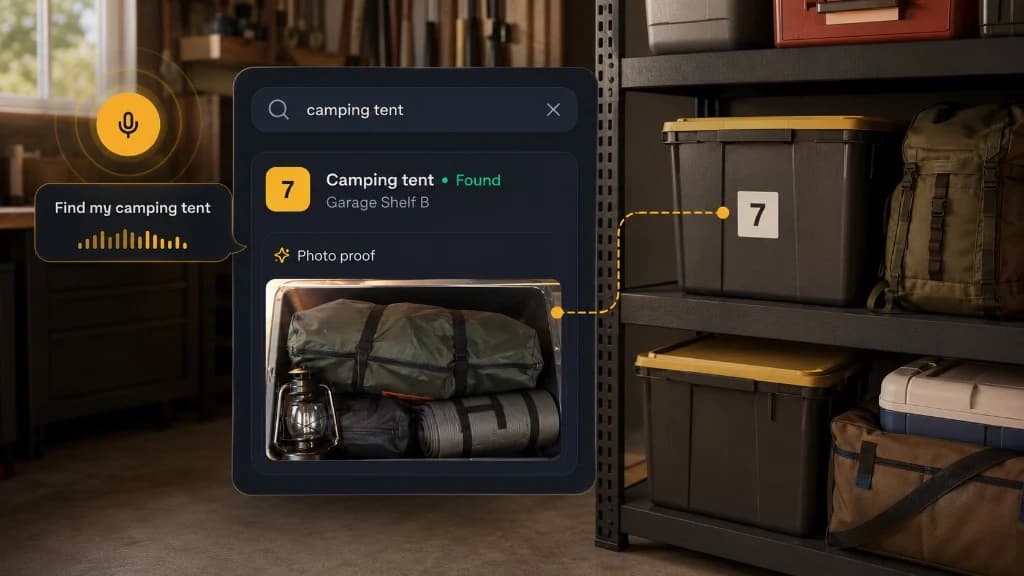
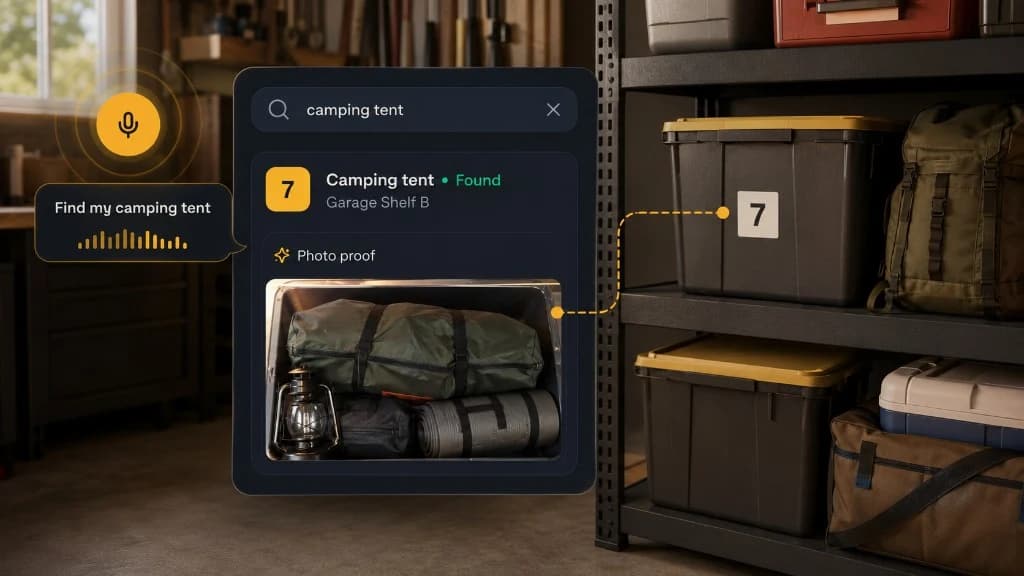
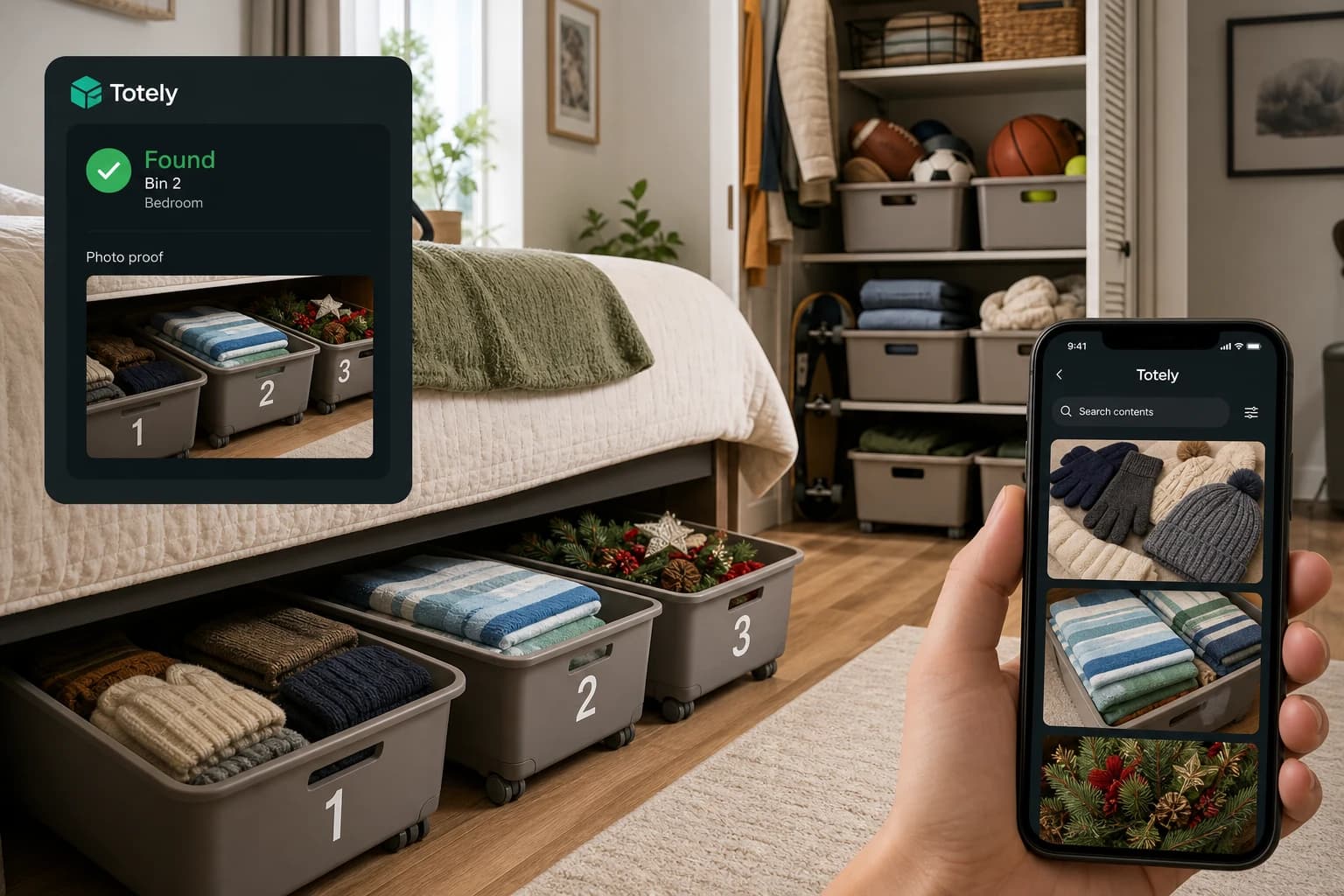
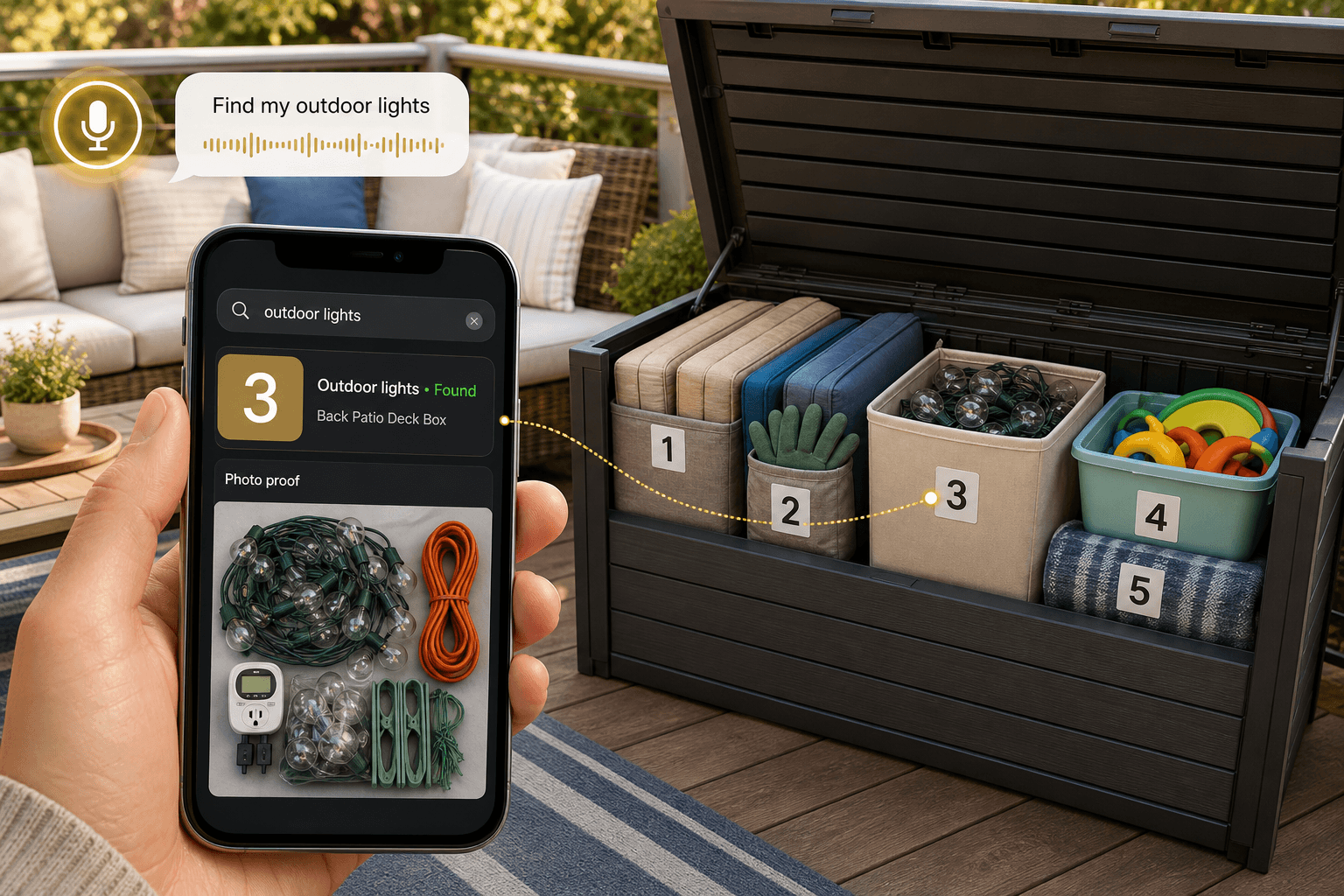
Attach one visible yellow number to the storage spot—the broad hanger, reel station, or seasonal bin—not to a flexible section of hose where it can snag or cover product markings. Photograph the stored setup and the companion parts together.
In Totely's searchable storage system, that photo can become a first item list for you to review before saving. A useful record might include:
- green 50-foot garden hose
- red spray nozzle
- brass quick-connect pair
- spare hose washers
- loose black storage strap
- exact location: Garage • North Wall • Watering Station • Hanger 18
Then search the way you naturally remember it: green 50-foot garden hose, red hose nozzle, or spare hose washers. The result can point to number 18, the saved location, and photo proof of the setup you recorded.
Review matters. A photo may not show a buried washer, an unreadable model marking, or a part that moved later. Correct the item list, add verified details, and update the photo or location when the station changes.
Totely does not drain the hose, judge damage, certify the mount, or track physical moves automatically. The numbered-photo record supports the physical system; it does not replace product instructions or maintenance.
Run a retrieval test
After saving the station, ask someone else to find the hose without coaching:
- Search for
green garden hose. - Confirm the result says
18. - Follow
Garage • North Wall • Watering Station • Hanger 18. - Match the stored hose and accessories to the photo proof.
- Confirm the hose can be removed without shifting neighboring tools.
If the person reaches the right station and finds the right companions, the system is complete. If not, fix the physical location name, photo, item list, or access path before winter makes the mistake harder to notice.
Avoid These Garden Hose Storage Mistakes
- Leaving the hose across a walkway. The hose is both harder to use and in the path of feet, wheels, and yard equipment.
- Hanging the full coil on a nail. Use a broad support intended for the load and surface.
- Winding over twists. A neat reel can still hide kinks and uneven tension.
- Packing a wet hose into a sealed container. Use a suitable hose container with drainage and airflow, and follow the product guidance.
- Leaving attachments full of water for freezing weather. Drain and store nozzles, timers, splitters, and reel components as directed.
- Assuming every garage stays above freezing. Verify the location against the equipment instructions.
- Mixing every connector in one deep bin. Store the companions with the hose they serve.
- Using color as a technical specification. Copy verified length, model, and rating details from the product; do not infer them from a green, black, or orange jacket.
- Treating a number as a care label. Number 18 identifies the station. It does not replace warnings, ratings, or manufacturer markings.
- Forgetting to update the record. If the hose moves from the north wall to a shed shelf, change the location and photo.
Garden Hose Storage FAQs
Should I drain a garden hose after every use?
Follow the hose and reel instructions. Turn off the faucet and release remaining pressure after use. Complete draining is especially important before long-term storage or freezing conditions. An everyday setup may use a reel or hanger between frequent watering sessions, but the hose should not remain under unnecessary pressure or be left where water and weather create a problem.
Is a hose reel better than a hose hanger?
Neither is universally better. A compatible reel is convenient for a long hose used often. A broad hanger is simple and visible for a hand-coiled hose. Choose based on hose length and weight, frequency of use, mounting surface, drainage, climate, and the product instructions.
Can I store a garden hose outside all winter?
Only if the instructions for the specific hose and storage equipment allow it and the system is prepared as directed. Many manufacturers call for complete draining, and some call for protected or above-freezing storage. Do not assume a cover alone protects trapped water, fittings, reel internals, or the connected faucet.
How do I coil a garden hose without kinks?
Lay out enough hose to remove twists, then form broad, relaxed loops in the direction the hose naturally accepts. Let the free length rotate, reopen any loop that buckles, and support the finished coil across a broad hanger or reel. Avoid sharp bends, tight ties, and using a coupling as a handle.
What should stay with the garden hose?
Keep the matching nozzle or wand, quick connects, caps, spare washers, and any normally paired timer or splitter in one nearby tray or pouch. Drain and store each part according to its instructions. Record the companion list so a small fitting does not become a separate search.
Where should I put the number sticker?
Place the visible number on the stable storage spot—such as the reel station, hanger plate, accessory bin, or seasonal container—where it will not cover a warning or product marking. Use that same number in the reviewed Totely record with the exact location and matching photo proof.
A Hose Station That Still Works Next Season
The right garden hose storage system is not the most decorative reel or the tightest coil. It is the routine you will actually use: water off, pressure released, hose drained when conditions require it, loops supported, attachments together, and one safe path from faucet to storage.
Once that physical station works, give it a stable number, a reviewed photo, and an exact location. Then green 50-foot garden hose can lead to Garage • North Wall • Watering Station • Hanger 18 instead of another search behind the lawn mower.