Garage Tool Inventory: How to Track Tools and Hardware at Home
Build a garage tool inventory system with zones for power tools, hand tools, hardware, cords, and project supplies—number bins, photograph contents, and search before you buy duplicates.
By Steve Watts · Co-Founder, Totely
July 24, 2026 · Updated August 26, 2026 · 15 min read
You needed the impact driver.
Or the 10mm socket. Or the box of #8 screws. Or the extension cord that is definitely in the garage somewhere.
Twenty minutes later, you are standing in front of open bins, a pegboard that has not been updated in years, and a drawer full of mixed fasteners. You still have not found the thing. So you drive to the hardware store and buy another one.
That is the real problem with garage tool inventory.
It is not that you lack tools. It is that tools, hardware, batteries, cords, and project leftovers spread across shelves, drawers, bags, and "temporary" bins until nothing is easy to retrieve.
A good garage tool inventory system should help you start projects faster, finish with less mess, and stop paying for duplicates you already own.
This guide is about how to track tools and hardware at home in bins and on shelves—not a product landing page. For broader garage layout, see garage storage zones. For the bin setup method, see garage organization with bins. For tool-specific workflows, see the tool inventory use case and garage storage inventory use case.
Quick Links
- Why Garage Tool Storage Becomes a Search Problem
- Start With Tool Zones, Not One Giant Tools Bin
- Zone 1: Power Tools and Accessories
- Zone 2: Hand Tools
- Zone 3: Hardware and Fasteners
- Zone 4: Cords, Batteries, and Chargers
- Zone 5: Paint and Project Supplies
- Separate Fastener Bins by Spec, Not by Vibes
- Number, Photo, Location, and Search
- How Totely Helps You Find Tools Later
- A Garage Tool Inventory System You Can Copy
- Garage Tool Inventory FAQs
Why Garage Tool Storage Becomes a Search Problem
Garages are project spaces.
That means tools move. Hardware gets opened for one job and partially put away. A drill comes back with a different bit installed. Extension cords get borrowed. Paint supplies migrate to a shelf after a weekend project. Batteries charge on one bench and end up in a drawer.
The most common mistake is storing everything that feels "tool-like" in one place.
Power tools, hand tools, screws, wall anchors, duct tape, sandpaper, and leftover tile spacers should not share one bin just because they all relate to home improvement.
The second mistake is labeling by category alone.
A bin labeled "hardware" might hold wood screws, drywall anchors, picture hooks, leftover bolts from a furniture kit, and three different wall plug sizes. A drawer labeled "tools" might hold a hammer, a random wrench, zip ties, and a tape measure—plus batteries that belong somewhere else.
Broad labels help you get close. They do not help you find the #8 x 1-1/4" screws before dinner.
A better system separates the garage into tool zones by retrieval:
- power tools and accessories
- hand tools
- hardware and fasteners
- cords, batteries, and chargers
- paint and project supplies
Then each zone gets numbered bins, photo records, and exact locations you can search later.
Start With Tool Zones, Not One Giant Tools Bin
Before buying another toolbox, decide what your garage actually holds.
Most households need five tool zones. You may already have pegboard, drawers, or a rolling cart—that is fine. Zones tell you what belongs where so overflow does not collapse back into mystery bins.
Core Garage Tool Zones
Power Tools and Accessories
Drills, drivers, saws, sanders, specialty tools, bits, blades, and brand-specific attachments.
Hand Tools
Wrenches, screwdrivers, pliers, hammers, levels, clamps, measuring tools, and manual cutting tools.
Hardware and Fasteners
Screws, nails, anchors, bolts, nuts, washers, brackets, hooks, and wall mounting hardware.
Cords, Batteries, and Chargers
Extension cords, power strips, tool batteries, chargers, and portable lighting.
Paint and Project Supplies
Paint, primer, caulk, rollers, brushes, sandpaper, tape, drop cloths, and leftover project materials.
The point is not to overbuild a workshop.
The point is to stop storing tools in a way that forces you to empty half the garage to hang one shelf.
For shelf and tote layout ideas, see garage storage ideas for totes and bins. For the full garage setup sequence, see the garage organization guide.
Zone 1: Power Tools and Accessories
Power tools are expensive, bulky, and full of small accessories that disappear.
Drill bits, driver bits, blade packs, sanding pads, router bits, and brand-specific attachments should stay near the tools they belong to—not in a general hardware bin.
Primary Power Tool Shelf
Drill, impact driver, circular saw, sander, and frequently used corded tools.
Accessory Bin
Extra drill bits, driver bits, hole saws, sanding pads, and blades grouped by tool type.
Specialty Tool Bin
Rotary tool, jigsaw, heat gun, or other tools used less often but worth tracking.
Case and Bag Zone
Original cases, soft bags, and protective storage for tools you transport.
If multiple people use the garage, power tool zones reduce friction.
Someone should be able to find the impact driver, the charger, and the bit set without unpacking every case on the shelf.
Keep loose accessories out of the bottom of large totes. Small parts sink, mix, and become unfindable. Use divided organizers, small bins, or pouches inside the larger zone.
Zone 2: Hand Tools
Hand tools are where many garages feel organized already—until they are not.
A pegboard helps for daily tools. The problem is overflow: extra wrenches, specialty pliers, tile tools, automotive tools, and the random screwdriver that only fits one appliance.
Daily Hand Tool Area
Pencil, tape measure, hammer, utility knife, level, most-used screwdrivers, and pliers.
Wrench and Socket Bin
Combination wrenches, socket sets, adapters, and extensions grouped by size range.
Measuring and Layout Bin
Squares, chalk line, stud finder, laser level, and marking tools.
Clamps and Holding Bin
Spring clamps, bar clamps, vises, and work-holding accessories.
Hand tools often get borrowed and returned to the wrong spot.
A numbered bin record helps when the socket set is not on the pegboard and the stud finder is not in the junk drawer. Search for "socket set" or "stud finder" and go to the right bin instead of opening four drawers.
Zone 3: Hardware and Fasteners
Hardware is the zone that breaks most garage systems.
Fasteners look interchangeable until you need a specific length, gauge, head type, or anchor style. Mixed hardware bins save space for a week and waste time for years.
Do not store all fasteners in one coffee can unless you enjoy sorting medleys before every project.
Wood Screw Bin
Screws grouped by size and length, not mixed with drywall screws.
Drywall and Anchor Bin
Drywall screws, wall anchors, toggle bolts, and picture-hanging hardware.
Machine Hardware Bin
Nuts, bolts, washers, and specialty machine fasteners in labeled inner containers.
General Utility Bin
Zip ties, hose clamps, picture hooks, cup hooks, and small brackets.
If you buy fasteners in bulk, keep the daily-use sizes in an easy bin and move overflow to numbered backstock on a higher shelf.
Photograph the open bin before closing it. A photo of labeled inner containers is much more searchable than a bin marked "screws."
Zone 4: Cords, Batteries, and Chargers
Cords and batteries drift.
Extension cords get used outdoors and coiled onto the wrong hook. Tool batteries sit on the charger, then migrate to a drawer. Flashlights lose their batteries. Power strips and adapters pile up because they almost fit in every bin.
Create a dedicated cords, batteries, and chargers zone.
Extension Cord Bin
Indoor and outdoor cords grouped by length, with damaged cords separated for repair or discard.
Battery and Charger Station
Tool batteries, chargers, and compatible packs grouped by tool brand or platform.
Utility Power Bin
Power strips, adapters, work lights, and portable lighting accessories.
Flashlight and Cell Bin
Flashlights, headlamps, spare cells, and small portable lights.
This zone works best when it is visible.
If batteries and chargers hide in closed bins on a high shelf, you will buy duplicates. Keep the active charger station reachable and track overflow in numbered backstock.
Follow manufacturer guidance for battery storage, charging, and disposal. Totely helps you remember where batteries and chargers live—it does not replace safety instructions printed on the tool or battery.
Zone 5: Paint and Project Supplies
Paint and project supplies are often treated as temporary.
Then they live in the garage for years.
Leftover paint, primer, caulk, rollers, brushes, sandpaper, painter's tape, drop cloths, tile spacers, and specialty adhesives should have a project zone separate from everyday tools.
Paint Storage Shelf
Cans and quarts grouped by room or project, with damaged or dried cans separated out.
Application Bin
Rollers, brushes, trays, liners, and stir sticks.
Prep and Finish Bin
Sandpaper, tape, caulk, putty, wood filler, and surface prep supplies.
Active Project Bin
Materials for the current job only—not long-term storage.
When a project ends, decide what returns to long-term storage and what should leave the garage.
An "active project bin" prevents half-used supplies from scattering into tool bins. It also gives you one place to search when the bathroom repaint starts again in two years.
Store paint and chemicals according to product labels and local disposal rules. A searchable inventory record does not replace manufacturer storage guidance.
Separate Fastener Bins by Spec, Not by Vibes
If you fix one hardware habit, fix this one.
Mixed fastener bins feel efficient until you need a specific screw for one bracket.
Separate by spec well enough that search terms match reality:
Fastener Bin Examples
Bin A
#6 wood screws, short length, for hinges and small hardware.
Bin B
#8 wood screws, common cabinet and bracket sizes.
Bin C
Drywall screws by length, kept separate from wood screws.
Bin D
Wall anchors and toggle bolts for drywall and hollow walls.
Bin E
Machine bolts, nuts, and washers in divided inner containers.
Use inner containers even inside numbered bins.
A large bin labeled 3 on the outside can hold four smaller containers inside—each photographed separately if you search for them often.
Add plain-language notes when specs matter:
- "cabinet hinge screws"
- "deck screws leftover from 2024 railing"
- "picture hanging anchors for drywall"
You do not need a perfect industrial labeling system. You need names you would actually search before opening every bin on the shelf.
Hardware Bin Rules That Save Time
- Keep wood screws, drywall screws, and machine hardware in separate numbered bins
- Use inner containers for mixed bolt and washer sets
- Photograph inner labels or sorted compartments before closing the lid
- Move leftover one-off fasteners out of daily bins if they do not match the bin's job
- Search before buying another box of the same size you already own
Number, Photo, Location, and Search
A pegboard hook or drawer label helps for daily tools.
Closed bins, overflow shelves, and backstock hardware need more.
Use simple visible numbers:
1 2 3 4 5
Then connect each number to a record:
Bin 1 Category: Power Tool Accessories Location: Workbench shelf, left side Contents: drill bits, driver bits, hole saws, sanding pads
Bin 2 Category: Hand Tools — Sockets Location: Rolling cart, middle drawer Contents: socket set, extensions, adapters
Bin 3 Category: Wood Screws Location: Garage shelf B, middle row Contents: #6 and #8 wood screws in divided inner containers
Bin 4 Category: Cords and Lighting Location: Wall hook row, lower hooks Contents: 25 ft extension cords, work light, spare cells
Bin 5 Category: Paint and Prep Location: Garage shelf C, top row Contents: interior paint, primer, rollers, sandpaper, painter's tape
The outside stays simple. The details stay searchable.
See how to keep track of storage bins for the numbered workflow and how to label storage bins for outside labels that stay readable in a garage.
Templates can help you start faster. See Totely templates for layouts you can adapt to tool zones.
Search Before You Shop or Start a Project
Garage tool inventory pays off when you search at the right moment.
Before buying another box of screws, search for the size you need. Before starting a project, search for the tool, bit, anchor type, or cord you expect to use. Before reorganizing a shelf, photograph the bin so the record still matches what is inside.
Search Before You Act
Before a hardware store run
Search for screw size, anchors, tape measure, or specialty bit you think you are missing.
Before a project
Search for impact driver, socket size, stud finder, caulk, or sandpaper.
After borrowing tools
Return items to the numbered bin and update the photo if contents changed.
After cleanup
Photograph bins that were opened during the job so hardware does not stay mixed.
This is not about cataloging every washer in the house.
It is about stopping duplicate purchases and cutting retrieval time for the items that actually slow projects down.
How Totely Helps You Find Tools Later
Totely is useful because garage tool inventory depends on closed bins, mixed hardware, and long gaps between projects. Treat the garage as a place to inventory your storage bins—not just a pile of unlabeled totes.
After a few months, it is easy to forget which bin holds the socket set, which shelf has the #8 screws, or where the spare batteries landed.
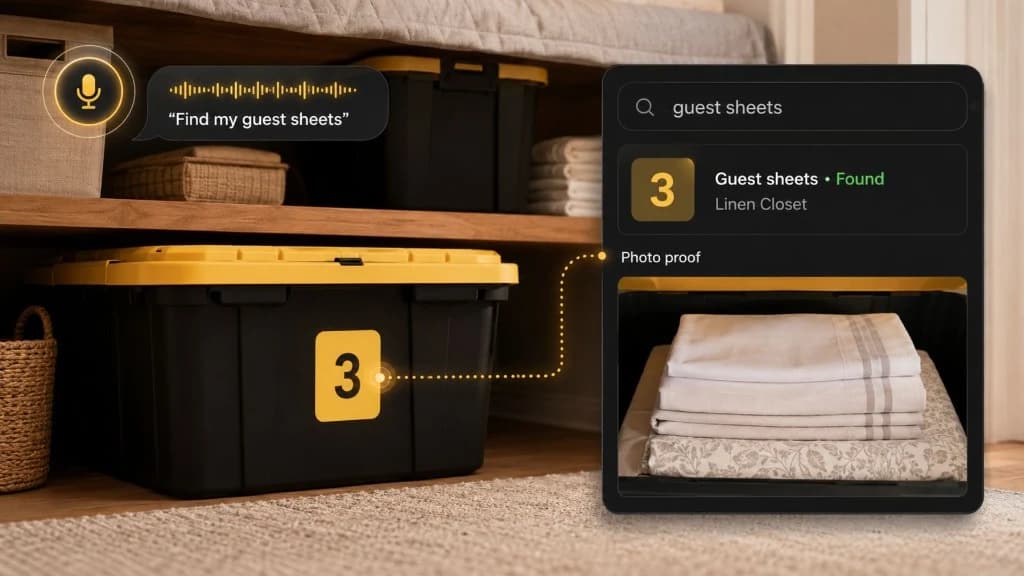
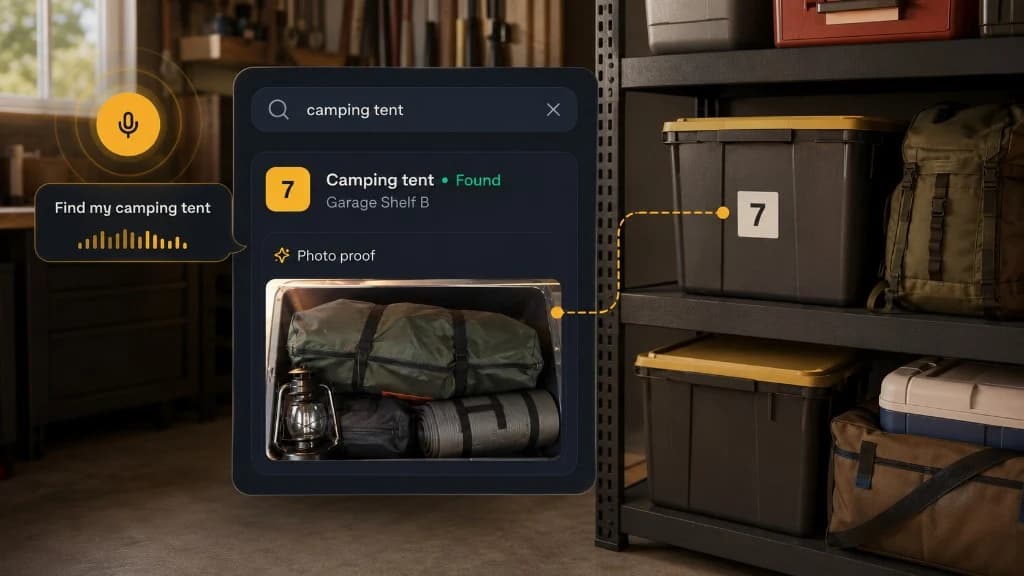
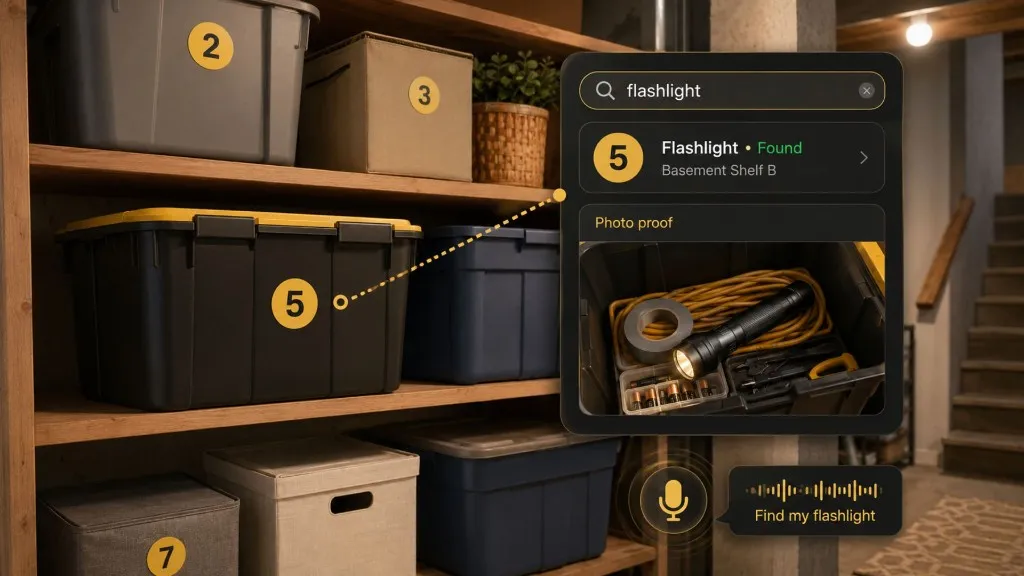
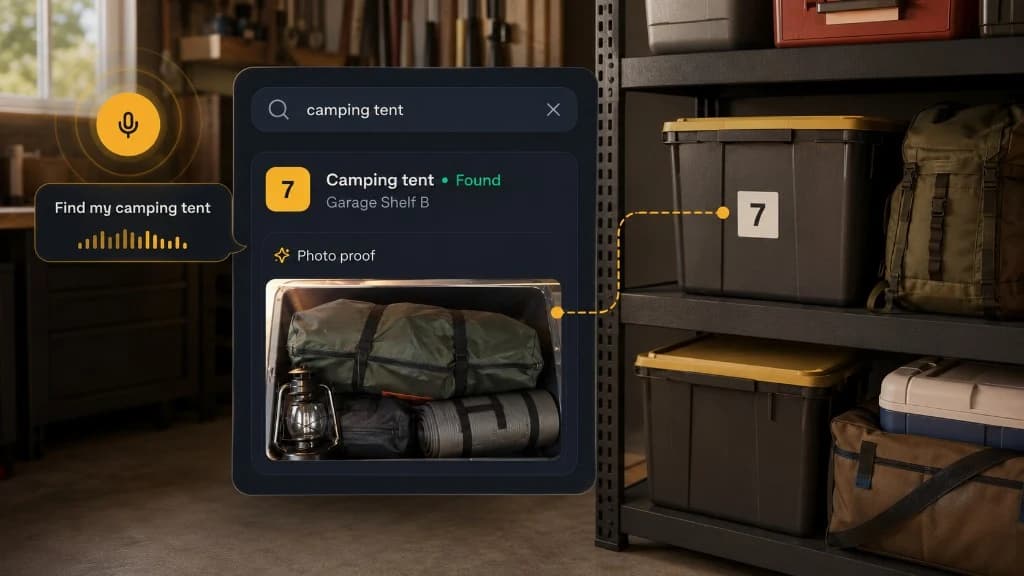
With Totely, you can make tool bins searchable without building a spreadsheet from scratch.
Here is the simple flow:
Number each bin, drawer section, shelf zone, or tool tote
so it has a clear identity.
Snap a photo
of what is inside—especially hardware with visible inner labels or sorted compartments.
Let AI build the first item list
from what it can see.
Review or edit if needed
so the words match how you search: "impact driver bits," "10mm socket," "#8 screws."
Save the exact location
such as "Workbench Left Shelf," "Rolling Cart Middle Drawer," or "Garage Shelf B."
Search naturally later
for "socket set," "extension cord," "wall anchors," "paint roller," or "drill batteries."
Use photo proof
to confirm what is inside before opening every bin or buying a duplicate tool.
Totely does not replace manufacturer manuals, safety guidance, tool warranties, or professional inventory systems.
It helps you remember what you stored and where it lives.
Think of it as the digital memory layer for the tools and hardware that spread across bins between projects.
See the tool inventory use case, the garage storage inventory use case, or try the One-Tote Test on one hardware bin before you expand the system.
A Garage Tool Inventory System You Can Copy
Here is a simple setup that works well for many home garages.
A Garage Tool Inventory System You Can Copy
Bin 1: Power Tool Accessories
Drill bits, driver bits, blades, sanding pads, and attachments grouped by tool.
Bin 2: Hand Tools — Daily
Pencil, tape measure, hammer, utility knife, level, pliers, and most-used screwdrivers.
Bin 3: Sockets and Wrenches
Socket set, wrenches, adapters, and extensions.
Bin 4: Wood and Drywall Fasteners
Wood screws, drywall screws, and anchors in separate inner containers.
Bin 5: Cords, Batteries, and Lighting
Extension cords, batteries, chargers, flashlights, and work lights.
Bin 6: Paint and Project Prep
Paint, primer, rollers, sandpaper, caulk, tape, and drop cloths.
Bin 7: Active Project Bin
Current job materials only—cleared when the project ends.
Keep daily hand tools on pegboard, drawer, or cart within arm's reach.
Use numbered bins for overflow, hardware backstock, and anything that disappears when the lid closes.
Garage Tool Inventory FAQs
What is the best way to organize tools in a garage?
The best way to organize tools in a garage is to separate power tools, hand tools, hardware, cords and batteries, and paint or project supplies into distinct zones. Keep daily tools reachable, move overflow into numbered bins, photograph contents, save exact shelf or drawer locations, and search before buying duplicates.
How do I track hardware and fasteners without overcomplicating it?
Separate wood screws, drywall screws, anchors, and machine hardware into different numbered bins. Use inner containers for mixed bolt and washer sets. Photograph sorted compartments before closing the lid, and search by the size or project name you would actually use later.
Should power tool batteries be stored in the same bin as hand tools?
Usually no. Keep batteries, chargers, and compatible packs in a dedicated cords and batteries zone that stays visible and reachable. Track overflow batteries in numbered backstock, and follow manufacturer storage and charging guidance on the battery or charger.
How can I stop buying duplicate tools?
Search your bin records before shopping. Photograph hardware and accessories when bins are restocked. Keep fastener sizes separated so you can confirm whether #8 screws or wall anchors are already on the shelf. Most duplicate purchases happen because closed bins hide what you own.
Do I need to inventory every tool I own?
No. Focus on the tools and supplies you hunt for, borrow, rebuy, or need mid-project: socket sets, driver bits, specialty anchors, extension cords, batteries, paint supplies, and separated fastener sizes. Daily pegboard tools may not need a full record unless they frequently disappear.
How can Totely help with garage tool inventory?
Totely helps you number bins, snap photos, let AI build the first item list, review or edit the record, save the exact location, and search naturally later. Photo proof helps you confirm which bin holds sockets, screws, cords, batteries, or paint supplies before you empty the shelf or buy another box.
Find the Tool Before You Buy It Again
Good garage tool inventory is not about cataloging every item in the house.
It is about retrieving the right tool, fastener, cord, or project supply when something needs fixing—and not paying twice because a bin was closed and unlabeled.
Start with one zone. Hardware. Power tool accessories. Cords and batteries. Paint supplies. Pick the area that wastes the most time today.
Give each bin a simple number. Take a photo. Save the location. Search before you shop.
With Totely, the bins on your garage shelf can become searchable—so the next project starts with the right socket, not with opening every tote on the floor.