Garage Storage Zones: How to Set Up a Garage That Stays Organized
Create garage storage zones by retrieval—tools, sports, camping, holiday decor, and household backstock each get a clear home.
By Ben Stallsworth · Co-Founder, Totely
May 16, 2026 · Updated August 27, 2026 · 14 min read
This is the garage layout / zones guide—where categories live in the space. Pair it with garage organization with bins for the container method, or garage storage solutions for a quick solutions list.
Most garages are not messy because people do not care.
They are messy because garages are asked to do too many jobs at once.
One corner holds tools. Another holds sports gear. The back shelf has holiday decorations. The floor catches shoes, helmets, bike accessories, garden gloves, extension cords, camping chairs, and half-finished projects. A few bins get added to make things look cleaner, but eventually those bins become their own version of clutter.
That is where garage storage zones help.
Instead of organizing the garage by whatever pile is bothering you most, zones organize the garage by how you actually use the space. A good zone system tells you where tools go, where cords live, where camping gear returns, where holiday bins belong, and where household backstock should be stored.
If you are already using bins, zones make them easier to manage. If you are following a broader system like garage organization with bins, zones are the foundation that makes numbered bins, shelf locations, photo records, and search actually work. Once zones are set, plan around retrieval so each tote has a rack, row, or slot you can find later.
The goal is not to create a showroom garage.
The goal is to create a garage where you can find what you need without opening every tote.
Quick Links
- Why Garage Storage Zones Work Better Than Random Bins
- Start With Retrieval Moments
- Zone 1: Tools and Hardware
- Zone 2: Cords, Batteries, and Utility Supplies
- Zone 3: Garden and Yard Supplies
- Zone 4: Sports, Bikes, and Outdoor Gear
- Zone 5: Camping and Adventure Gear
- Zone 6: Holiday and Seasonal Storage
- Zone 7: Household Backstock and Overflow
- How to Number Garage Zones and Bins
- How Totely Makes Garage Zones Searchable
- Garage Storage Zone FAQs
Why Garage Storage Zones Work Better Than Random Bins
Bins can make a garage look organized very quickly.
That does not always mean the garage is actually easier to use.
If every random item gets dropped into the nearest available tote, you may end up with a cleaner floor but a harder search problem. A bin labeled "garage stuff" can quietly collect batteries, bungee cords, sprinkler parts, light bulbs, work gloves, old tape, bike tools, hooks, and car cleaning cloths.
The outside looks tidy.
The inside becomes a mystery.
Garage storage zones prevent that by giving each category of use a home. Instead of asking, "Where can I put this?" the system answers, "What kind of use does this belong to?"
That one shift makes the garage easier to maintain.
A bin of extension cords belongs in the cords and utility zone. Tent stakes belong in the camping zone. Wreath hooks belong in the holiday zone. Garden gloves belong in the yard zone. The more obvious the home, the more likely items are to return there.
For layout ideas beyond zones, see garage storage ideas for totes and bins.
Start With Retrieval Moments
Before you create zones, think about retrieval moments.
A retrieval moment is the reason someone goes into the garage looking for something.
Common garage retrieval moments include:
Common Garage Retrieval Moments
Fixing something quickly
Tape, batteries, work gloves, flashlight, screws, extension cords, or a small tool.
Starting a yard project
Garden gloves, sprinkler parts, hose attachments, plant ties, pruning tools, or seed packets.
Packing for a trip
Camping chairs, tent stakes, lanterns, headlamps, ground tarp, or camp kitchen supplies.
Getting kids ready for practice
Sports balls, helmets, bike accessories, cleats, beach gear, or outdoor games.
Decorating for a holiday
Holiday lights, wreath hooks, extension cords, replacement bulbs, gift wrap, or seasonal decor.
Restocking the house
Paper goods, spare light bulbs, extra cleaning supplies, batteries, or storage supplies.
These moments are more useful than vague categories like "misc," "garage," or "seasonal." Build zones around the way your household actually searches.
Zone 1: Tools and Hardware
Your tool and hardware zone should be close to where small repairs happen.
This might be near a workbench, cabinet, pegboard, shelf, or wall-mounted tool area. The point is to keep repair-related items together without forcing everything into one giant "tools" bin.
Good items for this zone include:
Hand tools Hammer, screwdrivers, pliers, wrench set, tape measure, utility knife.
Small hardware Screws, nails, anchors, hooks, washers, bolts, picture-hanging supplies.
Project basics Painter's tape, duct tape, work gloves, drill bits, measuring tools.
Small repair extras Flashlight, spare batteries, bungee cords, zip ties, small clamps.
Use open wall storage for tools you reach for often. Use small bins, drawers, or numbered containers for hardware and loose pieces.
A good label might be:
Bin 4 — Small Hardware Location: Workbench shelf, left side Contents: screws, anchors, hooks, washers, picture hangers, drill bits.
This is more useful than one large bin labeled "tools."
Zone 2: Cords, Batteries, and Utility Supplies
Cords are one of the easiest garage categories to lose track of.
Extension cords, chargers, adapters, power strips, rope, zip ties, bungee cords, hooks, and spare batteries often end up scattered because they are useful in multiple contexts.
That is exactly why they need their own zone.
Good items for this zone include:
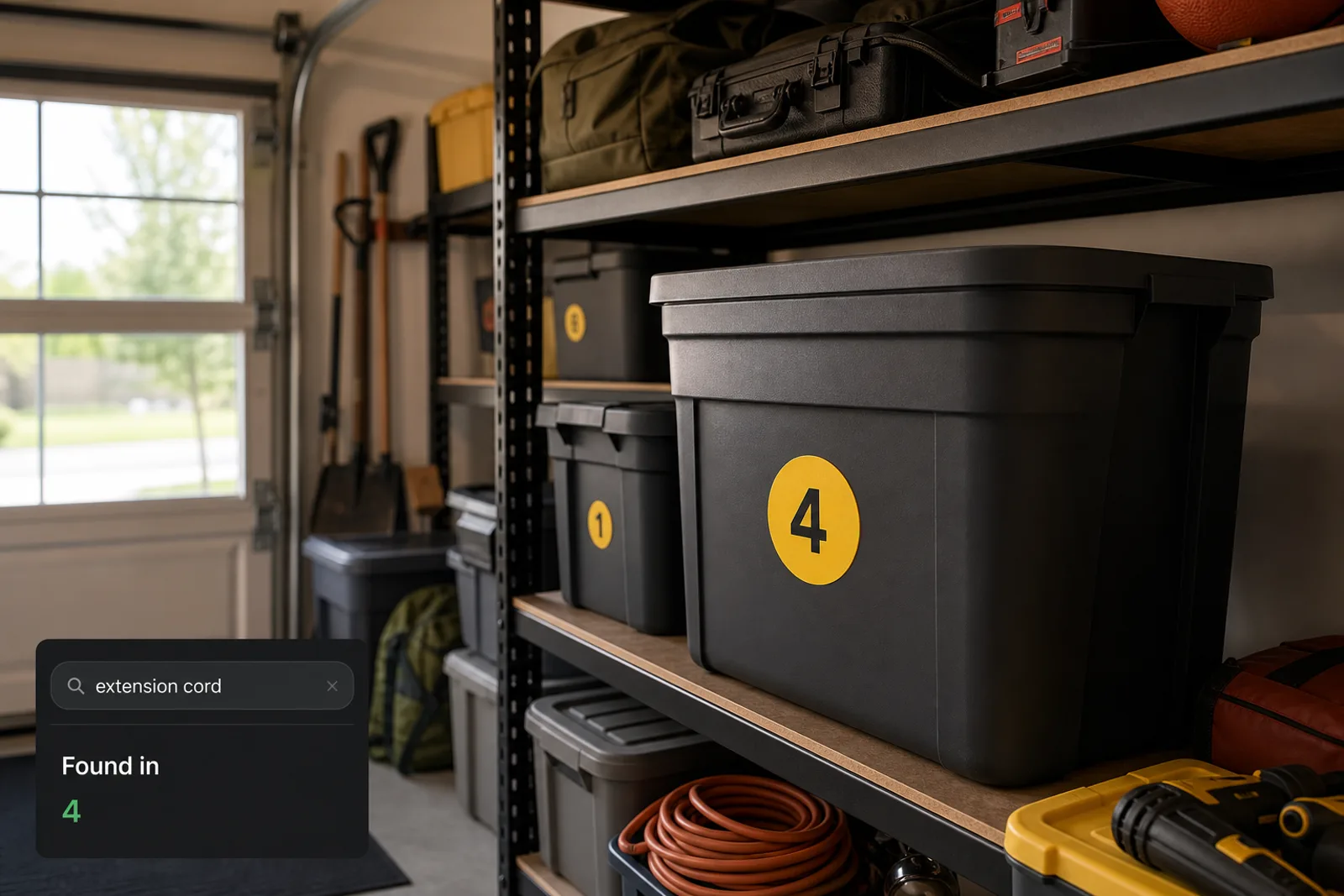
Extension cords Outdoor cords, indoor cords, short cords, heavy-duty cords.
Charging and power supplies Chargers, adapters, power strips, battery packs, spare cables.
Utility helpers Rope, zip ties, bungee cords, hooks, clips, Velcro straps.
Battery backstock AA, AAA, C, D, button batteries, flashlight batteries, tool batteries where appropriate.
Use cautious storage for batteries, charging items, and electrical supplies. Follow product labels and manufacturer instructions. For garage fire safety, the U.S. Fire Administration recommends keeping combustible items away from appliances, plugging only one charging appliance into an outlet, and avoiding extension cords when charging appliances.
For Totely-style tracking, number this zone or its bins clearly:
Bin 7 — Cords and Utility Location: Garage shelf, middle row Contents: extension cords, power strips, chargers, adapters, rope, zip ties, bungee cords. Notes: Check cords before seasonal use.
Zone 3: Garden and Yard Supplies
Garden supplies often get mixed into garage storage because they are seasonal and dirty.
That does not mean they should be scattered.
Your garden and yard zone should hold the small items that support outdoor maintenance, while larger items can live on hooks, wall racks, or dedicated floor space.
Good items for this zone include:
Small garden tools Trowel, pruners, hand rake, plant labels, small shovel.
Watering and sprinkler supplies Sprinkler parts, hose attachments, washers, connectors, timers.
Garden wear Garden gloves, kneeling pad, sun hat, small towels.
Plant and yard extras Plant ties, seed packets, twine, clips, small bags of supplies.
Long-handled tools usually work better on wall hooks than inside bins. Small parts work beautifully in labeled bins, drawers, or small containers inside a larger numbered tote.
Example:
Bin 9 — Garden and Sprinkler Parts Location: Back wall shelf, lower row Contents: garden gloves, sprinkler parts, hose attachments, plant ties, small hand tools. Notes: Bring forward in spring.
Zone 4: Sports, Bikes, and Outdoor Gear
Sports gear needs to be easy to reach, especially if kids use it.
This zone should be lower, more visible, and easier to return items to. If the system is too fussy, sports gear will land on the floor again.
Good items for this zone include:
Sports gear Balls, cones, gloves, pads, rackets, outdoor games.
Bike accessories Helmets, pumps, patch kits, lights, locks, water bottle cages.
Beach and summer gear Beach towels, goggles, swim bags, sandals, sunscreen backstock, pool toys.
Winter outdoor gear Gloves, hats, snow gear, boot accessories, sledding extras.
Use open baskets for items used weekly. Use numbered bins for off-season gear or accessories that need to stay grouped.
Example:
Bin 12 — Sports and Bike Gear Location: Garage shelf, lower row Contents: helmets, bike lights, pump needle, small sports gear, beach goggles. Notes: Keep low enough for kids to reach.
Zone 5: Camping and Adventure Gear
Camping gear is easy to own and hard to find.
The tent is in one spot. The stakes are in another. The headlamps are missing. The lantern has old batteries. The camp kitchen bin has half of what you need.
A camping zone keeps trip setup from turning into a garage dig.
Good items for this zone include:
Shelter and setup Tent stakes, ground tarp, rope, repair kit, mallet.
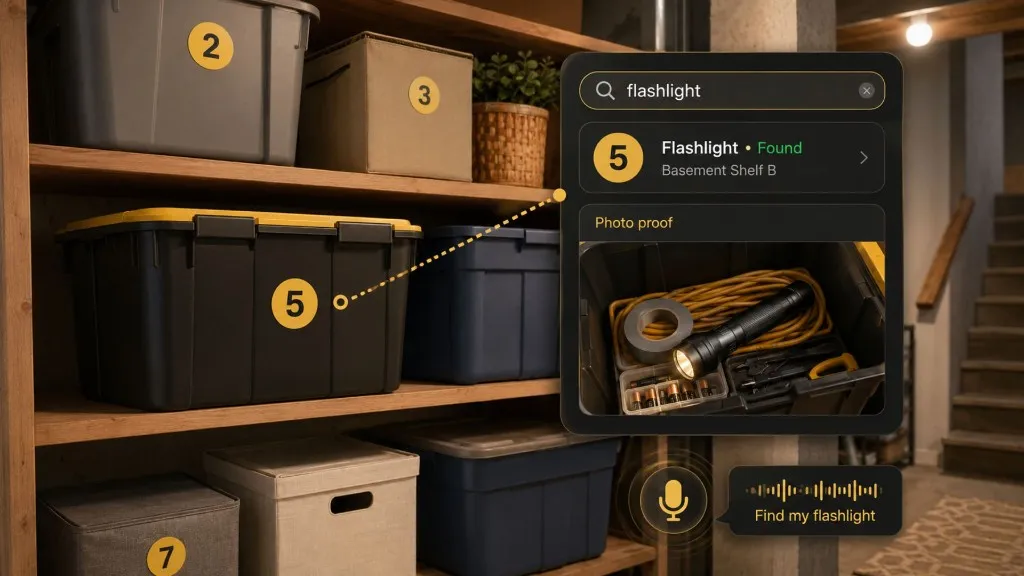
Lighting Headlamps, lanterns, flashlights, spare batteries.
Camp comfort Folding chairs, picnic blanket, dry bags, rain ponchos.
Camp kitchen Cooking tools, utensils, camp mugs, small cutting board, cleaning cloths.
Keep fuel, propane, food, sharp items, and fire-starting supplies separate and follow all product labels, safety guidance, local rules, and storage requirements. Totely can help you remember where gear lives, but it does not replace proper outdoor or fire-safety guidance.
Example:
Bin 15 — Camping First Open Location: Garage shelf, middle row Contents: tent stakes, headlamps, lanterns, ground tarp, rain ponchos, repair kit. Notes: Restock batteries before next trip.
See how to organize camping gear in storage totes for a packing workflow that keeps this zone updated after trips.
Zone 6: Holiday and Seasonal Storage
Holiday and seasonal items are prime candidates for garage bins because they are used intensely, then ignored for months.
The problem is that "holiday" is too broad.
Divide seasonal storage by retrieval moment.
Useful sub-zones include:
Christmas setup Holiday lights, extension cords, timers, replacement bulbs, clips, wreath hooks.
Decor and ornaments Ornaments, garland, stockings, table decor, fragile decorations.
Wrapping supplies Gift wrap, tags, ribbon, tape, bags, tissue paper.
Seasonal outdoor gear Winter gear, beach gear, summer sports gear, seasonal decor.
Example:
Bin 18 — Christmas Setup Location: Garage shelf, top row Contents: holiday lights, extension cords, replacement bulbs, clips, wreath hooks. Notes: Check lights before decorating weekend.
This supports the garage bin system because it keeps seasonal storage findable instead of letting it become one giant stack of mystery holiday totes.
Zone 7: Household Backstock and Overflow
Most garages end up holding household overflow.
That can be useful if it is intentional.
It becomes frustrating when backstock spreads across every available shelf.
Good items for this zone include:
Paper goods Paper towels, tissues, toilet paper, napkins.
Household supplies Light bulbs, storage bags, extra bins, replacement filters, extra cords.
Small overflow items Backup appliances, serving pieces, guest linens, rarely used household items.
Restock items Batteries, tape, cleaning cloths, household basics.
Use caution with cleaning supplies, paint supplies, chemicals, flammable items, electronics, paper, photos, linens, and anything affected by temperature, moisture, pests, or safety rules. Keep safety-sensitive items stored according to product labels, manufacturer instructions, local rules, and appropriate guidance.
Example:
Bin 21 — Household Backstock Location: Workbench cabinet, right side Contents: spare light bulbs, batteries, storage supplies, paper goods, extra tape. Notes: Check before buying duplicates.
This kind of zone can help prevent duplicate purchases because the household knows where extra supplies live.
How to Number Garage Zones and Bins
Once your zones are clear, number the bins.
You can number every container in one continuous sequence:
Bin 1, Bin 2, Bin 3, Bin 4
Or you can use zone-based numbering if you have a large garage:
T1 for tools G1 for garden C1 for camping H1 for holiday
For most households, simple numbers are easier.
The outside label should be large, visible, and consistent. Place it on the side that faces out, not only on the lid. For high shelves, make the number readable from below. For floor zones, make the label visible from the direction you approach.
Keep the outside label simple:
Bin 5 — Garage Quick Repair Bin 9 — Garden Parts Bin 15 — Camping First Open
The details should live in the record:
Bin number: 15 Zone: Camping and Adventure Location: Garage shelf, middle row Photo: Contents before closing Key contents: tent stakes, headlamps, lanterns, ground tarp, repair kit Notes: Restock batteries before next trip
The number helps you identify the bin. The record helps you find what is inside.
See how to label storage bins, storage tote labels that work, and keep track of storage bins for the full numbering and tracking workflow.
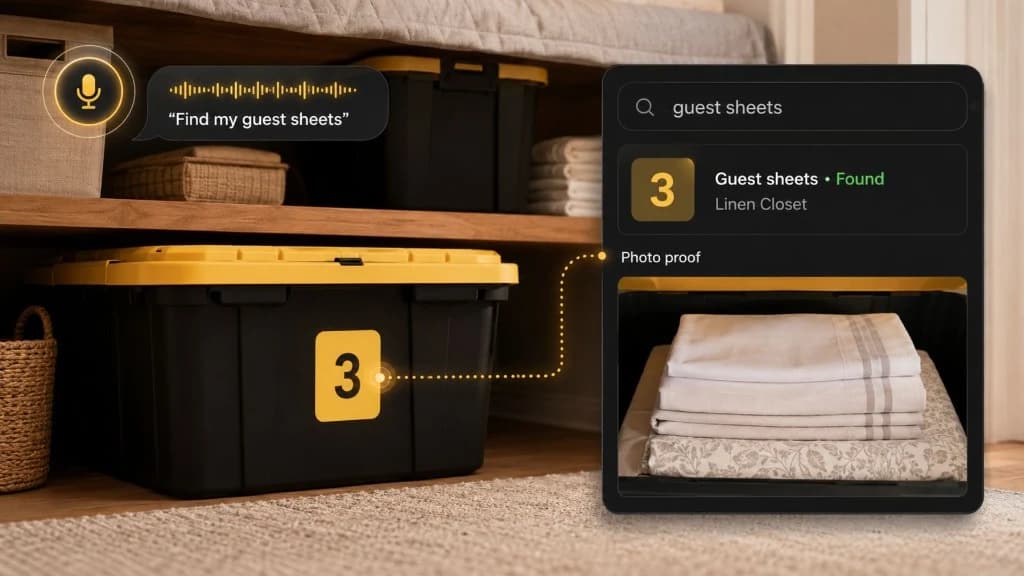
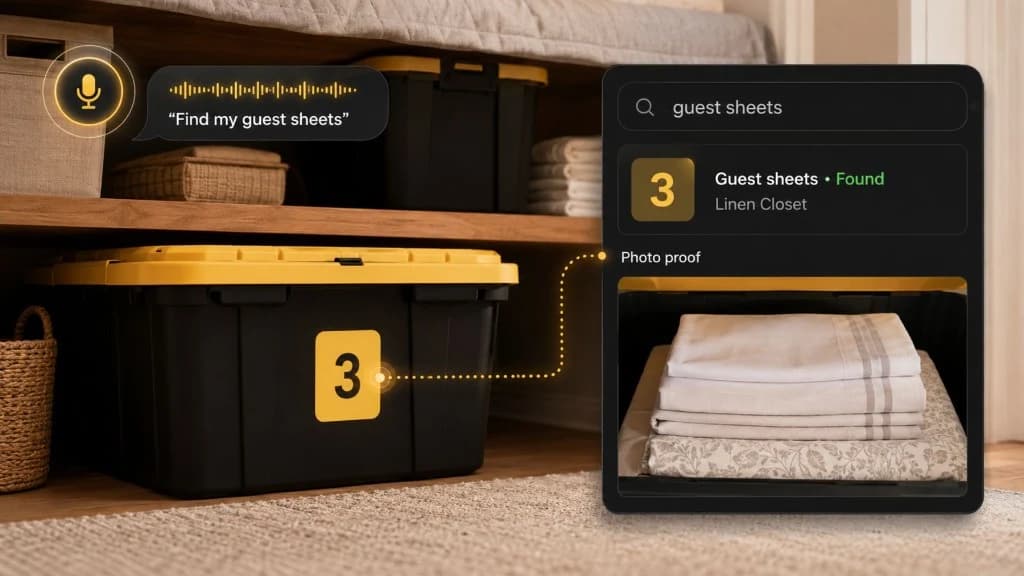
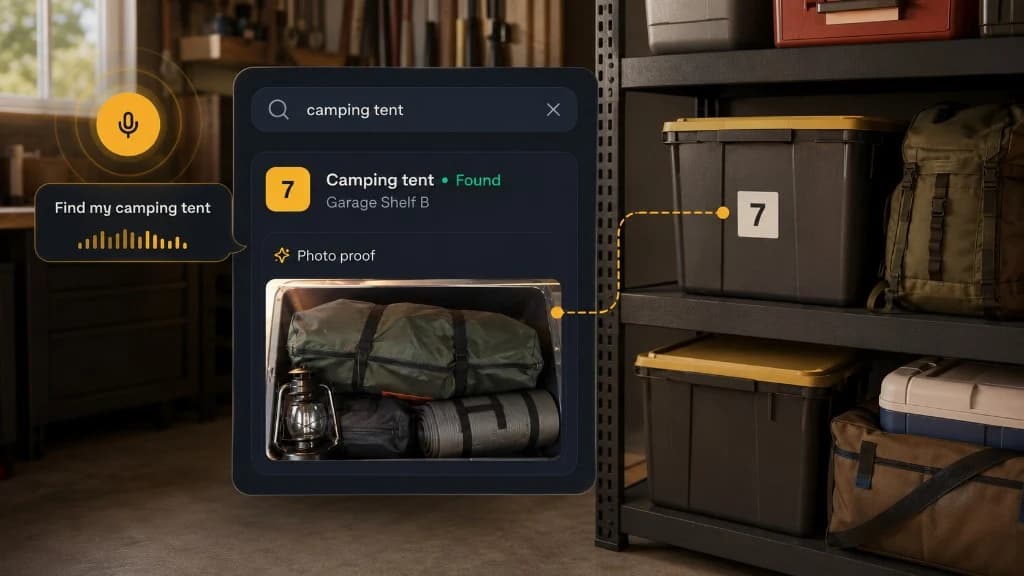
How Totely Makes Garage Zones Searchable
Garage storage zones are easier to maintain when the contents are searchable.
Totely helps connect the physical garage to a simple digital memory of what is stored where.
Here is the simple flow:
Create garage zones
for tools, utility supplies, garden items, sports gear, camping gear, holiday storage, and backstock.
Number each bin, tote, shelf, or zone
so it has a clear identity.
Snap a photo before closing each bin
so you have visual proof of what is inside.
Let AI build the first item list
from what it can see.
Review or edit if needed
so the words match how your household searches.
Save the exact garage location
such as "left wall shelf, top row," "garage shelf middle row," "workbench cabinet," or "back wall storage rack."
Add notes
like "restock batteries," "check cords," "holiday lights," "camping first open," "garden parts," or "keep low for kids."
Search naturally later
for "extension cords," "bike helmet," "tent stakes," "holiday lights," "sprinkler parts," "work gloves," or "AA batteries."
Use photo proof
to confirm what is inside before opening every bin.
Totely does not require QR codes, barcodes, or manual entry of every item.
The simple idea is this: your garage zones give items a physical home, and Totely makes those homes searchable.
Try the One-Tote Test on one zone, or see garage storage inventory for a full use-case walkthrough.
A Garage Zone System You Can Copy
Use this as a starting system for a typical garage.
A Garage Zone System You Can Copy
Zone 1 — Tools and Hardware
Location: Workbench wall and lower shelf. Bins: small hardware, measuring tools, fasteners, tape, work gloves.
Zone 2 — Cords and Utility
Location: Left wall shelf, middle row. Bins: extension cords, chargers, adapters, rope, zip ties, bungee cords.
Zone 3 — Garden and Yard
Location: Back wall rack. Bins: garden gloves, sprinkler parts, hose attachments, plant ties, small hand tools.
Zone 4 — Sports and Outdoor
Location: Low shelf near garage door. Bins: helmets, sports balls, bike accessories, beach gear, outdoor games.
Zone 5 — Camping and Adventure
Location: Garage shelf, middle row. Bins: tent stakes, headlamps, lanterns, ground tarp, repair kit, camp kitchen supplies.
Zone 6 — Holiday and Seasonal
Location: Top shelf or less-used rack. Bins: holiday lights, Christmas decorations, wreath hooks, seasonal decor, winter gear.
Zone 7 — Household Backstock
Location: Workbench cabinet or dedicated shelf. Bins: spare light bulbs, batteries, storage supplies, paper goods, backup household items.
Start with the zones you use most. You do not need to solve the entire garage in one weekend.
One clear zone is better than a whole garage full of mystery bins.
Garage Storage Zone FAQs
What are garage storage zones?
Garage storage zones are dedicated areas for specific types of use, such as tools, hardware, cords, garden supplies, sports gear, camping gear, holiday decor, seasonal items, and household backstock. Zones make it easier to know where items belong and where to find them later.
What garage zones should I create first?
Start with the categories you search for most often. For many households, that means tools and hardware, cords and batteries, garden supplies, sports gear, camping gear, holiday storage, and household backstock.
Should every garage item go in a bin?
No. Bins work well for small grouped items, seasonal supplies, dusty storage, and things that need containment. Frequently used items, long-handled tools, bikes, sports balls, and heavy items may work better on hooks, shelves, racks, pegboards, cabinets, or open baskets.
How do I keep garage zones from getting messy again?
Use simple zone names, visible bin numbers, photo records, exact shelf locations, and quick updates after projects or seasonal swaps. Avoid vague catch-all bins labeled "misc," "garage," or "stuff."
How should I label garage storage zones?
Use a clear zone name and visible bin numbers. For example, "Garden and Yard — Bin 3" or "Camping First Open — Bin 8." Keep detailed item lists in a searchable record instead of writing everything on the outside.
How can Totely help with garage storage zones?
Totely helps you number bins and zones, photograph contents, let AI create the first item list, save exact garage locations, add notes, and search naturally later. Photo proof helps you confirm what is inside before opening every bin.
Build a Garage You Can Actually Use
A good garage storage system should make life easier.
You should be able to find the extension cord before the project starts, the tent stakes before the camping trip, the holiday lights before decorating day, and the bike helmet before practice.
Garage storage zones help because they give every category a logical home.
Totely helps because it makes those homes searchable.
Start with one zone. Number the bins. Take photos. Save exact locations. Add the words your household will actually search for later.
Then build from there.
A garage does not need to be perfect to be useful.
It just needs to be findable.